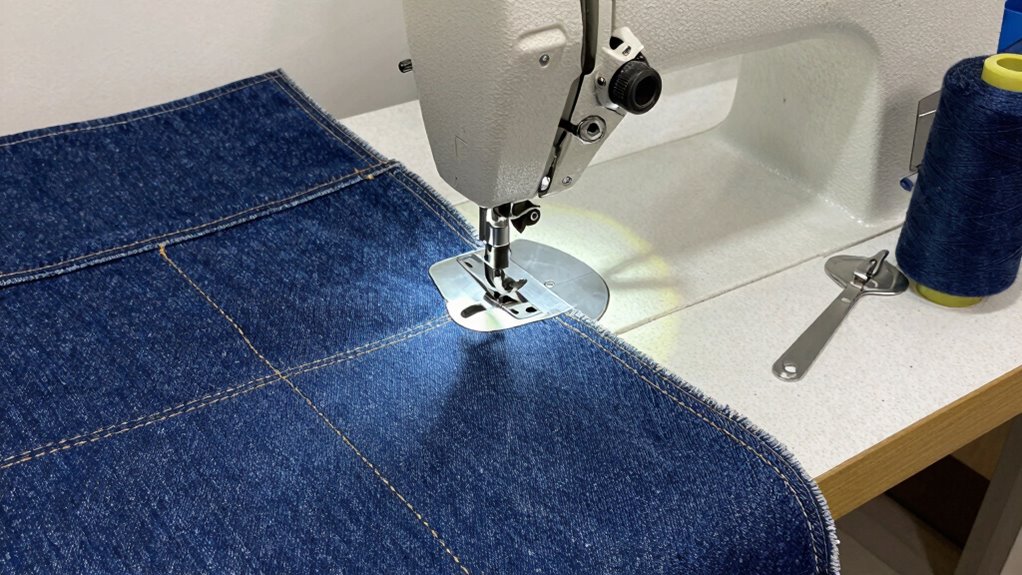

To sew heavy-duty denim without drama, focus on using a strong machine with a heavy-duty motor, adjustable pressure, and a wide sewing space. Choose sharp, heavy-duty needles (like size 90/14), and use durable polyester thread for strength. Proper fabric prep, adjusting tension, and increasing stitch length help prevent puckering and skipped stitches. Reinforcing seams and finishing raw edges boost durability. Keep your tools maintained, and you’ll master denim sewing with less stress—if you want to know more, stay tuned.
Key Takeaways
- Use a heavy-duty sewing machine with a powerful motor, adjustable presser foot, and wide workspace to handle thick denim layers effectively.
- Select strong, appropriate needles (like size 90/14 or 100/16 denim needles) and durable thread (polyester or nylon) for seamless stitching.
- Properly prepare fabric by pressing and stabilizing to prevent puckering, fraying, and uneven seams during sewing.
- Adjust tension and set a longer stitch length (3/8 to 1/2 inch) to accommodate heavy denim and ensure durable seams.
- Reinforce stress points with extra stitches and finish raw edges to improve seam strength and garment longevity.
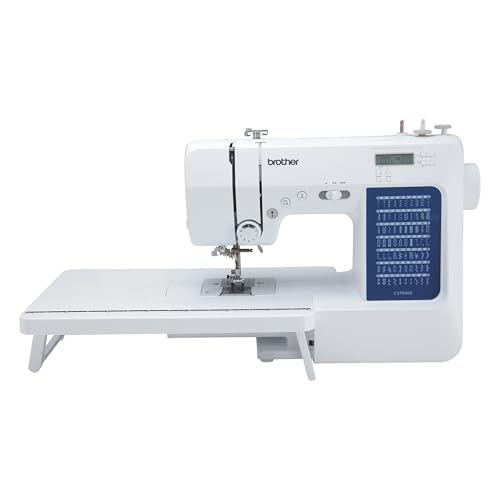
Brother CS7000X Computerized Sewing and Quilting Machine, 70 Built-in Stitches, LCD Display, Wide Table, 10 Included Feet, White
70 UNIQUE BUILT-IN STITCHES: The Brother CS7000X sewing and quilting machine includes 70 built-in stitches including utility, decorative,...
As an affiliate, we earn on qualifying purchases.
What Makes Sewing Heavy-Duty Denim Different?
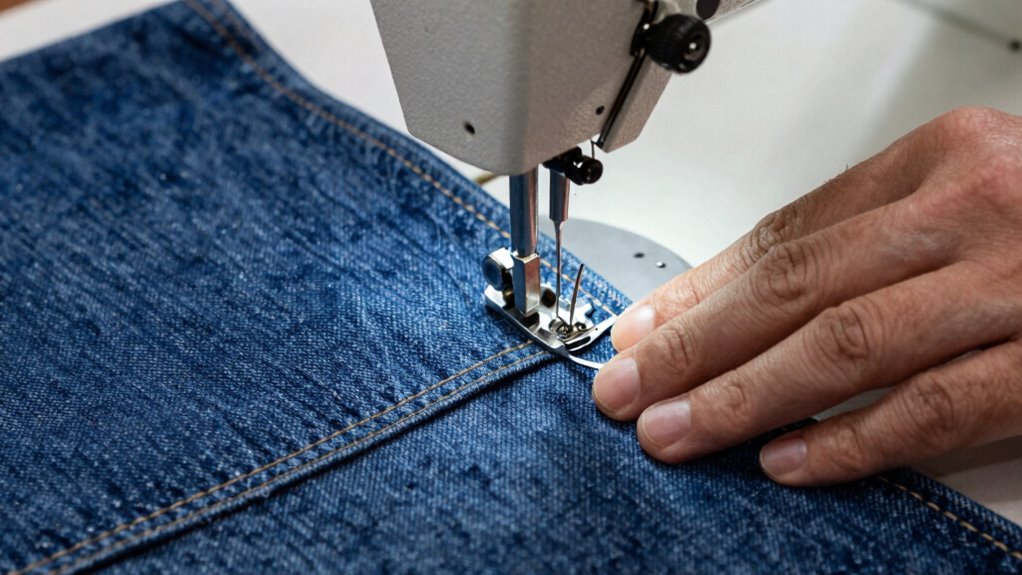
Sewing heavy‑duty denim requires a different approach because its thick fibers resist standard sewing techniques. Denim’s history dates back to the 19th century, initially created for durability during gold rush mining. Today, it’s a staple in fashion trends, symbolizing rugged style and versatility. However, its dense weave makes sewing challenging because regular stitches struggle to penetrate the fabric smoothly. You need stronger needles, heavier thread, and precise tension adjustments. The fabric’s thickness demands patience and proper tools to prevent skipped stitches or torn seams. Understanding how denim’s durable nature influences sewing helps you choose the right setup, ensuring your project holds up over time. Additionally, utilizing energy-efficient sewing machines contributes to sustainable practices by reducing power consumption during large projects. Recognizing the importance of piercing care and hygiene can also extend to maintaining your sewing equipment, ensuring it remains in top condition for heavy‑duty work. Proper ventilation considerations can help manage dust and fumes generated during sewing, promoting a safer workspace. Moreover, being aware of denim’s historical significance can inspire more mindful and informed sewing practices. Implementing proper maintenance routines for your sewing tools can further prolong their lifespan and maintain optimal performance.

Brother XR9550 Sewing and Quilting Machine, Computerized, 165 Built-in Stitches, LCD Display, Wide Table, 8 Included Presser Feet, White
165 unique built-in stitches: The Brother XR9550 computerized machine includes 110 built-in utility, decorative and heirloom stitches including...
As an affiliate, we earn on qualifying purchases.
How to Choose the Best Sewing Machine for Heavy Denim
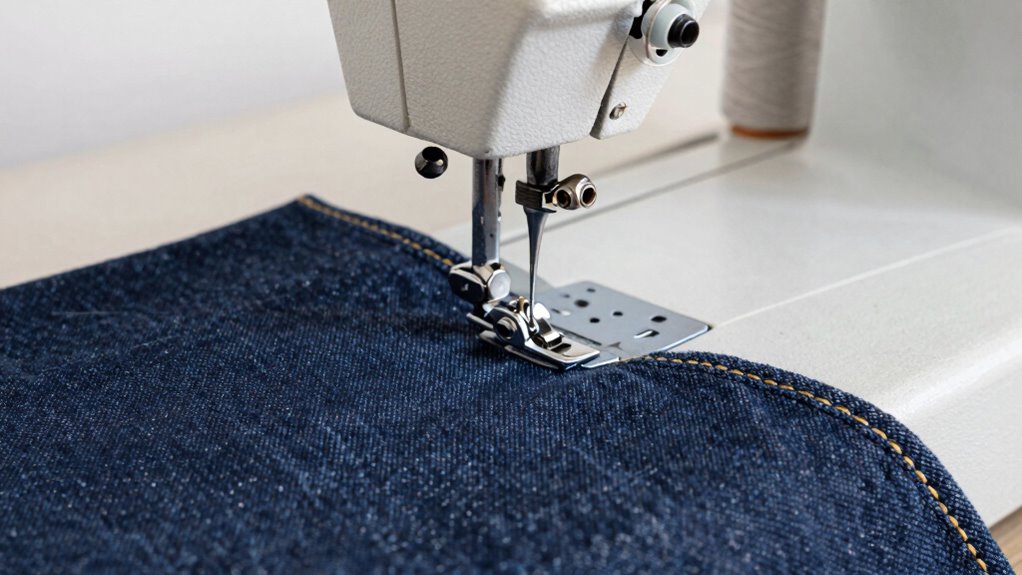
Choosing the right sewing machine for heavy denim means focusing on durability and power. Look for a machine with a strong motor that can handle thick layers without skipping stitches. A heavy-duty metal frame adds stability, essential for controlled fabric care. Consider machines with adjustable presser foot pressure, so you can tailor your setup to different sewing pattern choices and denim weights. A machine with a wide sewing space helps manage bulky seams comfortably. Reliable stitch options, like reinforced or triple stitches, will improve seam strength and longevity. Avoid models that struggle with thick fabrics or lack the necessary power. Ultimately, your choice should match your sewing needs, ensuring you can work efficiently and produce professional results without unnecessary drama. Paying attention to free floating mechanisms can also enhance fabric handling and reduce puckering during sewing. Additionally, selecting a machine with strong needle penetration capabilities is crucial for sewing through dense denim layers smoothly.

SINGER Quantum Stylist 9960 Computerized Sewing & Quilting Machine – Metal, Plastic, with Extension Table, Hard Case & Accessories, 600 Stitches, Lettering, LED Light, 1-Step Buttonhole
VERSATILE STITCH OPTIONS: The SINGER Quantum Stylist 9960 offers 600 built-in stitches and 1,172 stitch applications, including essential,...
As an affiliate, we earn on qualifying purchases.
Which Needles and Thread Work Best for Thick Fabrics?
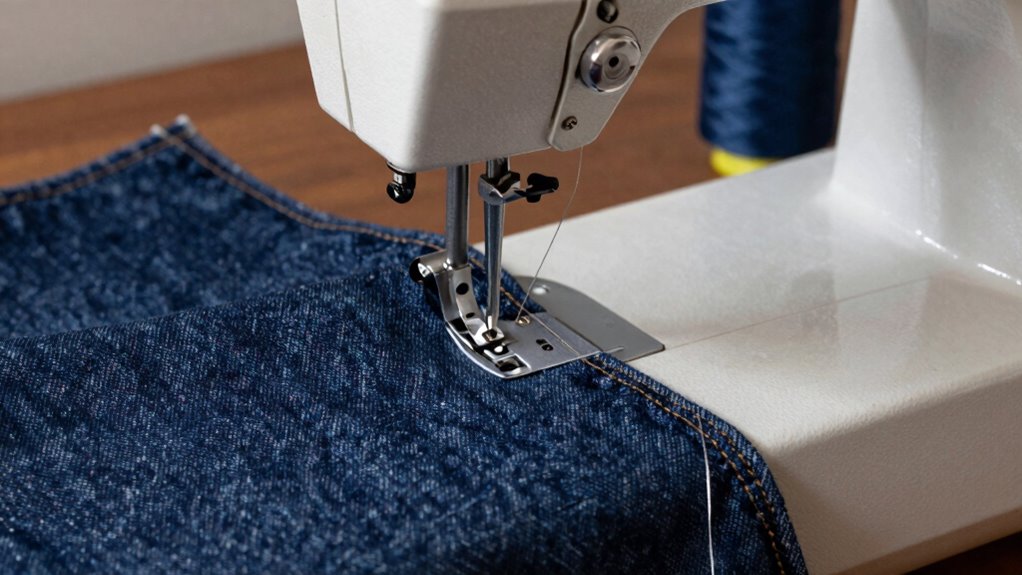
What needles and thread work best for thick fabrics like denim? You want durable tools that handle heavy-duty sewing with ease. Use heavy-duty needles like denim or leather needles, which penetrate thick layers without breaking. Opt for strong, topstitching thread, preferably polyester or nylon, that resists wear and maintains color during fabric dyeing. When sewing for pattern matching, choose a needle size that minimizes skipped stitches and keeps seams precise. The right needle and thread ensure your stitches are even and secure, reducing frustration. Remember, matching thread color to your denim helps hide stitches and creates a clean finish. Additionally, understanding the differences in needle types can help you select the most suitable needle for your specific project. Choosing the correct sewing machine settings can also make a significant difference in handling heavy fabrics. Proper tension and stitch length are crucial for heavy fabric sewing, preventing puckering and skipped stitches. Being aware of fabric feed mechanisms can further improve your sewing results with thick materials. With the proper tools, you’ll confidently sew thick fabric without drama, achieving professional results every time.

Bernette B48 Funlock Serger Coverstitch Overlock Machine | Heavy Duty Sewing Quilting Performance for Beginners and Professionals | 23 Stitches LED Light 1300 SPM Easy Threading Knife Control
POWERFUL FUNLOCK SERGER: The Bernette B48 Funlock is a versatile sewing machine and serger designed for heavy-duty quilting,...
As an affiliate, we earn on qualifying purchases.
How Do You Adjust Settings for Heavy Denim?
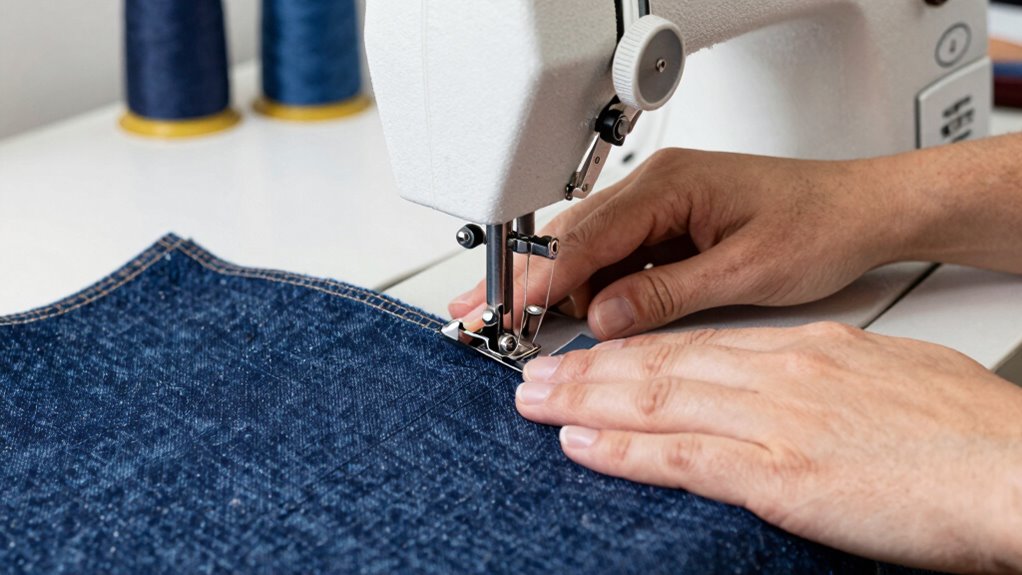
To sew heavy denim smoothly, start by increasing your stitch length so the fabric feeds better. Make sure you’re using a heavy-duty needle designed for thick fabrics to prevent skipped stitches. Adjusting these settings helps your machine handle the denim without extra effort or drama. Additionally, selecting the appropriate thread type can enhance the durability of your seams for heavy fabrics.
Adjust Stitch Length
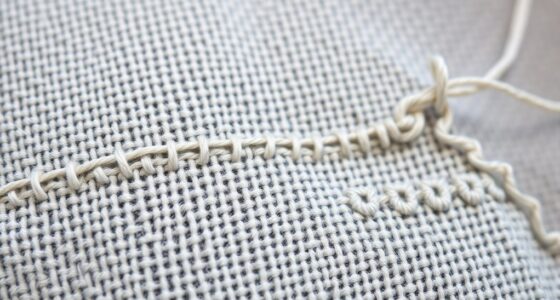
Adjusting your stitch length is essential when sewing heavy denim to make certain strong, even seams. Longer stitches, around 3/8 to 1/2 inch, help manage thick layers and prevent puckering. Before sewing, ensure proper fabric prep—press and stabilize the denim to reduce shifting. Keep an eye on stitch tension; too tight can cause puckering, while too loose results in weak seams. For best results, focus on performance and power to ensure your machine handles the heavy fabric smoothly without strain. Additionally, selecting the appropriate needle size and type further enhances your sewing efficiency, making your project go more smoothly. Proper machine settings also play a crucial role in achieving durable stitches and minimizing frustration during heavy-duty sewing. Being mindful of your machine’s capabilities ensures you choose the right adjustments for heavy fabrics and avoid unnecessary breaks or damage. Understanding your machine’s power requirements can help prevent overheating during extended sewing sessions. – Feel the satisfaction of perfectly balanced stitches with each pass – Experience the confidence that comes from knowing your seams won’t unravel – Embrace the smooth flow as your machine handles heavy fabric without struggle – Revel in the pride of a professional finish, every time
Adjust your stitch length thoughtfully, and your heavy denim projects will turn out flawless.
Use Heavy-Duty Needle
When sewing heavy denim, selecting the right heavy-duty needle is essential to prevent skipped stitches and fabric damage. A sturdy needle ensures your stitches stay even, especially when adding denim embellishments or working with vintage denim, which can be delicate or tightly woven. Use a denim or denim-topstitch needle, typically size 90/14 or 100/16, to penetrate thick layers smoothly. Adjust your machine’s tension if needed, but focus on using the correct needle first. This minimizes skipped stitches and helps maintain the fabric’s integrity. Remember, a quality needle reduces stress on your machine and produces cleaner, professional-looking seams, whether you’re crafting sturdy jeans or adding decorative accents to vintage denim pieces.
Common Mistakes When Sewing Denim: And How to Avoid Them
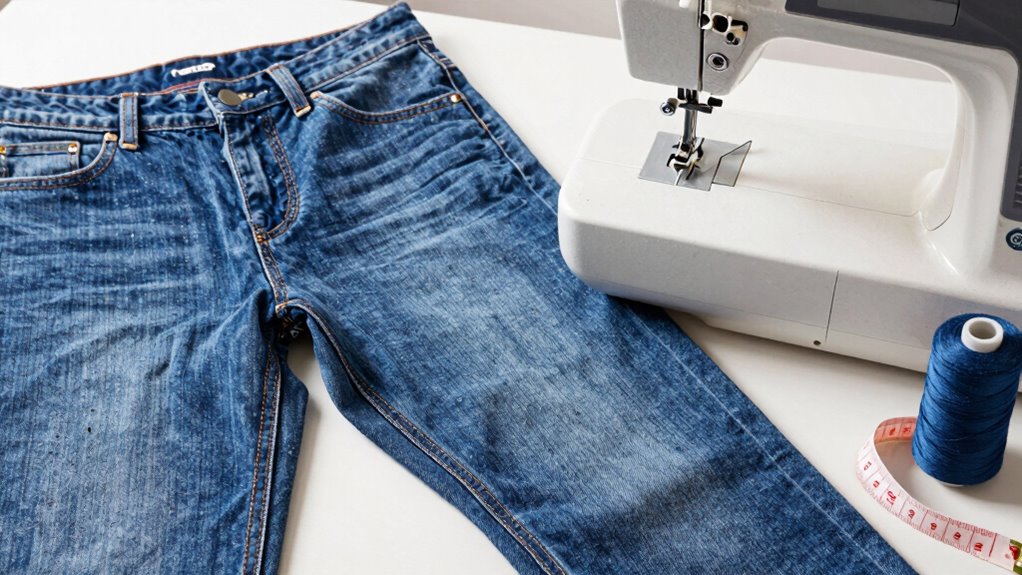
Sewing denim can be tricky if you’re not careful, and many crafters make common mistakes that compromise the quality of their finished pieces. One mistake is neglecting proper fabric prep, which can lead to uneven stitching or puckering. Another is ignoring the importance of setting the correct seam allowance; too narrow or too wide can weaken the seams or cause bulk. Rushing through pinning or skipping pressing can result in misaligned seams. Additionally, failing to test stitch tension on scrap fabric can lead to uneven stitches that ruin the look. Be mindful of these pitfalls to avoid frustration and guarantee your denim project holds up over time. Taking time to prepare fabric and maintain consistent seam allowances makes all the difference in achieving professional results. Recognizing the importance of individual evidence collection can also help troubleshoot issues if your project doesn’t turn out as expected. Paying attention to fabric quality and selecting the appropriate thread can greatly enhance durability and appearance. Furthermore, understanding how Gold IRA markets operate can be beneficial if you’re considering financing your sewing projects through investment returns or planning for future financial stability.
Tips for Reinforcing and Finishing Seams to Make Your Denim Last
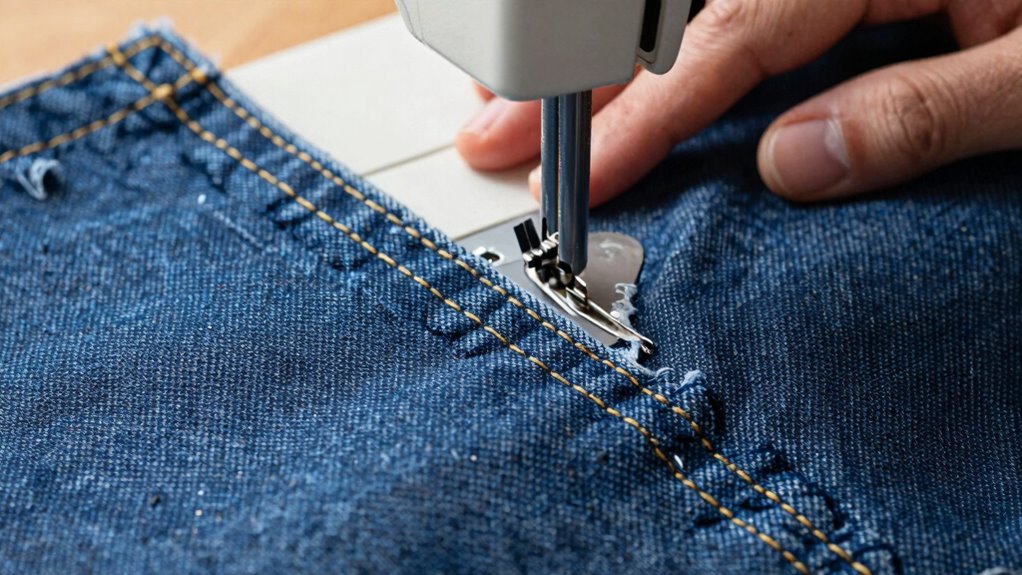
To guarantee your denim lasts through wear and washing, reinforcing and finishing your seams is essential. Seam reinforcement involves adding extra stitches or bar tacks at stress points to prevent tearing and fraying. Use zigzag stitches or double stitches along the seam edges for added strength. Seam finishing is equally important to prevent unraveling; options include overlocking, pinking shears, or binding the raw edges with bias tape. These techniques protect the fabric and ensure durability over time. When sewing heavy denim, always reinforce seams at high-stress areas like pockets and crotches. Incorporating professional sewing techniques can further enhance the garment’s longevity. Proper seam finishing not only extends your garment’s lifespan but also gives it a clean, professional look. Additionally, understanding seam construction can help you make more informed decisions during the sewing process. Using appropriate sewing tools can make your work smoother and more precise. Taking these steps ensures your denim can withstand daily wear without drama.
Troubleshooting: Fixing Sewing Machine Issues With Heavy Denim
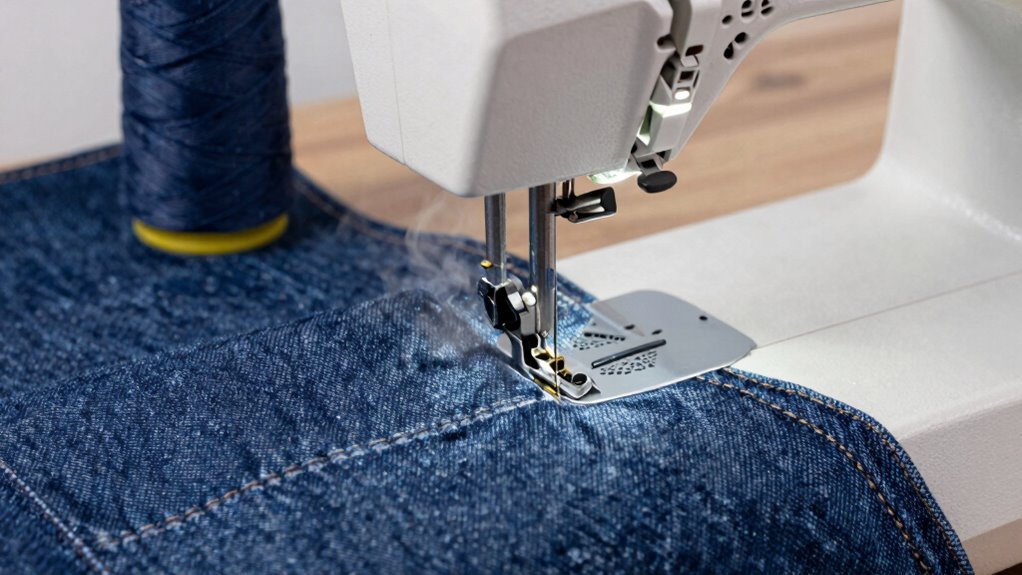
Heavy denim can challenge your sewing machine, causing skipped stitches, tension problems, or jams. To keep sewing smooth, focus on fabric care and regular sewing machine maintenance. When issues arise, don’t get discouraged—troubleshooting is part of the process.
- Feel frustrated when your stitches skip or machine jams?
- Wonder if your tension is off despite careful setup?
- Fear damaging your machine or ruining your project?
- Struggle to keep consistent stitches with thick fabric?
Stay calm and check your needle—use a sharp, heavy-duty needle designed for denim. Clean and oil your machine regularly to prevent jams. Adjust tension and stitch length as needed. Proper fabric care and routine maintenance are key to overcoming sewing machine issues with heavy denim.
Frequently Asked Questions
Can I Sew Heavy Denim on a Standard Home Sewing Machine?
Yes, you can sew heavy denim on a standard home sewing machine, but it’s better to use fabric alternatives like denim with a tighter weave or double-layered fabric. Make sure your machine is from trusted brands like Brother or Singer, and use heavy-duty needles and strong thread. Adjust stitch length and presser foot pressure for smooth sewing, and consider using a walking foot for even fabric feeding.
What Types of Presser Feet Are Best for Heavy-Duty Denim Sewing?
Did you know that using the right presser foot options can boost your denim sewing speed by 30%? For heavy-duty denim, opt for a walking foot or a roller foot to evenly feed thick layers. Pair these with strong needle types like denim or leather needles, which prevent skipped stitches and breakage. These tools make sewing heavy denim smoother and more reliable, saving you time and frustration.
How Do I Prevent Puckering When Sewing Thick Denim Layers?
To prevent puckering when sewing thick denim layers, start by adjusting your thread tension so it’s not too tight, which can cause gathers. Use a longer stitch length—around 3/8 to 1/2 inch—to evenly distribute the sewing stress. Also, consider using a walking foot to help feed multiple layers smoothly. These adjustments help you achieve neat, flat seams without puckering or bunching.
Is Serging Necessary for Durable Denim Seams?
Did you know that double stitched seams can increase denim durability by up to 50%? Serging isn’t strictly necessary for strong, long-lasting seams, but it offers fabric reinforcement and a clean finish. If you want extra strength, consider serging along with double stitching. This combo ensures your denim holds up through heavy use, giving you peace of mind and professional results without drama.
How Often Should I Replace Needles When Working With Heavy Denim?
You should replace your needles after every 8-10 hours of sewing heavy denim to guarantee ideal needle maintenance. Using the right thread, like heavy-duty or denim thread, reduces strain on the needle, extending its lifespan. Always inspect your needle regularly for signs of dullness or damage, and change it promptly to prevent skipped stitches or fabric damage. Proper needle care and thread selection keep your denim sewing smooth and durable.
Conclusion
Sewing heavy-duty denim can seem intimidating, but with the right tools and techniques, you’ll master it effortlessly. Did you know that properly reinforced seams can extend your denim projects’ lifespan by up to 30%? By choosing the right machine, needles, and settings, you avoid common mistakes and create durable, professional-looking results. Keep experimenting, and you’ll find sewing denim becomes less of a chore and more of a rewarding craft.