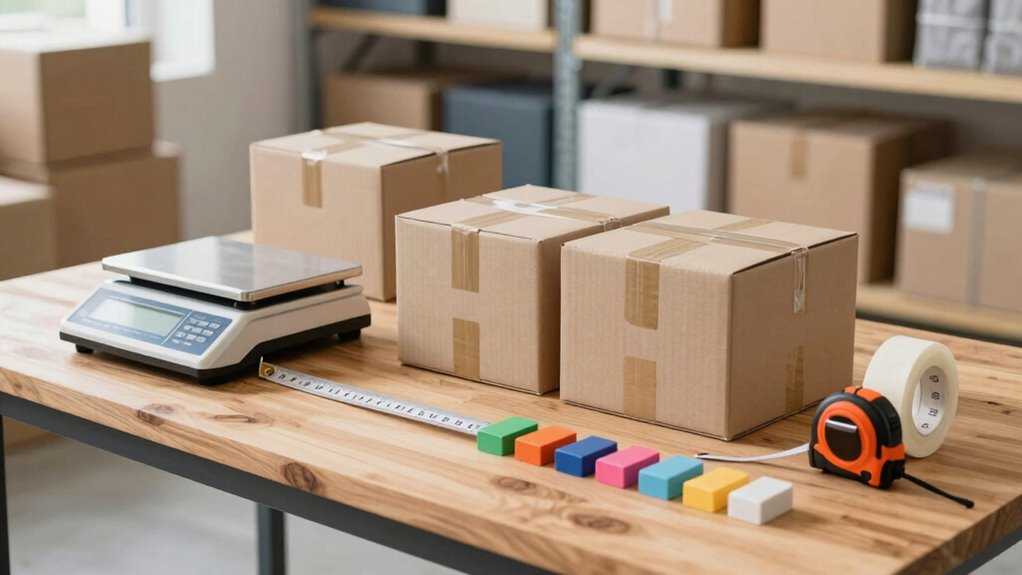

To optimize your shipping process, always weigh your package after measuring its dimensions, then apply the label last. Start by accurately measuring the length, width, and height, then weigh your package on a reliable scale to get the true weight. Once confirmed, attach clear, professional labels. Following this order reduces errors, prevents delays, and saves costs. Keep practicing this sequence, and you’ll find your shipments becoming more efficient and accurate every time.
Key Takeaways
- Weigh packages after measuring dimensions to ensure accuracy for carrier rates and compliance.
- Measure dimensions before weighing to determine proper packaging size and prevent additional fees.
- Apply labels only after confirming the correct weight and size, avoiding damage or misplacement.
- Use reliable tools like digital scales and tape measures, calibrate regularly, and record measurements precisely.
- Follow the sequence: measure and weigh first, then label, to streamline shipping and reduce errors.
Why a Proper Shipping Workflow Can Save You Money and Time
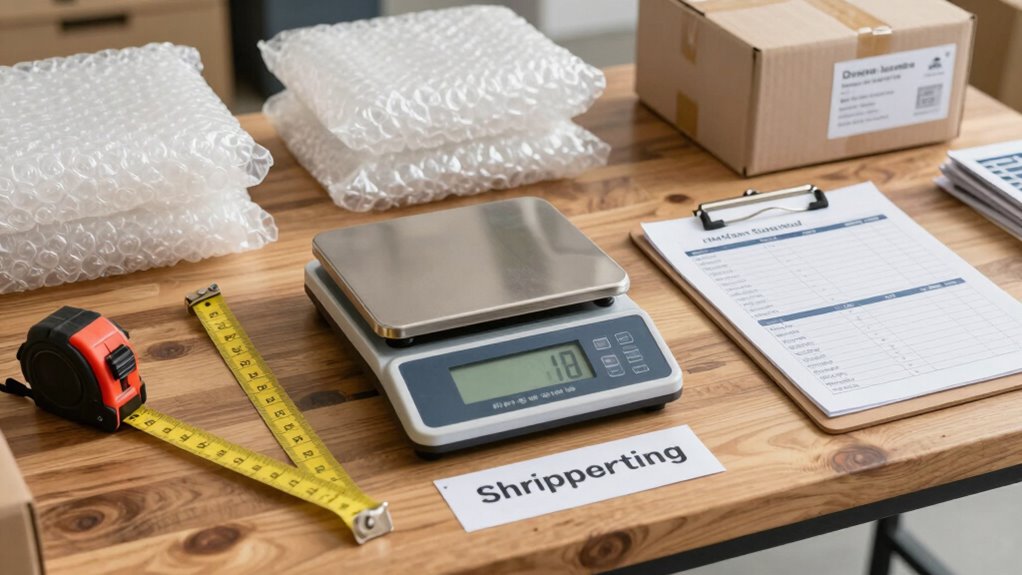
Implementing a proper shipping workflow can considerably reduce your costs and save time by streamlining processes and preventing errors. When you understand and follow shipping regulations, you avoid costly delays and penalties. A well-organized workflow ensures that every step — from labeling to documentation — complies with these rules, minimizing compliance issues. Building strong carrier partnerships also plays a crucial role, as reliable carriers can offer better rates, faster service, and tailored solutions for your shipping needs. By establishing clear procedures and maintaining good communication with your carriers, you can prevent misunderstandings and streamline your operations. Additionally, understanding automation concepts can help you adapt your shipping strategies to the specific requirements of your products and services. Leveraging European cloud infrastructure can also enhance your data security and ensure compliance with regional data regulations. Incorporating connected equipment into your workflow can further optimize your shipping process by providing real-time data and tracking. Moreover, utilizing proper data management practices ensures that your shipping records are accurate and accessible, reducing errors and improving compliance. Ultimately, a solid workflow helps you stay compliant, reduce shipping costs, and improve efficiency, giving you more time to focus on growing your business.
How to Weigh Your Packages Accurately for Shipping
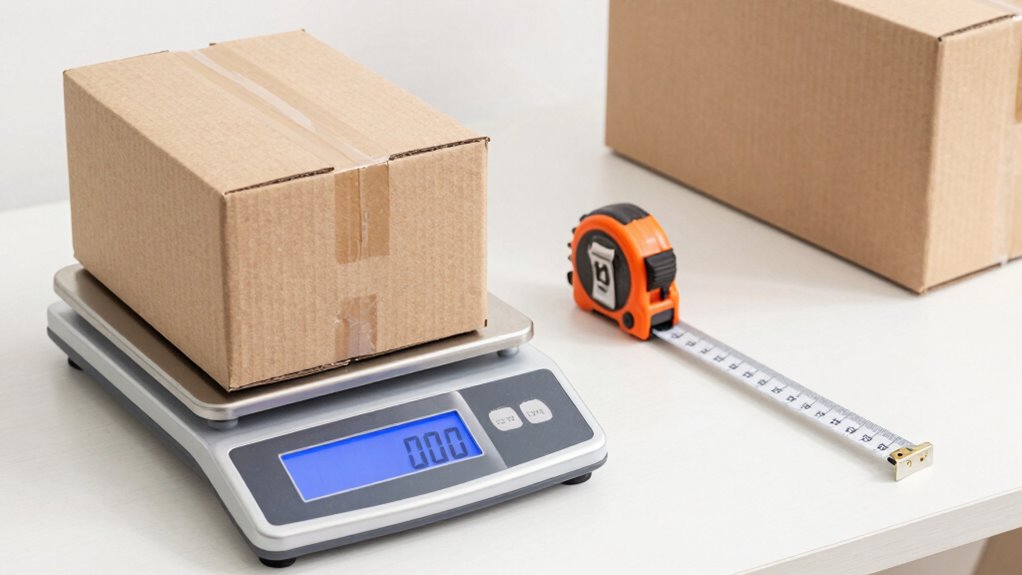
Accurate package weighing is a key step in maintaining your shipping workflow’s efficiency and cost-effectiveness. To guarantee precise weight measurement, use a reliable digital scale placed on a flat, stable surface. Avoid using makeshift or inconsistent tools that can lead to errors. When packing, include all packaging materials like fillers, bubble wrap, and cushioning to reflect the true weight of the parcel. Proper weighing also helps with customs documentation, as accurate weights are essential for international shipments to avoid delays or extra fees. Always double-check the weight after packing, especially if you add or remove items. Additionally, understanding sound vibrations and their influence on health can inspire innovative ways to enhance your workspace environment, promoting better focus and relaxation. Incorporating proper handling techniques can further reduce the risk of damaging fragile items and ensure your packages arrive intact. Being aware of package dimensions is also crucial, as it impacts shipping costs and carrier requirements. Paying attention to weight distribution during packing can help prevent damage and ensure safety during transit. Moreover, ensuring your packaging is adequately sealed can prevent tampering and maintain the integrity of your shipment. By following these steps, you ensure your shipping costs are accurate and your packages comply with carrier and customs requirements.
Measuring Packages Correctly: Tools and Best Practices
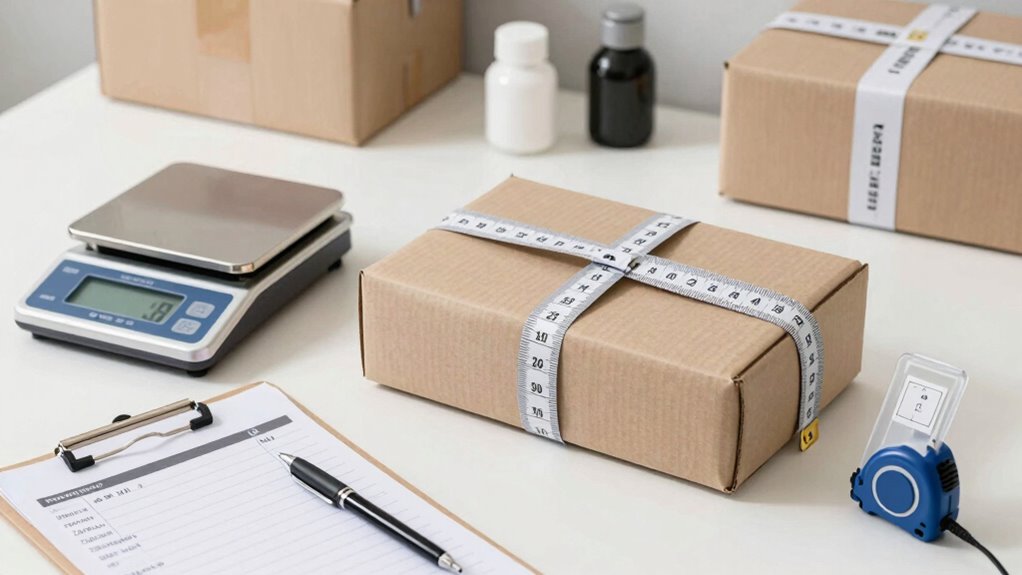
Ensuring your packages are measured correctly starts with selecting the right tools and following best practices. Use a sturdy tape measure for accuracy and double-check box dimensions before sealing. Proper measurement ensures you select the correct shipping tape length and avoid extra charges. Always measure the length, width, and height, recording each dimension precisely. Keep your tools accessible and calibrated regularly. To keep things clear, refer to this quick guide:
| Tool | Best Practice |
|---|---|
| Tape Measure | Measure box dimensions at the widest points |
| Digital Scale | Weigh packages before measuring for shipping |
| Shipping Tape | Use to securely seal after accurate measurements |
| Measuring Board | For large or irregularly shaped packages |
Accurate measurements help prevent delays and extra fees. Additionally, understanding the importance of proper measurement aligns with regulatory compliance and best practices in shipping workflows.
How to Label Shipments Clearly to Avoid Delivery Delays
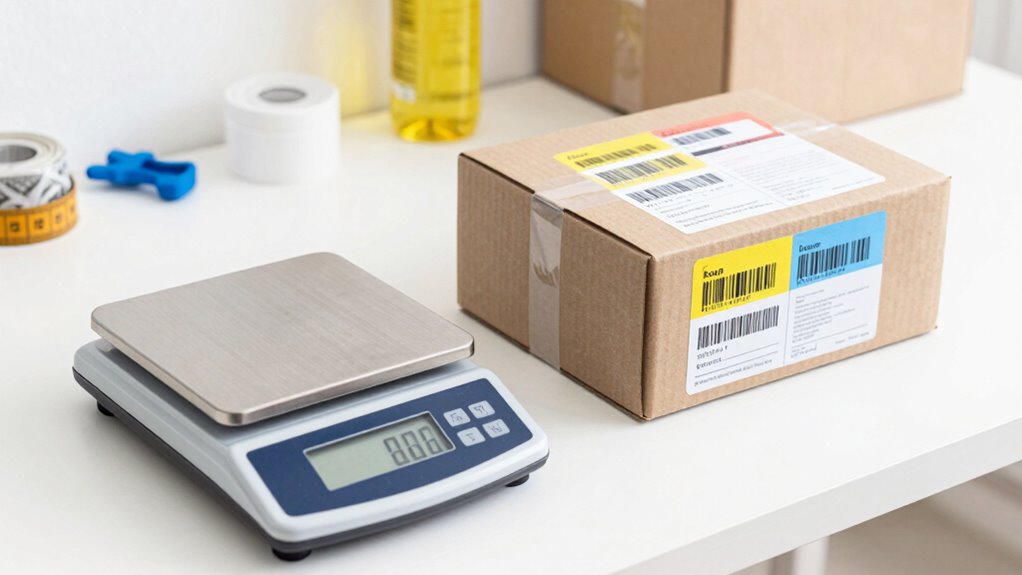
To prevent delivery delays, make sure your labels are easy to read and follow standard address formats. Always include complete contact details, like phone numbers and apartment numbers, so carriers can reach your recipients easily. Use clear, legible shipping labels to guarantee your packages are processed and delivered without confusion. Additionally, understanding luxury fashion insights can help you present your shipments with a touch of professionalism and style.
Use Legible Address Formats
Clear and legible address labels are vital for smooth deliveries. Proper address formatting ensures that your shipment details are easy to read and correctly interpreted by carriers. Use a consistent format, including recipient name, street address, city, state or province, postal code, and country. Avoid clutter or using fancy fonts that hinder barcode readability, which is indispensable for automated scanning. Confirm the text is large enough and printed in a clear, contrasting color to prevent misreading. Double-check that all information is accurate and aligned properly on the label. Well-formatted addresses reduce the chances of packages being delayed or lost. By paying attention to address formatting and barcode readability, you help delivery services process your shipments efficiently and reliably.
Include Complete Contact Info
Have you included all necessary contact information on your shipment labels? Clear, complete contact details are essential to prevent delivery delays. Use durable packaging materials that can withstand handling, ensuring labels stay intact. Include the recipient’s full name, company name (if applicable), street address, city, state or province, postal code, and phone number. Don’t forget to add your return address for easy return processing. If shipping internationally, ensure customs documentation is accurate and complete, with clear contact details for customs officers. Proper contact info helps delivery carriers and customs personnel reach the right person quickly, avoiding misdelivery or delays. Double-check that all contact details are legible and correctly formatted, and affix labels securely on your packaging to maintain visibility throughout transit. Accurate contact info is crucial for smooth delivery and avoiding unnecessary delays.
Apply Clear Shipping Labels
Applying clear shipping labels is essential for guaranteeing your packages reach their destinations without delays. Use large, legible fonts and high-contrast colors to make details easy to read. Confirm the label is securely affixed to the packaging materials, avoiding corners or edges that could peel off. Include accurate customs documentation if shipping internationally, as incomplete info can cause delays. Double-check that the destination address, sender info, and barcode are clearly visible and not smudged. Utilize waterproof labels or laminate labels for added durability. Properly positioned labels help carriers quickly scan and process your shipment, reducing errors. Remember, a well-applied label minimizes misdelivery, ensuring your package moves smoothly through the shipping process.
What’s the Best Order for Weighing, Measuring, and Labeling?
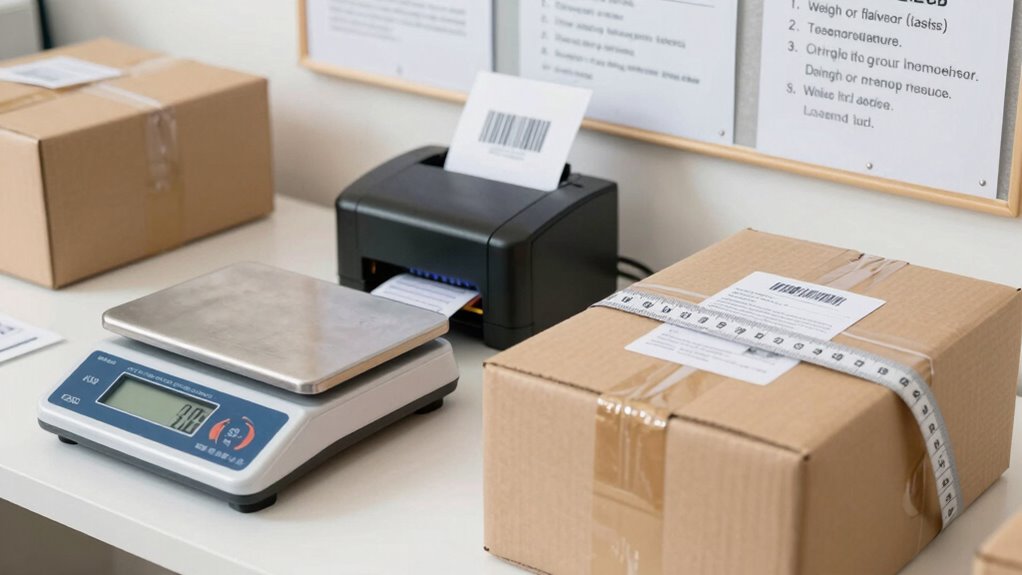
To guarantee an efficient shipping process, it’s best to weigh and measure your items before labeling them. Start by determining the package dimensions, which impact shipping costs and carrier options. Once you have accurate measurements, weigh the package to ensure the shipping insurance coverage is appropriate. Weighing first allows you to verify the weight without labels obstructing the process. Additionally, knowing the right packing techniques can help protect your items during transit. After weighing and measuring, apply the shipping label with the correct package dimensions and weight information. Labeling afterward ensures the label stays clean and adheres properly. This order minimizes errors, prevents re-labeling, and helps you select the best shipping options based on size and weight. Following this sequence streamlines your workflow and reduces the risk of costly mistakes. Additionally, understanding air purifier maintenance dos and don’ts can help you keep your equipment in top condition, ensuring a healthier environment during shipping and storage.
Common Mistakes in Shipping and How to Avoid Them
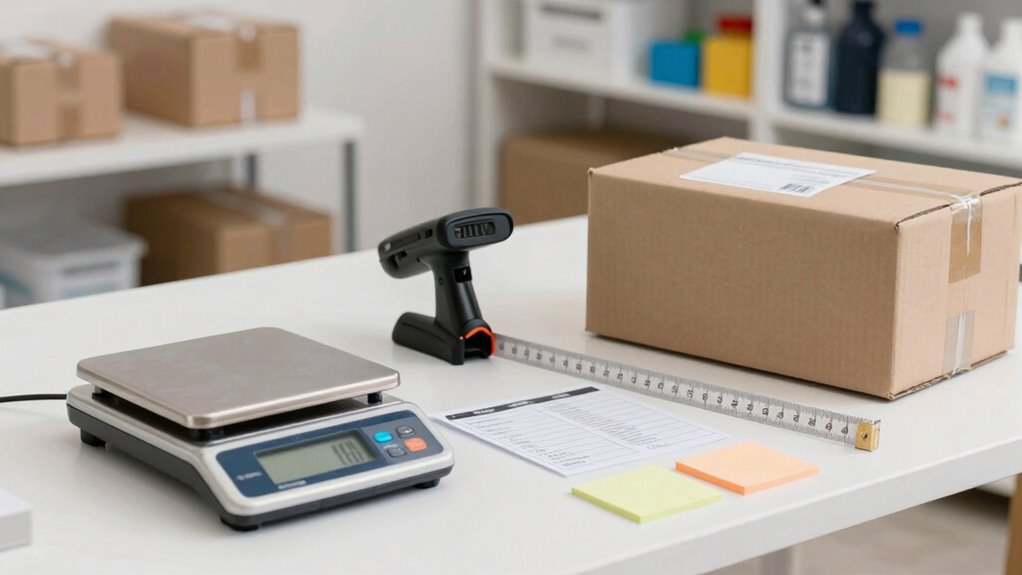
One common mistake in shipping is neglecting to double-check measurements and weights before printing labels. This can lead to incorrect postage, delayed deliveries, or return issues. To avoid this, follow proper packaging tips to ensure your items are secure and accurately measured. For international shipping, double-check customs forms and weight restrictions to prevent hold-ups or extra fees. Be mindful of fragile items—use adequate padding to protect goods during transit. Always verify labeling details, including addresses and barcodes, to minimize errors. A small oversight can cause costly delays, so take time to review your measurements, packaging, and labels thoroughly before sending out shipments. Incorporating accurate measurements and organized documentation can further reduce errors and improve overall efficiency. Additionally, understanding the safety guidelines for handling and packaging items can help prevent damage and ensure compliance with shipping standards. Regularly updating your shipping procedures can also help you stay aligned with best practices and avoid common pitfalls. Being aware of net worth and other relevant details can also assist in managing shipping costs effectively.
Essential Tools to Streamline Your Shipping Process
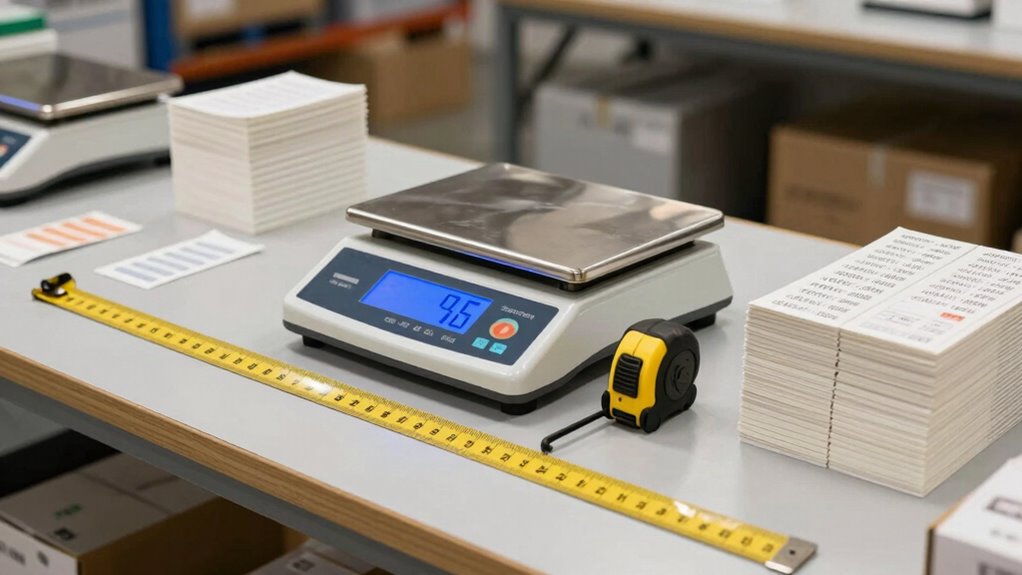
Are you looking for ways to make your shipping process more efficient? The right tools can help you do just that. Start with high-quality packaging materials—sturdy boxes, bubble wrap, and tape—to protect your items and reduce returns. Invest in digital scales and measuring tools to ensure accurate weight and dimensions, which can save you money on shipping costs. Partner with reliable shipping carriers that offer tracking, affordable rates, and flexible pickup options. Using shipping software can automate label creation, streamline order management, and keep everything organized. These tools work together to speed up your workflow, minimize errors, and improve customer satisfaction. Incorporating proper packaging materials and ensuring accurate measurements are essential steps in the process. Additionally, understanding your shipping options can help you select the most cost-effective method for each package. Knowing your horsepower of electric dirt bikes can help you choose the right bike for your off-road adventures, ensuring optimal performance and safety. Being aware of total-cost clarity can assist you in budgeting and making informed decisions to optimize your shipping expenses. Evaluating your performance cookies can provide insights into your shipping process efficiency and highlight areas for improvement. With the right combination of packaging materials and shipping carriers, you’ll make your shipping process smoother and more cost-effective.
How a Clear Workflow Improves Delivery Accuracy and Cuts Costs
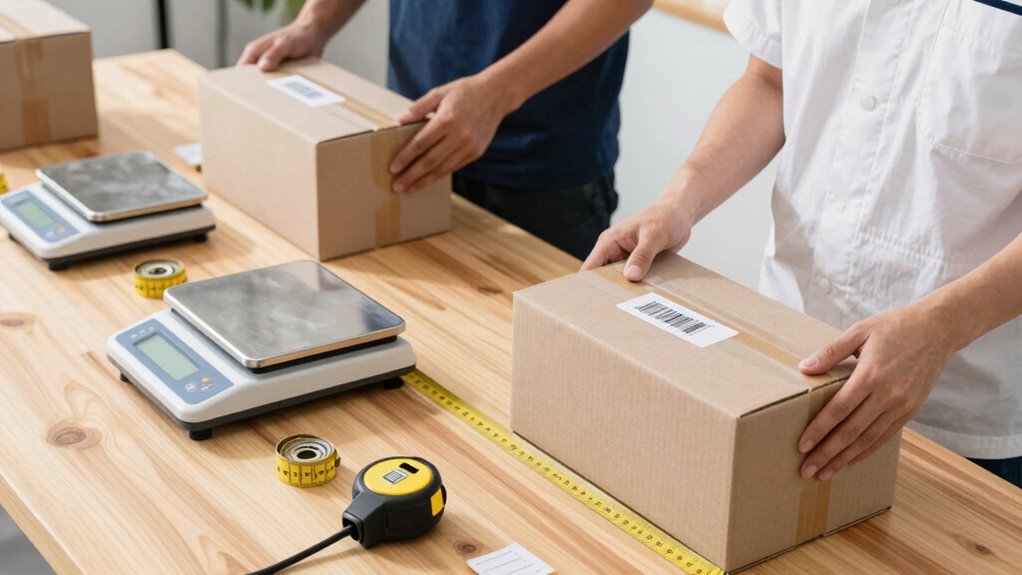
A clear workflow helps you minimize errors and keeps shipments on track. When processes are streamlined, you spend less time fixing mistakes and more time saving money. Accurate data guarantees every delivery is precise, cutting unnecessary costs along the way. Additionally, understanding the correct sequence of steps ensures that each task—such as weighing, measuring, and labeling—is performed in the optimal order for efficiency and accuracy. Recognizing the importance of standardized procedures can further enhance consistency throughout your shipping process. Implementing proper tool setup also plays a crucial role in maintaining accuracy and safety during each step.
Streamlined Processes Reduce Errors
Implementing a clear and streamlined shipping workflow considerably reduces errors by guaranteeing each step is well-defined and closely monitored. When you organize your process effectively, you minimize mistakes in inventory management and packaging optimization, leading to higher accuracy. A structured workflow helps you catch discrepancies early, reducing costly rework and delays.
Picture this:
- Precise inventory tracking prevents stock shortages or overages
- Consistent packaging protocols avoid damage and mislabeling
- Automated checks catch errors before shipment leaves
- Clear task assignments ensure accountability and focus
Accurate Data Saves Money
When your shipping workflow is clear and well-organized, maintaining accurate data becomes much easier, directly saving your business money. Precise weight, measurements, and labeling ensure you select the right packaging materials, avoiding wasted costs from oversized or inadequate packaging. Accurate data also helps you stay compliant with shipping regulations, reducing the risk of delays, fines, or returned shipments. When you verify information at each step, you minimize errors that lead to costly reprints or re-ships. Clear documentation streamlines customs processes and ensures parcels meet all legal requirements. By implementing a consistent workflow, you cut unnecessary expenses, improve delivery accuracy, and enhance customer satisfaction—all while keeping costs under control. Accurate data isn’t just a best practice; it’s a smart business move.
Frequently Asked Questions
How Do I Handle Irregularly Shaped Packages During Weighing?
When handling irregularly shaped packages during weighing, you should use specific handling techniques to guarantee accuracy. Place the package on a sturdy, flat surface, and use a flexible or digital scale that can accommodate uneven surfaces. Support delicate or protruding parts carefully to prevent damage or shifting. Make sure to record the weight accurately, adjusting for any instability caused by the irregular shape, and double-check your measurements before proceeding.
What Are the Best Practices for Labeling Multiple Packages at Once?
When labeling multiple packages at once, you should focus on efficient bulk labeling and precise label alignment. Use a label applicator or a template to guarantee consistency, and organize packages in a systematic way to streamline the process. Check for accurate placement, avoid overlapping labels, and verify each label’s readability. By maintaining consistent spacing, proper alignment, and systematic handling, you make sure each package is correctly labeled and ready for shipment.
How Often Should I Calibrate My Weighing and Measuring Tools?
You should calibrate your weighing and measuring tools regularly to maintain tool accuracy. A good calibration schedule is at least once every 3 to 6 months, depending on usage and industry standards. Frequent calibration helps ensure precise measurements and prevents shipping errors. Keep an eye on any discrepancies or signs of wear, and calibrate immediately if you notice accuracy issues to uphold reliable results.
Can I Use Digital Tools to Automate the Shipping Workflow?
Think of digital tools as your ship’s autopilot, guiding your workflow smoothly. Yes, you can automate your shipping process with digital tools, making inventory management and shipping documentation more efficient. They reduce errors, save time, and keep everything sailing on course. Implementing automation lets you focus on the bigger picture, ensuring your packages are weighed, measured, and labeled in the right order without manual hassle.
What Safety Precautions Should I Follow When Handling Fragile Shipments?
When handling fragile shipments, always wear safety gloves to protect your hands from handling hazards. Handle packages gently, avoiding sudden movements or drops, and use proper supporting tools or equipment when necessary. Keep your workspace clear to prevent accidents, and stay alert for sharp edges or fragile items. Following these precautions helps prevent damage to the shipment and keeps you safe during the handling process.
Conclusion
By following the right order—weight, measure, then label—you can cut shipping errors by up to 30%. Streamlining your workflow not only saves time but also reduces costs and delivery delays. When you guarantee accuracy at each step, your packages reach customers faster and more reliably. Don’t overlook these simple steps; they make a big difference. Implementing this cheat sheet could transform your shipping process and boost your business’s efficiency today.