To guarantee you actually use your fabric scraps, organize them by fabric type, color, or project in clear, stackable containers with labels. Fold or roll delicate fabrics like silk, and fold sturdy ones such as denim neatly to save space. Keep small scraps in divided boxes for easy access. Regularly recheck and reorganize your storage to stay on top of your supplies. Want tips on keeping everything tidy and ready for your next project? Keep exploring!

Get business pricing on tools and workshop supplies
- Business-only prices and quantity discounts
- Tax-exempt purchasing
- Multiple users, one account, clear invoices
Key Takeaways
- Categorize scraps by fabric type, color, or project to quickly find suitable pieces when needed.
- Use clear, labeled containers or subdivided boxes for easy visibility and organization.
- Fold or roll fabrics neatly to maximize space and prevent wrinkles, depending on fabric type.
- Store delicate fabrics flat or flat in small containers to prevent damage and maintain quality.
- Regularly reorganize and tidy storage to ensure scraps remain accessible and ready for use.
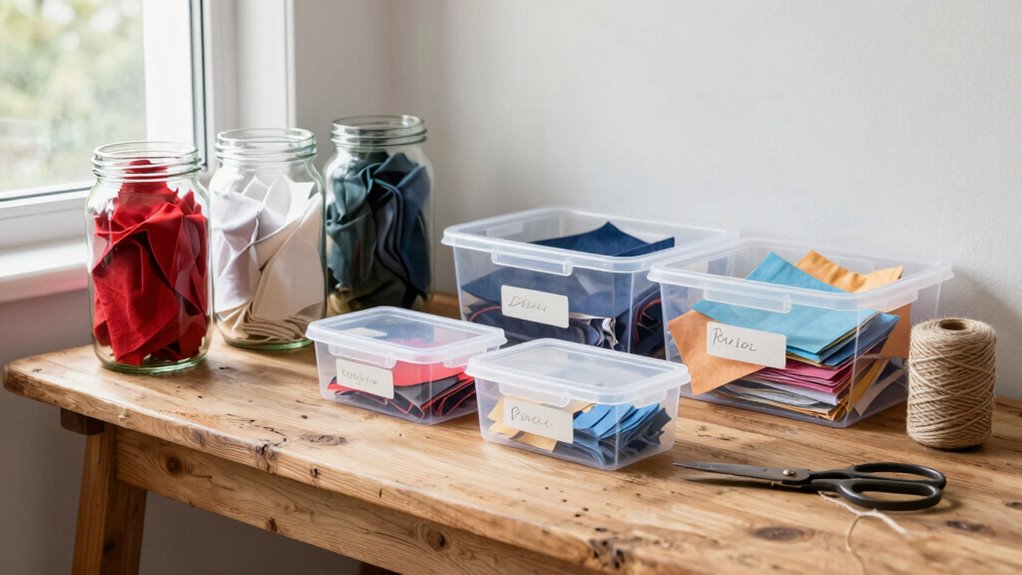
Storing scraps efficiently can save you time and reduce mess in your workspace. When you keep your fabric scraps organized, you’re more likely to use them instead of letting them pile up or get lost. To do this effectively, understanding fabric types is essential, because different fabrics require different storage methods. For example, delicate silks and lightweight chiffons should be stored flat to prevent wrinkles, while sturdier fabrics like denim or canvas can be folded and stacked. Recognizing these differences helps you choose the right storage containers that protect your scraps and keep them in good condition.
Organize fabric scraps by type to keep them in top condition and make your sewing projects easier and more enjoyable.
Using the right storage containers is key to maintaining an organized sewing area. Clear plastic bins or stackable containers are great options because you can see what’s inside without rummaging through piles. Label each container with the fabric type or size, so you can quickly find what you need without disturbing your entire system. For small scraps, consider using small flat storage boxes or divided containers to keep pieces separate and easily accessible. Larger scraps can go into bigger bins or garment bags. Whatever containers you choose, ensure they are sturdy, stackable, and have tight-fitting lids to keep out dust, moisture, and pests.
You might also find that categorizing scraps by color, fabric type, or project helps streamline your workflow. For instance, keep all your cotton scraps together, grouped by shades, so they’re ready for quilting or patchwork. Similarly, storing silk or satin scraps separately prevents accidental damage from rougher fabrics. When you use containers designed specifically for fabric storage, you prevent unnecessary wrinkles or tears, which means your scraps stay in better shape for future projects. Additionally, paying attention to fabric care can extend the lifespan of your stored scraps and keep them in optimal condition for future use. Incorporating proper storage techniques can further improve the longevity and usability of your fabric scraps. Regularly reviewing your stored scraps and reorganizing as needed can help you stay current with your projects and avoid clutter buildup.
Another helpful tip is to fold your scraps neatly before storing them. This way, you maximize space and prevent creases that could damage delicate fabrics. Rolling thinner fabrics like silk or chiffon can save space and keep them smooth. If you’re working with a variety of fabric types, designate specific containers for each, so you always know where to find what you need. This organization saves time, especially when you’re in the middle of a project, and helps reduce waste because you’re more likely to use scraps instead of throwing them away. Keeping your scraps in good condition through proper storage encourages more creative reuse and minimizes clutter in your workspace.
In the end, the key to storing scraps so you’ll actually use them lies in choosing the right fabric types to store together and using appropriate storage containers. This approach keeps your workspace tidy, makes your scraps easily accessible, and encourages you to incorporate those leftover pieces into your creative projects. By maintaining this system, you’ll find it easier to stay organized and inspired to sew, quilt, or craft without the frustration of misplaced or forgotten scraps. Properly organizing fabric scraps not only enhances your productivity but also extends the life of your materials, making your crafting more sustainable.
clear plastic fabric storage bins
As an affiliate, we earn on qualifying purchases.
As an affiliate, we earn on qualifying purchases.
Frequently Asked Questions
How Long Can I Keep Fabric Scraps Before They Spoil?
You can usually keep fabric scraps for about a year if stored properly, but they won’t spoil like food. To maximize their lifespan, consider fabric recycling or scrap donation, which keeps scraps useful and prevents waste. Store them in a cool, dry place in airtight containers or labeled bins. Regularly check your scraps, and donate or repurpose any you won’t use soon to stay organized and eco-friendly.
What Is the Safest Way to Store Sharp or Pointed Scrap Pieces?
Coincidentally, your sharp scrap pieces pose a safety risk, so you should store them in dedicated, puncture-proof storage containers. Use sturdy plastic bins with secure lids or compartmentalized boxes to prevent accidental injuries. Wrap pointed scraps in thick paper or old towels before placing them inside these containers. This guarantees sharp safety, keeps your workspace safe, and makes it easier to access the pieces without injury, encouraging you to reuse your scraps confidently.
Can I Repurpose Old Storage Containers for Scraps?
Yes, you can definitely repurpose old storage containers for scraps. Get creative with container ideas, like repurposing old jars, cans, or plastic bins for easy access and organization. Upcycling storage solutions not only saves money but also reduces waste. Make sure you clean and, if needed, label them for easy identification. These DIY solutions turn everyday items into practical, eco-friendly scrap storage, making your projects more enjoyable and efficient.
How Do I Organize Scraps by Color or Material?
Imagine your scraps as a rainbow of possibilities—color coding brings harmony and inspiration. To organize, sort by material first, then assign each type a color code: fabric, paper, or ribbon each get their own hue. This visual system sparks creativity and makes finding the right piece effortless. With clear labels and designated containers, your scraps become a vibrant, accessible palette ready for your next project.
Are There Eco-Friendly Storage Options for Scraps?
Yes, eco-friendly storage options like biodegradable containers and reusable fabric bins are great choices for scraps. Biodegradable containers break down naturally, reducing waste, while fabric bins are durable and can be used repeatedly. Both options help you organize your scraps sustainably, and they’re easy to label and access. By choosing these eco-friendly options, you minimize your environmental impact while keeping your workspace tidy and accessible.
Conclusion
By giving your scraps a thoughtful home, you create a space where inspiration can quietly flourish. When you store your materials wisely, you’re gently nurturing your creativity and patience, allowing ideas to bloom naturally over time. Remember, sometimes the best way to honor your craft is to let go of clutter and trust that what’s stored thoughtfully will always find its moment. In doing so, you’re subtly encouraging your future self to keep creating without the weight of chaos.
Fall Picks
fall essentials
As an affiliate, we earn on qualifying purchases.