To prevent big accidents, start with small safety checks like ensuring your blade guard and riving knife are properly installed and move freely, and verifying the fence and miter gauge are securely locked and aligned. Check that your blade height and tilt are correct, the emergency stop works, and your workspace is free of debris. Regularly test safety features using scrap pieces. Keep these routines in mind to stay safe and improve your setup—there’s more to learn ahead.
Key Takeaways
- Regularly inspect safety components like blade guards, riving knives, and dust collection systems for proper function and alignment.
- Ensure fence, miter gauge, and blade are securely adjusted and parallel to prevent kickbacks.
- Keep the workspace clean and free of debris to reduce slip hazards and improve dust extraction.
- Test safety features such as emergency stops and guards with scrap pieces before making full cuts.
- Develop and routinely review safety checklists tailored to your saw and environment for ongoing accident prevention.
Why Small Safety Checks Before Using Your Table Saw Matter
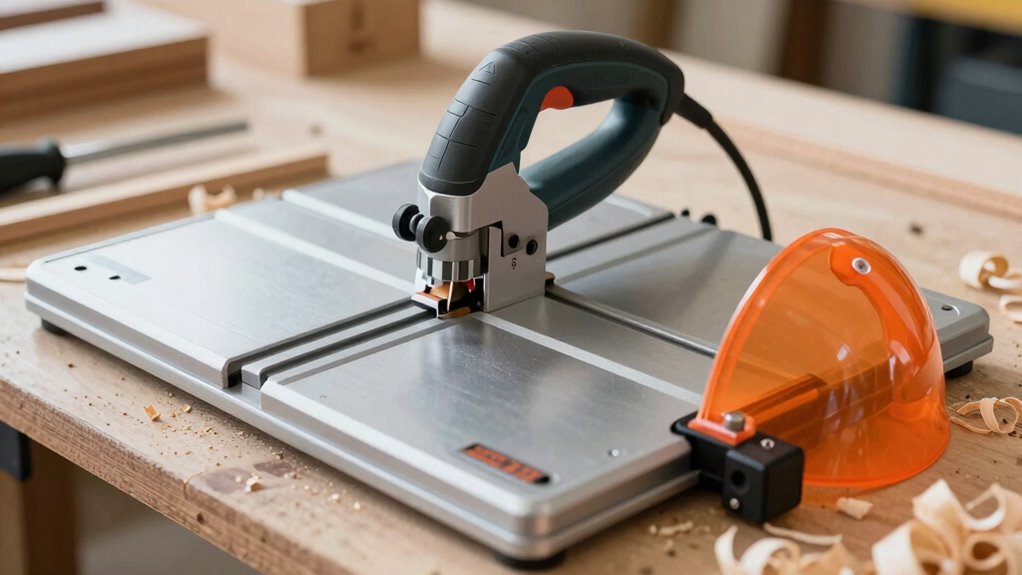
Performing small safety checks before using your table saw is essential because even minor issues can lead to serious accidents. When you adopt a safety mindset, you’re more likely to catch potential problems early, preventing mishaps down the line. Simple checks, like ensuring the blade guard is in place and the power switch works properly, reinforce your focus on safety. Regular inspection routines help identify wear or damage that could compromise safety during operation. Developing a safety-conscious attitude promotes consistent vigilance and careful handling of your tools. Establishing standard safety procedures can also serve as a helpful reminder to perform these checks consistently. These small steps cultivate a habit of accident prevention, making safety second nature. Incorporating preventive maintenance routines can further help keep your equipment operating safely and reliably. Recognizing the importance of proper tool maintenance ensures optimal performance and safety. Small safety checks truly make a big difference.
How to Inspect and Adjust Your Table Saw’s Blade Height and Tilt Safely
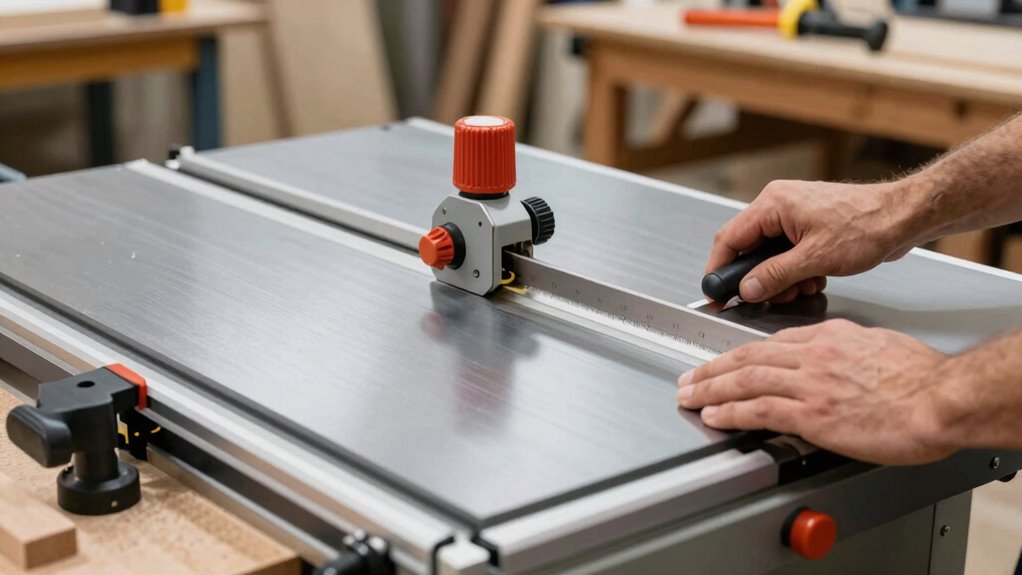
Before you start cutting, it’s important to make sure your table saw’s blade height and tilt are set correctly. Begin by unplugging the saw to ensure safety. Check blade alignment to confirm the blade is square to the miter slot and tabletop. Adjust the blade height so it’s just above the material’s thickness—typically about 1/8 inch higher—making cuts safer and cleaner. When tilting the blade, verify the angle with a protractor or built-in gauge, ensuring the tilt mechanism is secure. Proper blade height and tilt reduce kickback risks and improve dust collection, preventing sawdust buildup that can obscure visibility or cause hazards. Always double-check your adjustments before powering up, maintaining safety and precision during every cut. Additionally, ensuring your projector’s color accuracy is calibrated can help you better visualize detailed cuts and measurements during setup.
How to Confirm the Proper Installation of Blade Guard and Riving Knife
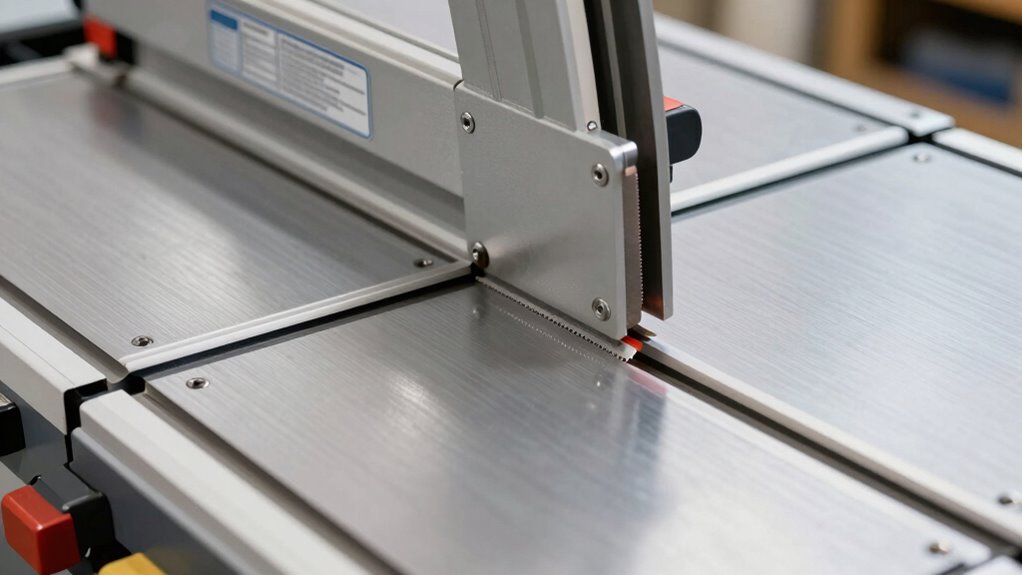
Ensuring the blade guard and riving knife are properly installed is essential for safe and effective operation. First, check the blade alignment to confirm the guard and riving knife sit flush with the blade, preventing any gaps that could cause kickback or debris getting trapped. Make sure the guard moves smoothly and remains close to the blade during cuts. Proper installation also improves dust collection, so verify that dust and debris are directed away from your work area and that the guard’s dust port is clear. Tighten all mounting hardware securely, ensuring nothing shifts during operation. When everything is correctly installed and aligned, you’ll have a safer, cleaner cut, reducing the risk of accidents and maintaining your saw’s efficiency. Proper installation is a key part of preventing common table saw hazards. Additionally, regularly inspecting the alignment and function of these safety components helps maintain optimal performance and safety. Regular checks ensure that the components continue to operate as intended, which is especially important given that appliance safety testing can prevent potential hazards. Incorporating routine safety inspections can further help identify issues before they lead to accidents or equipment failure. Consistent maintenance and checks contribute to overall workplace safety and help extend the lifespan of your equipment.
How to Check and Lock Your Fence and Miter Gauge for Safe, Accurate Cuts
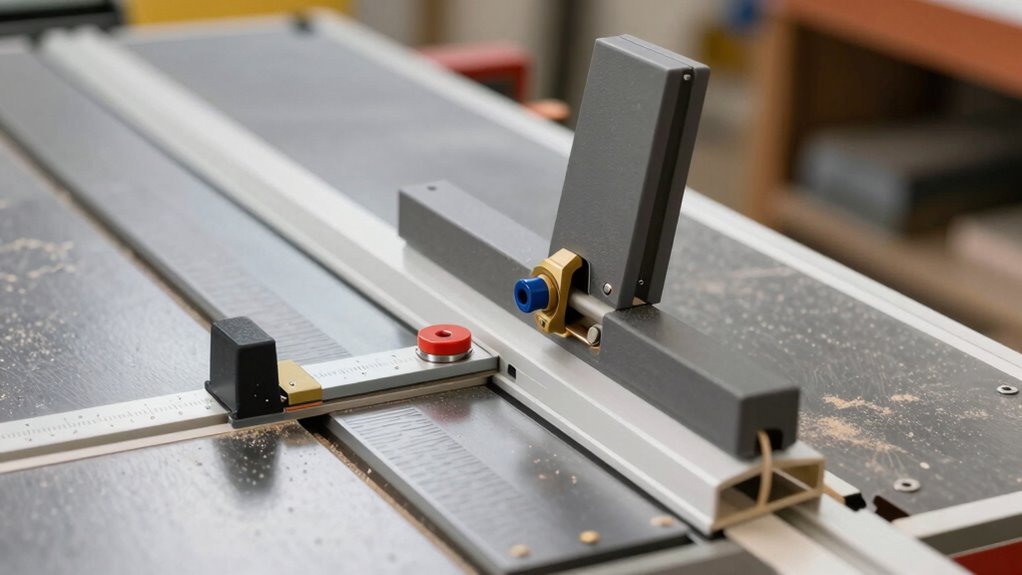
To achieve accurate and safe cuts, you need to verify that your fence and miter gauge are properly checked and securely locked in place before starting any work. Start by checking the fence alignment; it should be parallel to the saw blade to ensure consistent cuts. Tighten all locking mechanisms firmly to prevent movement during operation. Next, inspect your miter gauge calibration by setting it to a specific angle and confirming it reads correctly, then lock it securely. An improperly calibrated miter gauge can cause inaccurate angles, while loose locks on either the fence or miter gauge can lead to dangerous kicks or uneven cuts. Regularly inspecting and adjusting your safety features can significantly reduce the risk of accidents. It’s also important to maintain your tools through periodic checks to ensure all components are functioning properly. Always double-check that both are firmly secured before making any cuts to maintain safety and precision. Properly secured tools prevent accidents and help achieve accurate results. Remember, properly secured tools are key to preventing accidents and achieving accurate results.
How to Verify Your Emergency Stop and Power Switch Are Working Correctly
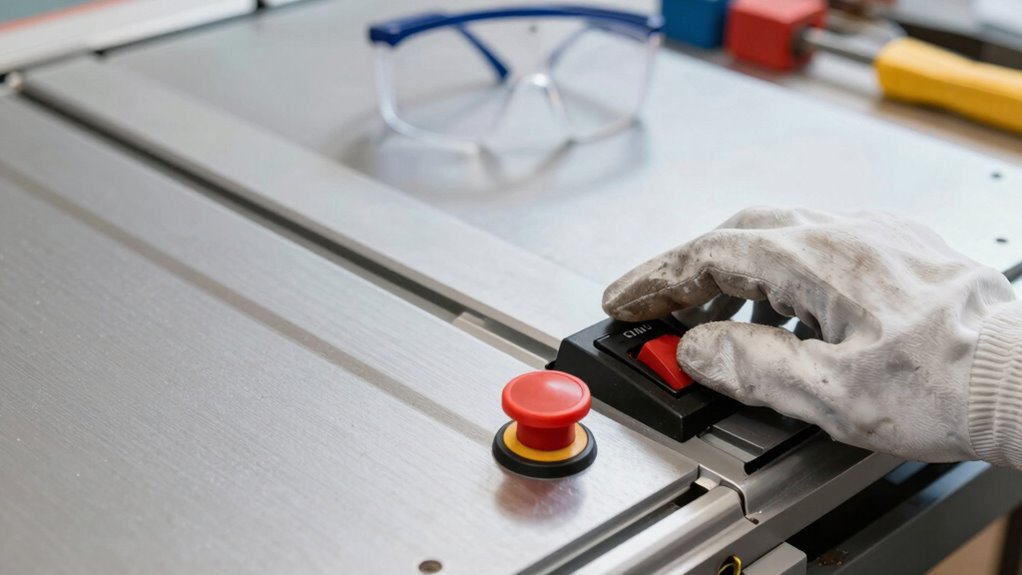
Have you tested your emergency stop and power switch recently to make sure they function properly? The emergency stop is your quick shutdown tool in case of an emergency, so it needs to work instantly. To verify, press the emergency stop button or lever and confirm the saw immediately powers down. Next, turn the power switch on and off to ensure it correctly controls power flow. If the switch feels loose or doesn’t turn on the saw reliably, replace or repair it before use. Regularly checking these safety features prevents delays in shutting down the saw during emergencies and minimizes the risk of accidents. Ensuring proper switch wiring and functionality is essential for safe operation. Additionally, regular maintenance checks help identify potential issues before they become hazards. Incorporating water-resistant features can further enhance safety in wet conditions, especially since many modern switches are designed for durability. Conducting safety inspections periodically ensures all safety components remain in optimal condition. Performing proper installation according to manufacturer guidelines guarantees reliable operation. Keeping your emergency stop and power switch in perfect working order is a simple but critical step for safe table saw operation.
How to Clear Your Work Area of Obstructions and Loose Debris
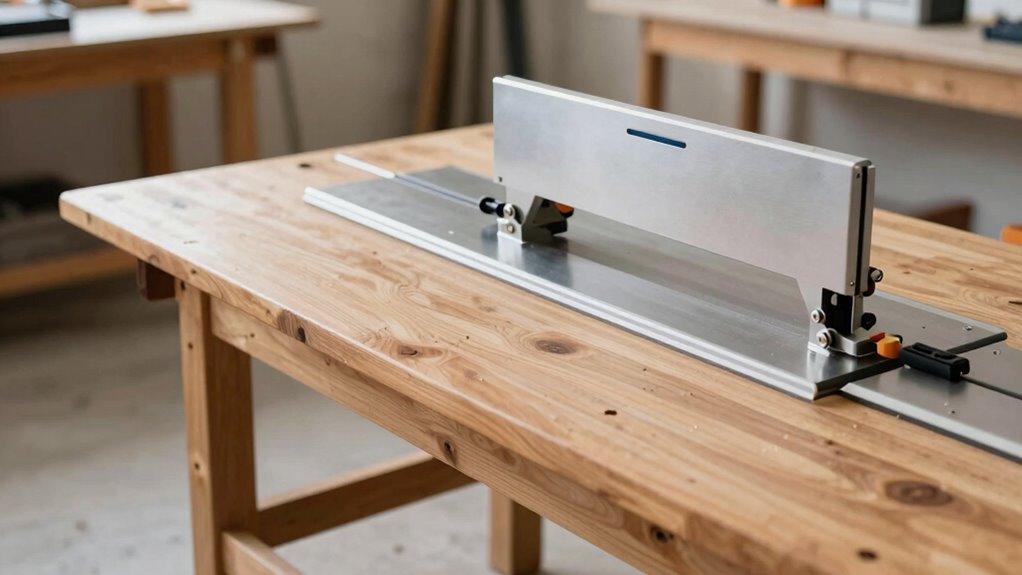
Before starting your cut, make sure your work area is free of obstructions and loose debris. Sweep the surface regularly to keep it clear, and pick up any objects that could interfere with your cut. A tidy workspace helps prevent accidents and keeps your operation smooth. Additionally, ensuring your workspace is free of water hazards can help prevent slips and electrical issues. Recognizing the importance of sound healing science, such as using specific frequencies to promote safety and calmness, further enhances overall safety during your work. Incorporating evidence‑informed safety practices like proper workspace organization can also significantly reduce the risk of injury.
Sweep Work Area Regularly
Keeping your work area clear of obstructions and loose debris is essential for safe and efficient table saw operation. Regular sweeping helps maintain a tidy space, reducing the risk of tripping or accidental contact. It also supports effective dust collection, which keeps the workspace cleaner and improves air quality. When dust and debris accumulate, they can cause the saw to become less responsive or create unnecessary noise, making it harder to focus. By sweeping frequently, you minimize these hazards and promote a quieter environment. This simple step not only guarantees safer operation but also prolongs your equipment’s lifespan. Make it a habit to clear your work area often, especially during long projects, to keep your workspace safe, clean, and noise-free. Additionally, understanding the importance of dust management can help you select the right accessories and cleaning routines to maintain optimal safety standards.
Remove Loose Debris
Are you aware of how loose debris can compromise your safety when using a table saw? Small scraps, dust, and sawdust buildup can cause slips or interfere with blade movement. Clear your work area thoroughly before cutting, ensuring there’s no clutter that could catch or shift unexpectedly. Proper dust collection helps minimize airborne dust and debris, maintaining a cleaner workspace and reducing fire hazards. Additionally, debris buildup on the blade can impair blade maintenance, leading to uneven cuts or dangerous kickbacks. Regularly inspect and clean the blade and surrounding area, removing any loose debris. Keeping your workspace tidy not only improves safety but also enhances your control and precision during cuts. Remember, a clean workspace is a safer workspace.
How to Test Safety Features With a Scrap Piece Before Making Full Cuts
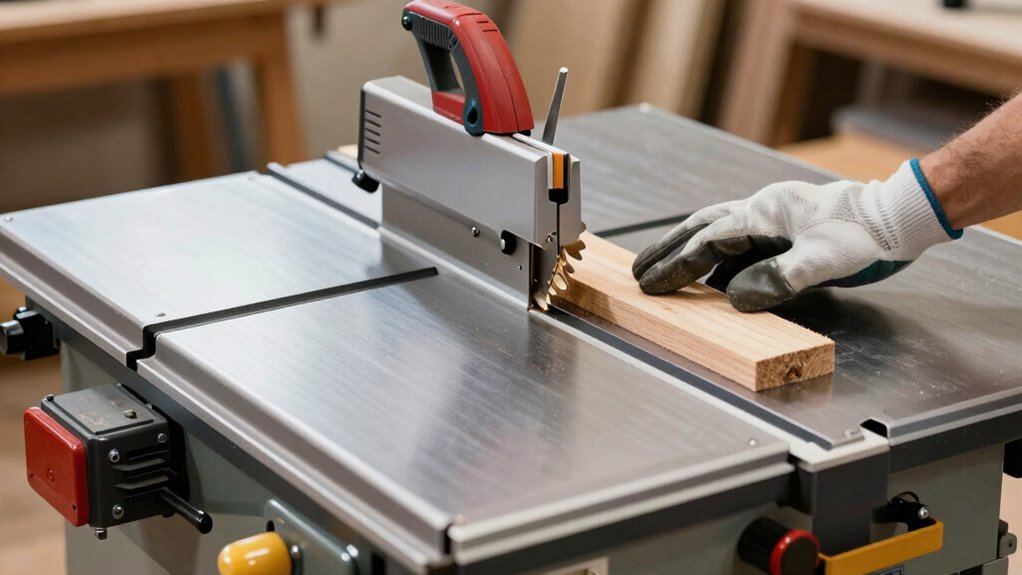
Testing safety features with a scrap piece is an essential step to guarantee your saw operates securely before making full cuts. First, feed the scrap through the saw to check blade alignment, ensuring the blade is straight and cuts cleanly without wobbling. This helps confirm your blade is properly aligned, reducing kickback risks. Next, observe how the dust collection system handles debris; a smooth, efficient dust removal indicates the system is functioning well, keeping your workspace clear and safe. Use the scrap to test the safety guard and riving knife, making sure they move smoothly and stay in place during operation. These small checks help identify potential issues early, so you can address them before cutting your actual material, preventing accidents and ensuring precise, safe cuts. Regular maintenance and inspection of safety features are also crucial for ongoing saw safety.
What Personal Protective Equipment (PPE) Should I Wear When Using a Table Saw?
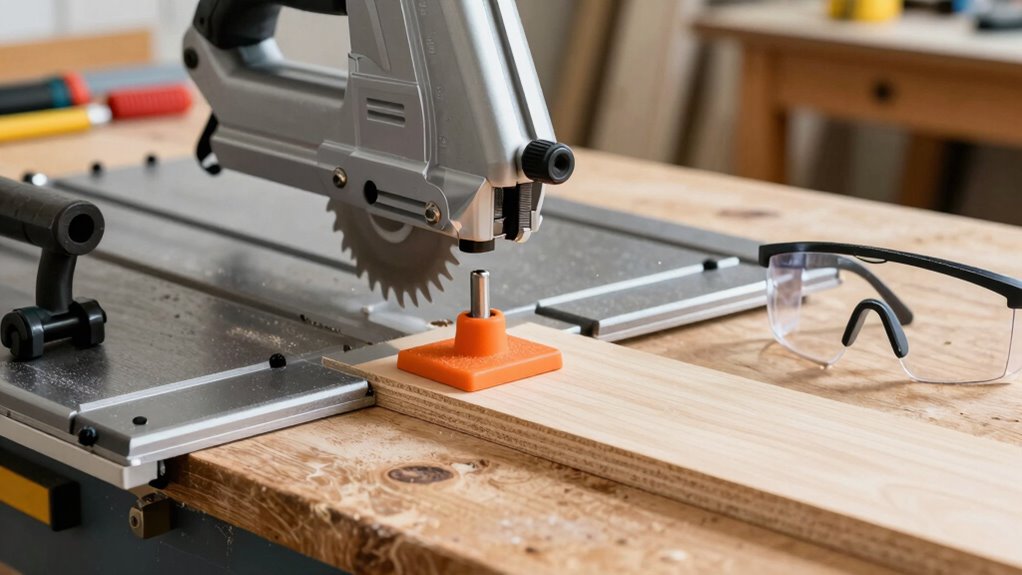
Wearing the right personal protective equipment (PPE) when using a table saw helps keep you safe from potential hazards. Always protect your eyes with protective goggles to prevent injury from flying debris or sawdust. Hearing protection is essential to guard against loud noise that can damage your ears over time. Here’s what to contemplate:
| PPE Item | Purpose |
|---|---|
| Protective goggles | Shield your eyes from flying chips |
| Hearing protection | Reduce noise exposure and prevent hearing loss |
| Dust mask | Prevent inhalation of fine sawdust |
| Gloves (optional) | Protect hands from splinters, but avoid near blade |
Choosing the right PPE minimizes risks and enhances safety during every cut.
How to Develop a Routine Safety Check List for Every Table Saw Session
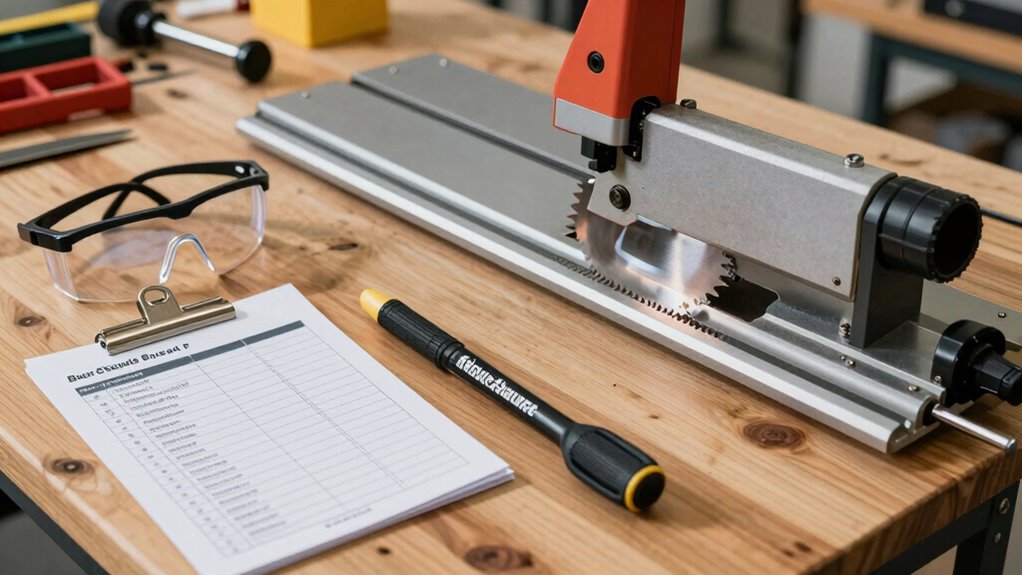
Creating a routine safety check list helps you stay consistent and catch potential hazards before starting. You can customize your list based on your specific saw model and work environment for maximum effectiveness. By sticking to a regular inspection routine, you’ll develop a habit that keeps safety a top priority every time you use your table saw.
Checklist Customization Tips
Developing a routine safety checklist for your table saw guarantees you don’t overlook any critical steps before each session. To customize it effectively, focus on your specific setup and common tasks. Include blade maintenance—checking for sharpness, proper alignment, and secure installation—to prevent kickbacks and ensure clean cuts. Dust collection should also be part of your list; verify that hoses are clear, filters are clean, and the system is functioning correctly to reduce sawdust buildup and improve visibility. Tailor your checklist to your workflow, adding any additional safety measures relevant to your environment. Regularly review and update it based on equipment changes or new safety insights. This proactive approach keeps your safety routine fresh, thorough, and effective.
Consistent Inspection Routine
Establishing a consistent inspection routine guarantees your table saw remains safe and reliable during every use. You should regularly check blade maintenance to ensure the blade stays sharp and properly aligned, reducing kickback risks. Also, inspect the dust extraction system to prevent buildup that can impair operation or cause fire hazards. Develop a simple checklist you follow each session, covering key points like blade condition, safety guards, and dust collection. Use this routine to catch issues early before they become serious problems. Here’s a sample check:
| Inspection Focus | Action |
|---|---|
| Blade condition | Sharpen or replace if dull, check alignment |
| Dust extraction | Clear debris, verify proper attachment |
| Safety guards | Ensure guards move freely and are secured |
| Overall integrity | Tighten loose parts, check for damage |
Frequently Asked Questions
How Often Should I Perform Safety Checks on My Table Saw?
You should perform safety checks on your table saw before each use to guarantee blade maintenance is up to date and safety features are functioning properly. Incorporate a safety checklist frequency into your routine, ideally daily or every time you operate the saw. Regularly inspecting the blade, riving knife, and safety guards helps prevent accidents. Staying consistent with these checks keeps your workspace safe and your equipment in prime condition.
What Signs Indicate My Blade Needs Replacing or Sharpening?
Think of your blade as a sword, sharpness cutting through the wood with ease. If you notice increased burning, tear-out, or uneven cuts, these are signs of blade wear and sharpening signs. Dull blades struggle, making your work harder and riskier. Regularly inspect for chips or dull edges, and sharpen or replace when these signs appear. Keeping your blade in top shape guarantees safety and precise cuts every time.
Can I Use a Table Saw Without Certain Safety Features?
You shouldn’t use a table saw without essential safety features like the blade guard and push stick. The blade guard protects you from accidental contact, while the push stick keeps your hands away from the blade during cuts. Skipping these safety features increases your risk of injury. Always verify these components are in place and functioning properly before starting your project to keep yourself safe and prevent accidents.
How Do I Properly Store My Table Saw After Use?
After use, you should unplug your table saw and clean it thoroughly. Check and maintain the blade guard to guarantee it moves freely and isn’t damaged. Remove sawdust and debris, and follow proper dust collection practices to keep the workspace safe and clean. Store your saw in a dry, secure place, covering it if possible, to protect it from dust and damage, ensuring it’s ready for your next project.
What Are Common Mistakes to Avoid During Safety Setup?
To avoid safety mishaps, make certain your blade is properly aligned before starting. Misaligned blades can cause kickbacks or inaccurate cuts. Always check that anti-kickback devices are securely in place and functioning correctly. Don’t skip these steps, as they’re essential for safe operation. Double-check everything before each use, and never compromise on these small but indispensable safety measures to prevent big accidents.
Conclusion
By performing these small safety checks, you protect yourself, prevent accidents, and guarantee precision. You inspect, adjust, verify, clear, test, and prepare—each step building a safer environment. You stay alert, stay cautious, and stay confident, turning routine tasks into proactive safeguards. With consistent habits and vigilant awareness, you create not just safer cuts but a safer workspace, empowering you to work confidently, efficiently, and responsibly every time you step up to your table saw.