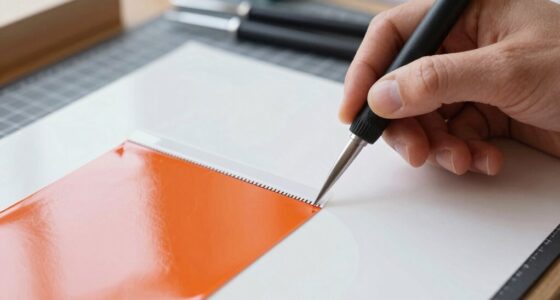
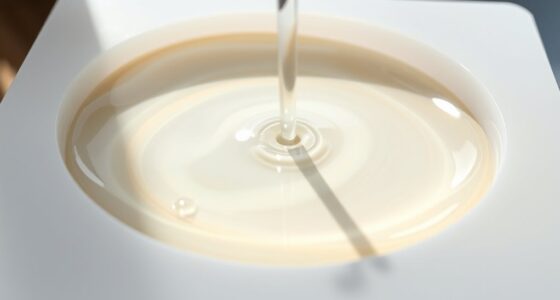
If you want quick, vibrant results for small or detailed projects, UV resin is your best choice since it cures within minutes and is ready-to-use. For bigger, more durable items or projects needing more control over colors and shaping, two-part resin is ideal thanks to its longer working time and strength. Consider your project size, desired finish, and speed. Keep exploring to discover which resin type fits your specific needs even better.

Get business pricing on tools and workshop supplies
- Business-only prices and quantity discounts
- Tax-exempt purchasing
- Multiple users, one account, clear invoices
Key Takeaways
- UV resin cures quickly with UV light, ideal for small, detailed, and colorful projects requiring fast turnaround.
- Two-part resin offers longer working time and durability, suitable for larger, thicker, or more durable items.
- UV resin provides vibrant, ready-to-use colors without additional pigments, while two-part resin allows custom color mixing.
- Two-part resin typically requires hours to fully cure, giving more control, whereas UV resin cures in minutes, limiting post-processing options.
- Choose UV resin for quick, detailed, and colorful crafts; opt for two-part resin for strength, larger projects, and custom effects.
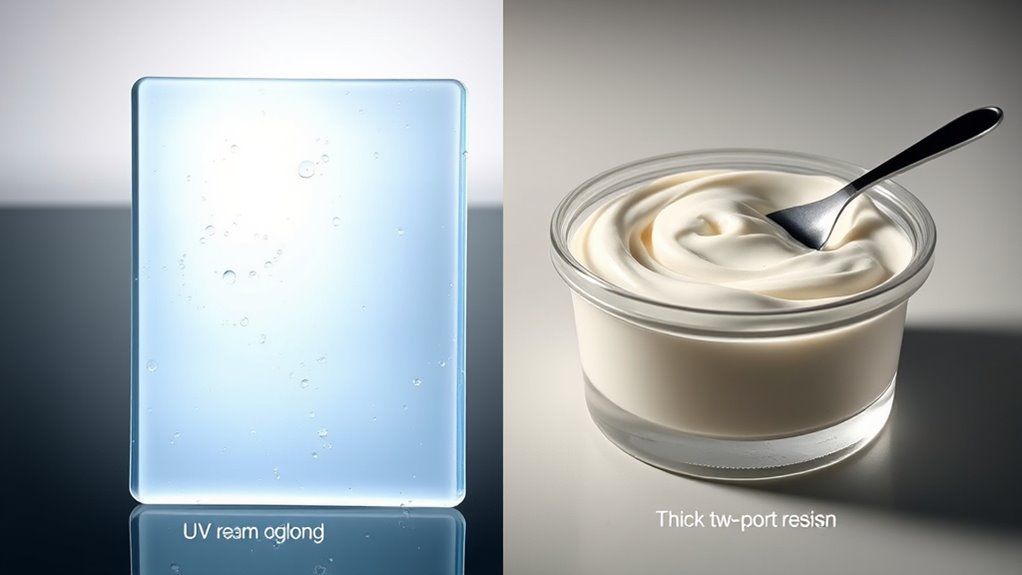
Have you ever wondered what sets UV resin apart from two-part resin? The differences go beyond just how they’re mixed or cured. When choosing between the two, understanding their unique characteristics can help you decide which works best for your project. One key aspect is the variety of color options available. UV resin typically offers a wider range of vibrant, transparent, and pigmented colors right out of the bottle. Because UV resin is pre-mixed and ready to use, it’s easier to find colors that fit your aesthetic without needing additional dyes or pigments. This makes it especially appealing if you want quick, colorful results or are working on detailed designs like jewelry or small crafts. Two-part resin, on the other hand, requires you to add your own pigments or dyes, giving you more control over custom colors and effects. You can experiment with mixing shades or creating gradients, but this process takes extra time and effort. Additionally, state tax implications can influence your overall project budget if you’re sourcing supplies from different regions.
UV resin offers a wide range of vibrant, ready-to-use colors, making quick, colorful projects easy.
Another major difference lies in curing times, which can substantially influence your workflow. UV resin cures rapidly—often within minutes—when exposed to UV light, making it ideal for projects that demand quick turnaround. You simply expose your piece to a UV lamp or sunlight, and it hardens almost instantly. This fast curing process can be a major advantage if you’re working under tight deadlines or want to see results quickly. Two-part resin, however, has longer curing times, usually taking several hours to fully harden. You mix the resin and hardener, then wait for it to cure at room temperature. While this longer process might seem inconvenient, it provides more working time to manipulate and shape your project before it sets.
Choosing between UV resin and two-part resin also depends on your project’s needs. If you’re creating small, detailed items with vibrant colors and quick finishes, UV resin is often the better choice. Its ease of use and fast curing times mean you can produce polished results in no time. Conversely, for larger pieces, thicker applications, or projects that require more durability, two-part resin might be preferable. It’s often more durable and can be sanded or polished after curing, making it suitable for items that need extra strength or a smooth, professional finish.
In the end, your decision hinges on the specific requirements of your project, including color preferences, curing speed, and durability. Both resins have their strengths, so understanding these differences helps you select the right one for your creative needs.
As an affiliate, we earn on qualifying purchases.
Frequently Asked Questions
Can UV Resin Be Used Outdoors Long-Term?
UV resin isn’t ideal for long-term outdoor use because it lacks UV stability, meaning it can yellow, crack, or degrade when exposed to sunlight over time. You should consider two-part resin for outdoor projects, as it offers better durability and environmental impact. If you must use UV resin outdoors, apply a protective coating or keep it shaded to extend its lifespan and reduce environmental damage.
How Do Curing Times Compare Between UV and Two-Part Resins?
UV resin cures faster than two-part resin, taking minutes under a UV light, which boosts your application efficiency. Two-part resin, however, requires longer curing times—often hours—since it depends on chemical reactions, not light exposure. If speed is your priority, UV resin offers a quick turnaround. But for larger or more durable projects, two-part resin’s longer curing process can improve the final strength and finish.
Is Two-Part Resin More Environmentally Friendly Than UV Resin?
Imagine choosing between two rivers: one flows quietly, gentle on the environment, the other rushing swiftly with hidden currents. Two-part resin often has a lower environmental impact because it typically involves fewer chemicals and can be more sustainable with proper disposal. While UV resin cures quickly, it may contain more volatile compounds. So, if you’re aiming for better sustainability, two-part resin might be the greener choice for your projects.
Can UV Resin Be Used on Larger Projects?
Yes, UV resin can be used on larger projects, but you need to take into account resin thickness and curing time. For large projects, applying thin layers helps ensure complete curing and prevents uneven surfaces. Keep in mind that UV resin cures quickly in thin layers, so you may need multiple coats for thicker applications. Make sure your UV light has enough power to reach all areas evenly for the best results.
What Are the Safety Precautions for Handling Each Resin Type?
Handling resin safely is like walking a tightrope—you need balance and caution. Always wear protective gear like gloves, goggles, and a mask, and guarantee good ventilation to avoid inhaling fumes. For UV and two-part resins, follow manufacturer instructions carefully, work in a well-ventilated space, and avoid skin contact. These precautions help you stay safe while creating beautiful projects without risking health hazards.
Conclusion
Ultimately, choosing between UV resin and two-part resin depends on your project’s needs. UV resin cures in seconds, making it perfect for quick fixes, while two-part resin offers unbeatable strength for larger creations. Think of UV resin as your lightning-fast superhero, saving the day in a flash, while two-part resin is your mighty fortress, built to last a lifetime. Pick the right one, and you’ll create masterpieces that truly stand the test of time.
Evergreen bestsellers Picks
bestsellers
As an affiliate, we earn on qualifying purchases.