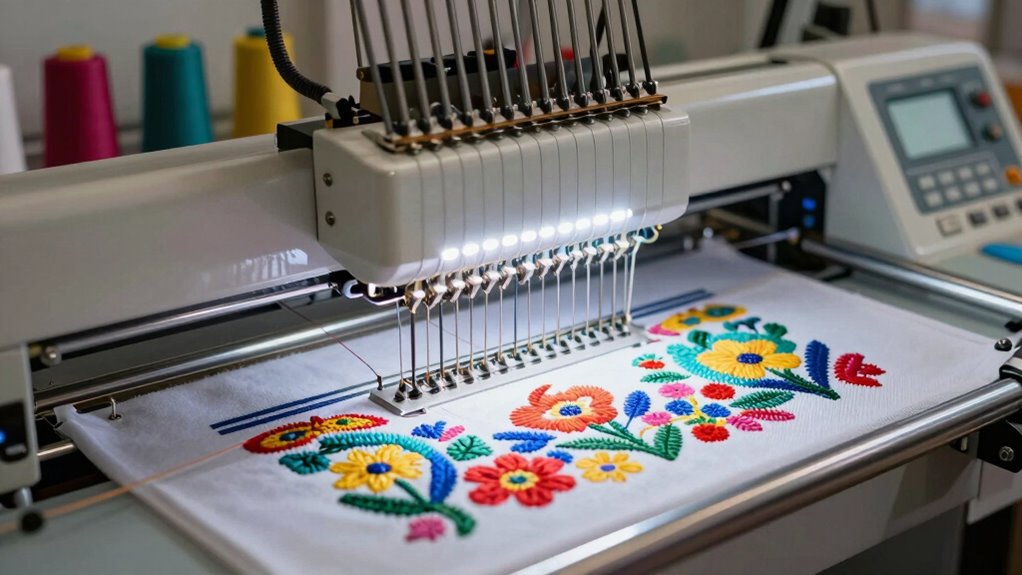

A multi-needle machine makes sense if you’re producing large quantities of garments efficiently and want to boost your productivity. Consider this investment if your work involves repetitive designs and high-volume orders, as it offers speed and consistency. Be aware that maintenance costs and training are ongoing factors. If you’re planning to scale up or diversify your products, this machine can support your growth. To discover how to determine the right time for this step, keep exploring these key points.

Get business pricing on tools and workshop supplies
- Business-only prices and quantity discounts
- Tax-exempt purchasing
- Multiple users, one account, clear invoices
Key Takeaways
- When your production volume consistently exceeds the capacity of single-needle machines, multi-needle models improve efficiency.
- If your projects demand high-speed, repetitive stitching of identical garments, a multi-needle machine becomes cost-effective.
- When automation and scaling up are priorities, investing in a multi-needle machine supports long-term growth.
- If your team has the technical expertise for maintenance and troubleshooting, the increased complexity is manageable.
- When your business goals include diversification and larger production runs, a multi-needle machine aligns with strategic expansion.
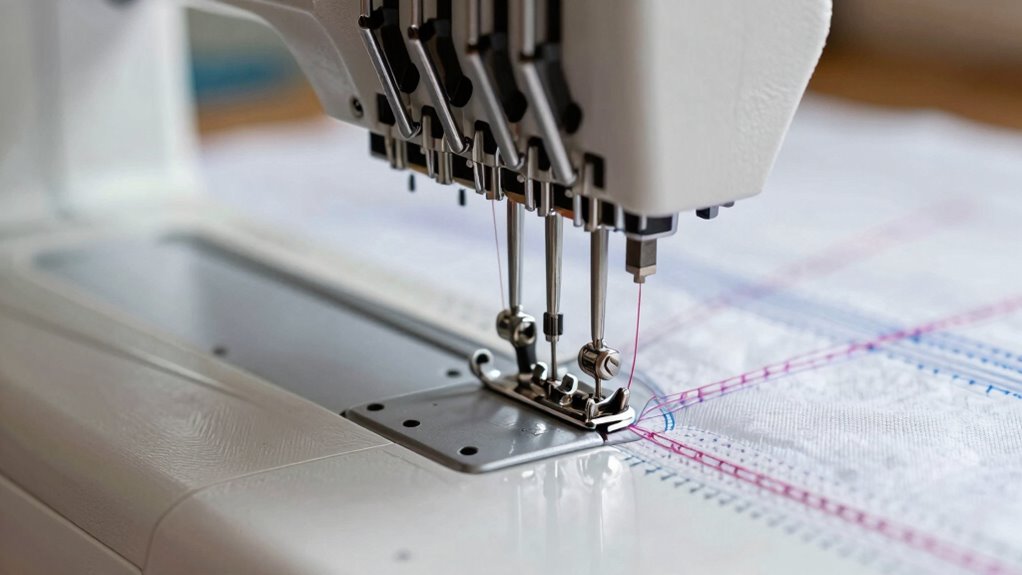
Deciding whether a multi-needle machine is right for you depends on your specific sewing needs and production goals. If you’re considering investing in one, it’s essential to evaluate both the advantages and challenges that come with these machines. While they can markedly boost productivity, they also require an understanding of maintenance costs and the learning curve involved. These factors can influence whether the machine aligns with your current operations and future plans.
First, think about the volume of work you handle. Multi-needle machines excel in high-volume production environments, allowing you to produce multiple identical garments or designs quickly and efficiently. However, if your workload is sporadic or consists of custom, one-off projects, the investment may not justify the benefits. You’ll want to consider whether your current production scale warrants the speed and automation that a multi-needle machine offers. Additionally, understanding machine mechanics can help you better anticipate potential issues before they lead to costly downtime. Recognizing the importance of reliability in high-volume settings can also influence your decision.
Multi-needle machines suit high-volume, repetitive production but may be unnecessary for custom or sporadic projects.
Next, be aware that maintenance costs tend to be higher with multi-needle machines. These machines have more complex mechanisms, which means more parts that can wear out or malfunction over time. Regular maintenance is vital to keep the machine running smoothly, and repairs can be costly if issues arise. Budgeting for ongoing maintenance is essential to avoid unexpected expenses that could offset the efficiency gains. Additionally, maintenance costs tend to be higher due to the increased complexity of these machines. It’s also important to recognize that technological complexity can impact the overall ease of operation and troubleshooting. A greater understanding of machine mechanics can help you better anticipate potential issues before they lead to costly downtime.
Another key factor is the learning curve. Multi-needle machines are more sophisticated than traditional single-needle models, and mastering their operation requires time and training. If you or your staff are new to these machines, expect a period of adjustment where productivity might dip as you learn the controls, threading, and troubleshooting procedures. Investing in proper training can minimize downtime, but it’s important to recognize that initial productivity might be slower until everyone is comfortable with the machine. Moreover, training and familiarity are crucial for maximizing the benefits and ensuring smooth operation. Developing a training plan can facilitate a smoother transition and quicker proficiency.
Finally, consider your long-term goals. If you plan to scale up production or diversify your product offerings, a multi-needle machine could become a valuable asset. But if you’re focused on small-scale or custom work that doesn’t demand high-speed output, the added complexity and costs might outweigh the benefits. Carefully weigh the initial investment, ongoing expenses, and the time needed to become proficient before making your decision.
multi-needle industrial sewing machine
As an affiliate, we earn on qualifying purchases.
As an affiliate, we earn on qualifying purchases.
Frequently Asked Questions
What Types of Fabrics Are Best for Multi-Needle Machines?
You should use fabrics that are compatible with your multi-needle machine’s needle configurations and fabric compatibility. Light to medium-weight fabrics like cotton, polyester, and blends work well because they handle multiple needles without bunching or damage. Avoid very thick or stretchy fabrics, which may strain the machine or cause uneven stitching. Selecting the right fabric guarantees smooth operation and high-quality embroidery results, maximizing your machine’s capabilities.
How Does Maintenance Differ Between Single and Multi-Needle Machines?
You’ll find maintenance differs wildly—imagine juggling more than one flaming torch. With a multi-needle machine, you must regularly check machine calibration to guarantee stitches stay perfect. Needle spacing demands precise adjustments; neglect these, and chaos ensues. Compared to a single-needle, you’ll spend extra time aligning, cleaning, and fine-tuning multiple components. It’s a dance of precision, patience, and a good sense of humor—because one misstep can turn your project into a circus act.
Can Multi-Needle Machines Be Used for Custom Embroidery?
Yes, multi-needle machines are excellent for custom embroidery because of their versatility. They allow you to switch between multiple colors seamlessly, which enhances your creative options. With multi-needle versatility, you can produce complex designs quickly and efficiently. This makes them ideal for custom embroidery projects, especially when you need detailed, multi-colored artwork. If you want professional-looking results and faster turnaround times, a multi-needle machine definitely makes sense for your custom embroidery needs.
What Is the Typical Learning Curve for Multi-Needle Machine Operation?
You’ll find the learning curve for a multi-needle machine manageable, though it varies. You’ll need to practice adjusting thread tension and ensuring needle alignment, which are essential for smooth operation. Expect some initial trial and error, especially with complex designs. With time, you’ll become confident, and operating the machine will feel natural. Regular practice helps you master these basics quickly, making your embroidery projects more precise and efficient.
Are There Size Limitations for Projects With Multi-Needle Machines?
You can handle larger projects with multi-needle machines, but size limitations depend on material compatibility and thread selection. Thick or heavy fabrics might require specialized settings or equipment, so always check if your machine supports your chosen materials. For bigger projects, make sure your thread selection suits the material, preventing breakage or uneven stitches. Proper setup and understanding your machine’s capabilities help you maximize its potential for various project sizes.
Conclusion
Ultimately, understanding when a multi-needle machine makes sense hinges on your needs, nuances, and nuances. If you’re looking to boost efficiency, elevate embroidery excellence, and embrace expanding projects, then this investment could be ideal. Don’t delay decision-making—delve into details, determine your demands, and decide if a multi-needle marvel matches your mastery. By balancing benefits with your budget, you’ll confidently choose the right machine, ensuring your sewing space stays sharp, swift, and successful.
Fall Picks
fall essentials
As an affiliate, we earn on qualifying purchases.