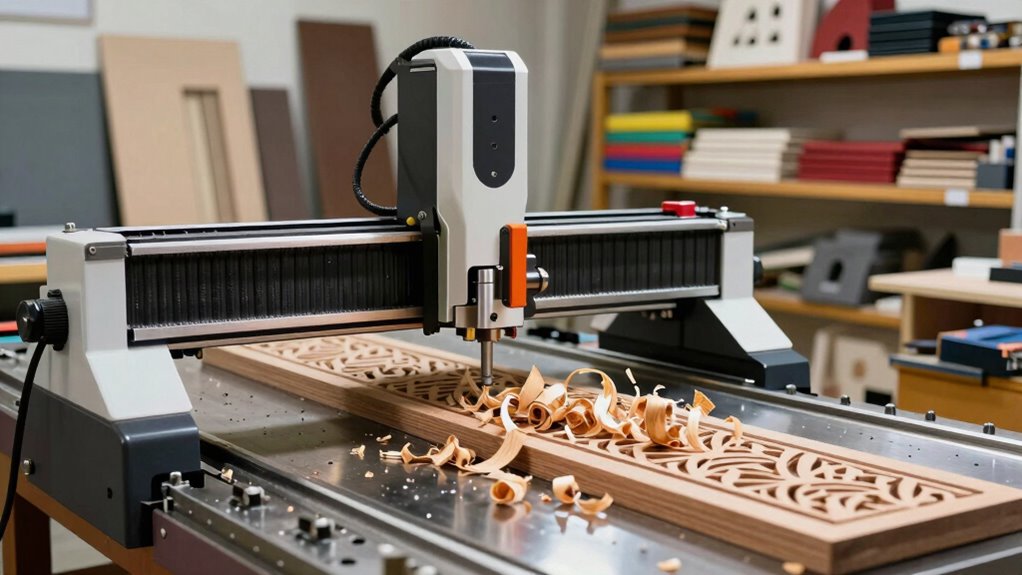

You might outgrow your first CNC too fast because you’re expanding without enough planning, which can lead to capacity issues and lower quality. Pushing growth too quickly often causes resource strain and delays, risking customer satisfaction. Without proper equipment upgrades, material choices, and strategic scaling, you may struggle to keep up with demand while maintaining standards. Stick around to discover how to manage growth sustainably and keep your craftsmanship first-rate.

Get business pricing on tools and workshop supplies
- Business-only prices and quantity discounts
- Tax-exempt purchasing
- Multiple users, one account, clear invoices
Key Takeaways
- Rapid demand can lead to premature equipment upgrades without proper capacity planning.
- Overestimating growth potential may cause businesses to overextend their CNC capabilities.
- Inadequate material sourcing or selection can slow down production, prompting early capacity expansion.
- Insufficient communication about current production limits can lead to overpromising and fast scaling.
- Ignoring strategic scaling and focusing solely on immediate demand risks outgrowing CNC capacity quickly.
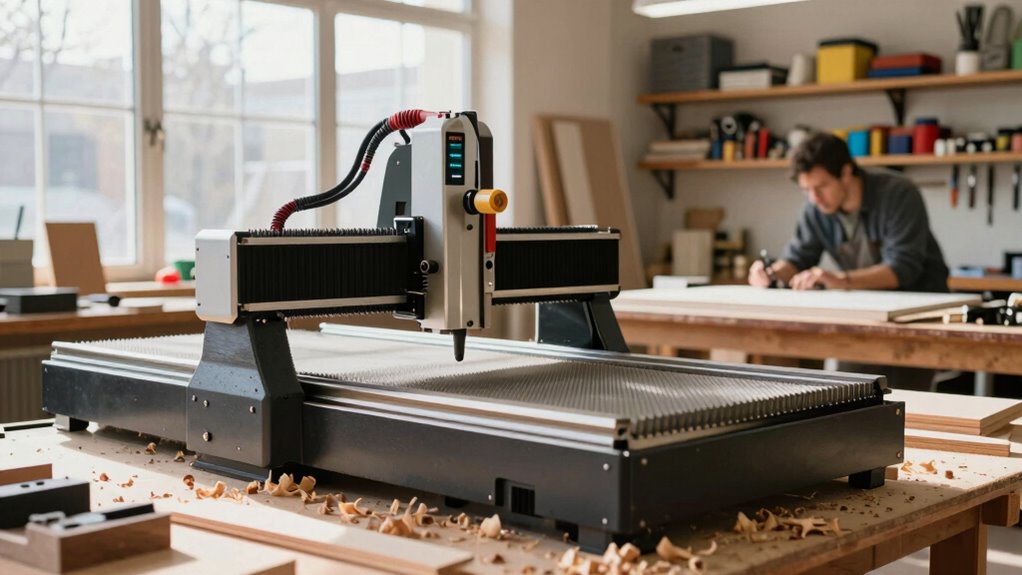
Many craft businesses find themselves outgrowing their CNC machines faster than they expected, especially as demand for their products skyrockets. When this happens, it’s often because you’ve successfully tapped into a niche and your growth has exceeded your initial capacity. One of the first areas to prioritize is your material selection. As your orders increase, you need to choose materials that not only meet your quality standards but also allow for faster processing and cost efficiency. Opting for easier-to-work-with materials, such as certain types of woods or plastics, can speed up production without sacrificing craftsmanship. Additionally, selecting materials that are readily available in larger quantities helps prevent delays caused by supply shortages. Your ability to adapt your material choices directly impacts how quickly you can fulfill orders, which is vital when demand rises unexpectedly.
Alongside material selection, your marketing strategies play a significant role in managing growth. When your business gains traction, you might see a surge in customer inquiries and orders. It’s tempting to accept all opportunities, but you need to refine how you communicate your capabilities and lead times. Clear marketing messaging about your current production capacity sets realistic expectations and helps prevent overpromising. As demand increases, you should also think about expanding your marketing efforts to attract a broader audience, but with a focus on quality rather than quantity. Highlight your strengths, such as craftsmanship, customization options, or quick turnaround times, to stand out. This can help you attract customers who value your expertise and are willing to wait slightly longer for high-quality products, easing the pressure on your CNC machine and workflow. Recognizing market trends and customer preferences can guide your investment in equipment upgrades and ensure sustainable growth. Being aware of demand fluctuations allows you to plan your capacity more effectively and avoid bottlenecks.
Furthermore, as your business grows, investing in better tools and equipment becomes essential. Upgrading to larger or more advanced CNC machines might be necessary to keep pace with demand. But before making these investments, analyze your market trends and customer preferences. Your marketing strategies should communicate these upgrades to your audience, emphasizing how they benefit the customer with faster, more precise products. It’s also important to consider scaling your operations strategically to avoid overextending resources and risking quality. Proper planning and capacity management are crucial to maintain efficiency and product quality during expansion. Balancing material selection, marketing, and equipment upgrades ensures you don’t just grow—you grow sustainably. By doing so, you’ll avoid the pitfalls of outgrowing your CNC machine too quickly and maintain a reputation for quality and reliability, even as your craft business scales up.
CNC woodworking machine for small business
As an affiliate, we earn on qualifying purchases.
As an affiliate, we earn on qualifying purchases.
Frequently Asked Questions
How Can I Tell if My CNC Is Limiting Growth?
You can tell if your CNC is limiting growth by checking material compatibility; if you’re unable to work with new or thicker materials, it’s a sign. Also, software limitations might hold you back—if your machine’s software can’t handle complex designs or larger files, it’s time to evaluate an upgrade. These factors slow productivity and restrict your creative potential, indicating your current CNC no longer meets your business needs.
What Are Signs My Craft Business Is Ready for a Larger CNC?
Your craft business is ready for a larger CNC when your current machine feels like a tight squeeze, limiting material versatility and slowing your creativity. If you notice longer production times, frequent operator training, or difficulty handling diverse materials, it’s time to upgrade. A bigger CNC offers more capacity, efficiency, and flexibility, empowering you to grow without constant technical bottlenecks, like a river expanding its course to meet new horizons.
How Does Scale Affect CNC Maintenance and Downtime?
As your scale increases, CNC maintenance and downtime become more complex due to automation challenges and machine calibration needs. You’ll need to schedule regular calibration to guarantee precision, and automation issues may cause unexpected delays. Larger operations demand proactive maintenance, so you minimize downtime and keep production flowing smoothly. Staying ahead of calibration and automation challenges helps maintain efficiency, allowing your craft business to grow without costly interruptions.
Can Upgrading My CNC Improve Production Speed Significantly?
Upgrading your CNC can boost production speed by up to 30%, making a noticeable difference. You’ll want to focus on material compatibility and software upgrades, which can streamline operations and reduce errors. Modern software offers better toolpath optimization, while hardware enhancements improve precision and speed. By investing in these upgrades, you’ll increase efficiency, meet higher demand, and stay competitive in a growing craft business.
What Are Common Pitfalls When Expanding CNC Capacity?
When expanding CNC capacity, you might stumble over pitfalls like poor material selection and neglected tool calibration. Choosing incompatible materials can cause machine strain or product defects, while skipping proper calibration leads to inaccuracies and delays. You should carefully select materials suited for your machine’s capabilities and regularly calibrate tools to guarantee precision. Avoid rushing expansion; instead, focus on optimizing your current setup and training staff to handle increased workload efficiently.
Conclusion
So, you’ve seen your craft business skyrocket faster than expected, outgrowing your first CNC in no time. But what’s next? Will you stick with what works or risk everything on a new machine? The choice could define your future. Every decision carries weight, and the path forward is anything but certain. Are you ready to face what’s next, or will this be just the beginning of a bigger story? The next move could change everything.
Fall yard work Picks
leaf blowers
As an affiliate, we earn on qualifying purchases.