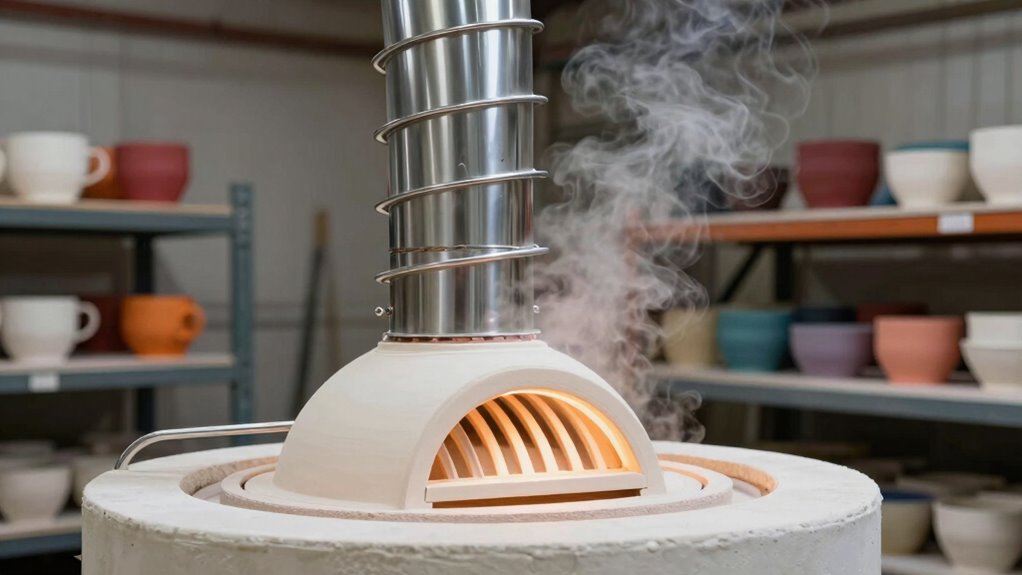

From day one, your kiln’s venting system impacts safety, efficiency, and long-term performance. Proper venting removes harmful fumes, prevents overheating, and keeps your workspace safe. It guarantees consistent firing conditions and easy maintenance. Choosing the right system from the start saves money and avoids future hazards. Investing in quality venting shows you prioritize safety and productivity. Keep exploring to discover how the right venting can make all the difference in your kiln’s success.

Get business pricing on tools and workshop supplies
- Business-only prices and quantity discounts
- Tax-exempt purchasing
- Multiple users, one account, clear invoices
Key Takeaways
- Proper venting ensures safe removal of hazardous fumes and dust, preventing health risks from the start.
- Choosing the right venting system enhances kiln efficiency and consistency in firing conditions.
- Good venting design reduces the risk of overheating and damage, saving costs on repairs and replacements.
- Prioritizing venting quality from day one ensures compliance with safety standards and reduces liability.
- Investing in effective venting supports long-term safety, performance, and peace of mind for ongoing kiln operation.

When it comes to kiln venting, understanding your options and needs is essential for safe and efficient operation. Your choice of venting system directly impacts kiln safety, the quality of your work, and the ease of venting installation. If you overlook this from the start, you risk costly upgrades or unsafe conditions down the line. Proper venting helps remove harmful fumes, dust, and excess heat, making your workspace safer and more comfortable. It’s crucial to consider how your kiln’s venting will integrate into your studio or workshop environment to prevent issues like smoke buildup or fumes lingering in the air.
Selecting the right venting setup from day one means you’ll save money and time. You want a system that’s compatible with your kiln size, firing schedule, and space constraints. A poorly chosen venting system can lead to inefficient airflow or inadequate removal of dangerous byproducts, which compromises kiln safety. When planning your venting installation, focus on ease of access for maintenance and future adjustments. You’ll need a setup that allows for regular cleaning and inspection to keep everything functioning safely and smoothly. Investing in quality components now reduces the likelihood of frequent repairs or replacements later. Additionally, understanding venting airflow dynamics** is essential for designing an effective and safe kiln setup. Being familiar with proper ventilation practices can further enhance safety and efficiency in your workspace. Recognizing the importance of safe fume removal can help prevent health hazards and ensure compliance with safety standards. Knowing the airflow patterns** within your kiln environment can also help optimize your venting system’s effectiveness.
Your venting choices also influence how your kiln operates. Proper venting reduces the risk of overheating and helps maintain consistent firing conditions. It’s tempting to cut corners on venting costs, but doing so can lead to uneven firing, damage to your kiln, or even safety hazards like toxic fumes escaping into your workspace. From a safety perspective, the right venting ensures hazardous gases are safely expelled, keeping you and others in your studio protected. Remember, venting installation isn’t just about connecting pipes; it involves understanding airflow dynamics and ensuring all connections are sealed properly to prevent leaks. Incorporating ventilation system design into your planning can optimize airflow and safety.
Ultimately, your decision about kiln venting should be a key part of your buying process. It’s not just about choosing the most affordable or easiest option but selecting a system that guarantees kiln safety and efficient operation. When you think ahead about venting from the beginning, you’re better positioned to create a safe, productive environment that supports your artistic or industrial goals. Proper venting isn’t an afterthought; it’s a fundamental aspect of your kiln setup that influences safety, performance, and peace of mind for years to come.
As an affiliate, we earn on qualifying purchases.
Frequently Asked Questions
How Often Should Kiln Vents Be Inspected or Cleaned?
You should inspect and clean your kiln vents at least once every three to six months. Regular venting maintenance guarantees proper airflow regulation, preventing blockages and buildup that could cause safety issues or affect kiln performance. Monitoring vents frequently helps you catch problems early, maintaining peak operation. Consistent upkeep not only prolongs your kiln’s lifespan but also ensures efficient firing and safety, making it an essential part of your overall kiln care routine.
Are There Specific Venting Systems Suitable for Small or Large Kilns?
Imagine your kiln as a starship—size matters! For small kilns, simple venting system options like basic exhaust hoods work well, while large kilns require robust venting systems with higher capacity. You should consider kiln size considerations when choosing venting, ensuring proper airflow and safety. Picking the right system from the start helps prevent issues, keeps your workspace safe, and maintains consistent firing results, no matter the kiln’s size.
Can Improper Venting Affect the Quality of My Ceramic Pieces?
Improper venting can substantially affect the quality of your ceramic pieces. Venting effects, like poor airflow or inadequate exhaust, can lead to uneven firing, causing cracks, warping, or incomplete glaze melting. This compromises your ceramic quality, making your pieces less durable and aesthetically pleasing. Ensuring proper venting from the start helps maintain consistent temperatures, prevents harmful fumes, and ultimately results in higher-quality, professional-looking ceramics.
What Are the Safety Risks of Poor Kiln Venting?
Poor kiln venting poses serious safety risks, including ventilation hazards and fire risks. When ventilation is inadequate, harmful fumes and gases like carbon monoxide can accumulate, endangering your health and creating breathing issues. Additionally, trapped heat and combustible materials increase the likelihood of a fire. Ensuring proper venting from the start helps protect you, your workspace, and your pieces, making it essential to choose a kiln with reliable ventilation features.
How Does Venting Impact Energy Efficiency During Firing?
Sure, neglecting venting might turn your kiln into a money-sucking monster, but let’s talk about real efficiency. Proper ventilation improves ventilation efficiency, ensuring excess heat escapes and prevents energy waste. Good venting also enhances heat retention, so your kiln stays hot without overworking the heater. Skip this, and you’ll burn through energy and dollars. Invest wisely from day one, and save big on your firing costs.
Conclusion
Choosing the right kiln venting system from day one is like planting a sturdy tree—it guarantees your studio breathes easy and grows strong. Don’t wait until smoke and fumes cloud your workspace to take action; investing early keeps your creative air clear and your kiln running smoothly. Remember, a good venting setup isn’t just an accessory—it’s the backbone of a healthy, productive studio. Make the smart move now, and let your artistry flourish without the fumes holding you back.
Fall yard work Picks
leaf blowers
As an affiliate, we earn on qualifying purchases.