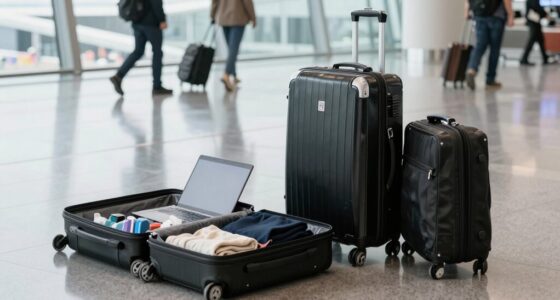

During unstable shifts, your luggage becomes more than just your belongings—it reflects your hopes, fears, and resilience. You may hold onto certain pieces or upgrade them as symbols of new beginnings or endurance. It offers a sense of control and comfort amid uncertainty, acting as an emotional anchor. Each item inside records memories, fears, or dreams, helping you face the unknown with strength. If you stay curious, you’ll discover even more about how your belongings shape your emotional journey.

Get business pricing on tools and workshop supplies
- Business-only prices and quantity discounts
- Tax-exempt purchasing
- Multiple users, one account, clear invoices
Key Takeaways
- Luggage symbolizes personal resilience, providing a tangible connection to memories and stability amid uncertainty.
- It acts as an emotional anchor through rituals like packing and unpacking during transitions.
- Sentimental items within luggage evoke feelings of comfort, hope, and connection to loved ones.
- Choices in luggage reflect internal fears, aspirations, or emotional states during uncertain times.
- Luggage offers a sense of control and safe space, helping individuals manage anxiety and emotional upheaval.
Luggage systems do more than just carry your belongings; they often serve as emotional tools that reflect your identity, aspirations, and memories. During unstable shifts—whether you’re moving to a new city, returning home after a long trip, or fleeing uncertain circumstances—your luggage takes on a deeper significance. It becomes a tangible connection to your past, your hopes, and your sense of stability. In these moments, your luggage isn’t just functional; it’s a vessel for emotions, offering comfort amid chaos.
Travel anxiety can make your luggage feel like more than just a container. As worries mount—about missing connections, losing possessions, or facing the unknown—the familiar weight of your suitcase can provide a small sense of control. You may find yourself clutching your bag tightly, feeling comforted by its presence. The routines involved in packing and unpacking become rituals that anchor you. And if your luggage contains sentimental attachments—like photos, gifts, or keepsakes—the emotional weight intensifies. These items symbolize memories and relationships, offering reassurance when everything else feels uncertain.
Clutching familiar luggage provides comfort and control amid travel worries and sentimental keepsakes.
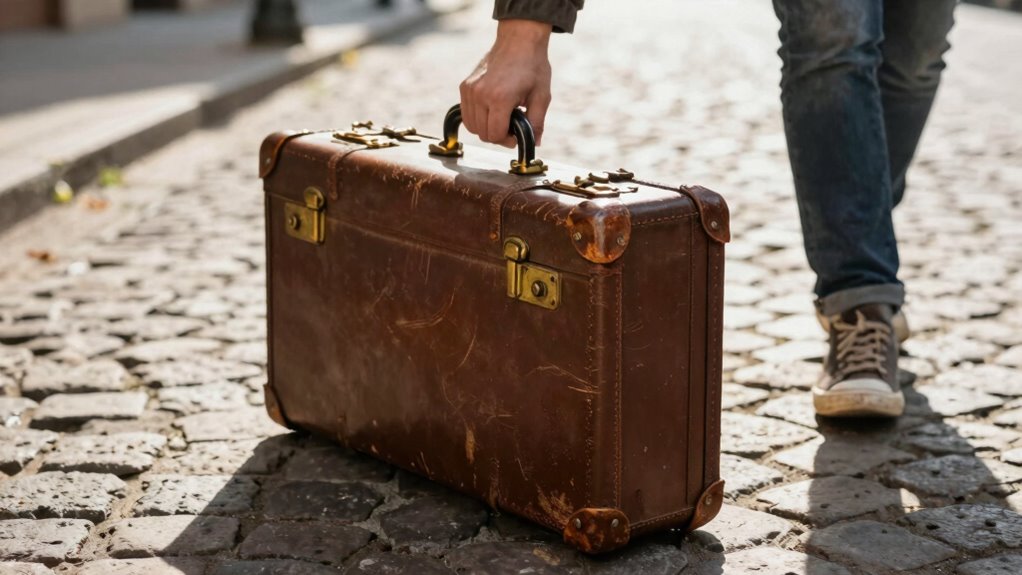
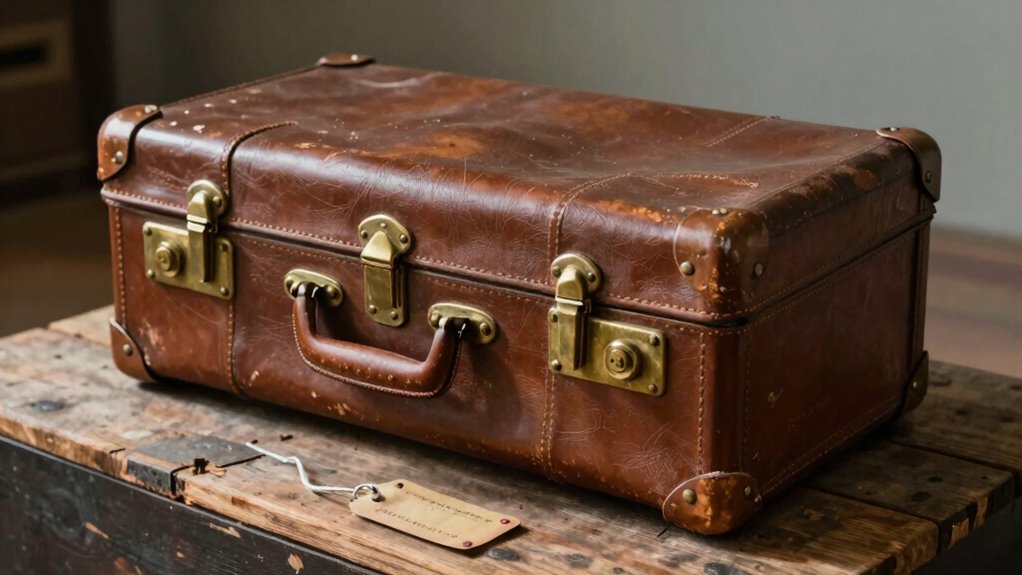
During transitional phases, your luggage often mirrors your internal state. A sturdy, well-worn suitcase might represent resilience, a symbol of the testament to the journeys you’ve already endured. Conversely, a sleek, new bag could symbolize hope and new beginnings. When you’re in flux, the choice of luggage can also reflect your aspirations or fears. You might cling to a bag that’s seen better days because it’s familiar, or you might upgrade your luggage as an act of optimism for what’s ahead. Either way, these choices are intertwined with your emotional landscape. Recognizing how personal belongings can influence your emotional well-being underscores the importance of intentional choices in what you carry.
Sentimental attachments to your luggage or its contents also intensify during unstable times. You may hesitate to part with certain items, fearing their loss would mean losing a piece of your story. Your luggage becomes a safe space for these cherished possessions, making it difficult to detach emotionally. As you navigate uncertainty, your luggage can serve as a reminder of who you are and what you’ve overcome. It becomes a symbol of endurance, resilience, and hope—a physical manifestation of your emotional journey. Being aware of how emotional attachments can deepen during these times helps you better understand your reactions and choices. Additionally, understanding the psychological significance of your belongings can aid in the process of emotional healing and adjustment.
In moments of upheaval, your luggage transforms from mere utility to a source of comfort and identity. It represents not just where you’ve been, but where you’re headed. It holds your memories, your fears, and your dreams—all bundled within its compartments. That’s why, during unstable shifts, luggage systems evolve into emotional tools that help you face the unknown with a bit more strength and clarity. Recognizing how biodiversity and conservation can play a role in these transitional spaces reminds us of the importance of nurturing stability both in our environment and within ourselves. Exploring the psychological impact of belongings can offer further insight into how we find stability through our possessions during times of change.
As an affiliate, we earn on qualifying purchases.
Frequently Asked Questions
How Do Luggage Systems Influence Personal Identity During Transitions?
Your luggage system influences your personal identity during shifts by acting as a reflection of your personality and values. Sentimental value gives your luggage emotional significance, making it more than just a container. It also allows you to express yourself through unique styles, colors, and designs. As you move through uncertain times, your luggage becomes a symbol of stability and personal expression, helping you maintain a sense of self amidst change.
Can Luggage Choices Reflect Emotional States Beyond Practicality?
Ever thought your luggage could mirror your emotional state? Absolutely. Beyond practicality, your choices often reflect sentimental value, reminding you of past journeys or loved ones. The aesthetic appeal also plays a role, conveying your mood or personality during uncertain times. When you pick a suitcase, you’re not just selecting storage; you’re expressing feelings, hopes, or nostalgia—making your luggage a tangible extension of your inner emotional landscape.
What Psychological Factors Make Luggage Emotionally Significant?
You’re drawn to luggage because of material symbolism, which connects the bag to your identity or past experiences. It becomes an emotional tool during unstable shifts, acting as a memory trigger that comforts or grounds you. The familiar weight, design, or scent can evoke feelings of security or nostalgia, helping you navigate uncertainty. This emotional attachment makes luggage more than just practical; it becomes a reflection of your inner journey.
How Do Cultural Differences Impact Emotional Attachment to Luggage?
Cultural differences shape your emotional attachment to luggage through symbolism and rituals. In some cultures, luggage represents more than travel; it symbolizes identity, status, or family heritage. Rituals around packing or gifting luggage deepen this bond, making it a meaningful keepsake. These cultural perspectives influence how you emotionally connect with your luggage, transforming it from mere baggage into a vessel of personal or cultural significance.
Do Luggage Systems Help in Coping With Loss or Change?
They say “what’s lost is found,” and luggage systems can indeed help you cope with loss or change. You attach sentimental value to your belongings, turning your luggage into memory triggers during tough times. By organizing and safeguarding these items, you create a sense of stability and comfort. Your luggage becomes more than just baggage — it’s a personal refuge that helps you navigate emotional shifts with resilience.
Conclusion
Your luggage becomes more than just a container; it transforms into a trusted companion, a silent witness to your journey, a reflection of your memories. It holds your hopes and fears, your past and future, quietly anchoring you amid life’s chaos. As you move through unstable shifts, your luggage offers a sense of stability, a constant presence. It’s not just about carrying belongings—it’s about carrying your story, your emotions, your resilience, all wrapped in a familiar, comforting embrace.
Fall yard work Picks
leaf blowers
As an affiliate, we earn on qualifying purchases.