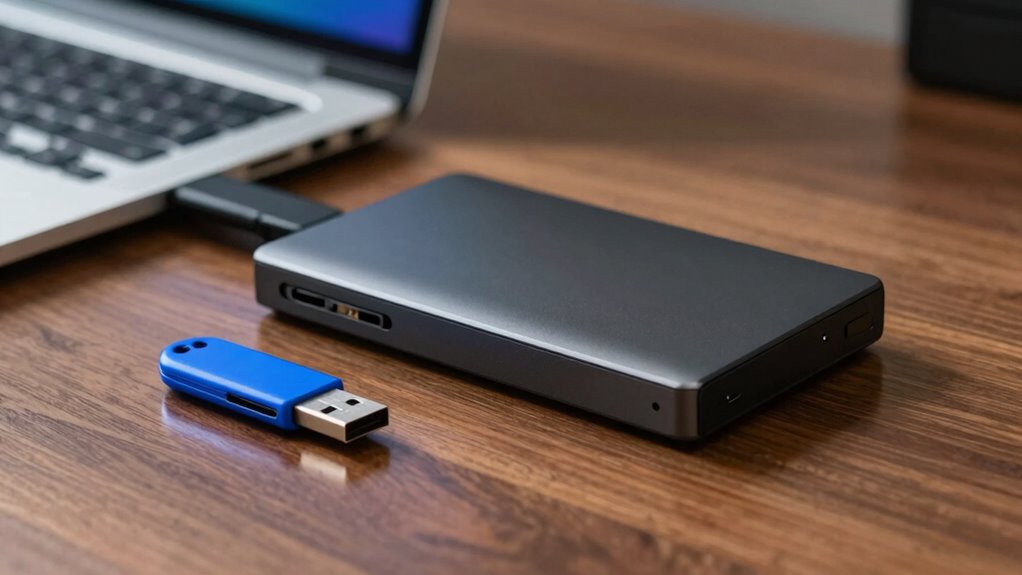

If you need large storage capacity for backups, media libraries, or recovery plans, an external hard drive is your best option, as it offers more space at a lower cost. For portable, secure transfers of sensitive files on the go, encrypted USBs are ideal thanks to their compact size and built-in encryption. Depending on your priorities for security, capacity, and mobility, choosing the right device matters—continue exploring to find out how to make the best match for your needs.
Key Takeaways
- Use external hard drives for large backups and extensive media libraries; encrypted USBs are better for secure, portable file transfer.
- Choose external drives for quick, reliable data recovery and large capacity; encrypted USBs protect sensitive data on the go.
- External hard drives are cost-effective for bulk storage; encrypted USBs prioritize security for small, confidential files.
- Encrypted USBs are ideal for secure, on-the-move data transfer; external drives support comprehensive backup strategies.
- Both can complement cloud backups; select based on capacity, security needs, and portability requirements.
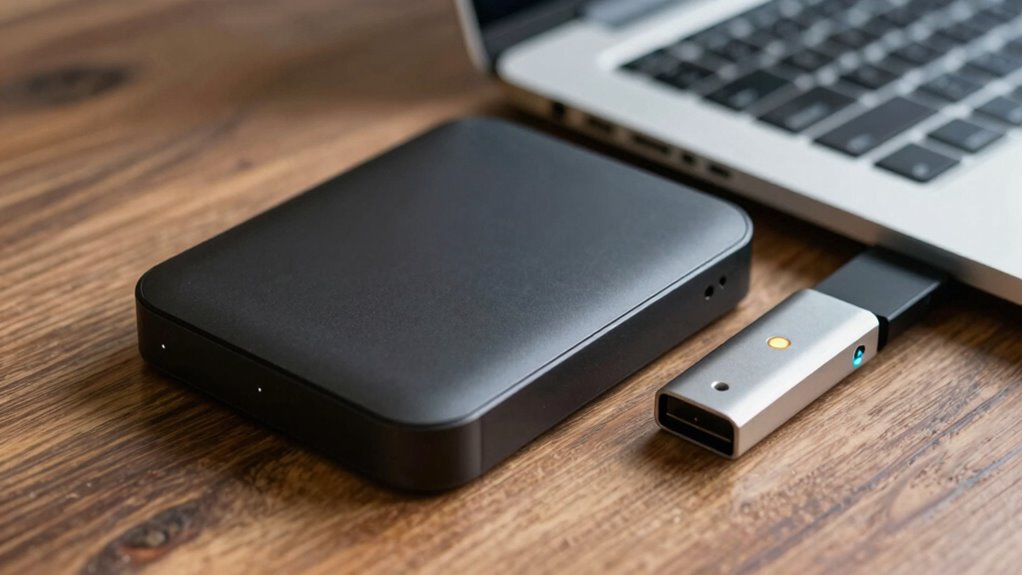
When choosing between an external hard drive and an encrypted USB, understanding their differences can help you make the best decision for your data storage needs. Both options serve as portable storage solutions, but they have distinct features that suit different purposes. An external hard drive typically offers larger storage capacity at a lower cost, making it ideal for backing up large files or creating a comprehensive cloud backup. It’s perfect for users who need to store extensive media libraries or backups, and can be an essential part of your data recovery plan if your primary devices fail. Because external hard drives can hold vast amounts of data, they’re often used in tandem with cloud backup services, providing an extra layer of security and accessibility. If your main concern is safeguarding data from local hardware failures, an external drive offers a reliable, physical backup option that complements cloud backup strategies and helps ensure quick data recovery when needed. Additionally, external hard drives can be formatted to support various file systems, enhancing compatibility with different operating systems. This versatility makes them suitable for users working across multiple platforms.
In contrast, encrypted USBs are designed for portability and security. Their compact size makes them easy to carry around, but their smaller storage capacity can be limiting if you need to store large files. The encryption feature is vital if you’re handling sensitive information, such as personal data or confidential business documents. By encrypting the USB, you prevent unauthorized access, even if the device gets lost or stolen. This makes encrypted USBs ideal for transferring sensitive files securely between locations or individuals. When considering data recovery, encrypted USBs require you to remember or securely store encryption keys; otherwise, access can be permanently lost. While both storage options can be part of your overall data management strategy, encrypted USBs are best suited for secure, on-the-go transfers rather than large-scale backups. Additionally, understanding the differences in data security features can help you choose the right device to protect your information effectively. To maximize data security, it’s also important to keep firmware and encryption software up to date. Moreover, understanding the benefits of encryption can help you better appreciate the security advantages of encrypted USBs over other storage options.

YOTUO 500GB External Hard Drive, Portable Storage Expansion HDD, USB 3.0 & USB-C for PC, Mac, Desktop, Laptop, Smartphone, PS4, Xbox One, Xbox 360, Office & Game, Black
- Versatile Storage for Gaming and Work: Stores PS4/Xbox One games and files
- Shock-Absorbing Silicone Sleeve: Protects against drops and bumps
- Plug & Play Compatibility: Works with Windows, Mac, Linux, consoles
As an affiliate, we earn on qualifying purchases.
As an affiliate, we earn on qualifying purchases.
Frequently Asked Questions
Which Device Offers Better Protection Against Physical Damage?
An external hard drive generally offers better protection against physical damage due to its durability testing and shock resistance. You’ll find that many external drives are built with sturdy casings and shock-absorbing features, making them more resilient if dropped or bumped. Encrypted USBs tend to be smaller and more delicate, so they’re more vulnerable to damage. For better protection, opt for an external hard drive with reinforced casing and high shock resistance.
Can Encrypted USB Drives Be Used for Cloud Backups?
Encrypted USB drives can be used for cloud backups, but there are limitations. You might face cloud backup limitations due to file size or storage capacity, and encryption challenges can complicate the process. You’ll need to decrypt files before uploading if they’re encrypted, which could expose sensitive data. Plus, managing encryption keys securely is essential. Overall, while possible, using encrypted USBs for cloud backups requires careful planning and security considerations.
Are There Compatibility Issues With Certain Operating Systems?
You might encounter compatibility issues with certain operating systems due to file system compatibility and device driver requirements. For example, some drives formatted with NTFS may not work seamlessly on macOS without additional software, while FAT32 is more universally compatible. Always check your device’s format and verify your OS supports it natively or has the necessary drivers installed. This helps prevent read/write issues across different platforms.
How Does Data Recovery Differ Between the Two Devices?
When data loss occurs, recovery methods differ between the devices. External hard drives often allow more straightforward recovery, especially if data is overwritten, using specialized software or professional services. Encrypted USBs can be trickier because encryption complicates recovery—if the password is lost, data might be unrecoverable. Always back up important files and keep recovery tools handy, regardless of which device you use.
What Are the Cost Differences Over Time?
Over time, external hard drives generally have higher initial costs but tend to be more cost-effective long-term due to larger storage capacities and durability. Encrypted USBs usually have lower upfront prices but might require frequent replacements or upgrades if they wear out or become outdated. Pricing trends show that as technology advances, USBs become cheaper, but long-term costs depend on your storage needs and device longevity.
Conclusion
Ultimately, choosing between an external hard drive and an encrypted USB depends on your needs. Think of the hard drive as a fortress, perfect for massive backups, while the encrypted USB is your secret agent, ideal for quick, secure transfers on the go. Both are powerful tools, but only one will fit your mission perfectly. Pick wisely, or your data could be caught in a digital tornado, spiraling into chaos!