When searching for the best 3D printer for custom blanks, the key factors are precision, versatility, and reliability. The Entina TINA2S stands out for its user-friendly features and auto-leveling, making it ideal for beginners and educational settings. The ELEGOO Centauri Carbon offers high-speed printing and advanced calibration for more demanding projects. However, tradeoffs include cost and complexity, especially if you’re new to 3D printing. Continue reading for a detailed breakdown of each option to find the best fit for your specific needs.
Key Takeaways
- Precision and auto-leveling features are critical for producing consistent custom blanks.
- Higher speed capabilities often come with increased complexity and higher price points.
- Open-source printers like the Ender 3 provide great flexibility but may require more setup and maintenance.
- Multi-color and multi-material options are available but tend to be more expensive and complex to operate.
- Ease of use and reliability often trade off against advanced features and speed in this category.



More Details on Our Top Picks
Entina TINA2S 3D Printers with WiFi Cloud Printing, Fully Assembled with Auto Leveling, Huge Library, DIY Mini 3D Printer for Beginners and Kids
The Entina TINA2S stands out for its ease of setup and user-friendly features, making it ideal for newcomers to 3D printing. Unlike the Creality Ender 3, which requires assembly and calibration, TINA2S arrives fully assembled, letting beginners start printing within an hour. Its automatic leveling system and flexible build plate minimize common issues like warping, and the WiFi connectivity enables effortless file transfer, a step ahead of traditional USB or SD card methods. While the ELEGOO Centauri Carbon offers high speeds and advanced material options, it’s better suited for experienced makers. The tradeoff here is that TINA2S sacrifices some speed and material versatility for simplicity and safety, especially suitable for kids and educational environments.
Pros:- Fully assembled and ready to use out of the box
- Automatic bed leveling reduces setup time and errors
- WiFi app control with a large model library supports easy operation
- Low noise operation and safety features for home and classroom use
Cons:- Limited build volume (3.9 x 4.7 x 3.9 inches) may restrict larger projects
- Print resolution of 0.04 mm is sufficient but not as high as more advanced models
Best for: Beginners, families, and educators seeking an easy-to-use, ready-to-print device
Not ideal for: Experienced hobbyists or those needing large build volumes and advanced material support
- Print Size:3.9 x 4.7 x 3.9 inches
- Auto Leveling:Yes
- Connectivity:WiFi, USB, TF card
- Print Resolution:0.04 mm
- Speed:Up to 200 mm/s
- Build Plate:Removable spring steel
Bottom line: This printer makes the most sense for beginners or educational use where simplicity outweighs speed or size.
ELEGOO Centauri Carbon 3D Printer, CoreXY 500mm/s High Speed Printing with Auto Calibration, 320°C Nozzle and Built-in Camera, Ready to Print Out of the Box, 256x256x256mm Printing Size
The ELEGOO Centauri Carbon excels in rapid printing with speeds up to 500 mm/s and stable, high-quality results thanks to its CoreXY structure, which surpasses the slower, more beginner-oriented Entina TINA2S. Its fully assembled design and auto calibration make it suitable for makers who want quick turnaround on detailed parts, especially with advanced filaments like carbon fiber reinforced materials. While the Creality Ender 3 offers a larger build volume and open-source flexibility, Centauri Carbon’s enclosed chamber and high-temp hotend support specialized, durable materials. The main tradeoff is that it’s more expensive and geared toward experienced users, with a smaller build size and higher complexity.
Pros:- Pre-calibrated and fully assembled for immediate use
- Achieves speeds up to 500 mm/s, ideal for rapid prototyping
- Enclosed chamber supports high-temp materials like carbon fiber
- Built-in camera and remote monitoring streamline workflow
Cons:- Smaller build volume (256x256x256 mm) compared to the Ender 3
- Higher price point may be prohibitive for casual users
- Enclosed design limits easy access during printing
Best for: Experienced hobbyists and professionals needing fast, precise prints with demanding materials
Not ideal for: Beginners or educational users on tight budgets or requiring large projects
- Build Volume:256 x 256 x 256 mm
- Hotend Temperature:320°C
- Speed:Up to 500 mm/s
- Auto Calibration:Yes
- Connectivity:WiFi, USB
- Camera:Built-in
Bottom line: This model makes the most sense for advanced users prioritizing speed and material versatility over size.
AOSEED X-MAKER JOY AI+ 3D Printer for Kids with Auto Leveling, Up to 400mm/s Speed and 1500+ Models
The AOSEED X-MAKER JOY AI+ is tailored for children and schools, offering voice and image prompts for easy printing, which sets it apart from the more technical Ender 3. Its auto-leveling and enclosed design make it safer and more approachable for young users, although it sacrifices some of the open access and larger build size that hobbyists may prefer. Speeding up to 400 mm/s and preloaded with over 1,500 models, it supports rapid, creative projects without the need for advanced design skills, unlike the Centauri Carbon which targets high-speed, precision parts. The tradeoff here is that it’s less flexible in material options and visibility during printing, but it excels in fostering creativity and educational engagement.
Pros:- AI-powered voice and image prompts for easy project initiation
- Enclosed, safe design suitable for kids
- Fast print speeds up to 400 mm/s
- Includes 8 PLA filaments and extensive model library
Cons:- Limited size and open access may restrict complex projects
- Material options mainly confined to PLA
- Enclosed design can obscure print progress
Best for: Parents, educators, and children starting out in 3D printing and design
Not ideal for: Experienced makers or those needing large-scale or high-precision models
- Speed:Up to 400 mm/s
- Auto Leveling:Yes
- Included Filaments:8 PLA
- Model Library:Over 1,500
- Build Plate:Magnetic
- Compatibility:iOS/Android/Windows
Bottom line: This printer is perfect for young creators and educators focusing on safe, quick, and fun 3D printing experiences.
FLASHFORGE AD5M 3D Printer Fully Auto Calibration Print with 1-Click Max 600mm/s Speed, All-Metal CoreXY Structure Precise Printing, Easy-Maintenance Quick-Swap Nozzle, Print Size 220x220x220mm
The FLASHFORGE AD5M delivers rapid, precise printing with speeds up to 600 mm/s and a durable all-metal CoreXY frame, making it a strong choice for users who need high throughput and reliability. Compared to the Entina TINA2S, which targets beginners, the AD5M offers more advanced features like quick nozzle swaps and remote management, catering to experienced hobbyists and professionals. Its automatic calibration and resume function reduce downtime and errors, although its smaller build size (220x220x220mm) limits large project capabilities. The tradeoff is a higher complexity and cost, but it pays off for those seeking speed and precision in a compact form.
Pros:- Auto calibration and resume printing enhance reliability
- Fast speeds up to 600 mm/s for rapid prototyping
- All-metal CoreXY structure provides stability and precision
- Quick-nozzle swaps simplify maintenance
Cons:- Limited build volume (220x220x220 mm)
- More complex setup and operation compared to entry-level models
- Higher price point may not suit casual users
Best for: Professional hobbyists, small-scale prototyping, and advanced users needing fast, reliable prints
Not ideal for: Beginners or those requiring large build volumes or simple setup
- Build Volume:220 x 220 x 220 mm
- Max Speed:600 mm/s
- Nozzle Options:0.25/0.4/0.6/0.8 mm
- Auto Calibration:Yes
- Resume Function:Yes
- Frame:All-metal CoreXY
Bottom line: This printer is ideal for experienced users needing speed, precision, and reliable operation in a compact size.
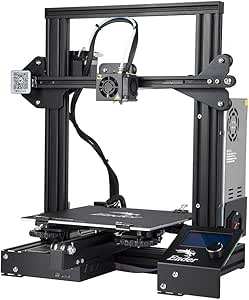
Official Creality Ender 3 3D Printer Fully Open Source with Resume Printing Function DIY Printers Build Volulme 8.66×8.66×9.84 inch
The Creality Ender 3 remains a favorite for its affordability and open-source flexibility, making it an excellent choice for those just starting out or wanting to customize their setup. While it requires assembly and manual bed leveling—features that the Entina TINA2S and AOSEED X-MAKER avoid—it offers a large build volume of 8.66×8.66×9.84 inches, accommodating bigger custom blanks. Its straightforward operation and widely available community support compensate for the lack of automation, but users should be prepared for some calibration and maintenance. Unlike the FLASHFORGE AD5M, which emphasizes speed and precision, Ender 3 prioritizes affordability and open-source tinkering at the expense of speed and convenience.
Pros:- Affordable and widely supported
- Large build volume suitable for bigger projects
- Open-source firmware allows extensive customization
- Supports resume printing after power loss
Cons:- Requires assembly and manual calibration
- Lower print resolution compared to premium models
- Manual bed leveling can be time-consuming
Best for: Budget-conscious beginners and makers wanting a customizable, open-source platform
Not ideal for: Users needing high-speed production or minimal assembly effort
- Build Volume:8.66 x 8.66 x 9.84 inches
- Assembly:Partial, DIY required
- Open Source:Yes
- Resume Print:Yes
- Supported Filaments:PLA, ABS, TPU
- Power Supply:Safe, tested
Bottom line: This printer offers excellent value for beginners willing to invest some time in setup and calibration.
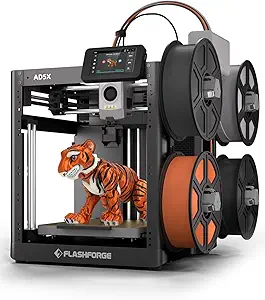
FLASHFORGE AD5X Multi-Color 3D Printer, CoreXY 600mm/s High-Speed, 1-Click Auto Leveling, 300°C Direct Drive Extruder, 220x220x220mm Build Volume, Ideal for Precision and Efficiency
The FLASHFORGE AD5X stands out for its remarkable combination of high-speed printing and vibrant multi-color output, making it ideal for artists and rapid prototyping. Unlike the FlashForge Adventurer 5M, which emphasizes ease of use with automatic bed leveling, the AD5X offers speeds up to 600mm/s, significantly reducing production times for complex, multi-colored models. Its support for up to four colors simultaneously opens creative options that other printers, like the Adventurer 5M, cannot match. The tradeoff, however, is increased complexity; this model requires more setup and a steeper learning curve. While its extruder reaches 300°C, enabling filament versatility, it demands a more attentive user to manage multi-color workflows effectively. This pick makes the most sense for experienced users needing rapid, colorful prototypes or multi-color custom blanks, but less so for beginners seeking straightforward operation.
Pros:- Supports up to 4 colors simultaneously for vibrant, multi-layered prints
- Ultra-fast printing speeds up to 600mm/s boost productivity
- 1-Click auto leveling simplifies bed calibration for consistent results
- Versatile nozzle options for different detail and speed needs
Cons:- Steeper learning curve due to advanced features and multi-color workflow
- Requires more maintenance and filament management for multi-color printing
Best for: Professionals and hobbyists who prioritize multi-color detailed prints and rapid turnaround for custom blanks
Not ideal for: Beginners or those looking for a simple, plug-and-play 3D printer without multi-color or ultra-fast capabilities
- Maximum Print Speed:600mm/s
- Build Volume:220x220x220mm
- Extruder Temperature:300°C
- Nozzle Sizes Supported:0.25mm to 0.8mm
- Auto Leveling:Yes, 1-Click
- Connectivity:Wi-Fi, App Control
Bottom line: This model is best suited for experienced users needing high-speed, multi-color custom blanks with complex detailing.
FlashForge Adventurer 5M 3D Printer with Auto Leveling and High-Speed Printing
The FlashForge Adventurer 5M offers a compelling blend of high-speed printing and hassle-free operation, making it ideal for users who want reliable results without extensive setup. Its automatic bed leveling ensures consistent first layers, unlike the FLASHFORGE AD5X, which, while faster, requires more skill to manage multi-color workflows. The 5M’s 600mm/s travel speed and 280°C extruder make it suitable for rapid prototyping, but its focus on simplicity means it lacks the multi-color features of the AD5X. The quick nozzle change capability in just three seconds enhances flexibility during print jobs, but the printer’s higher price point and the need for regular maintenance might be a deterrent for casual users. This printer is ideal for small businesses and hobbyists prioritizing speed and consistency over multi-color complexity.
Pros:- Automatic bed leveling ensures consistent print starts
- High-speed printing at 600mm/s accelerates production
- Fast 3-second nozzle changes support quick workflow adjustments
- Dual-fan nozzles produce smooth, high-quality layers
Cons:- Learning curve can be steep for users unfamiliar with advanced features
- Requires regular maintenance, especially nozzle cleaning and calibration
- Higher cost compared to entry-level models without advanced features
Best for: Hobbyists and small prototyping teams seeking fast, reliable prints with minimal fuss
Not ideal for: Users requiring multi-color or intricate, detailed color blending in their custom blanks
- Max Print Speed:600mm/s
- Build Volume:220x220x220mm
- Extruder Temperature:Up to 280°C
- Nozzle Change Time:3 seconds
- Structure Type:CoreXY All Metal
- Connectivity:Wi-Fi, Mobile App
Bottom line: This printer suits users who need fast, dependable printing with minimal setup, but it’s less suitable for those chasing complex multi-color designs.
How We Picked
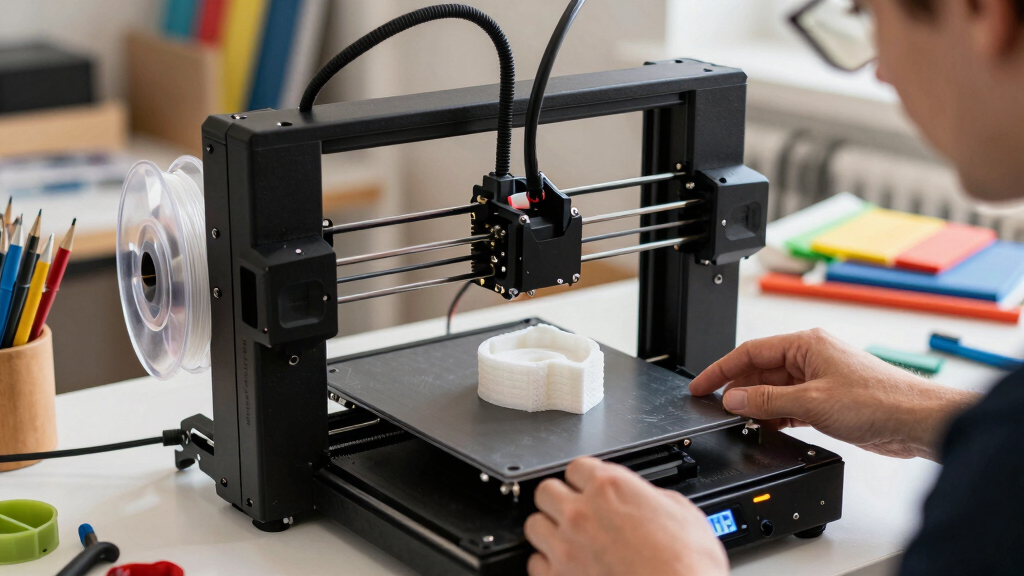
To determine the best 3D printers for custom blanks, I focused on performance, build quality, ease of use, and value. I evaluated each model’s ability to produce precise, consistent results crucial for custom blanks, alongside factors like setup complexity, maintenance needs, and feature set. The ranking reflects a balance between affordability and advanced capabilities, ensuring options cater to different levels of expertise and project demands. Products with reliable auto-calibration, high-quality components, and user-friendly interfaces earned higher marks, while those with tradeoffs in speed or price were ranked accordingly.Factors to Consider When Choosing Best 3d Printer For Custom Blanks
Choosing the right 3D printer for custom blanks involves several key considerations. Beyond basic features, understanding what impacts print quality, ease of use, and long-term value can prevent costly mistakes. The ideal printer balances precision with affordability, depending on your specific project needs and experience level. Here are the main factors to keep in mind:Print Quality and Precision
For custom blanks, the ability to produce accurate, detailed prints is essential. Look for printers with high-resolution capabilities, stable frames, and auto-leveling features to ensure consistent results. Lower-tier models might save money upfront but often struggle with accuracy, leading to wasted material and time. Investing in a well-built machine with precise extrusion and calibration features pays off in the long run, especially for intricate or functional blanks.
Build Volume and Flexibility
The size of the printable area determines what sizes of blanks you can produce. Larger volumes offer more versatility but usually come at a higher cost and complexity. Consider your typical project size and future needs—overestimating can lead to unnecessary expense, while underestimating may restrict your creativity. Think about whether you prefer a compact model for small projects or a larger one if your work involves bigger blanks.
Ease of Use and Setup
Ease of operation is especially important if you’re new to 3D printing. Features like auto-calibration, touchscreen controls, and straightforward assembly can significantly reduce learning curves and setup time. Conversely, more complex machines might require technical skills and ongoing maintenance, which can be a challenge for beginners. Prioritize user-friendly interfaces and solid customer support to streamline your experience.
Material Compatibility and Versatility
The types of filament or resin a printer can handle directly influence the range of blanks you can produce. Some printers excel with specific materials like PETG or ABS, which may be necessary depending on your project. Multi-material or multi-color capabilities add flexibility but often come with increased costs and complexity. Matching your material needs with the printer’s capabilities prevents frustration and ensures quality results.
Price and Long-Term Value
While budget models may seem attractive initially, they often lack durability or advanced features needed for consistent blank production. Higher-priced options typically offer better build quality, precision, and support, translating into more reliable results over time. Balance your budget with your project demands—sometimes paying more upfront saves costs and trouble later. Consider long-term expenses like filament, maintenance, and potential upgrades when evaluating options.
Frequently Asked Questions
Can a beginner effectively use high-speed 3D printers for custom blanks?
High-speed 3D printers can be used by beginners, but they often require a steeper learning curve due to their complexity and calibration needs. Many models include features like auto-leveling and touchscreen controls that simplify operation, making them accessible even for newcomers. However, understanding the tradeoff between speed and precision is important; very high speeds may compromise detail and accuracy initially. With patience and some guidance, beginners can successfully produce quality blanks on these fast machines, especially if they choose models designed with user-friendliness in mind.
Is a larger build volume necessary for custom blanks?
Not necessarily. The need for a larger build volume depends on the size of the blanks you plan to produce. Smaller volumes can be sufficient for most personal or small-scale projects, reducing cost and complexity. However, if you intend to make larger or multiple blanks simultaneously, a bigger build space becomes valuable. Overestimating your needs can lead to unnecessary expense, so consider your typical project sizes before selecting a model with a larger or smaller build volume.
How important is auto-calibration for producing consistent blanks?
Auto-calibration is highly beneficial for maintaining consistent quality in your blanks, as it ensures the print bed is properly leveled without manual intervention. This feature reduces setup time and minimizes errors caused by uneven layers or misalignment. For those producing multiple blanks or working on detailed projects, auto-calibration boosts reliability and saves time. While manual calibration can suffice, investing in a machine with automated features offers greater peace of mind and more consistent results, especially for complex or high-precision work.
Should I prioritize multi-material capability for custom blanks?
Multi-material capability adds versatility, allowing you to experiment with different filaments or resins for varied blank properties. If your projects require different finishes, colors, or functional materials, this feature can be a game-changer. However, multi-material setups tend to be more expensive and complex to operate, often requiring additional hardware and calibration. For most beginners or hobbyists focused on standard blanks, a single-material printer with good quality may be more straightforward and cost-effective. Assess your specific project needs before choosing a multi-material capable model.
How do I determine if a 3D printer is worth the investment for custom blanks?
Evaluating whether a 3D printer is worth the cost involves considering your project scale, desired quality, and budget. Look for machines with features like auto-leveling, high resolution, and reliable extrusion, which directly impact the quality of your blanks. Consider the long-term costs of maintenance, filament, and potential upgrades. If you plan to produce blanks regularly or require high precision, investing in a more capable, durable model often pays off. Conversely, for occasional or hobbyist use, more affordable options with essential features may suffice, providing good value without overextending your budget.
Conclusion
The best overall choice for most users is the Entina TINA2S for its balance of ease of use, auto-leveling, and reliability. If you prioritize speed and advanced features, the FLASHFORGE AD5X offers impressive multi-color and high-speed capabilities, suitable for experienced makers. Beginners seeking simplicity should consider the FlashForge Adventurer 5M, which combines auto-leveling with straightforward operation. For those focused on cost-efficiency without sacrificing quality, the Creality Ender 3 remains a versatile, open-source option. Ultimately, your choice depends on your project size, experience, and budget, but these selections cover the key needs for producing high-quality custom blanks in 2026.