TL;DR

Get business pricing on tools and workshop supplies
- Business-only prices and quantity discounts
- Tax-exempt purchasing
- Multiple users, one account, clear invoices
An Ideal Home report recommends six habits for drying laundry indoors: remove extra water with a suitable spin, leave space between garments, use a heated airer if useful, run a dehumidifier, position the rack for airflow and ventilate the room. These are practical recommendations, not a guarantee against damp or mould; results depend on the home, weather, load and equipment.
Ideal Home has outlined six ways to dry laundry indoors while limiting moisture build-up, including using an extra suitable spin cycle, spacing garments on the rack, improving airflow and removing moisture with a dehumidifier. The advice matters during cold or wet weather, when outdoor drying may not be practical and wet clothes release water into the home as they dry.
The report recommends starting with the washing machine: run an additional spin cycle before hanging clothes, provided the selected spin speed is suitable for the items. Removing more water before drying can shorten the time clothes stay wet and reduce the amount of moisture they release indoors. The article highlights heavier items such as towels, jeans and bedding as garments that may retain substantial water.
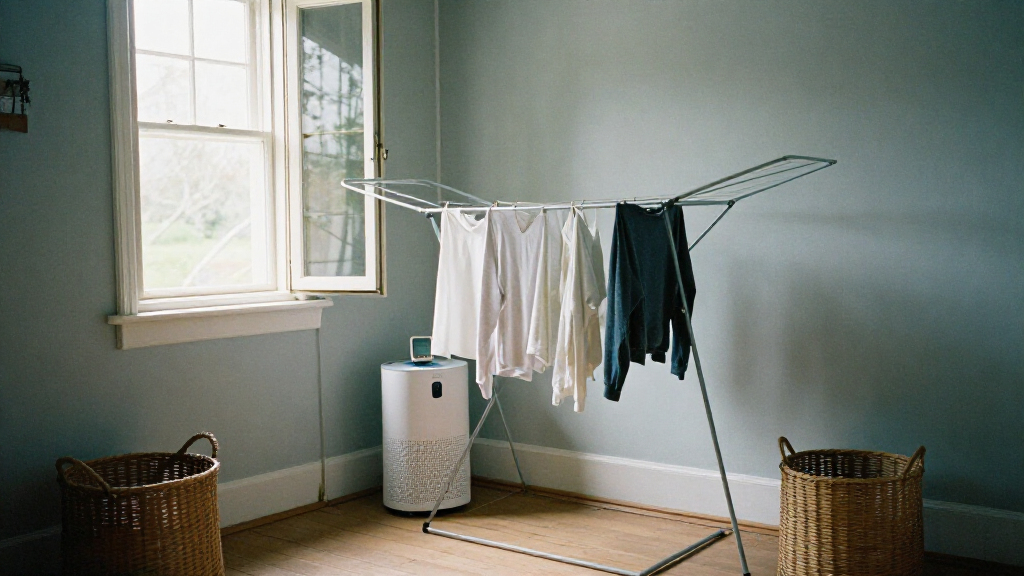
On the rack, avoid overcrowding clothes. Lauren Roelofs, identified in the report as a laundry expert at Brabantia, says that space between garments helps air circulate and clothes dry more evenly. The article also advises spreading out sleeves, opening shirts and avoiding folded-over trouser legs. Roelofs recommends turning heavy items partway through drying to help prevent damp patches.
The remaining recommendations focus on the room and equipment. A heated clothes airer can help dry clothes when outdoor drying is unavailable; the article says a compatible cover may retain warmth and reduce drying time, though the result depends on the load and conditions. Catrin Parry, Lakeland’s buying lead, says a dehumidifier can remove excess moisture from the air while laundry dries. The report also advises placing the rack away from walls and ventilating the room. It does not provide measured comparisons for the six methods or quantify their effects on mould risk.
Keeping Indoor Laundry Moisture Lower
Drying clothes inside sends moisture from the fabric into the surrounding air. If that moisture is not removed or dispersed, it can contribute to condensation indoors, particularly when ventilation is limited. The recommendations address different parts of that problem: a spin cycle leaves less water in clothes, spacing and positioning support airflow, and ventilation or a dehumidifier can help manage moisture in the room.
The guidance is relevant to households without outdoor drying space or those who cannot use a tumble dryer. It also distinguishes between drying equipment and moisture control: a heated airer warms clothes, but, as the report explains, it does not itself remove water released into the room. Readers may need to combine approaches according to the space and conditions rather than rely on one product or habit.
Popular right now

Breville Bambino Espresso Machine, Brushed Stainless Steel (BES450BSS)

De'Longhi Magnifica Evo Fully Automatic Espresso Machine with Manual Milk Frother, Silver

Ninja Foodi Smart 6-in-1 Indoor Grill and Air Fryer, 4 Qt, FG551
As an affiliate, we earn on qualifying purchases.
The Six Indoor Drying Recommendations
The source is a household-advice report from Ideal Home, framed around colder, wetter weather and the increased use of clothes airers indoors. It presents six recommendations: add a suitable spin; leave space between garments; consider a heated airer; pair the airer with a dehumidifier; choose a position that allows airflow; and ventilate the room.
The report includes advice attributed to Brabantia laundry expert Lauren Roelofs and Lakeland buying lead Catrin Parry. It also mentions specific airers and dehumidifiers for readers considering purchases. Those product examples are shopping recommendations in the article, not independent evidence that a particular product is necessary or that it will prevent damp in every home.
“One of the simplest ways to speed things up is to avoid overcrowding your drying rack. Leaving space between garments allows air to circulate, helping clothes dry more evenly.”
— Lauren Roelofs, laundry expert at Brabantia, as quoted by Ideal Home
What the Advice Cannot Establish
The report does not give a publication date in the supplied source text, nor does it cite a controlled test comparing the six methods. It provides no quantified estimate of how much each step changes drying time, indoor humidity or mould risk. Parry’s comment that a cover can cut drying times by a couple of hours is explicitly conditional on the load and conditions.
How well the advice works will vary with the amount of laundry, room size, outdoor conditions, ventilation and the performance of any equipment. The report does not assess the energy cost of a heated airer or dehumidifier, set out a ventilation plan for different weather, or claim that these steps eliminate damp or mould. It also does not address what to do if a home already has persistent condensation or visible mould.
Putting the Guidance Into Practice
The report sets out practical steps rather than announcing a policy or product launch, so it names no follow-up milestone. Households can apply the no-cost measures first: use a suitable spin setting, leave gaps between clothes, spread garments out, turn heavier items and keep the rack clear of walls. Ventilation and a dehumidifier may help manage moisture, depending on the home and conditions.
Anyone considering powered equipment can compare running costs and product specifications for their own needs; the article’s product listings are examples rather than a requirement. If moisture or mould remains a concern, the source offers no diagnosis or remedy. The specific cause and appropriate response in an individual home remain outside the report’s advice.
Key Questions
What are the six ways to dry laundry indoors with less moisture?
The report advises using a suitable extra spin, spacing clothes on the rack, considering a heated airer, using a dehumidifier, positioning the rack for airflow and ventilating the room.
Does a heated clothes airer remove moisture from the room?
No. The Ideal Home report says a heated airer helps dry clothes but does not remove the moisture released into the room. It recommends a dehumidifier as a separate way to remove excess moisture from the air.
How should clothes be arranged on an indoor airer?
Leave gaps between garments, spread sleeves, open shirts and avoid folding trouser legs over each other. The report also relays advice to turn heavier items partway through drying.
Can these steps guarantee there will be no damp or mould?
No such guarantee is made in the source. The recommendations aim to limit moisture build-up, but the report gives no measured mould-risk reduction, and results depend on the home and drying conditions.
Source: idealhome.co.uk