TL;DR

Get business pricing on tools and workshop supplies
- Business-only prices and quantity discounts
- Tax-exempt purchasing
- Multiple users, one account, clear invoices
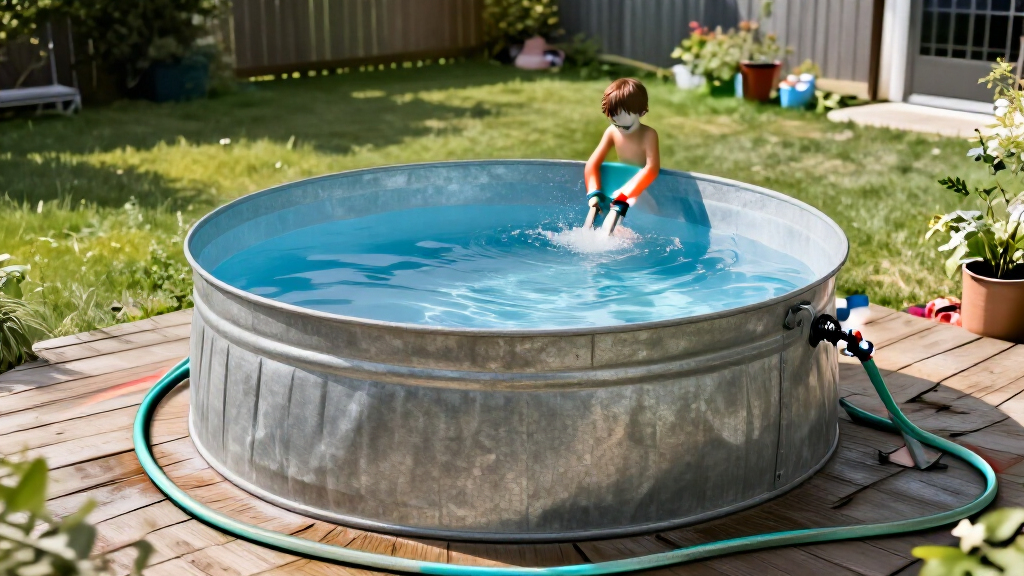
Garrett Brown, a real estate investor who posts DIY videos on YouTube, showed how he converted a 700-gallon galvanized stock tank sold at Tractor Supply into an above-ground swimming pool. Hunker reports the project cost less than $800, including a filter pump, but the total can vary, and the setup requires a level base, sealed fittings and properly maintained water.
Real estate investor Garrett Brown has demonstrated a backyard pool made from a 700-gallon galvanized stock tank sold at Tractor Supply, adding a filter pump through openings drilled into the tank. Hunker reports the build cost less than $800, offering a compact alternative for homeowners who want a pool without installing a conventional in-ground one.
Brown’s video, posted on his YouTube channel, shows him adapting an 8-foot round tank for use as a shallow pool. The report puts the tank’s price at about $600 and describes an Intex Krystal Clear filter pump priced at about $64. Those figures are examples from the report, not a guaranteed current price or a complete estimate for every build; tools, sealant, water treatment and any surrounding features can add to the cost.
To connect the pump, Brown used a hole-saw attachment to cut two openings in the tank wall for the inlet and outlet fittings. The outlet opening should sit higher than the inlet, according to the project description. He fitted the pump hardware and sealed the openings with plumber’s putty. Hunker says a waterproof sealant intended for structural or marine use is another option, and recommends checking for leaks before filling the tank.
The installation also needs a level, stable surface. Brown initially had to move the tank from his yard to a patio, illustrating a practical challenge: a filled stock tank is heavy, and an uneven base can complicate setup. The finished project included steps and a wooden bench. The report also suggests placing pump hoses over the rim instead of drilling the tank; that approach may be less polished but avoids cutting openings in the metal.
A Lower-Cost Pool With Trade-Offs
The project gives readers a concrete example of how a stock tank and filter pump can serve as a small backyard pool, without the scale of a traditional pool installation. Its appeal is the combination of a relatively simple vessel, modest footprint and scope for customization. Brown’s build also shows that the tank can be adapted to circulate water rather than used as a simple container.
But the reported price should not be read as a universal all-in cost. The under-$800 figure comes from Hunker’s account of this particular build, and prices and required materials can differ. Buyers also need to account for site preparation, water treatment and upkeep. A metal tank is not automatically a ready-to-use swimming pool: the pump connections must be watertight, and the water needs appropriate maintenance.
The project may be most relevant to people seeking a shallow, above-ground cooling option and willing to handle setup and routine care. It is not presented as a substitute for every feature of a conventional pool, nor does the report provide a long-term assessment of durability, operating costs or performance.
galvanized stock tank for swimming pool
As an affiliate, we earn on qualifying purchases.
As an affiliate, we earn on qualifying purchases.
How Brown Adapted the Stock Tank
Stock tanks are made to hold water for livestock, and their round, galvanized-metal construction can also suit a compact backyard pool. Brown’s build repurposes that container by adding a pump and filter, rather than relying on the tank alone. Hunker describes the tank as durable enough to last for a few years, but does not provide testing or a longer-term report to support a specific lifespan.
The key steps in the video report are choosing a level location, cutting openings for the pump fittings, sealing them and checking the joints before filling. After the pump is connected, the water still needs treatment. Brown used a floating dispenser with chlorine tablets, according to Hunker. The report also discusses hydrogen peroxide as an alternative, but says the water should be tested and the amount adjusted as needed. Readers should follow product directions and use a suitable water-testing method rather than assume a particular chemical level is safe.
Brown customized the area with a bench and steps. Other options mentioned by Hunker include painting or covering the tank’s exterior, fitting a stock-tank liner, or adding pool noodles over the rim for cushioning. These are possible modifications, not features required for the pump to work.
“How can you build a pool for cheap? You have to become a cowboy apparently.”
— Garrett Brown, in a social video caption
Costs, Lifespan and Water Care
The report does not state when Brown’s video was published, provide receipts for every project item or explain exactly how the under-$800 total was calculated. Retail prices can change, and the final cost may depend on the pump, fittings, sealant, tools, site preparation and finishing choices.
There is no independent assessment of how long this specific tank will last as a pool, whether the drilled fittings remained leak-free over time, or how well the pump performs under regular use. The report’s description of a lifespan of a few years is an expectation, not a documented result. It also does not give a complete water-treatment schedule or tested chemical measurements. Anyone considering the build would need to establish appropriate maintenance for the pool’s water and materials.
Check the Site Before Filling
For anyone following the project, the next steps are to confirm that the tank can sit on a level, stable surface, select compatible pump fittings and sealant, and test the connections for leaks before filling. The tank should be moved into its final position while empty; Brown’s experience shows that relocating it after setup can add work.
After filling, owners would need to run and maintain the filter and test the water according to the directions for the chosen treatment products. Hunker does not report a planned follow-up from Brown or provide later results on cost, durability or performance, so those outcomes remain unknown.
Key Questions
What did Brown use to make the pool?
He used a 700-gallon, 8-foot galvanized stock tank from Tractor Supply and added an above-ground pool filter pump connected through fittings in the tank wall.
How much did the project cost?
Hunker reports a total of less than $800. It cites a tank price of about $600 and a pump price of about $64, but does not provide a full itemized budget or confirm that those prices remain current.
Does the tank need to be modified?
Brown drilled two openings for the pump connections and sealed the fittings. The report also describes routing hoses over the rim as an alternative that avoids drilling, though it may look less finished.
What should be checked before filling the tank?
Use a level, stable location, confirm the fittings are secure, and test the seals for leaks. The source also recommends smoothing cut metal edges and removing metal shavings after drilling.
How is the pool water treated?
Hunker says Brown used a floating dispenser with chlorine tablets. It also discusses hydrogen peroxide as another option, while advising users to test the water and adjust treatment as needed. The report does not provide a complete maintenance schedule.
Source: rss
Fall yard work Picks
leaf blowers
As an affiliate, we earn on qualifying purchases.