
TL;DR
Apartment Therapy style editor Emma Dangel describes covering a frame’s backing with fabric to create a textured mat for cards and photos. She says the project took about five minutes and cost nothing because she already had fabric and frames; she cautions that thick material may make the frame difficult to close.
Apartment Therapy style editor Emma Dangel has shared a do-it-yourself way to refresh a float frame: cut fabric to fit the frame’s backing, secure it with double-sided tape, and arrange cards or photos over it. Dangel says the project took about five minutes and cost her nothing because she already had the materials, offering a simple display option for readers who want to put keepsakes on show.

Get business pricing on tools and workshop supplies
- Business-only prices and quantity discounts
- Tax-exempt purchasing
- Multiple users, one account, clear invoices
Dangel describes using the method to improve two large float frames filled with paper ephemera, including written notes, birthday cards, gift tags, magazines and movie tickets. She wanted to keep the items visible but felt the existing displays looked “cheap” and like a scrappy collage. A fabric layer gave the arrangement a more finished appearance while adding texture behind the keepsakes.
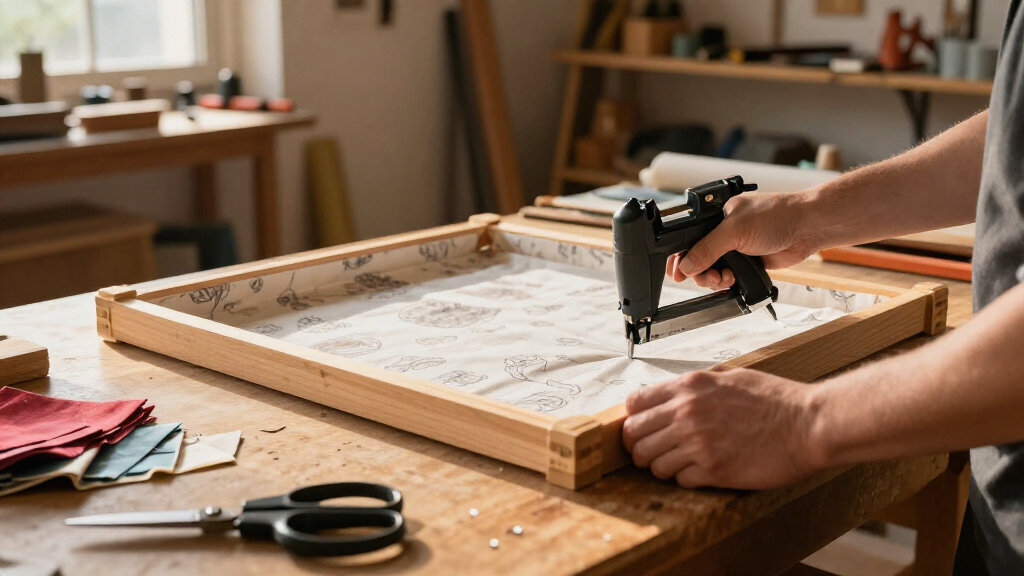
For her project, Dangel used red chenille left over from reupholstering a bedroom bench. She placed a sheet of plastic from the frame over the fabric, cut around it, and attached the fabric to the frame’s backing sheet with double-sided tape. She arranged the cards on top, then put the second plastic sheet over them and closed the frame. Her cards sat off-center in the lower-right corner, leaving more of the fabric visible.
Dangel says the chenille worked, but advises choosing fabric that is not too thick because extra bulk could make it difficult to secure the backing. She identifies linen or cotton as thinner options that would suit the project. The exact time and cost are her account of her own DIY, not a tested estimate for every frame or fabric.
A fabric refresh for keepsakes inside a float frame
Apartment Therapy style editor Emma Dangel added fabric behind cards and photos to give sentimental paper keepsakes a more coordinated display.
How to make the fabric mat
Follow Dangel’s method to add a textured backdrop while keeping keepsakes visible.
Use the frame’s plastic sheet as a guide to cut fabric for the backing.
Attach it to the backing with double-sided tape.
Place cards or photos on top, add the second plastic sheet, and close the frame.
Choose fabric that fits
Added bulk can make the backing difficult to secure.
| Fabric | Dangel’s experience | Fit guidance |
|---|---|---|
| Red chenille | Worked in her frames | Thicker material may make closing difficult |
| Linen or cotton | Suggested thinner options | May suit the project better |
A more intentional display
Dangel wanted sentimental paper items to feel more like wall art.
- Written notes and birthday cards
- Gift tags, magazines, and movie tickets
- Adds texture behind the paper items
- Can coordinate with textiles already in a room
Before you assemble
The reported time and cost describe Dangel’s project; your frame and supplies may differ.
- Check that your chosen fabric fits the frame’s backing.
- Test whether the frame closes securely before arranging keepsakes.
- Costs may apply if you need to buy fabric, tape, or frames.
A Simple Way to Display Keepsakes
The idea addresses a common decorating trade-off: sentimental items can be meaningful to keep, but difficult to display in a way that feels intentional. Adding fabric behind cards or photographs can turn an ordinary float frame into a more personalized wall display, while still leaving the contents visible and easy to change.
Dangel also uses the fabric to connect the frame to other parts of her bedroom. The red chenille matches a reupholstered bench, and she says she plans to use the leftover material for pillows. That is her own design choice rather than a guaranteed result, but it shows how coordinating an existing textile can help a small DIY project fit into a room. Readers can adapt the approach with material they already own, though costs will vary if they need to buy fabric, tape or frames.
Popular right now

Ninja Air Fryer XL, 6.5 Qt, 6-in-1, MaxCrisp, Dark Grey (AF181)

Bose QuietComfort Headphones (2nd Gen), Wireless Over-Ear Noise-Cancelling Headphones, Black

VIZIO 65-Inch V-Series 4K HDR Smart TV
As an affiliate, we earn on qualifying purchases.
How Dangel Updated Her Frames
Dangel says she had kept paper mementos for years but had limited storage space in her New York apartment. She first put her collection in two large float frames so she could revisit the notes and cards. Although she liked having them in view, she disliked how the display looked and wanted it to feel more like wall art.
After seeing fabric-frame DIY ideas on Pinterest, she tried using leftover upholstery fabric as a mat. She describes the change as a quick personal project, not a formal product test or a measured comparison of different materials. Her report establishes what she did and how she says it looked in her home; it does not establish how every frame design will accommodate fabric.
“I simply laid one of the sheets of plastic from the frame on top of the fabric, cut around it, and voila!”
— Emma Dangel, Apartment Therapy style editor
Fit Depends on Frame and Fabric
Dangel does not specify the dimensions of her frames, the fabric’s thickness, or the type of tape beyond saying it was double-sided. The article also does not provide a universal time estimate or a cost for readers who need to purchase supplies. Frame construction and available clearance may affect whether fabric can be added while allowing the backing to close securely.
She says the chenille worked in her frames but that a thinner fabric such as linen or cotton would have been ideal. It is not clear whether the material was attached permanently or how well the taped fabric would hold up over time. Readers should check their own frame’s fit before assembling it and avoid forcing the backing closed.
Dangel Plans More Displays
Dangel says she removed most of the cards after trying the arrangement but plans to make more fabric frames so she can display them again. She also says she intends to use the remaining red chenille for bedroom throw pillows and still wants to paint the frame to match the fabric. These are plans she describes; no later completion or follow-up is reported.
For readers trying the method, the immediate next step is to measure the frame’s backing, cut a fabric piece to fit, and test whether the frame closes before arranging keepsakes. Using thinner material can reduce the chance that the added layer interferes with the backing.
Key Questions
What is the fabric frame hack?
It is a way to add fabric behind cards or photos inside a float frame. Cut fabric to match the backing, attach it with double-sided tape, arrange the keepsakes on top, and close the frame with its second plastic sheet.
How long does the project take?
Dangel says her project took about five minutes. That is her estimate for the frames and supplies she already had; measuring, cutting or working with a different frame may take longer.
What fabric should I use?
Dangel recommends avoiding fabric that is too thick because it can make the backing difficult to secure. She says thinner materials such as linen or cotton would be suitable. Her chenille worked in her frame, but she says a thinner fabric would have been ideal.
Does the DIY cost nothing?
It cost Dangel nothing because she already owned the frames and leftover fabric. Readers who need to buy materials may have costs for fabric, tape or frames; the article does not give prices.
Can the framed keepsakes be rearranged?
Dangel arranged the cards before closing the frame, but she does not describe how easily the fabric or keepsakes can be changed later. Check how the frame opens and how the fabric is attached before treating the display as permanent or reusable.
Source: apartmenttherapy.com