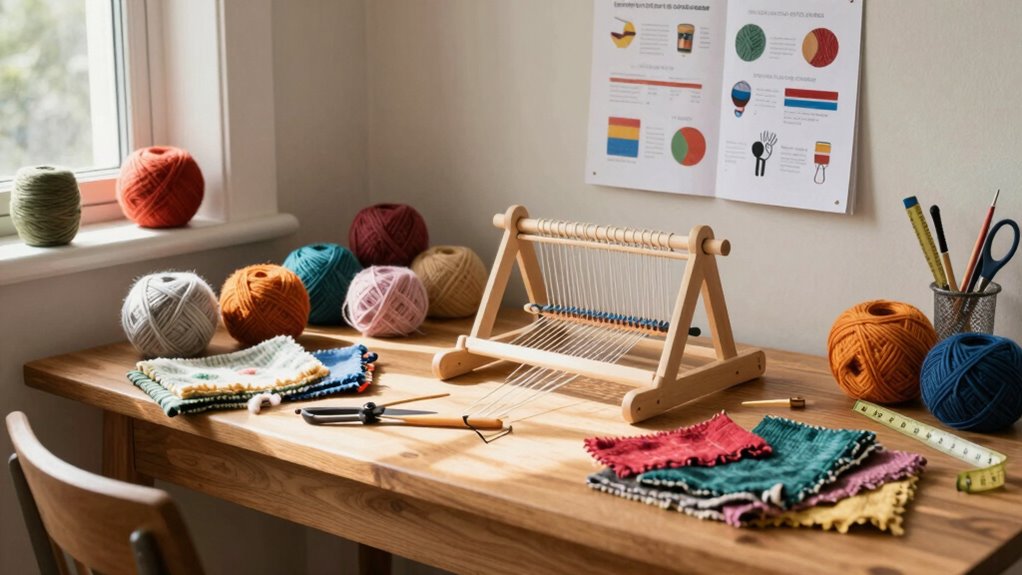

To create a beginner-friendly rug workflow at home, start by breaking the project into small, manageable steps and sketching a simple design beforehand. Gather your supplies early and organize your workspace for efficiency. Choose a calming color palette with 2-3 main shades, and select natural fibers like wool or cotton to keep things straightforward. Maintain a steady pace, celebrate small milestones, and keep your environment tidy. If you keep exploring, you’ll discover more tips to make the process even smoother.

Get business pricing on tools and workshop supplies
- Business-only prices and quantity discounts
- Tax-exempt purchasing
- Multiple users, one account, clear invoices
Key Takeaways
- Break the project into small, manageable steps and sketch a simple design before starting.
- Choose a limited color palette (2-3 main colors) to keep the process simple and enjoyable.
- Use natural fibers like wool or cotton, and test materials with small samples before committing.
- Organize supplies and create a dedicated, tidy workspace to enhance focus and efficiency.
- Establish a routine with scheduled work times and celebrate milestones to stay motivated.
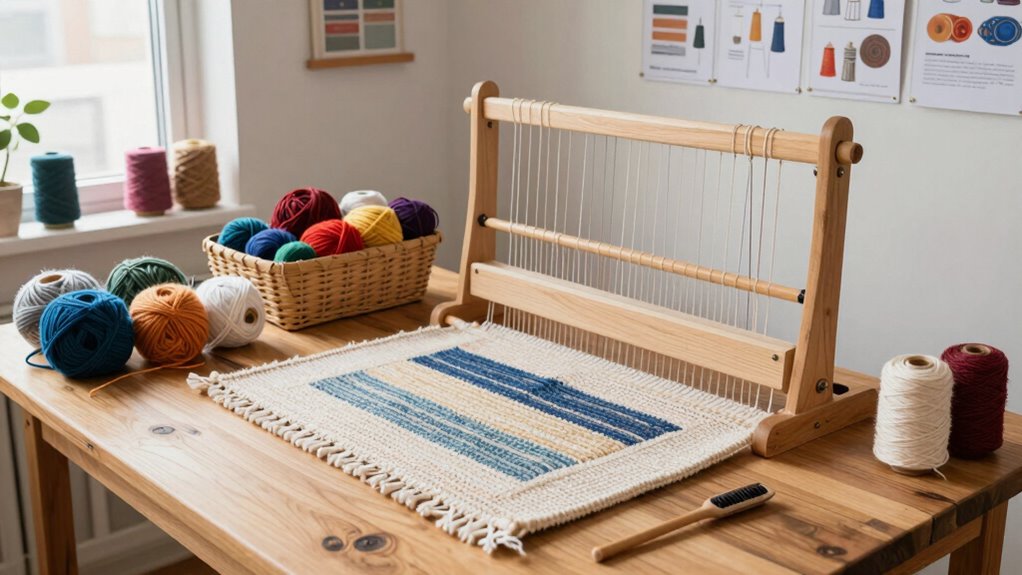
Starting a rug-making project can feel overwhelming, especially if you’re new to the craft. The first step to making it manageable is planning your workflow carefully. It all begins with the basics—deciding on your color selection and material choices. When choosing colors, think about the space where your rug will live. Are the walls neutral or bold? Do you want the rug to be a statement piece or a subtle addition? Picking a color palette that complements your decor will make your project more enjoyable and guarantee your finished rug fits seamlessly into your home. Stick to two or three main colors to keep things simple and avoid overwhelming yourself. You can always add accent shades later if you feel adventurous.
Start your rug project by choosing colors that complement your space and stick to a simple, calming palette.
Material choices are just as important. For beginners, natural fibers like wool or cotton are ideal because they’re forgiving, durable, and easy to work with. Wool, in particular, has a nice resilience and rich texture that elevates even simple designs. Cotton is lightweight and affordable, perfect for smaller projects or practice pieces. If you prefer something more eco-friendly, consider jute or hemp, which lend a rustic look. Whichever materials you pick, make sure they’re suitable for your chosen rug-making technique—be it weaving, hooking, or tufting. Having the right materials ready before you start prevents delays and helps you stay focused. Additionally, understanding fiber properties can help you select the best materials for your project, ensuring durability and the desired aesthetic.
Once you’ve settled on colors and materials, organize your workspace. Keep your chosen yarns or fibers within easy reach and set up a dedicated area for cutting, assembling, and working. Breaking your project into small, manageable steps makes it less intimidating. For example, start by sketching out a simple design, then gather your supplies, and proceed to create a small sample or swatch. This approach helps you learn how your chosen materials behave and confirms your color choices before committing to the full rug. Additionally, understanding the importance of biodiversity in natural fibers can inspire eco-conscious material selections that support sustainable practices.
As you move forward, work at a steady pace and don’t rush. Establish a routine—set aside specific times during the week to focus on your project. Keep your workspace tidy and organized, so you don’t waste time searching for tools or supplies. Remember, creating a beginner-friendly workflow means making the process enjoyable and sustainable. Celebrate small milestones along the way, like completing your first section or mastering a new technique. With clear planning, thoughtful material choices, and a calm, organized approach, you’ll turn rug-making from an intimidating task into a rewarding craft you can enjoy at home.
As an affiliate, we earn on qualifying purchases.
Frequently Asked Questions
What Types of Rugs Are Easiest for Beginners to Work With?
You’ll find that simple, solid-colored rugs are easiest for beginners to work with, especially when experimenting with color combinations and pattern design. These rugs allow you to focus on mastering techniques without the complexity of intricate patterns. As you gain confidence, you can try more detailed designs. Starting with straightforward textures and minimal patterns helps you develop skills while creating beautiful, personalized rugs at home.
How Do I Choose the Right Tools for Rug Making?
To choose the right tools for rug making, focus on quality and purpose. Start with basic tools like a sturdy weaving loom, sharp scissors, and a crochet hook. Prioritize easy tool maintenance to keep everything in good shape. Consider material sourcing—select beginner-friendly fibers like wool or jute, which are easier to work with. As you progress, upgrade tools for better results, but always guarantee your tools suit your chosen materials for a smooth workflow.
Can I Create a Rug Without Prior Crafting Experience?
Yes, you can create a rug without prior crafting experience by focusing on DIY techniques and thoughtful material selection. Start simple, follow step-by-step tutorials, and practice patience. Use beginner-friendly tools and soft, manageable materials like wool or cotton to ease your process. Keep experimenting with different techniques and don’t rush—each rug you make improves your skills and confidence, turning your DIY project into a rewarding creative journey.
How Long Does It Typically Take to Complete a Beginner Rug?
It typically takes about 10 to 20 hours for a beginner to complete a rug, depending on size and complexity. You’ll spend time on rug dyeing to achieve your desired colors and practice knotting techniques to guarantee durability. Break the process into manageable sessions, and don’t rush—your skills will improve with each step. Patience and consistent effort are key to finishing your handmade rug.
What Safety Precautions Should I Follow During Rug Creation?
Prioritize safety by donning essential safety gear like gloves and goggles, protecting your hands and eyes from hazards. Keep your workspace well-organized, ensuring tools are within easy reach and clutter is minimized to prevent accidents. Always work in a well-ventilated area, especially when using adhesives or dyes. Staying attentive and cautious helps you avoid injuries, making your rug-making journey safe, smooth, and satisfying.
Conclusion
By setting up a simple, organized rug workflow, you’re turning your home into a cozy haven, one step at a time. Think of it as weaving a tapestry where each task, like cutting, sewing, and finishing, fits together seamlessly. With patience and practice, your skills will grow like a blooming garden. Remember, every great rug starts with small, steady stitches—so keep at it, and watch your craftsmanship flourish into something truly beautiful.
Fall Picks
fall essentials
As an affiliate, we earn on qualifying purchases.