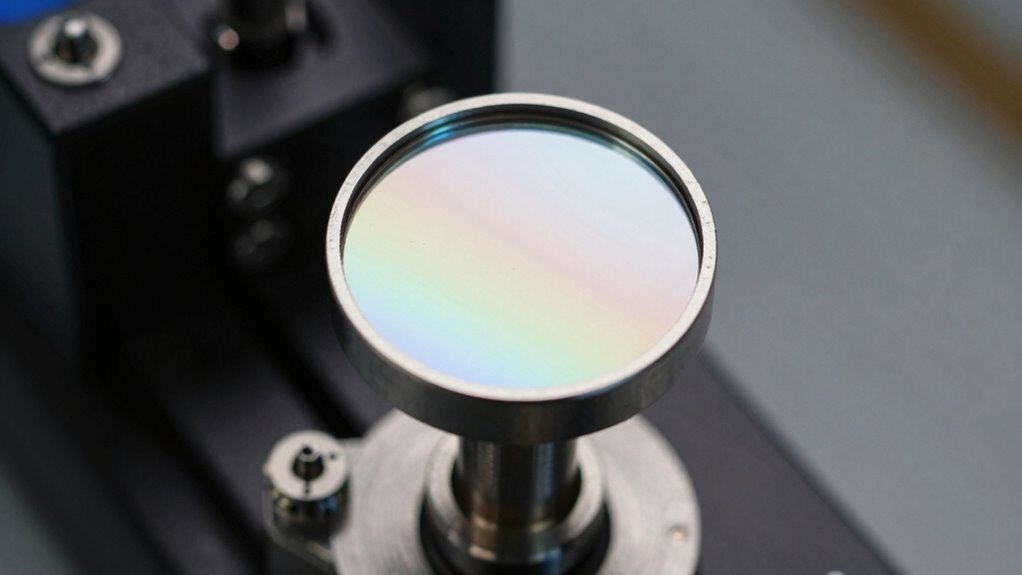

Precise mirror alignment in your CO2 laser is vital for maximizing power, beam quality, and efficiency. Tiny adjustments to the mirrors can markedly reduce beam divergence, improve focus, and prevent power loss. Proper alignment guarantees the laser delivers consistent results and prolongs component life. By fine-tuning the mirror angles carefully, you can open up huge performance gains. Keep exploring to discover step-by-step techniques that help you achieve perfect alignment and boost your laser’s output.

Get business pricing on tools and workshop supplies
- Business-only prices and quantity discounts
- Tax-exempt purchasing
- Multiple users, one account, clear invoices
Key Takeaways
- Use alignment tools like laser pointers, beam splitters, and calibration cards for precise mirror adjustments.
- Make small, incremental adjustments to mirror angles to optimize beam path and power.
- Regularly verify and re-measure laser power after each tweak for maximum efficiency gains.
- Clean and inspect mirrors for dirt, scratches, or damage that can affect reflectivity and beam quality.
- Prioritize safety by wearing protective eyewear and controlling the environment during fine-tuning.
CO2 laser mirror alignment tools
As an affiliate, we earn on qualifying purchases.
As an affiliate, we earn on qualifying purchases.
Why Precise Mirror Alignment Matters for Your CO2 Laser

Proper mirror alignment is essential for your CO2 laser to perform at its best. When your mirrors are precisely aligned, the laser beam remains focused, reducing beam divergence and ensuring maximum power delivery. Misaligned mirrors cause the beam to spread out, decreasing cutting accuracy and efficiency. More importantly, poor alignment can compromise laser safety, risking accidental exposure to scattered or reflected beams. Accurate alignment minimizes stray reflections and prevents potential hazards. Maintaining proper alignment also extends the life of your laser components by reducing unnecessary stress on the system. Additionally, understanding the importance of mirror alignment can help you troubleshoot and optimize your laser setup for long-term reliability. Regularly checking and adjusting your mirrors ensures consistent beam quality and prolongs equipment lifespan, especially since laser safety protocols emphasize correct setup procedures. Proper alignment techniques are vital for achieving optimal performance and safety in your laser operations.
Get to Know the Components of Your CO2 Laser Mirror System
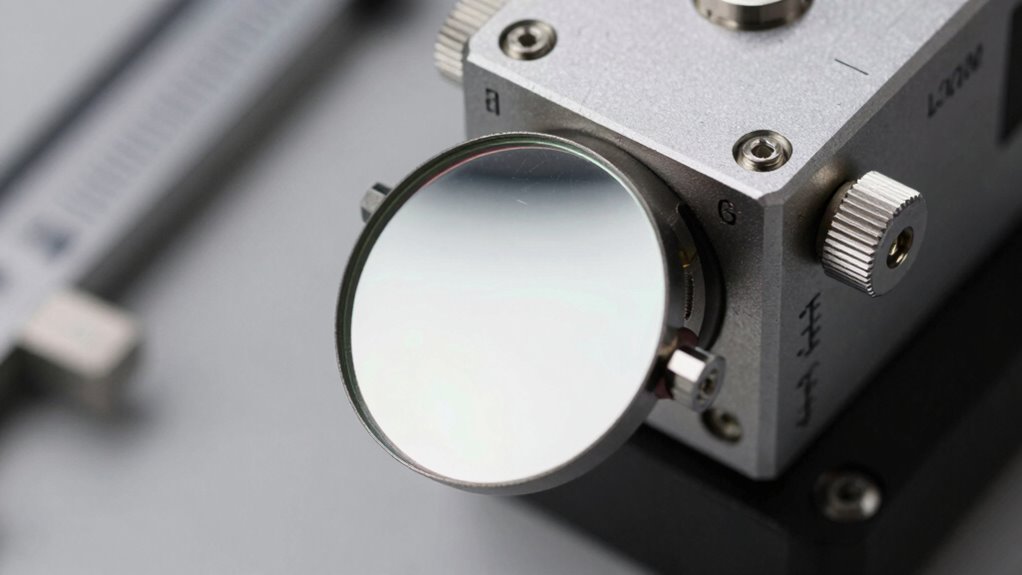
Understanding your CO2 laser mirror system starts with knowing its key components. You’ll want to pay attention to optical coatings and reflectivity, which affect beam quality, as well as how the mirrors are mounted and adjusted for precise alignment. Mastering these parts ensures optimal laser performance and easier troubleshooting. Additionally, being familiar with laser safety protocols can help prevent accidents and maintain system integrity.
Optical Coatings and Reflectivity
Optical coatings are vital components of your CO2 laser mirrors, directly affecting how much laser energy is reflected back into the system. These coatings are designed to maximize reflectivity within the laser’s specific reflectivity spectrum, guaranteeing efficient energy retention. The durability of the coating is essential; high-quality coatings resist damage from intense laser exposure, maintaining consistent performance over time. Different coatings are engineered for specific wavelengths and power levels, so selecting the right one guarantees optimal reflectivity and longevity. Keep in mind that even minor imperfections can reduce reflectivity, leading to power loss. Understanding the coating’s properties helps you maintain the mirror’s effectiveness, ensuring your laser operates at peak performance with minimal energy leakage. Optical coating properties are critical to achieving long-lasting and efficient laser operation, especially as they relate to the durability of the coatings under high-energy conditions. Additionally, being aware of coating degradation processes helps in scheduling proper maintenance for sustained laser efficiency. Regular inspection and maintenance practices can significantly extend the lifespan of your laser components. Moreover, proper cleaning techniques can prevent contamination buildup that might harm the coatings and reduce their effectiveness over time.
Mirror Mounting and Adjustment
The mirror mounting and adjustment components are critical for maintaining precise laser beam alignment. You’ll find mirror mounts securely hold the mirrors in place while allowing fine-tuning. Adjustment screws are integral to this process, providing precise control over mirror angles and positions. By turning these screws, you can make tiny adjustments that substantially impact beam alignment and power output. Properly calibrated mounts ensure stability during operation, preventing drift over time. When aligning your CO2 laser, start with the mounts firmly in place, then slowly turn the adjustment screws to achieve ideal reflection angles. Remember, small adjustments yield big gains in beam quality and power. Regularly inspect and fine-tune the mounts and screws to maintain peak performance and avoid alignment issues. Free Floating setups can also be utilized to enhance stability and ease of adjustment, making ongoing maintenance more straightforward. Maintaining beam stability is essential for consistent laser output and optimal performance. Additionally, understanding component calibration helps ensure precise and reliable laser operation over time, especially when dealing with delicate optical components.
How to Align Your CO2 Laser Mirrors Step-by-Step
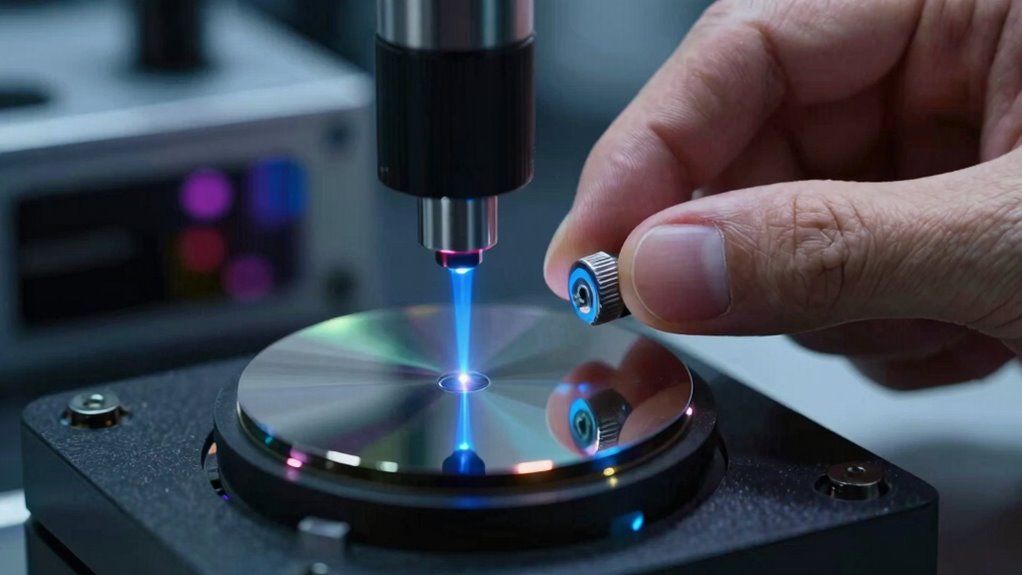
Aligning your CO2 laser mirrors is a crucial step to guarantee precise and efficient laser operation. Start by ensuring laser safety: wear protective eyewear and work in a controlled environment. Carefully check mirror materials for any damage before proceeding. Begin with low laser power, and slowly adjust the mirrors using the adjustment screws. Focus on the beam’s path, ensuring it hits each mirror’s center and reflects accurately toward the target. Use a beam target card or photodetector to verify alignment. Remember, even tiny adjustments matter. Proper alignment prevents mirror damage and maintains beam quality. Regularly monitoring the beam alignment helps sustain optimal laser performance over time. Practicing precise mirror adjustments can significantly improve overall efficiency. Understanding the importance of laser beam quality is essential for optimal results. Consistent alignment procedures help maintain system reliability and extend equipment lifespan. Developing a routine for checking mirror stability can prevent misalignments before they affect performance. Here’s a quick guide to the process:
| Step | Action | Purpose |
|---|---|---|
| 1 | Power on laser | Safety check |
| 2 | Adjust mirrors | Correct beam path |
| 3 | Verify beam | Ensure precise focus |
Signs Your CO2 Laser Mirrors Are Misaligned
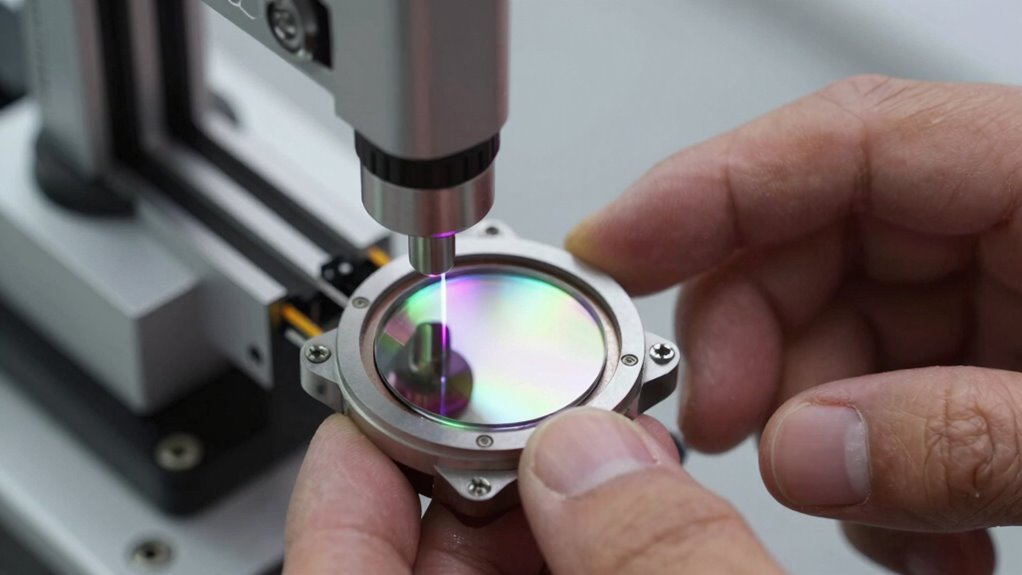
If your CO2 laser mirrors are out of alignment, you might notice the laser beam becomes inconsistent or drifts from its intended path. This misalignment can cause uneven focusing and reduced beam quality. You’ll see a drop in power output, making it harder to achieve peak results. Additionally, the laser may produce a flickering or unstable beam, indicating that the mirror alignment needs attention. If your laser isn’t performing at its best, it’s a clear sign that the mirrors are not properly aligned for maximum power enhancement. Regularly checking and maintaining mirror alignment ensures your laser operates efficiently and delivers consistent, high-quality results. Proper alignment is essential to prevent further performance issues and increased wear on components, which can be exacerbated by misalignment over time. Being proactive about alignment can help extend the lifespan of your laser components and prevent costly repairs. Incorporating precision adjustments can significantly improve your laser’s overall efficiency and output stability. Additionally, understanding the net worth of notable personalities can provide context for investment in quality equipment and maintenance.
How to Troubleshoot and Correct Mirror Alignment Problems
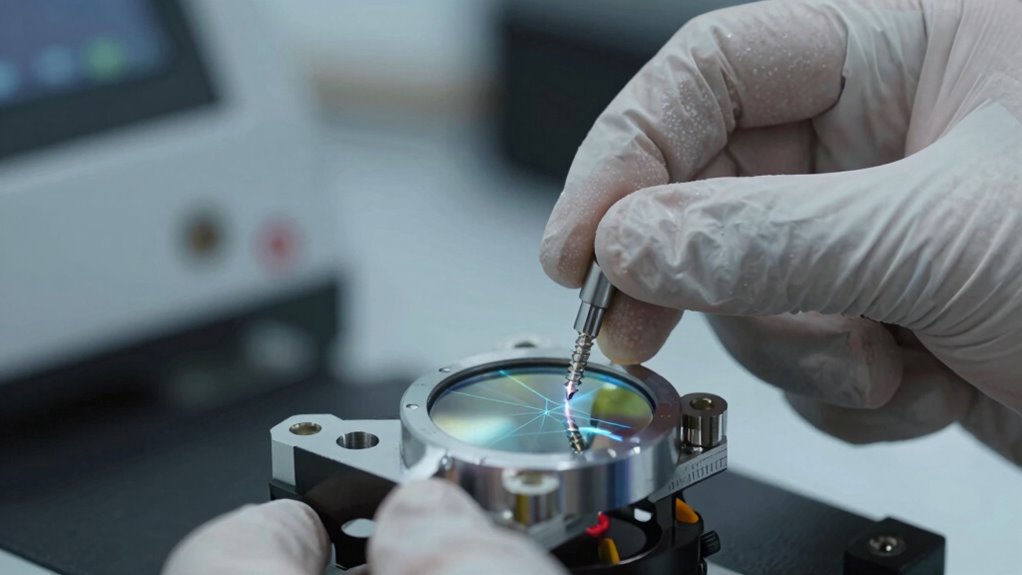
When you notice signs of misalignment, start by identifying the specific symptoms affecting your laser’s performance. Next, carefully adjust the mirror angles to correct these issues, ensuring you make precise movements. Additionally, safe installation practices should be followed during adjustments to prevent damage or safety hazards. To ensure optimal beam quality, it’s also important to regularly monitor and maintain your laser setup. Regularly inspecting the alignment system can help catch issues early before they impact performance. Furthermore, using precision tools during adjustments can greatly enhance the accuracy of your realignment process. Finally, verify your changes by observing improvements in power output and beam quality.
Identifying Misalignment Symptoms
How can you tell if your CO2 laser mirror is misaligned? Look for signs like beam distortion, which causes uneven or blurred laser output. If the beam appears irregular or shifts from its usual path, the mirror may be misaligned. Mirror degradation over time can also contribute, leading to reduced beam quality and increased distortion. You might notice a drop in power or inconsistent cutting and engraving results. Sharp, well-defined beams should maintain a consistent shape; any deviation suggests alignment issues. Regularly inspecting the mirror surface for dirt, damage, or wear helps identify problems early. Recognizing these symptoms allows you to troubleshoot promptly, preventing further damage and ensuring your laser operates at peak efficiency.
Adjusting Mirror Angles Precisely
To accurately adjust your CO2 laser mirror angles, start by carefully observing the laser beam’s path and shape. Look for signs of misalignment, such as a distorted or drifting beam. Use a mirror calibration tool or alignment card to gauge your adjustments and guarantee the beam remains centered and stable. Precision in angle setting is essential; small tweaks can greatly improve performance. Adjust each mirror incrementally, focusing on the shortest path and ideal beam focus. Keep track of your adjustments to avoid overcorrecting. Remember, achieving the right angle precision minimizes losses and enhances power output. Regularly double-check your mirror angles during calibration to maintain alignment. Precise mirror calibration is the key to maximizing your laser’s efficiency and consistent operation.
Verifying Power Output Changes
Are you noticing a drop in your laser’s power output after aligning the mirrors? To verify changes, measure the output with a calibrated power meter. Ensure your laser is operating with minimal beam divergence, as misaligned mirrors can cause the beam to spread and reduce intensity. Confirm that the laser is functioning within safe parameters by maintaining proper laser safety protocols during testing. If power remains low or inconsistent, double-check your mirror angles and ensure they’re precisely aligned. Small adjustments can markedly impact output, so make incremental tweaks and re-measure after each change. Always prioritize laser safety, wearing protective gear and working in a controlled environment. Proper verification ensures your laser operates at peak performance and maintains safe operation standards.
Essential Tools for Perfect Mirror Alignment

Achieving perfect mirror alignment in a CO2 laser setup requires the right tools to guarantee accuracy and efficiency. First, use a quality alignment laser or a low-power visible beam to trace the laser path without risking laser safety. This helps you precisely identify misalignments without exposing yourself or others to high-intensity beams. A beam splitter or alignment card can assist in visualizing beam divergence, ensuring the laser path remains true. A calibrated mirror adjustment tool, like a small Allen wrench or alignment screwdriver, allows for tiny, controlled shifts. Always wear appropriate laser safety gear, including goggles, and work in a controlled environment. These essential tools enable you to make accurate, safe adjustments, optimizing power output and ensuring your laser operates at peak performance.
Fine-Tuning and Maintaining Your Laser Mirrors for Peak Performance
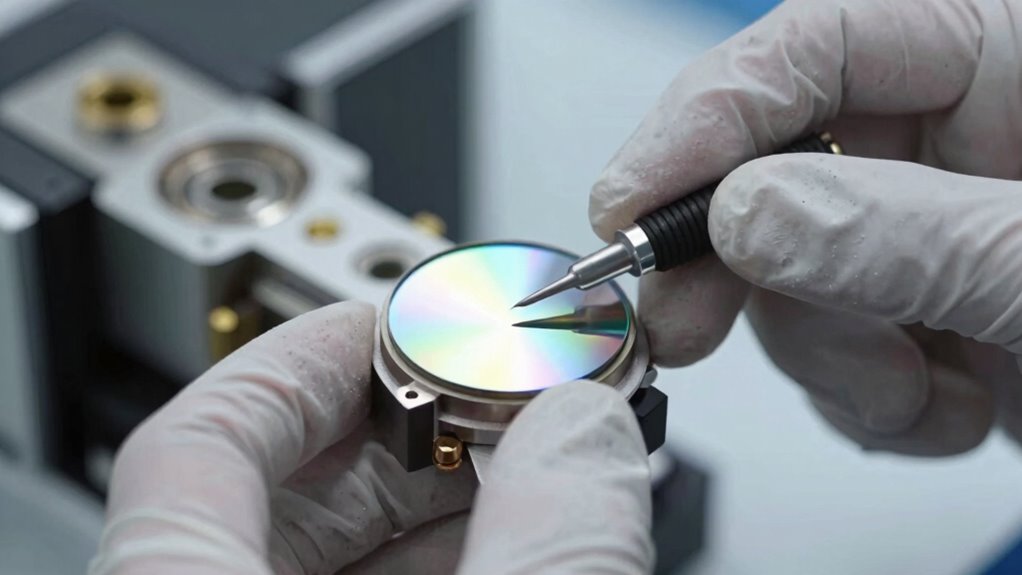
Maintaining essential mirror alignment is crucial for ensuring your CO2 laser consistently delivers maximum power and quality. Regular fine-tuning helps prevent issues like increased beam divergence and loss of beam focus. To keep your mirrors in top shape:
- Regularly inspect mirror coatings for dirt, scratches, or damage, which can impair reflectivity.
- Use precise adjustments to minimize beam divergence, ensuring the laser beam stays focused and efficient.
- Clean and recalibrate your mirrors periodically to maintain ideal alignment, preventing power loss and preserving beam integrity.
How Proper Mirror Alignment Boosts Your Laser’s Power and Efficiency
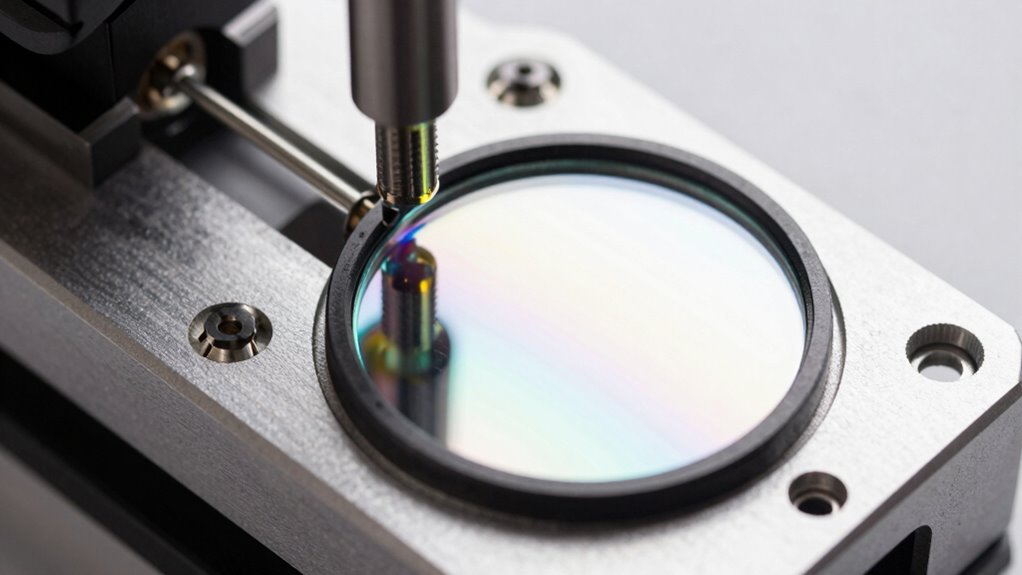
Proper mirror alignment directly enhances your CO2 laser’s power and efficiency by ensuring the laser beam remains precisely focused along its optical path. When mirrors are correctly aligned, the laser delivers maximum energy to the target, reducing power loss and improving cut quality. Proper alignment also supports laser safety by minimizing stray beams that could pose hazards. Regular maintenance schedules are essential to keep your mirrors in superb condition, preventing misalignments over time. Neglecting this can lead to decreased performance and potential safety risks. By maintaining proper mirror alignment, you’ll achieve consistent, efficient operation while safeguarding operators and equipment. Ultimately, small adjustments in alignment translate to significant gains in laser power, efficiency, and safety.
Frequently Asked Questions
How Often Should I Realign My CO2 Laser Mirrors?
You should realign your CO2 laser mirrors whenever you notice a drop in laser power or beam quality, typically every few months or after major maintenance. Use precision calibration and alignment tools to guarantee accuracy. Regular checks help maintain ideal performance, preventing misalignment from affecting the beam’s focus and intensity. Consistent alignment ensures you get the best results, saving time and reducing waste in your laser operations.
What Are Common Causes of Mirror Misalignment?
You’ll find that mirror misalignment often comes from simple issues like loose mirror mounting or unexpected vibration sources. Ironically, it’s the tiniest disturbances—like a slight bump or a loose screw—that throw off your laser’s precision. Vibration sources such as nearby machinery or even the environment’s movement can shake the mirrors, causing misalignment. Regular checks and secure mounting help prevent these sneaky, power-draining misalignments.
Can Mirror Misalignment Damage My Laser?
Yes, mirror misalignment can cause mirror damage and affect alignment accuracy. When mirrors aren’t properly aligned, the laser beam may reflect incorrectly, leading to increased heat and stress on the mirror surfaces. Over time, this can cause damage or warping, decreasing efficiency and risking further damage to your laser system. Regularly checking and adjusting your mirrors guarantees peak alignment precision and prevents costly damage to your laser components.
Are There Safety Precautions During Mirror Adjustment?
Think of mirror adjustment as balancing a delicate sculpture; safety gets you through without breaking it. Always wear protective eyewear to shield your eyes from potential laser reflections. Minimize vibrations by securing the laser setup firmly, preventing sudden shifts. Keep your workspace clear and use proper tools. By following these precautions, you guarantee a safe, precise alignment process that preserves both your equipment and your health.
How Does Temperature Affect Mirror Alignment Stability?
Temperature affects your mirror alignment stability through thermal expansion, which causes slight changes in the mirror’s position. Ambient fluctuations increase this effect, making it harder to maintain precise alignment. You should monitor temperature variations and avoid sudden temperature shifts around your laser setup. Using stable, temperature-controlled environments helps prevent misalignments, ensuring your laser operates at peak power and accuracy. Regular checks can also compensate for any minor shifts caused by temperature changes.
Conclusion
Remember, a tiny misalignment can sap your laser’s power just as a small crack can weaken a structure. Precision in mirror alignment isn’t just about perfect beams; it’s about revealing maximum efficiency and power. While the adjustments seem minor, their impact is monumental—like tuning a fine instrument. Embrace meticulous care, because in the world of CO2 lasers, small tweaks hold the key to extraordinary performance.
Halloween Picks
halloween
As an affiliate, we earn on qualifying purchases.