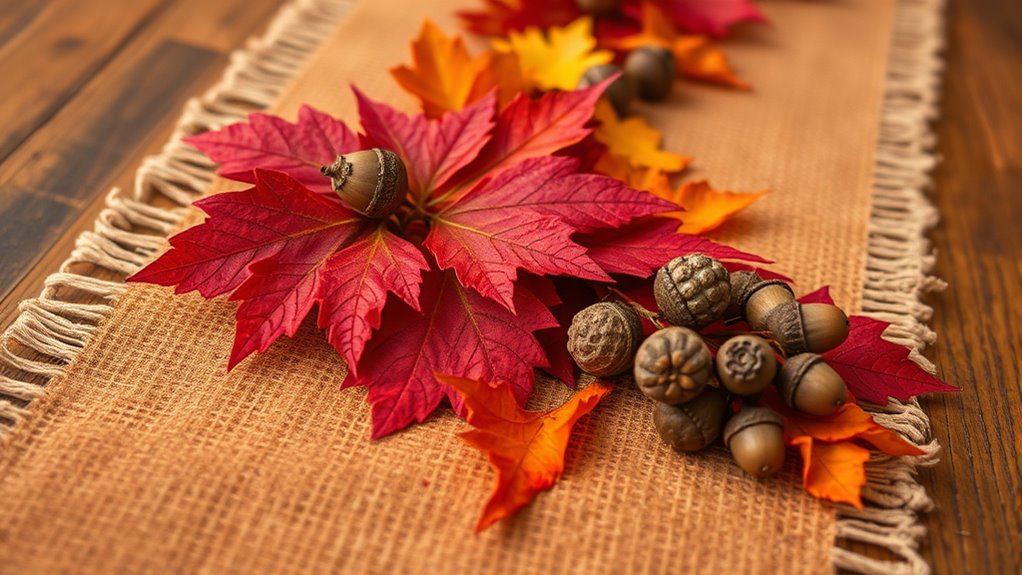

To create a rust-dyed table runner with fall foraged materials, start by ethically gathering colorful leaves, acorns, pinecones, and weathered metal objects. Prepare natural fiber fabric by washing and dampening it, then submerge the rusty items in water to develop your dye solution. Apply the rust dye with dipping or brushing techniques, and let the fabric sit undisturbed to develop rich, layered colors. Properly rinse and dry your piece for a beautiful, natural seasonal decor; discover more tips along the way.

Get business pricing on tools and workshop supplies
- Business-only prices and quantity discounts
- Tax-exempt purchasing
- Multiple users, one account, clear invoices
Key Takeaways
- Collect natural fall materials like leaves, acorns, pinecones, and driftwood responsibly from non-protected areas for authentic, seasonal decor.
- Prepare fabric such as linen or burlap by washing and dampening to ensure optimal dye absorption before applying rust dye.
- Create a rust dye solution by soaking rusty metal objects in water for several days, adding natural mordants for enhanced color and stability.
- Use dipping or brushing techniques to apply rust dye to fabric, experimenting with crumpling or wrapping for varied patterns and textures.
- Layer natural fall elements and textured fabrics with rust-dyed material to craft a cohesive, vibrant, eco-friendly table runner.
As an affiliate, we earn on qualifying purchases.
Gathering and Preparing Fall Foraged Materials

As fall arrives, it’s the perfect time to gather natural materials for dyeing. Start by practicing botanical identification to ensure you collect safe, dye-worthy plants like sumac, oak leaves, or goldenrod. Look for vibrant, healthy specimens, and avoid anything that’s been treated with chemicals or pesticides. Ethical foraging is essential—only take what you need, and leave enough behind for the plant to thrive and support local ecosystems. Use gloves and tools to minimize disturbance, and always follow local regulations. Collect a variety of materials, such as leaves, bark, or berries, and prepare them promptly by cleaning or chopping to maximize dye extraction. Respect nature’s balance, and your foraged materials will provide beautiful, natural colors for your project. Incorporating sustainable foraging practices can also help maintain the vitality of native plant populations and preserve biodiversity, ensuring that these resources remain available for future use. Practicing ethical foraging not only benefits the environment but also enriches your connection to the natural world. Additionally, understanding the dyeing process can help you achieve more vibrant and lasting colors in your projects.
Selecting the Right Fabric and Preparing It for Dyeing

Choosing the right fabric is essential to achieve vibrant and long-lasting dye results. Your fabric choice impacts how the rust dye reacts and how well the color sets. Opt for natural fibers like linen, cotton, or hemp, as they absorb dye more effectively. Before dyeing, prepare your fabric by washing it thoroughly to remove any oils, dirt, or sizing that could hinder dye absorption. Avoid fabric softeners or detergents with additives. Once clean, dampen the fabric slightly; this helps ensure even dye application. Proper dye preparation starts with selecting a fabric that responds well to rust dye, ensuring your table runner achieves the desired depth of color and durability. Additionally, understanding AI security concerns can help you safeguard your creative projects and digital resources during the process. Preparing your fabric properly sets the foundation for a successful rust dyeing process. Engaging with current cybersecurity trends can also protect your digital tools from potential threats while working on your craft. Incorporating rust-resistant fabrics into your selection can further improve the longevity of your dyed piece.
Creating Your Rust Dye Solution With Natural Materials

To create a rust dye solution with natural materials, start by gathering your supplies: clean, rusty objects like nails, screws, or metal scraps, along with water and a container large enough to submerge your fabric. Place the rusty items in the container and add water, ensuring they’re fully covered. Allow the mixture to sit for several days, periodically checking for color development. Natural mordants, such as alum or iron, can be added to enhance dye absorption and improve dye stability, resulting in more consistent and vibrant hues. During the waiting period, be sure to monitor the mixture’s pH, as it can influence the final color outcome. Proper dye fixation techniques can help make the color more durable and resistant to washing. For better results, understanding the horsepower of electric dirt bikes can help in choosing the right bike for outdoor dyeing adventures. Additionally, considering the sustainability of dyeing materials can ensure an eco-friendly process. Once the desired color is achieved, strain out the rusty objects and transfer the liquid to a clean jar or bottle. This rust dye solution provides a natural, eco-friendly way to create beautiful, earthy tones on your fabric.
Techniques for Applying Rust Dye to Your Fabric

Once your rust dye solution is ready, you can start applying it to your fabric using various techniques to achieve different effects. You might dip sections of the fabric for a mottled, uneven look or brush on the dye for more control. Wrapping or crumpling fabric creates unique patterns by trapping rust chemistry in certain areas. Using natural mordants beforehand helps fix the dye and enhances color vibrancy. Experiment with layering different application methods to add depth and complexity. Keep in mind that rust chemistry drives the color development, so the contact time and fabric preparation influence the final result. Handling the fabric carefully during application ensures even coverage or intentional variations, depending on your desired aesthetic. Additionally, understanding vetted materials can help you select fabrics that will produce the most durable and vibrant results in rust dyeing, especially when working with Mother Baby Kids-approved textiles that are safe and gentle. Being aware of toilet flushing mechanisms can also inform your cleaning routines after dyeing, ensuring your workspace remains free of residues. Incorporating wicks or other candle-making techniques can inspire innovative textile art projects that incorporate subtle candle-inspired textures. Exploring the importance of attention in creative practice can further enhance your experimentation and results.
Allowing the Fabric to Properly Set and Develop Color

After applying the rust dye, it’s vital to let the fabric sit undisturbed to allow the color to fully develop. Proper fabric prep before dyeing ensures the dye sets evenly and enhances color richness. During dye setting, resist the temptation to move or touch the fabric, as this can cause uneven coloration or spots. Keep your fabric in a warm, stable environment to promote consistent dye development. The longer you allow the fabric to sit, the deeper and more layered the color becomes. This resting period is essential for the rust dye to react fully with the fabric fibers, resulting in vibrant, lasting hues. Incorporating proper drying techniques can further improve the final appearance and longevity of your dyed fabric. Automation technologies can also streamline the dyeing process, making it easier to achieve consistent results. Additionally, understanding color development during the dyeing process can help you anticipate the final outcome and adjust timing as needed. Patience during dye setting ensures a beautifully crafted, naturally colored table runner.
Rinsing, Drying, and Finishing Your Handcrafted Runner

As the rust-dyed fabric has had time to develop its rich, layered color, it’s now ready for rinsing and finishing. Gently rinse the runner in cool water to remove excess dye and prevent color bleeding, ensuring proper fabric care. Avoid wringing; instead, softly squeeze out water and lay the runner flat on a clean towel to air dry. This step helps maintain dye stability and preserves the depth of your colors. Once dry, you can gently press the fabric with a warm iron if needed, using a pressing cloth to avoid disturbing the finish. Handling your runner with care ensures the colors stay vibrant and the fabric remains durable over time. Proper rinsing, drying, and finishing are essential for a polished, long-lasting handcrafted piece.
Tips for Incorporating Seasonal Elements Into Your Decor

To create a cozy, seasonal look, start by gathering natural materials with care to guarantee they complement each other. Incorporate vibrant fall leaves for pops of color and layer different textures to add depth and interest. These simple steps help seamlessly blend the season’s beauty into your decor.
Gather Natural Materials Thoughtfully
Gathering natural materials for your fall decor is a thoughtful process that enhances the season’s warmth and beauty. Always practice foraging ethics by only collecting what you need and avoiding protected or sensitive areas. Prioritize material sustainability by choosing items that won’t harm the environment or deplete local resources. Consider the following when gathering:
| Area | Materials | Tips |
|---|---|---|
| Forest Edge | Acorns, pinecones | Gather fallen items, leave roots intact |
| Fields | Dried grasses, wildflowers | Harvest gently, avoid overharvesting |
| Underbrush | Bark, twigs | Use fallen pieces, avoid stripping trees |
| Near Water | Reeds, driftwood | Collect washed-up debris, respect wildlife |
| Gardens | Seed heads, dried leaves | Pick from dead plants, not growing ones |
Being mindful ensures your decor is beautiful and eco-friendly.
Use Colorful Fall Leaves
Colorful fall leaves instantly bring vibrancy and warmth to your seasonal decor, making them an ideal element to showcase the changing landscape. To make the most of their natural hues, consider color theory when pairing leaves with your table runner. Bright reds and oranges contrast beautifully with muted earth tones, creating visual interest. When selecting fabric, choose materials that complement or highlight the leaves’ colors—think soft linen or rustic burlap for a natural feel. You can also press and preserve the leaves to maintain their vibrancy longer, then arrange them artfully on your table or along the runner’s edges. By thoughtfully combining leaf colors with fabric textures, you’ll craft a striking, cohesive display that celebrates the essence of fall.
Layer Textures for Depth
Layering different textures adds visual interest and richness to your fall table setting, making it feel more inviting and dynamic. To achieve this, focus on color blending by combining warm, earthy tones with contrasting shades, creating a harmonious backdrop. Incorporate pattern layering by mixing different fabric textures—think burlap, linen, and velvet—or adding woven placemats and textured runners. This combination elevates the depth and complexity of your decor, drawing the eye across the table. Mix smooth and rough surfaces, matte and shiny finishes, to enhance tactile appeal. Don’t be afraid to experiment with natural materials like pinecones, acorns, or dried flowers, which add a layered, multi-dimensional effect. These techniques help your fall-themed setting feel warm, cozy, and visually engaging.
Caring for and Maintaining Your Rust-Dyed Table Runner

To keep your rust-dyed table runner looking its best, you need to handle it carefully during cleaning and storage. Proper washing and gentle handling prevent fading or damage, while smart storage preserves the vibrant colors. Let’s explore some simple tips to maintain its beauty over time.
Washing and Handling Tips
Properly caring for your rust-dyed table runner guarantees its vibrant hues last through many seasons. When washing, always handle it gently to preserve dye stability. Before use, ensure the fabric was properly prepared during dyeing to prevent color bleeding. Use cold water and a mild, pH-neutral detergent to wash it, avoiding harsh chemicals or bleach that can damage the rust dye. Hand washing is best; if machine washing, opt for a delicate cycle and place the runner in a mesh bag. Avoid wringing or twisting, which can distort the fabric. To prolong its appearance, wash it separately or with similar colors. Proper handling ensures your rust-dyed table runner stays beautiful and vibrant for years to come.
Storage and Preservation
Ensuring your rust-dyed table runner stays beautiful over time requires careful storage and preservation. To maintain dye stability and fabric compatibility, follow these tips:
- Store your runner flat in a cool, dark place to prevent fading from light exposure.
- Use acid-free tissue paper between folds if you need to fold it, avoiding creases and fabric damage.
- Keep it away from direct contact with moisture or harsh chemicals that could compromise dye stability or fabric integrity.
Avoid hanging your runner, as gravity can weaken fibers, and always handle it with clean hands. Proper storage preserves your rust-dyed piece’s vibrant coloration and ensures it remains a stunning centerpiece for years to come.
Frequently Asked Questions
How Long Does the Rust Dyeing Process Typically Take?
The dyeing duration depends on the desired color intensity and fabric type. Typically, the rust process time ranges from a few hours to several days. You should check the fabric periodically to see how the color develops. If you want a deeper, richer hue, leave it longer; for lighter tones, shorter durations work better. Patience is key, as the rust process gradually creates beautiful, natural variations in your fabric.
Can Rust Dyeing Be Done on Synthetic Fabrics?
You can rust dye on synthetic fabrics, but it’s more challenging because of their bleaching and dye absorption properties. Synthetic materials don’t absorb rust dye as easily as natural fibers do, which can result in less vibrant or uneven coloring. To improve results, you might need to pre-treat the fabric or experiment with different rusting techniques. Keep in mind, patience and testing will help you achieve the best effect.
What Are Common Mistakes to Avoid During Rust Dyeing?
Imagine your fabric as a blank canvas, eager for vibrant transformation. To avoid mistakes in rust dyeing, focus on proper fabric preparation—clean, damp fabric absorbs dye better. Choose a rust source like iron-rich materials carefully; avoid rusty metals that are too corroded, which can cause uneven spots. Keep control over exposure time and avoid moving the fabric during dyeing to ensure consistent, beautiful results.
How Do Seasonal Weather Conditions Affect the Rust Dyeing Results?
You should consider how seasonal humidity and temperature fluctuations impact your rust dyeing results. High humidity can slow down the oxidation process, leading to lighter or uneven colors, while low humidity speeds it up, potentially causing darker, more intense shades. Temperature swings can also affect how the rust reacts with fabrics, resulting in inconsistent patterns. To achieve consistent results, monitor weather conditions and adjust your process accordingly.
Is It Possible to Recreate the Same Color Consistently?
Imagine chasing a rainbow—you can get close, but perfect color consistency remains elusive. Achieving it with rust dyeing depends on controlling factors like dye fixation and material preparation. While you can replicate similar shades using standardized methods and precise timing, natural variations in foraged materials make perfect consistency challenging. Embrace these unique differences; they’re part of what makes each piece beautifully one-of-a-kind.
Conclusion
By using natural fall foraged materials, you create a unique, eco-friendly table runner that celebrates the season’s beauty. Did you know that natural dyes can produce over 100 shades? With a little effort, you’ll craft a stunning piece that’s both sustainable and personalized. Embrace the process, enjoy the creative journey, and let your handcrafted runner be a charming centerpiece that highlights the richness of autumn. Your guests will surely admire your skill and seasonal flair.
Fall yard work Picks
leaf blowers
As an affiliate, we earn on qualifying purchases.