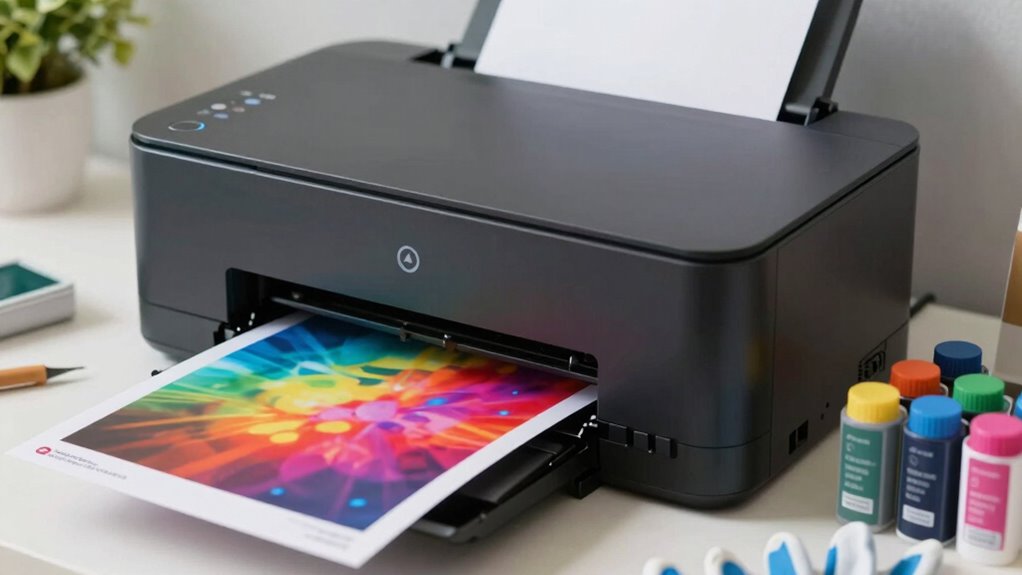

To safely convert your printer to sublimation and avoid clogs, start by choosing a model compatible with sublimation ink and carefully cleaning and flushing it before switching inks. Use high-quality sublimation ink, fill slowly, and run test prints to check for smooth flow. Regular cleaning and calibration help prevent buildup. Following these essential steps ensures longevity and vibrant results—stay tuned for more detailed tips to keep your sublimation printer running smoothly.
Key Takeaways
- Thoroughly clean print heads and ink channels to remove OEM ink residues before installing sublimation ink.
- Use compatible cleaning solutions and run multiple cleaning cycles to ensure no residual inks cause clogs.
- Replace or bypass incompatible components during modification to prevent chemical reactions and blockages.
- Fill sublimation cartridges slowly with a syringe to avoid air bubbles and ensure smooth ink flow.
- Regularly perform calibration and maintenance, including cleaning cycles, to maintain optimal ink flow and prevent clogs.

Epson SureColor F170 Dye-Sublimation Printer – Compact 8.5" x 11" Format – Includes Genuine Epson Ink, User Guide & Power Cable – Original OEM Product with Full Manufacturer Support
Confidence – Epson authorized partner. Original Epson Manufactured product delivered in Epson’s factory-sealed packaging with Epson documentation and…
As an affiliate, we earn on qualifying purchases.
As an affiliate, we earn on qualifying purchases.
Why Converting Your Printer to Sublimation Saves Money and Time
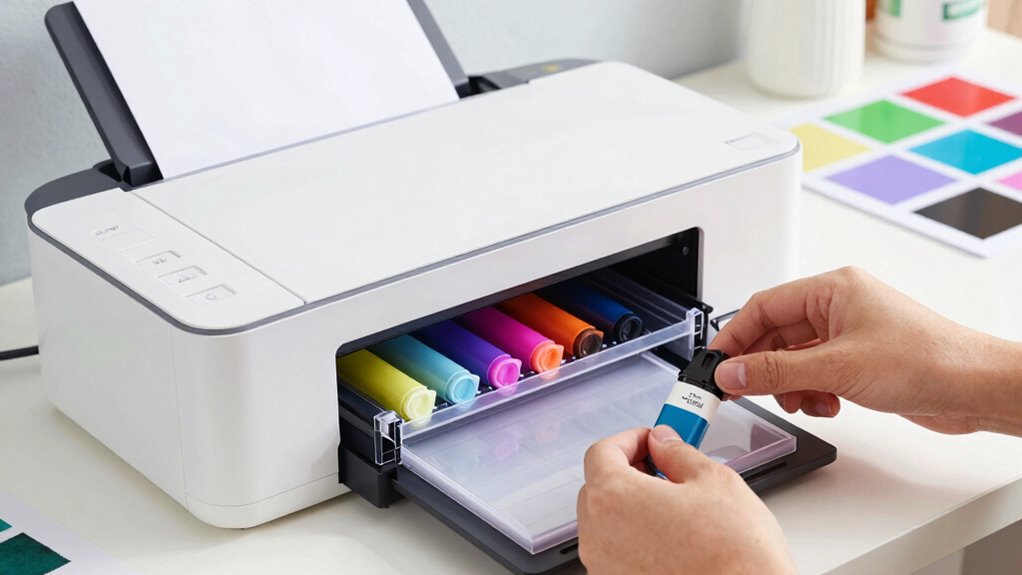
Converting your printer to sublimation can considerably cut costs and save time in the long run. By making this switch, you avoid the ongoing expenses of buying specialized sublimation printers or outsourcing printing jobs, leading to significant cost savings. Plus, once set up, you gain greater control over your workflow, boosting time efficiency. You won’t need to wait for external print services or handle multiple transfers; instead, you can produce your designs in-house quickly and consistently. This streamlined process reduces delays, increases productivity, and makes it easier to meet customer demands. Additionally, understanding the importance of color accuracy can help ensure your prints are vibrant and true to your designs. Over time, the combination of lower material costs and faster turnaround times makes converting your printer to sublimation a smart investment for your business. Additionally, adopting energy-efficient cloud solutions can further optimize your printing operations by enhancing data management and reducing overall energy consumption.

Hiipoo Sublimation Ink Refilled Bottles Compatible for ET2400 ET-2800 ET2720 ET2760 ET2750 ET4800 ET-2803 ET-2850 Inkjet Printers Heat Press Transfer on Mugs T-Shirts
[Wide Compatibility] Hiipoo Sublimation Ink compatible for Stylus C88 C88+ ET-2720 ET-2760 ET-2800 ET-2803 ET-2830 ET-2850 ET-15000 ET-3760…
As an affiliate, we earn on qualifying purchases.
As an affiliate, we earn on qualifying purchases.
How to Choose the Right Printer for Safe Sublimation Conversion

Choosing the right printer is essential for a safe and successful sublimation conversion, as not all printers are suitable for this process. You need to focus on printer compatibility and ink formulation to guarantee ideal results. First, verify that the printer supports sublimation ink and can handle refillable cartridges. Second, look for models known for their compatibility with sublimation inks, like certain Epson or Sawgrass printers. Third, select a printer with a print head that tolerates the ink formulation without clogging. Fourth, check for user reviews highlighting ease of modification and maintenance. By choosing a printer designed or easily adaptable for sublimation, you’ll minimize risks of clogs and damages, making your conversion safer and more effective. Additionally, understanding AI’s role in business efficiency can help you optimize your workflow and troubleshooting processes during the conversion. Ensuring that your printer has adequate maintenance protocols will further reduce the likelihood of print head issues and extend the lifespan of your equipment. Regularly performing preventative cleaning routines can significantly prevent clogs and maintain optimal print quality over time.

43Pcs 3D Printer Tools Kit, Complete 3D Printing Accessories & Maintenance Set for All FDM and SLA Printers | Includes Nozzle Cleaning Kit, Scrapers, Brushes, Wire Cutters, Engraving Knife, Files
🔥【All-in-One Pro Toolkit for Flawless 3D Printing】This 43-piece professional 3D printer tools kit includes everything for maintenance, cleaning,…
As an affiliate, we earn on qualifying purchases.
As an affiliate, we earn on qualifying purchases.
How to Safely Clean and Modify Your Printer for Sublimation
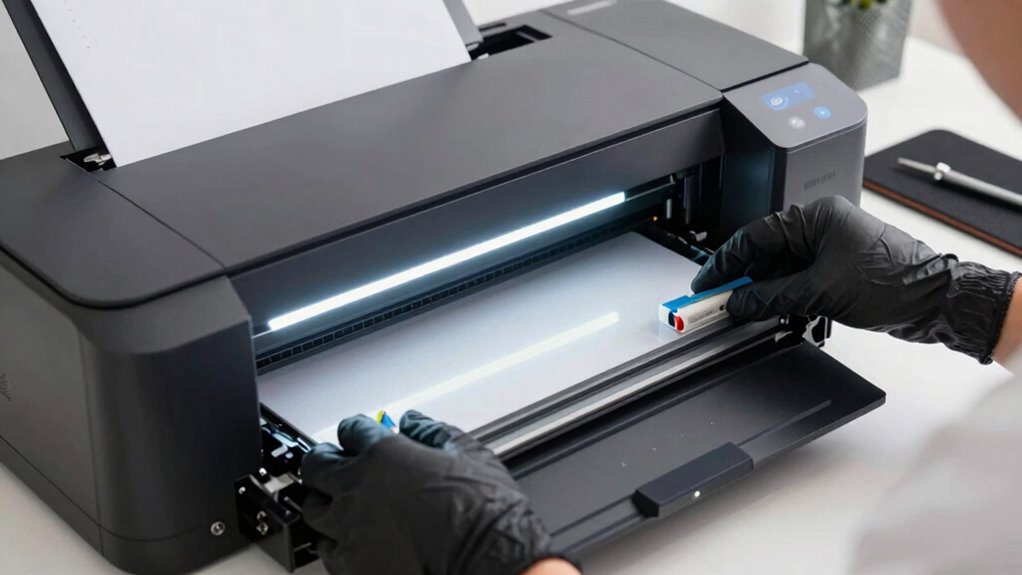
Once you’ve selected a compatible printer for sublimation, the next step is to guarantee it’s properly cleaned and modified to handle sublimation inks safely. Start by thoroughly cleaning the print heads and ink channels to remove any residual OEM ink, ensuring ink compatibility with sublimation inks. This step is crucial to prevent clogs and ensure smooth operation. Next, adjust the printer calibration to match sublimation ink properties, which may involve updating color profiles and settings. This calibration ensures accurate color output and prevents clogs. Use a cleaning solution recommended for your printer model and avoid mixing inks. Carefully modify the ink system if necessary, replacing or bypassing components incompatible with sublimation ink. Proper cleaning and calibration are essential for smooth operation, vibrant prints, and avoiding costly repairs down the line. Additionally, maintaining proper water chemistry and regular cleaning routines can help prevent buildup and ensure consistent print quality over time. Regularly inspecting and maintaining the print head can also extend the lifespan of your equipment and maintain optimal print quality. Being aware of ink compatibility is key to preventing issues related to sublimation printing, and understanding your printer’s internal components helps in effective modifications.

BEIBEINOYA Printhead Compatible with WF4720 4730 WF4720 Fedar Sublimation Printer Fedar Printer 4720 FD1900
Compatible with WF4720 4730 models integration for printing performance
As an affiliate, we earn on qualifying purchases.
As an affiliate, we earn on qualifying purchases.
How to Fill and Flush Sublimation Ink to Prevent Clogs
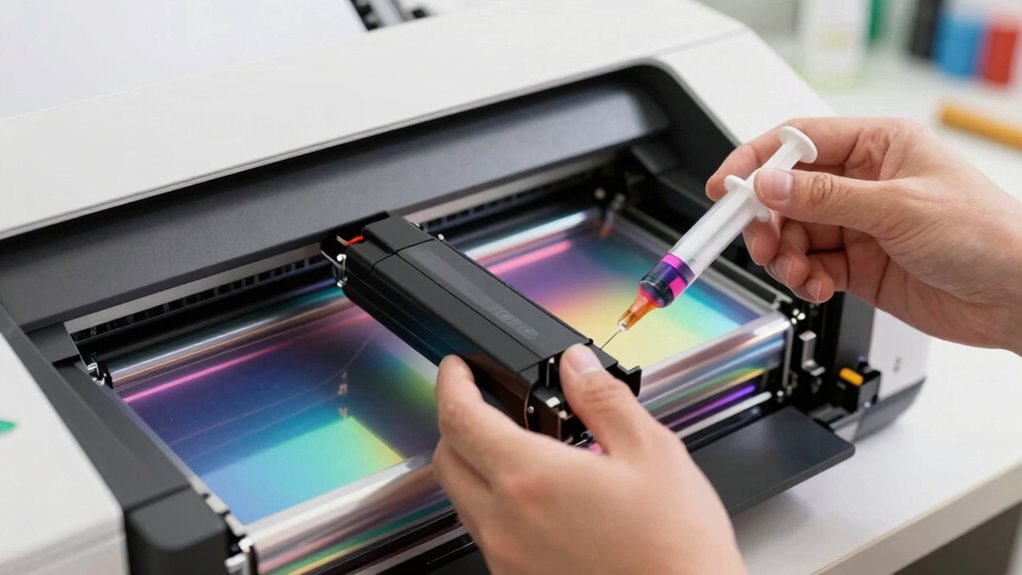
To keep your sublimation printer running smoothly, you need to master proper ink filling techniques. Regularly flushing the system helps prevent clogs and guarantees consistent print quality. Follow these steps carefully to maintain a clean, clog-free printer. Proper maintenance routines include using the right cleaning solutions and following manufacturer guidelines to ensure longevity and optimal performance. Additionally, ensuring proper ventilation considerations can help reduce ink buildup and improve overall system health. Incorporating system monitoring can also alert you to potential issues before they cause significant clogs or damage, especially when considering the importance of water quality in the overall maintenance of your equipment. Maintaining awareness of ink formulation is essential, as using the correct type of sublimation ink can significantly reduce the risk of blockages and system failures.
Proper Ink Filling Techniques
Proper ink filling techniques are essential to keep your sublimation printer running smoothly and prevent clogs. To ensure maximum ink flow and maintain nozzle health, follow these steps:
- Always use fresh, compatible sublimation ink and avoid overfilling the cartridges.
- Carefully open cartridges and fill slowly to prevent air bubbles, which can disrupt ink flow.
- Use a syringe or nozzle applicator to avoid spills and maintain nozzle cleanliness.
- After filling, run a test print to check for smooth ink flow and clear nozzles.
- Regular maintenance and proper ink management can significantly extend the life of your printer and prevent clogs.
Flushing Procedures for Clogs
When your sublimation printer starts experiencing clogs, performing a thorough flushing process is essential to restore proper ink flow. Begin by ensuring ink compatibility; using compatible inks reduces the risk of blockages. Next, run a cleaning cycle designed for nozzle cleaning, which helps clear dried or obstructed ink from the nozzles. If your printer has an automatic flushing feature, use it; otherwise, carefully manually flush the system with a cleaning solution recommended for sublimation inks. Be sure to follow the manufacturer’s instructions to avoid damaging your printer. After flushing, run a test print to confirm that ink flows smoothly. Regular flushing, combined with proper ink compatibility checks, can prevent future clogs and maintain ideal print quality. Additionally, understanding your printer’s navigation and mapping features can help optimize maintenance routines and troubleshooting efforts, especially when dealing with complex clog prevention strategies.
Tips for Installing Sublimation Ink Without Causing Clogs
Using quality sublimation ink is essential to prevent clogs and guarantee smooth printing. Always maintain a proper flush before installing new ink to keep the system clean. These steps help you avoid issues and keep your printer running efficiently. Additionally, understanding safe installation practices can further reduce the risk of damage or clogs during the conversion process. Properly handling printer components can also minimize potential problems and extend the life of your equipment.
Use Quality Ink
To avoid clogs and guarantee smooth printing, it’s vital to use high-quality sublimation ink from trusted brands. Quality ink ensures better ink compatibility with your printer and reduces the risk of blockages. Here are four tips to help you choose and install the right ink:
- Opt for reputable brands known for consistent quality.
- Check that the ink matches your printer’s specifications.
- Avoid generic or cheap inks that may cause clogs.
- Always verify the ink’s compatibility with your printer model before installation.
- Proper ink selection is essential for a successful conversion, ensuring your printer functions smoothly and produces professional results, especially when using sublimation ink designed specifically for your printing needs. Additionally, understanding the importance of ink quality can significantly impact your printer’s performance and longevity. Maintaining printer health through proper ink choices can help prevent issues such as clogs and damage, extending the lifespan of your equipment. Being aware of market trends can also guide you to the latest advancements in sublimation technology, further improving your printing outcomes. Regular cleaning and maintenance based on aerosol guard recommendations can enhance your printer’s longevity and performance.
Maintain Proper Flush
Before installing sublimation ink, it’s essential to perform a proper flush of your printer’s ink system. This step ensures print head maintenance and helps remove residual inks that could cause clogs. Use a compatible cleaning solution recommended for your printer model to avoid damaging the print head. During the flush, run several cleaning cycles to clear out old ink and check for any obstructions. Confirm that the new sublimation ink is compatible with your printer to prevent chemical reactions that might lead to clogs. Proper flushing minimizes the risk of print head damage and ensures smooth ink flow once you switch to sublimation inks. Additionally, understanding your printer’s ink system can help you perform more effective maintenance and avoid issues. Taking this step carefully will help you maintain your printer’s performance and extend its lifespan.
How to Print Safely and Avoid Common Ink Clogs
Ensuring safe printing and preventing ink clogs requires paying close attention to your printer’s maintenance and settings. First, check ink compatibility to make sure you’re using inks designed for your printer model, reducing the risk of clogs. Second, regularly calibrate your printer to keep colors accurate and ink flow smooth. Third, perform routine cleaning cycles to clear any residual ink buildup. Fourth, avoid mixing incompatible ink types or using expired cartridges. Proper maintenance and correct settings help prevent common issues and keep your printer running efficiently. By staying attentive to ink compatibility and calibration, you minimize the chances of clogs and ensure consistent, high-quality sublimation prints. Additionally, understanding ink flow dynamics can help you troubleshoot and optimize your printer’s performance even further.
Troubleshooting Clogs and Maintaining Your Sublimation Printer
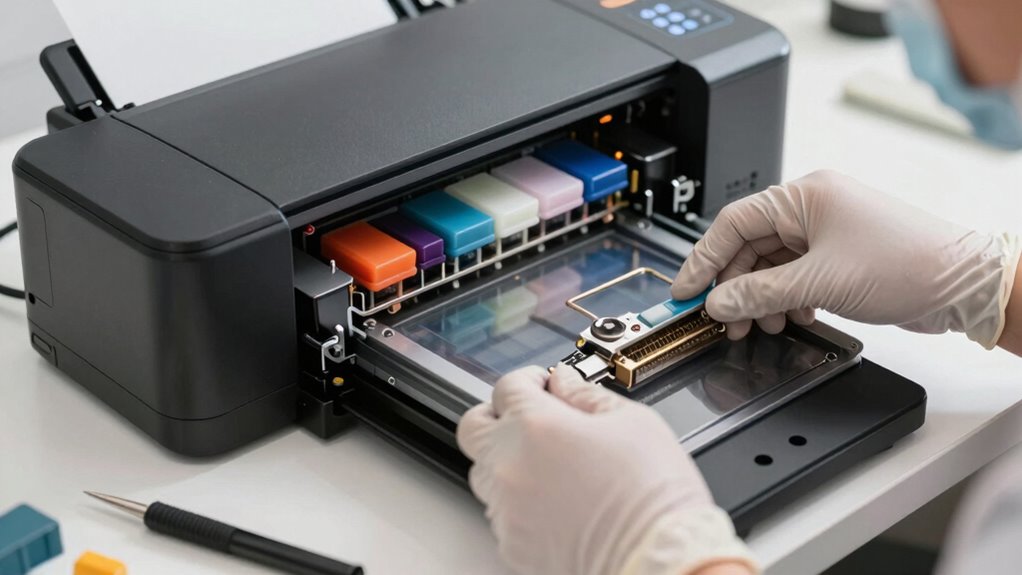
When your sublimation printer starts experiencing frequent clogs or inconsistent ink flow, addressing the issue promptly can save you time and costly repairs. First, check ink compatibility—using the right sublimation ink for your printer model is essential. Incompatible inks can cause blockages and damage. Next, confirm your printer is compatible with sublimation inks and the conversion process; not all models are designed for this. Regularly clean your print heads and perform test prints to clear potential clogs. Use compatible cleaning solutions recommended for your printer type. Also, avoid mixing different ink brands, which can lead to clogs. By maintaining proper ink compatibility and printer compatibility, you’ll keep your sublimation printer running smoothly and prevent unnecessary downtime.
What Not to Do When Converting Your Printer for Sublimation
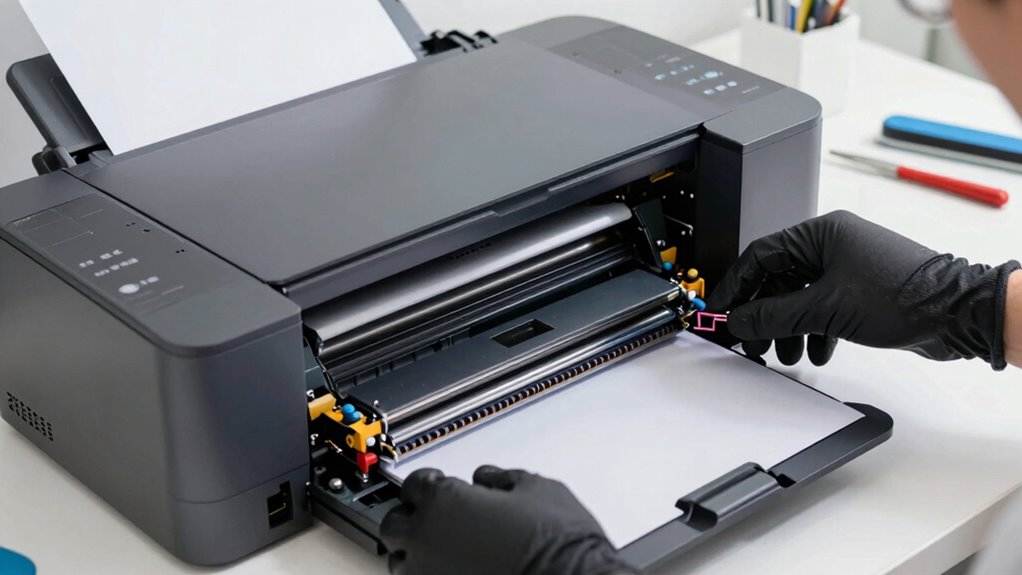
Converting a printer for sublimation requires careful planning, so avoid rushing the process or skipping essential steps. Ignoring safety precautions or rushing through can lead to DIY pitfalls that damage your printer or cause health risks. Here are things to avoid:
- Skipping thorough cleaning of the printer before conversion, which can cause clogs or damage.
- Using incompatible inks or materials, risking printer malfunction or poor print quality.
- Rushing the process without researching proper methods, leading to costly mistakes.
- Overlooking safety precautions, like proper ventilation or protective gear, which can pose health hazards.
Frequently Asked Questions
Can Any Inkjet Printer Be Converted for Sublimation Use?
Not all inkjet printers can be converted for sublimation use. You need to check ink compatibility first, as only specific printers work with sublimation inks. Additionally, converting a printer may void the printer warranty, so consider this risk before proceeding. If your printer is compatible and the warranty isn’t an issue, you can follow safe steps to convert it effectively for sublimation printing.
What Are the Signs of a Clogged Sublimation Printer?
You’ll notice clog indicators like streaks, blank spots, or inconsistent colors on your prints. You might also experience ink smudging or frequent paper jams. Regular maintenance tips, like cleaning the printhead and running diagnostic checks, help prevent clogs. If you see these signs, don’t ignore them—address the issue promptly to keep your sublimation printer running smoothly and avoid costly repairs.
How Often Should I Clean My Sublimation Printer?
You should clean your sublimation printer every 2-4 weeks, depending on usage. Following a consistent cleaning schedule helps prevent clogs and maintains print quality. Incorporate maintenance tips like wiping print heads and checking ink levels regularly. If you notice streaks or color inconsistencies, clean immediately. Regular cleaning keeps your printer running smoothly, extends its lifespan, and guarantees vibrant, high-quality sublimation prints every time.
Is There a Risk of Damaging My Printer During Conversion?
Absolutely, risking your printer’s health during conversion is like playing roulette with ink. You might damage it if you skip proper steps like printer calibration and checking ink compatibility. But don’t worry—if you follow the safe steps, you keep your printer safe and avoid costly repairs. Just take your time, double-check compatibility, and calibrate carefully. Enjoy your sublimation journey without turning your printer into a paperweight!
What Safety Precautions Should I Take During the Conversion Process?
You should handle electrical components carefully, guaranteeing the printer is unplugged before starting. Use protective gear like gloves and safety glasses to prevent injuries. Work in a well-ventilated area to avoid inhaling fumes from cleaning agents or inks. Follow manufacturer instructions precisely, and avoid rushing the process. Taking these safety precautions helps protect you from electrical hazards and ensures a smooth, damage-free conversion to sublimation printing.
Conclusion
Converting your printer to sublimation can be cost-effective and convenient, but safety and proper steps are key. Stay savvy by selecting the right printer, cleaning carefully, and following the correct filling procedures. Avoid avoidable clogs by adhering to expert tips and troubleshooting tricks. With patience and precision, you’ll produce perfect prints without problems. Remember, a prepared printer, paired with proper practices, promises pristine sublimation results and prevents pesky clogs. Happy printing!