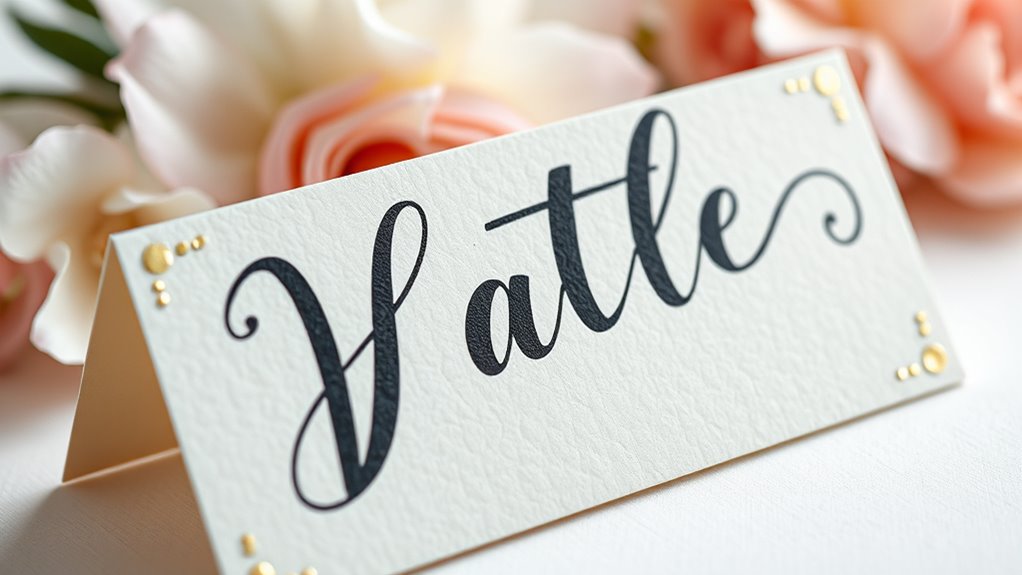

To design a faux calligraphy place card, start by writing your guest’s name in a simple, neat script with a regular pen. Identify the downstrokes in each letter and thicken these lines by retracing them with more pressure or a second pass. Add decorative touches like flourishes or borders to elevate the design. Use quality paper to guarantee smooth strokes, and practice for neatness. For more tips and techniques, continue exploring the steps to create stunning, handcrafted place cards.
Key Takeaways
- Select sturdy paper like cardstock or watercolor paper for a smooth, durable surface.
- Write the guest’s name in regular lettering, then identify downstrokes for thickening.
- Trace the downstrokes with more pressure or a second pass to create faux calligraphy.
- Add decorative flourishes or borders to enhance the elegance of the place card.
- Keep your hand steady and practice consistently for clean, professional-looking results.
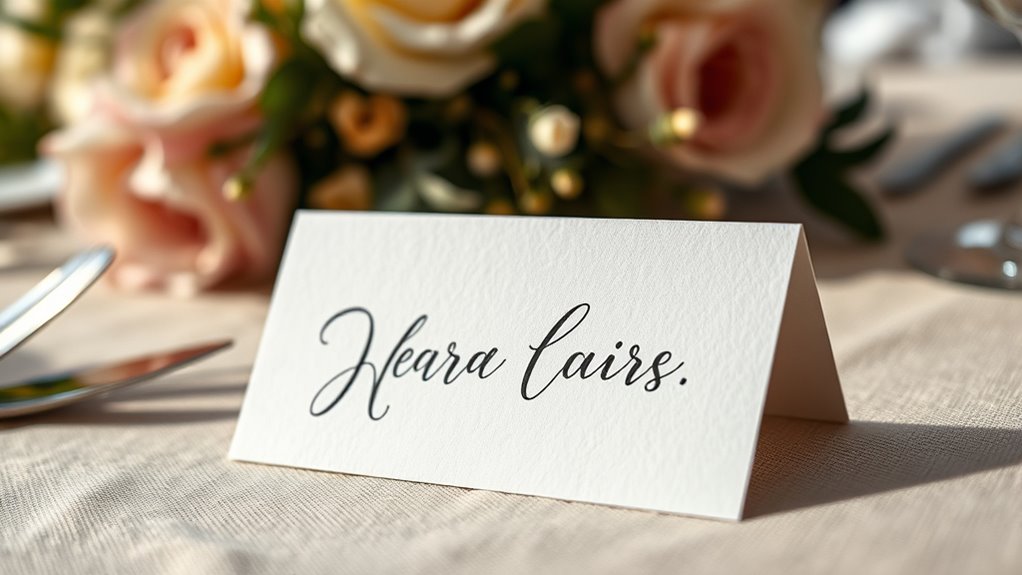
Faux calligraphy place cards offer a stylish and budget-friendly way to elevate your event decor without requiring advanced lettering skills. You don’t need to be a professional calligrapher to achieve elegant, hand-lettered looks—just some simple techniques and a bit of paper crafting know-how. The key lies in mastering basic lettering techniques that mimic traditional calligraphy, giving your place cards a personalized touch without the time or skill investment of real calligraphy.
Faux calligraphy place cards are an affordable way to create elegant, personalized event decor with simple lettering techniques.
Start by selecting your paper. Thicker cardstock or watercolor paper works best, as it provides a sturdy surface for your lettering. Once you’ve got your paper ready, choose a pen that suits your style—most people find that a fine-tip marker or a brush pen offers the best control and variation in line thickness. The idea behind faux calligraphy is to first write your lettering with a regular pen, then add thick strokes to mimic the characteristic contrast of calligraphy. When you finish writing the name or greeting, go back and thicken the downstrokes—these are the parts of the letters that would naturally be thicker in traditional calligraphy—by retracing with your pen, applying more pressure or simply going over the lines.
This technique is a form of paper crafting that allows you to create a handcrafted appearance efficiently. You can experiment with different styles—simple cursive, modern brush lettering, or even more elaborate script—by adjusting your letterforms and stroke thickness. The beauty of faux calligraphy is its flexibility; you don’t need special tools or expensive supplies. Instead, focus on your lettering technique: keep your hand steady, practice consistent pressure, and take your time to ensure each stroke is deliberate. With a little patience, your cards will look like they’ve been created by a professional, yet all you’ve used is a basic pen and some paper.
Adding embellishments like small flourishes, borders, or decorative elements enhances your place cards further, making them unique and tailored to your theme. You can also incorporate simple paper crafting techniques, such as layering or adding small paper embellishments, to give your cards more dimension. These touches make your place cards stand out without complicating the process. Additionally, understanding cookie and privacy policies can help you manage your online preferences while browsing or shopping for supplies.
Ultimately, designing a faux calligraphy place card is about blending art and simplicity. It’s accessible, fun, and allows you to personalize your event decor with minimal effort. By focusing on your lettering technique: keep your hand steady, practice consistent pressure, and take your time to ensure each stroke is deliberate. With a little patience, your cards will look like they’ve been created by a professional, yet all you’ve used is a basic pen and some paper.
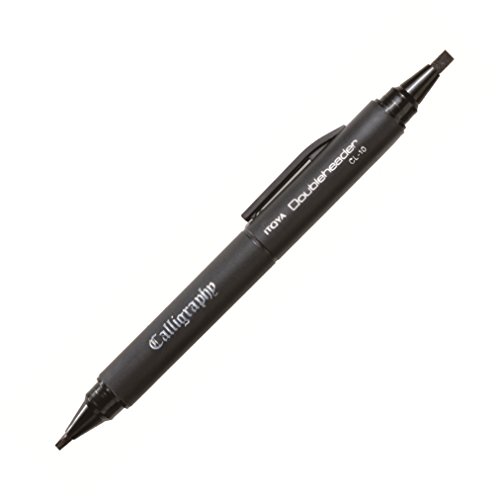
Itoya CL-10BP-BK Doubleheader Calligraphy Marker Black
- Dual chisel tips: 1.5mm and 3.0mm nibs
- Water-soluble ink: Easy to blend and wash out
- Acid-free ink: Safe for archival projects
As an affiliate, we earn on qualifying purchases.
As an affiliate, we earn on qualifying purchases.
Frequently Asked Questions
What Materials Are Best for Faux Calligraphy?
You should use ink pens or watercolor markers for faux calligraphy. Ink pens, especially gel or felt-tip varieties, give you clean, precise lines that are easy to control. Watercolor markers add a beautiful, textured look with vibrant color options. Both materials allow you to create the thick and thin strokes characteristic of faux calligraphy, making your place cards look elegant and professional without needing traditional calligraphy tools.
How Long Does Faux Calligraphy Last?
Faux calligraphy can last for quite a while if you choose the right materials. You’ll find that ink longevity and surface durability play key roles in how long your design stays vibrant. When you use waterproof markers or high-quality pens on sturdy surfaces, your faux calligraphy can last days or even weeks without fading or smudging. Proper sealing or framing further enhances its longevity, ensuring your artwork remains beautiful over time.
Can Faux Calligraphy Be Erased or Corrected?
Yes, you can correct mistakes in faux calligraphy, but removing faux ink can be tricky. If you need to correct errors, lightly use a damp cloth or a q-tip dipped in rubbing alcohol to gently eliminate the ink. Be careful not to smudge or tear the paper. Practice on a spare piece first to ensure you don’t damage your actual place card. Patience and gentle correction help achieve a clean, polished look.
Is Faux Calligraphy Suitable for Outdoor Events?
Like a sturdy oak standing tall in a storm, faux calligraphy can be suitable for outdoor events if you choose weather-resistant materials. You should opt for waterproof inks or markers and durable paper or cardstock to guarantee outdoor durability. While it adds a charming touch, be mindful of wind or rain, which could challenge its longevity. Proper sealing or lamination can help your faux calligraphy stay pristine amidst the elements.
What Tools Are Necessary for Beginners?
You need basic tools like a fine-tip pen or marker, ruler, and smooth paper to get started with faux calligraphy. These tools help you practice various calligraphy styles and explore different art techniques. As a beginner, focus on simple strokes and letter formations, gradually building your skills. With consistent practice and the right tools, you’ll master the art of faux calligraphy and create beautiful, personalized place cards.
Conclusion
Now that you’ve learned how to create a faux calligraphy place card, you’re ready to impress your guests with elegant, personalized touches. Did you know that handmade place cards can boost guest engagement by 30%? By mastering this simple technique, you add a sophisticated flair without the need for fancy tools. So, go ahead and customize your event’s vibe—your guests will notice and appreciate the effort you put into every detail!