
TL;DR

Get business pricing on tools and workshop supplies
- Business-only prices and quantity discounts
- Tax-exempt purchasing
- Multiple users, one account, clear invoices
A Hunker report describes a DIY method for turning an old laundry hamper into the outer mold for a concrete planter, using cardboard to shape its hollow center. The project can be customized, but the report notes that drainage and protective equipment need attention.
Hunker has reported a do-it-yourself method for making a concrete backyard planter with an old laundry hamper as its outer mold and cardboard as the inner mold. The approach gives homeowners a way to create a planter in a chosen shape, though the report does not provide a verified cost comparison or a tested estimate of how much the project saves.
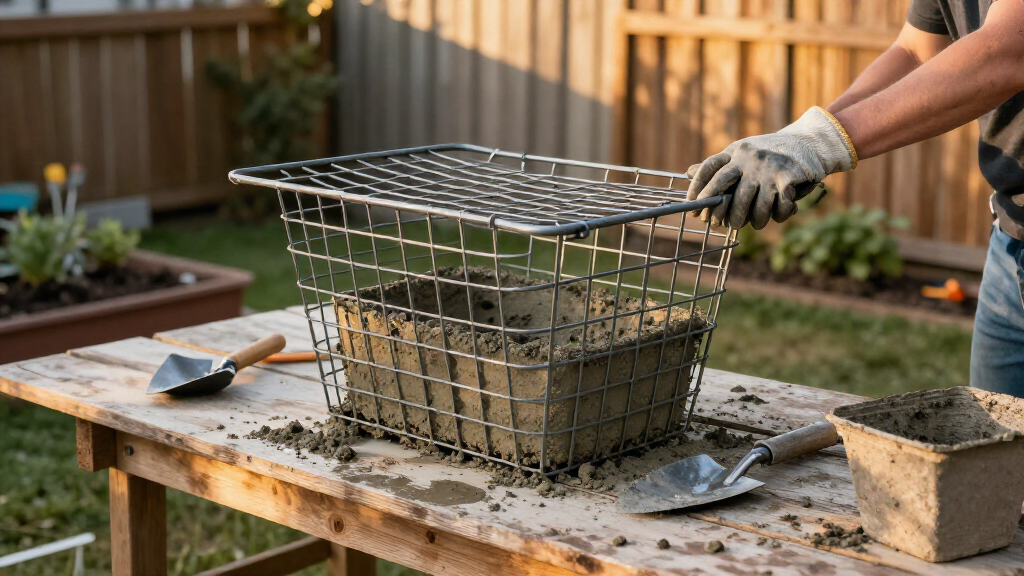
The hamper forms the planter’s exterior, while a smaller cardboard mold creates the hollow area for soil and plants. The Hunker report says the project also calls for concrete mix, water, a bucket, a measuring scoop, a trowel and a tool for mixing. A video from the YouTube channel DIY – Cement Ideas Tips demonstrates the technique. The report says a ready-made concrete mix can be used by adding water according to the package instructions; the video maker instead mixes cement and sand.
In the demonstrated method, packing tape is applied to the sides of a hamper with openings to help keep wet concrete from spilling through. The maker first pours and tamps a thin layer of concrete into the bottom, then centers the cardboard mold inside. Sand placed inside the cardboard can help hold it steady as concrete is added around it. The hamper is tapped or shaken during filling to level the mixture and release air bubbles. The planter must be left to cure fully before the molds are removed.
The report identifies a practical omission in the video: it does not show a drainage hole. It suggests either placing a greased PVC pipe or rubber stopper through the base of the inner mold before pouring and removing it after demolding, or drilling a hole after curing with a bit suitable for concrete. The article also recommends gloves, goggles and a mask while handling the materials, even though the video maker is not shown wearing them.
A Custom Planter Without a Store-Bought Mold
The project may appeal to people looking for a custom-sized garden container without buying a specialized planter mold. Reusing a household hamper also gives an otherwise unwanted object another use. Hunker contrasts the project with a store-bought example: a 15.7-inch concrete planter cited in its report costs more than $100. That price is an example, not a direct comparison with the DIY project’s total cost; the report does not calculate expenses for concrete, tools or decorative materials.
There is also a trade-off. A homemade concrete planter requires mixing, careful mold placement and time for curing, and a heavy finished container may be difficult to move. The drainage detail matters for gardeners because water needs a route out of the planter; the report flags this as a step viewers may need to add to the video’s instructions. Following product directions and using protective equipment can help reduce risks from concrete dust and wet mix.
Popular right now

Samsung 42-Inch Class OLED S90F 4K Smart TV (2025)

Bose QuietComfort Wireless Noise-Cancelling Over-Ear Headphones, Black

Vitamix 5200 Professional-Grade Blender, 64 oz. Container, Black
As an affiliate, we earn on qualifying purchases.
How the Hamper Shapes the Concrete
Concrete planters are made by pouring concrete around an inner form, leaving a cavity for planting. In this project, the laundry hamper replaces a purpose-made outer mold, while cardboard supplies the inner shape. Hunker notes that the same general method can be tried with other household containers, including an old bucket or small trash can, though the final planter’s dimensions and appearance will depend on the mold.
The report also describes ways to alter the finish. Foam mats placed against the hamper can create inset patterns or impressions, while jute or another textile can add texture. Stones or shells can be pressed into the rim before the concrete fully sets. After curing and demolding, the exterior can be left plain, painted or decorated with stencils, as shown in the video.
““The trouble is, concrete planters have a high price tag.””
— Hunker
Cost, Drainage and Curing Details
The supplied report does not state the project’s total cost, how long the planter takes to cure, or how durable a finished planter is under different weather conditions. It also does not give measurements for the cardboard mold or a tested mix ratio for every hamper size. The video’s omission of drainage means readers would need to plan that feature themselves; the report offers options but does not specify which is best for a particular planter.
The retail price cited by Hunker does not establish how much a DIY version would save. Costs will depend on whether the maker already has tools and a suitable hamper, as well as the amount and type of concrete mix needed. The report does not provide independent testing of the finished planter or a cost breakdown.
Plan the Mold Before Pouring
Anyone following the method would need to choose a hamper, make a smaller centered inner mold, decide how to provide drainage and prepare protective equipment before mixing concrete. Hunker advises following the instructions on a packaged mix if using one. The concrete should be allowed to cure fully before demolding, and any decoration or planting should wait until the planter is ready for use. The supplied report does not announce a follow-up test or additional project results.
Key Questions
What materials does the planter project use?
The method uses an old laundry hamper for the outer mold, cardboard for the inner mold, concrete mix and water. The report also lists a bucket, measuring scoop, trowel and mixing tool. Optional materials include packing tape, sand to stabilize the inner mold and items for decoration.
How does the planter get a drainage hole?
Hunker describes two options: place a greased PVC pipe or rubber stopper through the base of the inner mold before pouring and remove it after demolding, or drill a hole once the concrete has cured using a concrete-suitable bit. The video itself does not show a drainage hole.
Does making the planter cost less than buying one?
The report presents the method as a budget-minded alternative and cites a 15.7-inch store-bought planter priced at more than $100. It does not calculate the DIY project’s full cost, so actual savings are not established.
What safety equipment should be used?
Hunker recommends wearing gloves, goggles and a mask when working with the materials. Follow the concrete mix’s package directions and avoid handling wet concrete or dust without suitable protection.
Source: hunker.com