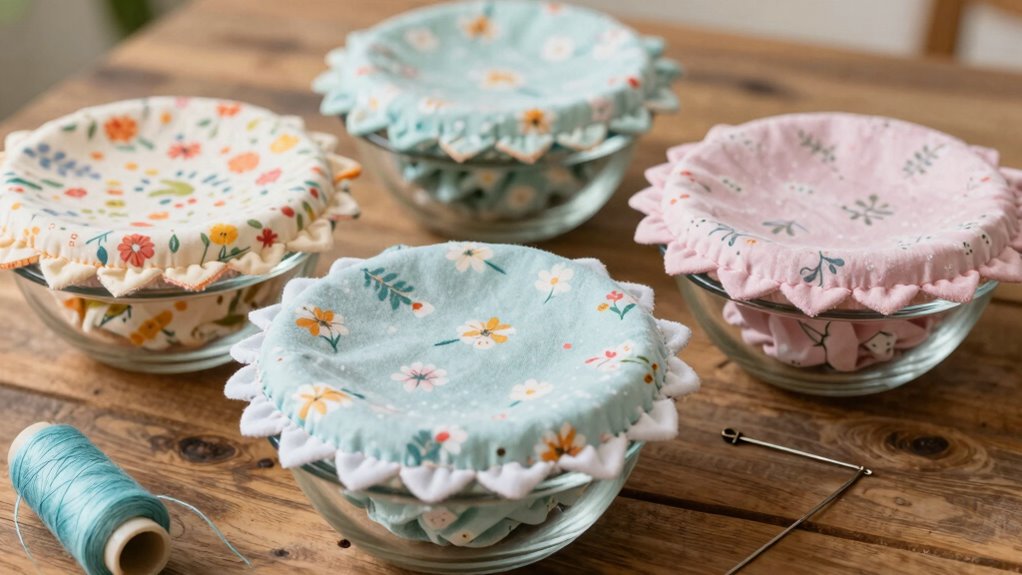

To sew a set of reusable bowl covers, choose lightweight, stretchy, and washable fabrics like cotton blends with spandex in bright or patterned colors. Cut slightly larger circles than your bowls, adding about half an inch for seams. Sew elastic thread into the edge using a zigzag stitch to create a snug, flexible fit, then reinforce the stitching. Add a small tab for easy removal. For detailed steps and tips, keep exploring—you’re about to discover the full process.
Key Takeaways
- Select lightweight, stretchy, washable fabric in bright or patterned designs, slightly larger than bowl openings with a seam allowance.
- Cut round fabric pieces, ensuring they are slightly larger than bowls, and organize for efficient sewing.
- Sew elastic thread into the fabric edge using a stretch or zigzag stitch, then gently gather for a snug fit.
- Test the cover on bowls, adjust tension if needed, and reinforce stitches for durability.
- Add small loops or tabs for easy removal, ensuring the covers fit multiple bowl sizes securely and stylishly.
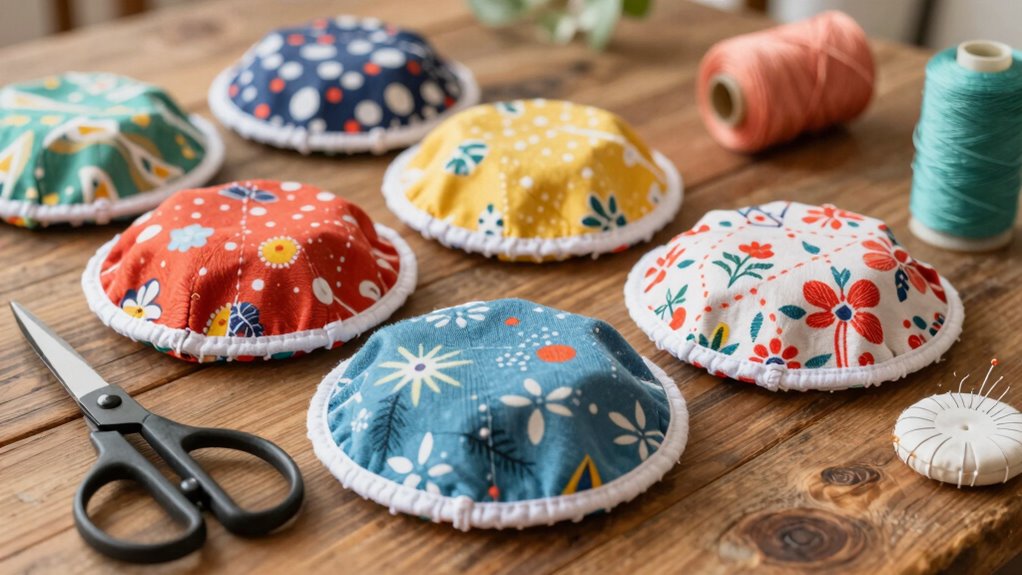
Ever wondered how to make your own eco-friendly bowl covers? Creating your own reusable covers is a simple, satisfying project that helps cut down on waste. The first step is choosing the right fabric. You want something lightweight, breathable, and somewhat stretchy, like cotton or cotton blends with a bit of spandex. These fabrics are easy to work with and will stretch smoothly over bowls of various sizes. When selecting your fabric, opt for patterned or bright colors to give your kitchen a cheerful touch. Make sure the fabric is washable and durable enough to withstand frequent use and cleaning. Once you’ve picked your fabric, cut out round pieces slightly larger than your bowls, giving yourself about half an inch extra around the edges for seam allowance.
Next, you’ll need to focus on elastic threading, a vital component that gives your covers their stretchability. Elastic thread is different from regular thread—it’s designed to stretch and return to its original length, making it perfect for creating snug, secure fits. Before sewing, set your machine to a stretch stitch or a zigzag stitch, as these will accommodate the elastic’s flexibility. Cut a length of elastic thread roughly twice the circumference of your bowl’s opening. Using a zigzag stitch, sew the elastic thread along the edge of each fabric circle. As you sew, gently pull the elastic thread to gather the fabric, creating a ruffled edge that will easily fit over the bowl. Make sure to keep the tension even to avoid puckering or uneven gathers. Incorporating proper sewing techniques can help ensure a smooth and secure finish. Additionally, using a stretch stitch can further enhance the flexibility and durability of your finished cover.
Once you’ve sewn the elastic into the edge, try it out on your bowl. The fabric should stretch smoothly without bunching or slipping. If needed, adjust the tension or resew to get a perfect fit. To make the covers more durable, you can reinforce the elastic stitching with a few extra zigzags. For added convenience, consider attaching a small fabric tab or loop on the edge, so you can easily remove the cover from the bowl. Remember, the key to a good reusable cover is a tight, secure fit that’s easy to put on and take off. With your choice of fabric and elastic threading techniques, you’ll end up with eco-friendly, versatile bowl covers that make your kitchen more sustainable and stylish.
As an affiliate, we earn on qualifying purchases.
Frequently Asked Questions
What Fabric Is Best for Reusable Bowl Covers?
You should choose a fabric with good fabric durability, like cotton or laminated polyester, for reusable bowl covers. These materials withstand frequent washing and use. When sewing, use strong stitches and reinforced seams to enhance resilience. Consider sewing techniques such as zigzag or double stitching to prevent fraying. These choices guarantee your bowl covers are long-lasting, flexible, and eco-friendly, making them perfect for everyday reuse.
Can I Make Bowl Covers Waterproof?
You can make bowl covers waterproof by applying a waterproof coating or using water-resistant fabric, which researches show enhances fabric durability. While fabric alone isn’t inherently waterproof, a coating like silicone spray creates a barrier that keeps moisture out. Make sure your fabric is suitable for this treatment, and test the coating on a small area first. This way, your reusable covers stay sealed and protected, extending their lifespan effectively.
How Do I Ensure the Cover Fits Different Bowl Sizes?
To guarantee your reusable bowl covers fit different bowl sizes, focus on elastic fit and adjustable sizing. Sew a stretchy elastic edge around the cover’s rim, so it snugly contracts over various bowls. Incorporate adjustable features like ties or elastic bands, allowing you to customize the fit as needed. This way, your covers stay secure on different-sized bowls, keeping contents fresh and avoiding slips or gaps.
Are There Eco-Friendly Materials Suitable for Sewing Covers?
Think of eco-friendly materials as nature’s gift to sustainable living. Yes, biodegradable fabrics and natural fiber options are perfect for sewing covers, offering an environmentally conscious choice. These materials break down naturally, reducing waste and pollution. By selecting organic cotton, hemp, or linen, you’ll create covers that are both functional and kind to the planet. Embracing these options helps you sew with purpose, making your kitchen greener, one cover at a time.
How Do I Wash and Care for Reusable Bowl Covers?
To care for your reusable bowl covers, hand wash or machine wash them in cold water with gentle detergent. Avoid bleach, which can damage eco-friendly fabrics. For stain removal, treat stains promptly with a mild stain remover or a mixture of baking soda and water before washing. Dry flat or air dry to maintain elasticity. Regular care tips like these extend the life of your covers and keep them looking fresh.
Conclusion
Sewing your own reusable bowl covers is a simple, eco-friendly way to reduce waste. With just a few materials and some basic sewing skills, you can create covers that fit snugly and last for years. Did you know that over 300 million tons of plastic are produced globally each year, much of which ends up in our oceans? By making these covers, you’re helping cut down on single-use plastics and making a positive impact on the environment.