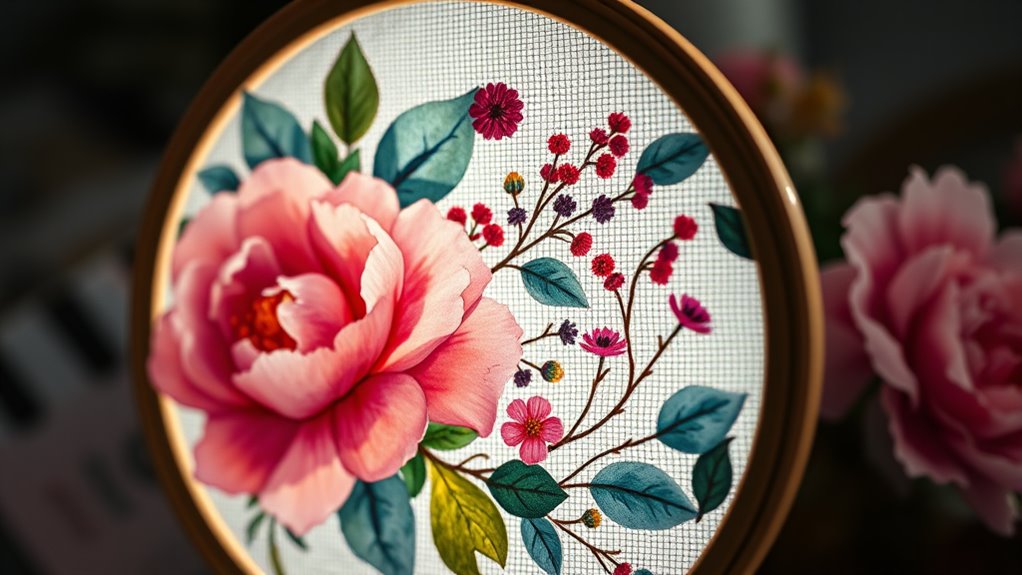

Creating a watercolor and embroidery hoop wreath involves selecting a color-coordinated palette, painting vibrant designs with smooth blending, and fastening the fabric tightly in an appropriately sized hoop. You then add embellishments like dried flowers or beads to enhance the texture, securing everything firmly for a polished look. For a special touch, choose a hoop that complements your artwork and hang it at eye level. If you want to master these steps, continue exploring detailed tips and techniques.
Key Takeaways
- Select a sturdy embroidery hoop and fabric suitable for watercolor painting and embroidery.
- Create a watercolor design using wet-on-wet techniques for seamless color blending on fabric.
- Tighten the fabric in the hoop, ensuring a smooth surface for embroidery embellishments.
- Add embroidery stitches and embellishments that complement the watercolor design for texture and detail.
- Securely assemble the wreath, then hang or display at eye level, avoiding direct sunlight for preservation.

6 Pcs Embroidery Hoop 6 Size, Round Plastic Cross Stitch Hoop with 16 Needles (3.6In to 10.7 in), Small Embroidery Hoop, Cross Stitch Hoops and Frames, Suitable for Embroidery, Craft Sewing
- Multiple Sizes Included: Six different hoop sizes with needles
- Durable Plastic Material: Lightweight, non-fading, smooth surface
- Adjustable Tightening: Wider opening and upgraded screw for secure grip
As an affiliate, we earn on qualifying purchases.
As an affiliate, we earn on qualifying purchases.
Gathering Materials and Tools

Before you begin creating your watercolor and embroidery hoop wreath, it’s important to gather all the necessary materials and tools. Start by choosing a cohesive color palette that reflects your style, sticking to a few complementary shades to keep your design harmonious. Next, select fabrics that match your chosen colors and texture preferences—light cottons or linen work well for embroidery. You’ll also need basic tools like scissors, embroidery needles, and watercolors or paint supplies. Consider having a clean workspace and an apron to safeguard your clothing. Gathering everything beforehand ensures you won’t interrupt your creative flow. With your color palette and fabric selection in hand, you’re ready to move forward confidently, knowing you have what you need to craft a beautiful wreath.
Painting the Watercolor Design

Now that your materials are ready, it’s time to bring your watercolor design to life. Focus on smooth color blending by applying wet-on-wet techniques, allowing colors to flow seamlessly into each other. Use gentle brush techniques to create soft gradations and delicate details. To enhance your painting, consider these steps:
Bring your watercolor design to life with smooth blending, gentle strokes, and subtle details for a harmonious finish.
- Start with light washes to establish your base colors, ensuring they blend naturally.
- Gradually add darker shades, using controlled brush strokes for depth and contrast.
- Use a clean, damp brush to soften edges and merge colors for a cohesive look.
- Remember to incorporate color harmony to ensure your palette creates a balanced and pleasing visual effect.
- Engage in mindful meditation practices while painting to foster focus and emotional well-being. Exploring artistic techniques can deepen your understanding and improve your skills.
- Pay attention to your brushwork, varying pressure and angle to achieve different textures. Additionally, understanding color theory can help you select and combine hues more effectively. Practicing proper water control is essential for achieving smooth washes and preventing unwanted blooms. With patience and precision, your watercolor design will develop vibrant, harmonious hues perfect for your wreath.
Preparing the Embroidery Hoop Base

To prepare your watercolor hoop base, start by selecting the right size and type of hoop for your wreath project. Guarantee it’s sturdy enough to support your watercolor design. Next, tighten the screw to keep the fabric taut, creating a smooth surface. When working with watercolor, use specific brush techniques to achieve seamless color blending on your fabric. Practice controlled brush strokes to gradually layer colors, avoiding harsh lines. Here’s a quick overview:
| Step | Tip | Focus Area |
|---|---|---|
| 1 | Choose size | Balance size with design scale |
| 2 | Tighten fabric | Keep surface smooth |
| 3 | Use gentle brush strokes | Achieve smooth color blending |
| 4 | Layer colors gradually | Enhance depth and dimension |
This preparation ensures your watercolor transitions are fluid and your base remains solid for embroidery. Additionally, understanding the sound vibrations involved can help you create a more calming and harmonious workspace. Incorporating ergonomic tools can further improve comfort during long crafting sessions. Recognizing the importance of color accuracy can help you select the best pigments for vibrant, true-to-life results. For those interested in vehicle customization, Jeep Tuning techniques can be applied to optimize your vehicle’s performance and handling in various terrains.
Adding Embellishments and Details

Once you’ve completed your watercolor background, it’s time to add embellishments and details that bring your wreath to life. Use thoughtful embellishment techniques like layering fabric or adding small, textured elements to create depth. Incorporate color blending to seamlessly integrate your embellishments with the watercolor background, ensuring a harmonious look. Here are some key steps:
- Select embellishments that complement your color palette and paint accents or highlights using subtle color blending.
- Attach small embellishments, such as dried flowers or beads, to add texture and visual interest.
- Use fine brushes or embroidery stitches to add delicate details, enhancing the overall depth and intricacy of your wreath.
- Consider incorporating multivitamins to support your overall health and ensure you’re getting essential nutrients while working on your craft projects. Additionally, exploring product branding strategies can help you showcase your handcrafted wreaths to a wider audience.
- Paying attention to retirement planning tips can help you manage your time and resources more effectively, allowing you to enjoy your creative pursuits without financial stress. Incorporating content relevance techniques can also boost your craft’s visibility and appeal.
Final Assembly and Display Tips

After you’ve finished adding all your embellishments and details, the final step is to assemble and display your wreath effectively. Start by choosing the right hoop size, considering your design’s overall balance and the space where you’ll hang it. When selecting a hoop, opt for one that complements your color blending choices; a neutral or coordinating color can enhance your watercolor effects. Verify all elements are securely attached, using hot glue or thread as needed. To hang, use a sturdy hook or ribbon that supports the wreath’s weight without shifting. Position it at eye level for maximum impact, and avoid placing it in direct sunlight to preserve your watercolor’s vibrancy. Incorporating appropriate payment methods if you plan to sell or gift your wreath, ensuring transactions are seamless and secure. Exploring remote hackathons can also inspire innovative ways to showcase your craft online and reach a broader audience. Additionally, considering the varieties of embroidery hoops available can help you choose the best option for durability and aesthetic appeal. Using a balance between size and detail can ensure your wreath remains visually appealing without becoming overwhelming. Paying attention to emotional expression and creativity can also add a unique touch that makes your wreath stand out. With thoughtful assembly and display, your wreath will look polished and inviting.
Frequently Asked Questions
Can I Customize the Wreath for Seasonal Themes?
Absolutely, you can customize the wreath for seasonal themes. You can add seasonal motifs like flowers, leaves, or holiday symbols to match each occasion. Plus, you have the option of adjusting the color palette to reflect the season’s colors, making your wreath more personalized and festive. This flexibility allows you to keep your decor fresh and relevant all year round, perfectly aligning with your seasonal style and preferences.
What Are Some Alternative Materials for the Watercolor Paint?
If you’re looking for alternatives to watercolor paint, you might consider acrylic alternatives like gouache or fabric paints, which provide vibrant, opaque colors. Digital painting is also a great option, offering endless color options and easy corrections. These choices let you customize your project with different textures and finishes, giving you more creative freedom. Experiment with these materials to find the perfect fit for your artistic style and project needs.
How Do I Prevent Paint From Bleeding Outside the Design?
Don’t let paint bleeding ruin your artwork—think of it as a double-edged sword. To prevent paint bleeding, focus on water control; use just enough water to keep your colors vibrant without spreading beyond the lines. You can also apply a light sketch or mask the edges with tape for added precision. Practice patience, and soon you’ll master the trick of controlling water and keeping your design sharp.
Is It Necessary to Seal the Watercolor Before Adding Embroidery?
Sealing your watercolor before adding embroidery isn’t strictly necessary, but it’s recommended for better paint durability. Use sealing techniques like a fixative spray or clear acrylic to protect your artwork from smudging or fading. This creates a stable surface, preventing paint from bleeding or smearing when you stitch. Sealing guarantees your design stays vibrant and intact, giving your embroidery a smooth, professional finish.
How Long Does This Wreath Typically Take to Complete?
Think of creating this wreath as planting a garden—you need patience for each step. The wreath assembly itself takes about 1-2 hours, but you should consider watercolor drying time, which can be 30 minutes to an hour. If you decide to seal your watercolor, add extra drying time. Overall, expect to spend roughly 3-4 hours from start to finish, depending on your pace and drying conditions.
Conclusion
As you hang your watercolor and embroidery hoop wreath, you might notice how the gentle hues perfectly match your cozy space—almost as if it was meant to be. Sometimes, the smallest details, like a delicate stitch or a splash of color, can unexpectedly transform a simple project into a cherished piece. So, when you step back to admire it, realize that your creativity has beautifully come full circle—making your home uniquely yours.