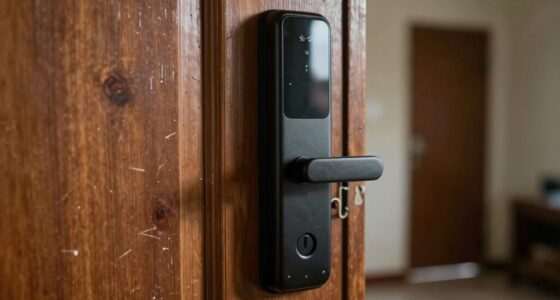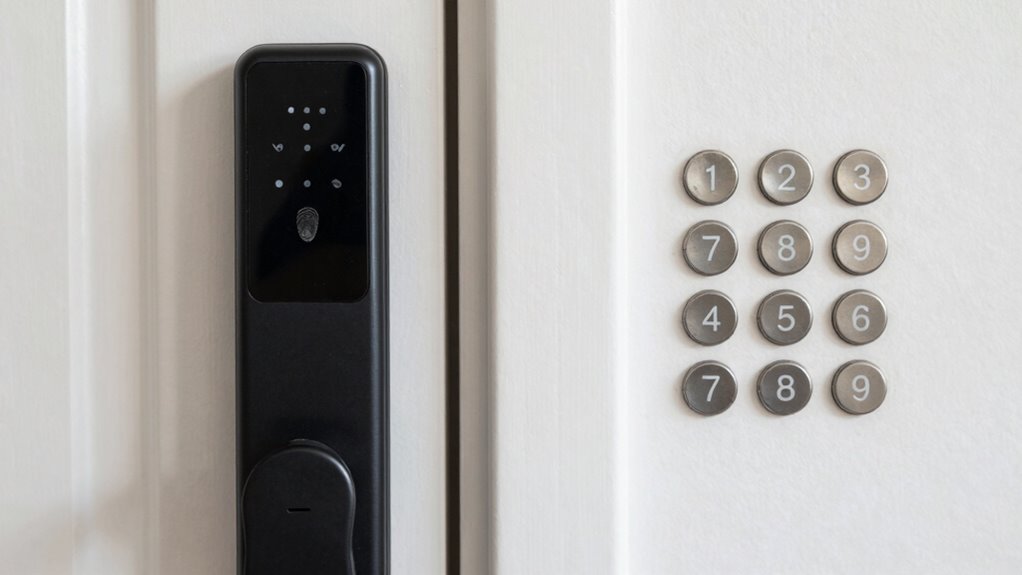

If you’re choosing between a keypad and a fingerprint lock, consider long-term reliability and environment. Keypads are simple and easier to maintain but can be compromised or forgotten, especially if codes are shared or changed often. Fingerprint locks offer quick access but can malfunction due to dirt, moisture, or skin issues. Dusty or humid conditions make keypads more durable. To discover which option suits your needs best and the potential pitfalls, explore further.
Key Takeaways
- Fingerprint locks are more convenient but may malfunction in dusty, humid environments, increasing maintenance needs.
- Keypads are less susceptible to environmental issues but pose higher security risks if PINs are observed or guessed.
- Durable, high-quality products and proper installation reduce long-term problems for both lock types.
- Changing keypad codes is easier than managing multiple fingerprint profiles, affecting long-term usability.
- Environmental factors and user conditions influence reliability, making keypad more suitable in harsh conditions.
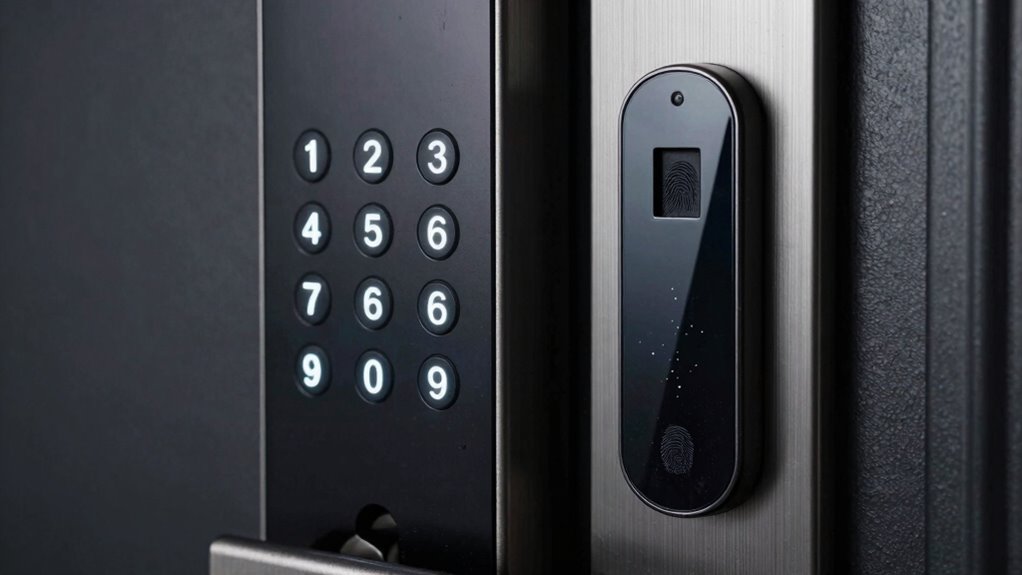
When choosing between a keypad or fingerprint lock, it’s essential to take into account which option will cause fewer headaches down the line. Both types of locks aim to boost security, but they come with their own sets of challenges. You’ll want to weigh security vulnerabilities against user convenience to make the best decision for your needs. Keypads are generally straightforward to use; you simply punch in a code. However, their security can be compromised if someone observes you entering your PIN or if someone gains access to the code through guessing or theft. On the other hand, fingerprint locks offer a biometric solution that’s quick and often more private, but they’re not immune to vulnerabilities. For example, fingerprints can sometimes be spoofed with high-quality copies, or the scanner might malfunction due to dirt, moisture, or wear over time. This means that security vulnerabilities are present in both options, but the nature of those vulnerabilities differs. Additionally, environmental factors such as dusty or humid conditions can significantly impact the performance of fingerprint scanners. Regular maintenance and understanding biometric technology limitations can help in managing these issues effectively. It’s also important to consider manufacturing quality, as the durability of the lock can influence long-term reliability. Proper installation and product design quality play crucial roles in ensuring the lock functions reliably over time. User convenience plays a significant role in your long-term satisfaction with the lock. Keypads are familiar and simple; you don’t need to remember complex passwords or worry about fingerprint clarity. Still, if multiple people need access, you’ll have to regularly change or share the code, which can become cumbersome and less secure over time. Fingerprint locks excel in ease of use—just press your finger, and you’re in. They’re ideal when you want quick access and don’t want to carry keys or remember codes. Still, issues can arise if your fingers are wet, dirty, or injured, preventing the scanner from recognizing you. Over time, fingerprints may also become less reliable because of wear or skin conditions, which could cause frustration. Ultimately, both options have strengths and weaknesses in security vulnerabilities and user convenience. If you prefer a simple, familiar approach and don’t mind changing codes occasionally, a keypad might suit you better. But if you prioritize quick access and minimal fuss, a fingerprint lock could be more convenient—provided you’re aware of potential scanner issues. Think about who will need access and how often, as well as how much security you require. Consider your environment too: dusty or humid conditions might affect fingerprint scanners, while keypad durability depends on the build quality. By carefully assessing these factors, you’ll pick a lock that minimizes future problems, giving you peace of mind for years to come.
As an affiliate, we earn on qualifying purchases.
Frequently Asked Questions
Which Lock Type Is More Resistant to Hacking Attempts?
Fingerprint locks are generally more resistant to hacking attempts than keypads because they rely on biometric data, which is harder to replicate or hack. With smart lock integration, fingerprint scanners enhance user authentication methods by adding an extra layer of security. Keypads, on the other hand, can be vulnerable to code guessing or hacking. So, for better resistance to hacking, choose a fingerprint lock with advanced biometric technology.
How Do Environmental Factors Affect Fingerprint Lock Reliability?
Imagine trying to open your phone in a rainstorm—the moisture impact can make your fingerprint lock falter, as water and dirt interfere with sensor readings. Environmental interference like humidity, dust, or extreme temperatures can reduce reliability, causing false rejections or failures. To avoid frustration, consider how these factors might affect your lock’s performance, and choose a system resilient to such conditions for dependable security.
Can Keypad Codes Be Easily Changed or Reset?
Yes, keypad codes can be easily changed or reset. You typically use simple reset procedures, often involving a specific sequence or a reset button, to update your code. To keep your lock secure, choose a complex code with a mix of numbers and avoid common patterns. Regularly changing your code enhances security and prevents unauthorized access, ensuring your home stays safe.
What Is the Typical Lifespan of a Fingerprint Scanner?
A typical fingerprint scanner lasts around 5 to 10 years, depending on biometric accuracy and scanner durability. You might notice reduced accuracy or slower responses over time, especially if the scanner faces frequent use or harsh conditions. To avoid future problems, choose a high-quality scanner designed for durability, and keep it clean. Regular maintenance helps guarantee the device remains reliable, prolonging its lifespan and maintaining biometric accuracy.
Are There Any Health Concerns With Shared Keypad Surfaces?
Shared keypad surfaces can pose hygiene concerns due to surface contamination, especially if multiple people touch them regularly. You should clean the keypad frequently with disinfectant to reduce bacteria and viruses. Using hand sanitizer before and after keypresses also helps maintain hygiene. If you’re worried about health, a fingerprint lock might be safer, as it minimizes surface contact and reduces the risk of transmitting germs.
Conclusion
Imagine choosing between a keypad and a fingerprint lock like picking a reliable partner. I once knew someone who relied solely on a keypad, only to forget the code during an emergency. The lesson? Your choice should minimize future headaches. Just as a sturdy bridge withstands storms better, pick the lock that offers fewer problems down the road. Think ahead, weigh the risks, and choose wisely—your peace of mind depends on it.