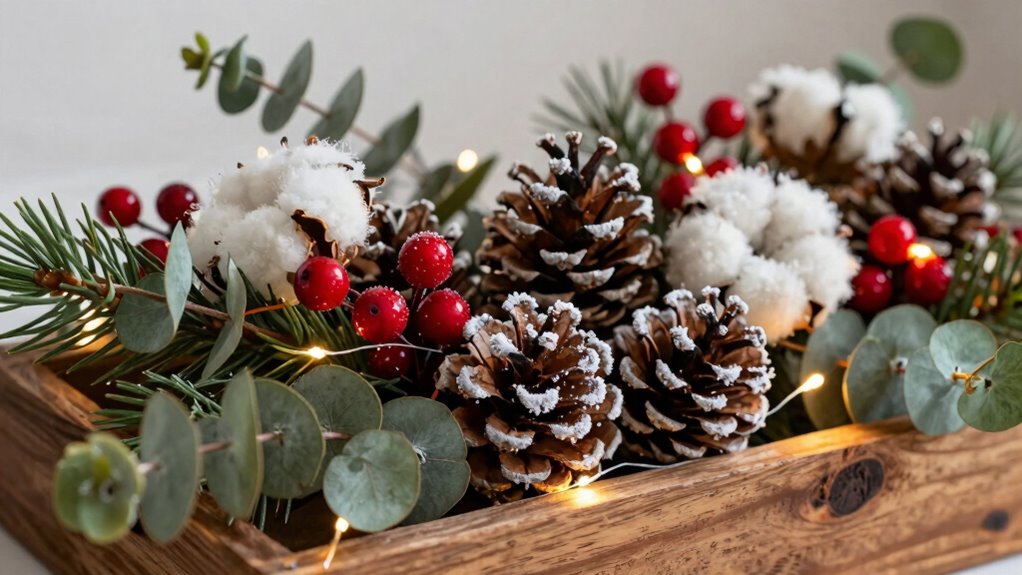

To make your handmade winter centerpiece last beyond a week, start by hydrating flowers thoroughly and trimming stems at a sharp angle before arranging in fresh water with floral preservative. Incorporate durable elements like pinecones, holly berries, and evergreen branches, and spray flowers with floral sealant for extra protection. Keep the arrangement cool, away from direct heat and sunlight, and mist lightly daily. For more tips on extending your centerpiece’s charm, explore additional preservation methods and environmental tips.

Get business pricing on tools and workshop supplies
- Business-only prices and quantity discounts
- Tax-exempt purchasing
- Multiple users, one account, clear invoices
Key Takeaways
- Hydrate flowers thoroughly and keep stems in water until just before arranging to extend freshness.
- Use floral sealant or glycerin mixtures to preserve blooms and prevent wilting.
- Place the centerpiece in a cool, shaded area away from heat or direct sunlight.
- Regularly mist and check water levels, replenishing with fresh water and preservative as needed.
- Remove wilted or decayed elements promptly to maintain overall appearance and longevity.

Creating a beautiful handmade winter centerpiece can brighten your home and set a festive mood, but keeping it fresh beyond one week requires some careful planning. When it comes to holiday decor, your goal is to preserve the beauty of your arrangement while maintaining its vibrant appearance. Floral preservation plays a key role here, guaranteeing your centerpiece remains eye-catching for days to come.
First, select your flowers and greenery wisely. Opt for hardy, long-lasting blooms such as pinecones, holly berries, or evergreen branches, which naturally withstand the winter climate. If you choose flowers like roses or carnations, consider cutting them early in their bloom cycle so they’re less fragile and easier to preserve. Incorporate elements like dried fruits, cinnamon sticks, or twigs to add texture and depth, making your centerpiece more resilient and visually interesting.
Proper hydration is crucial. Before assembling your centerpiece, hydrate your flowers thoroughly and keep them in water until just before arranging. This helps maximize their lifespan. When you assemble, use a clean, sharp tool to trim stems at an angle, which allows better water absorption. Fill your vase or container with fresh, cold water and add floral preservative to inhibit bacteria growth and extend freshness. Regularly check the water level, especially in the first few days, and replenish as needed to prevent the stems from drying out. Additionally, understanding flower longevity can help you select the best blooms for your arrangement’s lasting power. Using techniques like floral preservation can also significantly extend the life of your centerpiece, making it more durable and beautiful for longer periods. Ensuring your floral arrangement is free of bacteria and fungi through proper preservation methods also plays a vital role in maintaining freshness.
Incorporating floral preservation techniques can considerably prolong the life of your centerpiece. For example, you might spray your flowers with a floral sealant or use a mixture of water and glycerin to keep stems supple. If you’re working with dried elements, make certain they are completely dry and stored in a cool, dark place before arranging. Adding a layer of flower protection methods can further shield your arrangement from early wilting. To keep your arrangement looking lively, remove any wilted or dead foliage promptly, which prevents decay from spreading to healthier parts.
Placement also makes a difference. Keep your centerpiece away from direct sunlight, heat sources, or drafts, which can accelerate wilting. Maintaining a cool, humid environment helps preserve the moisture content of your flowers and greenery. Consider misting the arrangement lightly with water daily, especially if you notice it beginning to look dull. Additionally, choosing an appropriate location that minimizes exposure to extreme environmental conditions can significantly extend your centerpiece’s lifespan.
Popular right now

Ninja CM401 Specialty Coffee Maker with 10-Cup Carafe and Fold-Away Frother

Dreame G10 Pro Wet and Dry Vacuum Mop

Dyson V15 Detect Cordless Vacuum
As an affiliate, we earn on qualifying purchases.
Frequently Asked Questions
Can I Reuse the Centerpiece for Next Year?
Yes, you can reuse your DIY floral arrangements for next year if you store them properly. Carefully remove any dried or decayed flowers, and dry out the centerpiece completely. Store it in a cool, dry place to prevent mold or damage. Seasonal decorating tips suggest keeping the arrangement intact to reuse, but consider revitalizing it with new flowers or accents to make it look vibrant again for the next season.
What Are the Best Storage Methods for Leftover Flowers?
Think of your leftover flowers as delicate whispers of beauty; treat them with care. To preserve them, focus on flower preservation by trimming stems and removing excess foliage. Store them in a clean vase filled with fresh water, and make sure you change the water regularly. Don’t forget to give the vase a thorough cleaning before reusing it, keeping your flowers fresh and vibrant for as long as possible.
How Do I Prevent Mold Growth on Live Plants?
To prevent mold growth on live plants, keep your centerpiece in a well-ventilated area and avoid overwatering. Use artificial plants as a low-maintenance alternative if mold persists. Regularly remove any dead or decaying leaves, and guarantee your flowers aren’t in standing water, which promotes mold. Good airflow and proper watering are key to mold prevention, helping your winter centerpiece stay fresh and beautiful longer.
Are There Eco-Friendly Materials I Can Use?
Think of eco-friendly alternatives as the roots of your winter centerpiece—they keep everything grounded in sustainability. You can use sustainable materials like reclaimed wood, biodegradable moss, dried flowers, and recycled ornaments. These options not only reduce waste but also add a natural, earthy charm to your decor. By choosing eco-friendly materials, you craft a beautiful, conscious centerpiece that celebrates winter’s beauty without harming the planet.
How Often Should I Water or Care for the Centerpiece?
You should water your winter centerpiece only when the materials feel dry to the touch, typically every 3 to 4 days. Follow a consistent watering schedule and care tips to keep it fresh longer. Avoid overwatering, which can cause mold or rot, and guarantee proper drainage if you’re using floral foam or containers. Regularly check for wilting or browning flowers, and remove any dead or decaying elements promptly to maintain its beauty.
Conclusion
With a little care, your winter centerpiece can shine as brightly as a guiding star through the darkest nights. Think of it as a symbol of warmth and hope, reminding you that beauty and cheer can endure beyond fleeting moments. When you tend to it gently, your creation becomes a beacon of the season’s spirit—lasting longer, glowing stronger, and filling your home with the cozy glow of winter’s enduring charm.