For quiet solo hobbies at home, selecting the right telescope means balancing ease of use, portability, and viewing quality. The Gskyer 70mm Aperture 400mm AZ Mount stands out as an excellent overall choice for beginners thanks to its simplicity and affordability. The 80mm Aperture 600mm Refractor offers a compact, travel-friendly design perfect for those who want to observe on the go, while the Telescope 150EQ appeals to more serious hobbyists interested in high-powered, detailed views. The main tradeoffs revolve around size, complexity, and price—more advanced models often require more setup and investment. Keep reading for a detailed comparison to find the best fit for your solo stargazing adventures.
Key Takeaways
- Portability is a common theme—smaller, travel-friendly models like the 80mm refractor excel for quiet solo hobbies at home.
- High-powered, professional-grade telescopes offer better detail but often sacrifice ease of use and price accessibility.
- Ease of setup and operation are critical for solo hobbyists who prioritize relaxing, undisturbed observing sessions.
- Accessories like phone adapters and remote controls enhance solo use by simplifying tracking and capturing images.
- There’s a clear tradeoff between entry-level affordability and higher-end performance, so select based on your commitment level.


More Details on Our Top Picks
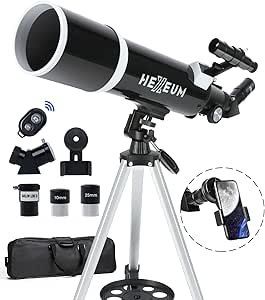
Gskyer 70mm Aperture 400mm AZ Mount Refracting Telescope for Kids and Beginners
This telescope stands out for its balance of portability, ease of use, and decent optical performance, making it ideal for those just starting out or exploring celestial sights on the go. Compared to the ToyerBee 70mm model, it offers fully coated optics that improve image clarity without adding weight, and the wireless remote enhances smartphone astrophotography. While its 70mm aperture is sufficient for lunar and planetary views, it doesn’t provide the power needed for deep-sky objects, which is a tradeoff for its travel-friendly design. Assembly is straightforward, but younger users might need assistance due to the included setup. This pick is perfect for casual stargazing, family trips, or kids developing an early interest in astronomy, though it’s less suited for advanced observers seeking high magnification or detailed deep-sky imaging.
Pros:- Fully coated optics for clearer, brighter images
- Includes phone adapter and wireless remote for easy astrophotography
- Lightweight, portable design with travel bag and adjustable tripod
Cons:- Limited magnification power compared to larger telescopes
- May require assembly and some supervision for young users
Best for: Beginners, families, and travelers wanting a portable, easy-to-use telescope for casual observing and phone astrophotography.
Not ideal for: Serious amateur astronomers or those looking for high magnification and deep-sky imaging, as its limited aperture and magnification restrict detailed observations.
- Aperture:70mm
- Focal Length:400mm
- Eyepieces Included:2
- Barlow Lens:3x
- Finder Scope:5×24 with cross-hair lines
- Tripod Material:Aluminum alloy
- Accessories Included:Carry bag, phone adapter, wireless remote
Bottom line: This telescope makes the most sense for beginners and travelers who want simple, reliable views without the complexity of larger instruments.
80mm Aperture 600mm Refractor Telescope for Adults & Kids, Compact Portable Travel Model with Backpack
Compared with smaller telescopes like the ToyerBee 70mm, this model offers a larger 80mm aperture that captures more light, resulting in brighter, more detailed images of the moon and planets. Its compact, lightweight design with a backpack makes it ideal for family outings or travel, and the included smartphone adapter and multiple eyepieces add versatility. However, the manual focus can be awkward for quick adjustments, and its limited magnification range (30x-66x) isn’t enough for deep-sky objects or detailed planetary study. This telescope is well-suited for beginners, especially those who want a portable option that still delivers quality views, but it might fall short for more serious or advanced astronomy pursuits.
Pros:- Large 80mm aperture for bright, clear images
- Includes smartphone adapter and two eyepieces for variety
- Portable design with backpack for easy travel
Cons:- Manual focus can be slow and imprecise
- Limited magnification range restricts detailed planetary or deep-sky views
Best for: Beginners and casual observers seeking a portable, bright-view telescope for travel and family stargazing.
Not ideal for: Advanced astronomers or deep-sky astrophotographers who need higher magnification and more precise focus controls.
- Aperture:80mm
- Focal Length:600mm
- Eyepieces Included:K20mm (30x), K9mm (66x)
- Finder Scope:5×24 with crosshair
- Mount Type:Altazimuth with scale
- Field of View:133.33 Arc Minutes
- Zoom Ratio:64x
Bottom line: This telescope offers great value for casual, travel-oriented astronomy but isn’t suited for those chasing high-detail deep-sky imaging.
MEEZAA Telescope, Telescope for Adults High Powered Professional, 90mm Aperture 800mm Refractor Telescopes for Astronomy Beginners Fully Multi-Coated with AZ Mount Tripod & Phone Adapter & Carry Bag
This telescope stands out for its substantial 90mm aperture and 800mm focal length, making it a more capable choice for those wanting detailed lunar and planetary views or entry-level deep-sky exploration. Its high-quality, fully multi-coated lenses provide brighter, sharper images than smaller models like the ToyerBee 70mm. The stable AZ mount with 360° rotation offers smooth tracking, and the included accessories, such as the phone adapter and carry bag, make it convenient for backyard or outdoor use. However, its weight and physical size are greater, and the higher magnification range (up to 240x) can be challenging to use without a sturdy mount or tripod. This model is best for beginners ready to upgrade from basic telescopes, but less ideal for those seeking ultra-portable setups or astrophotography at high magnifications.
Pros:- 90mm aperture captures more light for brighter, detailed images
- Fully multi-coated lenses for high clarity and contrast
- Stable AZ mount with smooth 360° rotation
Cons:- Heavier and less portable than smaller models
- High magnification may require a sturdy tripod for steady viewing
Best for: Beginners with some experience seeking a more powerful, stable telescope for backyard viewing and light astrophotography.
Not ideal for: Travelers or kids who need a lightweight, ultra-portable telescope, or those focused solely on planetary viewing without the need for high magnification.
- Aperture:90mm
- Focal Length:800mm
- Magnification Range:36X – 270X
- Mount Type:AZ Tripod
- Tripod Height Adjustment:28″ to 46″
- Included Accessories:Finder scope, zenith mirror, eyepieces, Barlow lens, carry bag, smartphone adapter
Bottom line: This telescope provides a good balance of power and stability for beginner backyard astronomers seeking more detailed views.
Telescope for Adults & Kids, 70mm Aperture Refractor (15X-150X) Portable Travel Telescope with Phone Adapter & Wireless Remote, Astronomy Beginners Gifts, Black
This model offers a flexible magnification range from 15X to 150X, making it suitable for both casual planetary viewing and more detailed lunar observations. Its 70mm aperture is comparable to the ToyerBee and Gskyer options, but the addition of a wireless remote and quick assembly makes it stand out for family use and beginner fun. The included phone adapter simplifies capturing images, and the lightweight, portable design is perfect for travel or backyard use. However, the higher magnification can be shaky at times, especially without a sturdy mount, and the manual focus may require patience. This telescope is ideal for kids and beginners who want a versatile, easy-to-use device that enhances their celestial experience without overwhelming complexity.
Pros:- Wide magnification range up to 150X
- Wireless remote and phone adapter for easy photography
- Lightweight, portable design with quick setup
Cons:- Magnification at higher settings may be shaky without a sturdy mount
- Manual focus can be slow for quick adjustments
Best for: Families and casual astronomy enthusiasts seeking a versatile, portable telescope with simple controls and photo capabilities.
Not ideal for: Advanced users or those wanting high-magnification astrophotography or ultra-stable viewing for detailed planetary or deep-sky work.
- Aperture:70mm
- Focal Length:300mm
- Magnification Range:15X-150X
- Mount Type:Altazimuth
- Included Accessories:Phone adapter, wireless remote
- Focus Type:Manual
Bottom line: This telescope is a versatile, family-friendly choice for casual skywatching and beginner photography, though it lacks the stability for high-magnification detailed work.
Telescope 150EQ Astronomical Professional Telescope for Adults High Powered, Manual Equatorial Reflector Telescopes for Beginners with Phone Adapter, Moon Filter, Stainless Tripod – with Carrying Bag
This 150mm aperture reflector telescope is a powerhouse that surpasses many beginner models, especially with its manual equatorial mount that allows for precise tracking—ideal for those ready to deepen their stargazing experience. Compared with the Dianfan 90mm, it offers a larger aperture and higher magnification potential, making faint objects like nebulae more visible. However, this increased capability does come with a tradeoff: it’s heavier (14 kg) and less portable, which might be a challenge for solo users who prefer quick setups or travel. The sturdy stainless steel tripod and included accessories—phone adapter, Moon filter, and carry bag—add value and convenience, enabling both terrestrial and celestial viewing. Its setup takes around 20 minutes, and the smooth tracking makes it suitable for long observation sessions, though the manual operation demands some patience and skill. This model is well-suited for dedicated amateurs who enjoy detailed lunar and planetary views and are comfortable with a slightly more involved assembly process. The main tradeoff is its weight and complexity compared to smaller, more portable options, but the clarity and power justify the effort for committed hobbyists.
Pros:- Large 150mm aperture for bright, detailed images of faint objects
- High magnification range (26x–130x) with included eyepieces and Barlow lens
- Pre-assembled equatorial mount for smooth, accurate tracking
- Comprehensive kit including phone adapter and Moon filter
Cons:- Heavy and less portable, less ideal for frequent transport
- Manual operation requires more experience and patience
Best for: Serious amateur astronomers or adults who want a high-powered, precise telescope for extended, detailed sky observation at home.
Not ideal for: Casual stargazers or those seeking a lightweight, quick-to-set-up telescope for spontaneous night sky viewing; its weight and manual operation may be cumbersome.
- Optical Tube Diameter:150mm
- Focal Length:650mm
- Mount Type:Manual Equatorial
- Eyepiece Compatibility:Standard 1.25 inches
- Tripod Material:Stainless steel
- Weight:14 kg
Bottom line: This telescope is perfect for dedicated sky lovers who prioritize power and precision over portability.
Dianfan 90mm Aperture 800mm Refractor Telescope for Beginners with Stainless Tripod, Phone Adapter & Carry Bag
This 90mm aperture refractor telescope offers a solid balance of brightness and portability, with a focal length of 800mm that supports a wide range of terrestrial and lunar observations. Its fully coated lenses deliver clear, bright images, making it a step up from smaller beginner models like the Gskyer 70mm. The included stainless steel tripod and phone adapter make setup straightforward, and the high magnification range (32x–240x) allows for detailed lunar and planetary views. However, the manual focus may be less convenient for quick adjustments, and the altazimuth mount lacks tracking capabilities, requiring manual repositioning for prolonged observation. This model is ideal for those just starting out who want an easy-to-use scope that can handle both celestial and terrestrial targets, but it might fall short for users seeking motorized tracking or advanced astrophotography. The compact design and included accessories make it a versatile choice, though the manual focus can be a minor frustration during extended viewing sessions.
Pros:- Large 90mm aperture for bright, sharp images
- Versatile magnification range (32x–240x) for multiple viewing options
- Portable, sturdy tripod and included carry bag for easy transport
- Straight-through finderscope for easy object locating
Cons:- Manual focus may require frequent adjustments for clarity
- No tracking or motorized mount for prolonged observations
Best for: Beginners or casual hobbyists who want a versatile, portable telescope suitable for lunar, planetary, and terrestrial viewing without complex setup.
Not ideal for: Experienced astronomers or those interested in astrophotography, as it lacks tracking and motorized features for long-exposure imaging.
- Aperture:90mm
- Focal Length:800mm
- Magnification Range:32x-240x
- Mount Type:Altazimuth
- Finderscope:Straight-Through
- Coating:Fully Coated
Bottom line: This refractor offers excellent value for beginners seeking a portable, all-around telescope for home use and outdoor adventures.
High-Powered 90mm Aperture Refractor Telescope with Stainless Tripod and Phone Adapter
This 90mm aperture refractor with a 900mm focal length excels at high-magnification viewing, reaching up to 450x with the included 3x Barlow lens, making it well-suited for detailed lunar and planetary studies. It’s a clear step above the Dianfan 90mm in magnification potential, appealing to those wanting to see Mars’ surface or lunar craters in finer detail. The adjustable stainless steel tripod (29-46 inches) adds stability, but at high magnifications, even slight instability can impact image quality, especially in less stable conditions. Its multiple eyepieces provide flexibility, yet the high magnification range demands very steady viewing conditions, limiting usability in windy or light-polluted environments. This model is ideal for enthusiasts focusing on planetary detail, but less so for wide-field or deep-sky viewing, which require a larger aperture or tracking features. The setup is straightforward, but the high magnification limits the scope’s versatility under typical home conditions.
Pros:- Large 90mm aperture for bright, high-resolution planetary images
- Includes multiple eyepieces and 3x Barlow for flexible magnification
- Adjustable tripod for stability and comfort during viewing
- Easy to set up with detailed guide included
Cons:- High magnification (up to 450x) requires very stable conditions
- Tripod adjustment can be cumbersome for very tall or short users
Best for: Intermediate hobbyists eager to explore planetary features in great detail, especially those comfortable with manual adjustments and stable viewing conditions.
Not ideal for: Casual viewers or those in light-polluted urban areas, as the high magnification demands stable skies and may be difficult to use effectively without tracking.
- Aperture:90mm
- Focal Length:900mm
- Magnification Range:36x-450x
- Tripod Height Adjustment:29-46 inches
- Optical Coating:Fully Multi-Coated
- Eyepieces Included:Multiple
Bottom line: This telescope is best suited for planetary observers who have stable conditions and want detailed views of lunar and planetary surfaces.
Koolpte Telescope for Adults & Beginner Astronomers – 80mm Aperture 600mm Fully Multi-Coated High Transmission Coatings with AZ Mount Tripod Phone Adapter, Carrying Bag, Wireless Control
This 80mm aperture telescope with a 600mm focal length offers a user-friendly experience, especially with its wireless control and quick setup. Its lightweight design and included accessories—phone adapter, carry bag, and AZ mount—make it an attractive option for beginners or casual users who want to quickly start observing. The dual eyepieces (25mm and 10mm) with a 3x Barlow provide magnifications of 24x and 72x, suitable for lunar and planetary viewing. While its transmission coatings improve brightness and clarity, the manual AZ mount lacks tracking capabilities, requiring manual repositioning for prolonged sessions. Compared to the Dianfan 90mm, it’s slightly more portable and easier for quick setup, but it offers less maximum magnification. This model is ideal for those new to astronomy or looking for a simple, reliable scope for casual home use, but it’s less suited for advanced imaging or deep-sky observing due to its smaller aperture and manual mount.
Pros:- Easy and quick to set up with no tools needed
- Wireless remote control for convenience
- Includes two eyepieces and 3x Barlow for versatile magnification
- Lightweight and portable for outdoor use
Cons:- No tracking or motorized features for long observing sessions
- Maximum magnification limited to about 72x, less ideal for detailed planetary imaging
Best for: Beginners or casual hobbyists seeking an easy-to-use telescope with wireless control for quick setup and lunar/planetary observation.
Not ideal for: Advanced astronomers or deep-sky enthusiasts who want motorized tracking or larger apertures for faint object viewing.
- Aperture:80mm
- Focal Length:600mm
- Magnification Range:24x-72x
- Mount Type:AZ Mount
- Coating:High Transmission Coatings
- Wireless Control:Yes
Bottom line: This telescope offers a straightforward, portable experience perfect for beginners exploring the night sky at home.

How We Picked
These telescopes were evaluated based on performance, ease of use, build quality, portability, and value for solo hobbyists. Preference was given to models that balance simplicity with quality, making them suitable for quiet, solo observation at home without requiring extensive setup or maintenance. We prioritized user-friendly features like stable mounts, versatile focal lengths, and compatibility with accessories such as phone adapters. The ranking reflects a combination of affordability, usability, and the ability to deliver satisfying views for casual observation, ensuring each product serves a specific niche within the solo astronomy community.Factors to Consider When Choosing Best Telescopes For Quiet Solo Hobbies At Home
Choosing the best telescope for quiet solo hobbies involves considering several factors beyond raw specifications. First, think about portability—if you prefer quick setup and minimal fuss, a compact model with a sturdy mount is ideal. Next, evaluate optical quality—higher aperture sizes typically mean brighter, more detailed views, but often come with increased size and cost. Ease of use is equally important; beginner-friendly features like simple mounts and quick alignment can make solo sessions more relaxing. Additionally, consider accessory compatibility, especially phone adapters for capturing images. Lastly, reflect on your long-term interest—whether you want a basic setup or a more advanced, high-powered instrument—since this impacts both budget and satisfaction.Portability and Size
For quiet, solo hobbies at home, a telescope that’s easy to move and set up can make the experience more enjoyable. Smaller refractors, like the 80mm models, are lightweight and come with carrying cases, making them convenient for quick sessions or storage. Larger, more powerful telescopes, such as the 150EQ, tend to be bulkier and require more space and effort to handle, which might detract from the relaxing aspect of solo observing. Consider your space constraints and how often you want to move or transport your telescope. A portable design encourages regular use and helps keep the hobby engaging without feeling burdensome.Optical Quality and Aperture
Aperture size directly affects the brightness and detail of what you can see. For quiet, solo hobbies, a balance is key—larger apertures like 90mm or 80mm provide clear views without overwhelming setup complexity. However, bigger isn’t always better if it compromises ease of use or portability. Multi-coated optics improve image clarity and contrast, which enhances the viewing experience during peaceful, solitary sessions. Keep in mind that higher-quality optics often come at a higher price, so evaluate whether the incremental improvements meet your expectations for quiet observation.Ease of Use and Setup
Since solo hobbies thrive on relaxed, undisturbed observation, selecting a telescope with straightforward setup is essential. Refractors with AZ mounts are generally easier for beginners, offering intuitive operation and quick alignment. Manual equatorial mounts provide more control for detailed viewing but require more patience and practice to use effectively. Remote controls and phone adapters are valuable accessories that minimize the need for manual adjustments, allowing you to focus on observing rather than fiddling with equipment. Prioritize models with clear instructions and minimal assembly to maximize your quiet, solo experience.Accessories and Compatibility
Adding accessories like phone adapters and wireless remote controls can significantly enhance solo hobbies by simplifying image capturing and tracking. Compatibility with smartphones makes it easier to document your observations without additional equipment, fostering a more engaging and personal experience. Check whether the telescope comes with or supports these accessories—models like the Koolpte and Dianfan often include them. Investing in a telescope with versatile compatibility can boost your enjoyment and help you develop your skills at a comfortable, unhurried pace.Long-Term Value and Upgrade Potential
While entry-level models are affordable and easy to operate, consider whether you might want to upgrade later. Some telescopes, especially those with higher-quality optics and stable mounts, offer room for adding accessories or improving components. If your interest in quiet solo hobbies deepens, investing in a more capable instrument now can save money and hassle later. Conversely, if you’re just exploring the hobby, a more straightforward, less expensive model might be the best initial choice. Think about your long-term goals and how your telescope can grow with your skills and interests.Frequently Asked Questions
What size telescope is best for quiet solo hobbies at home?
For quiet, solo hobbies at home, telescopes with apertures around 70mm to 90mm are ideal because they balance ease of use, portability, and image quality. Larger apertures provide brighter, more detailed views but tend to be heavier and more complex to set up. Smaller models, like the 70mm refractors, are lightweight and quick to assemble, making them perfect for relaxed sessions. Your choice should reflect how much space you have, your comfort with setup, and whether you prioritize quick access to observing or detailed views.Are motorized mounts necessary for quiet solo observation?
Motorized mounts are not essential for quiet, solo hobbies, especially if you prefer a calm, stationary viewing experience. Manual mounts, like AZ or equatorial types, are simpler, more affordable, and require less maintenance, which aligns well with a relaxed atmosphere. However, motorized or remote-controlled mounts can make tracking objects easier, reducing the need for constant adjustments and allowing you to focus solely on observing. If you value a peaceful, minimal-effort experience, a good manual mount with precise controls is often enough.Should I prioritize portability over optical quality?
It depends on your specific needs. If you plan to frequently move your telescope around or store it easily, portability may take precedence, favoring smaller, lighter models. However, sacrificing some optical quality for portability can limit the detail and brightness of your views. For most quiet, at-home hobbies, a balance works best—choose a telescope with decent aperture and stable mount that’s still manageable in size. This way, you enjoy satisfying views without the hassle of bulky equipment.How important are accessories like phone adapters?
Accessories like phone adapters can greatly enhance the solo observing experience by allowing you to effortlessly capture images or videos of what you see through the telescope. They are especially useful for those who enjoy documenting their hobby or sharing observations. Compatibility varies, so selecting a model that supports common accessories adds flexibility and long-term value. Investing in a telescope with such features can make your quiet, solo sessions more engaging and help you develop your skills over time.Is a more expensive telescope worth it for beginners?
While higher-priced telescopes often feature better optics and more stable mounts, they are not always necessary for beginners focused on quiet, solo hobbies. A well-chosen affordable model can provide excellent views and ease of use without overwhelming complexity or cost. As you gain experience and confidence, you might consider upgrading to more advanced equipment. For now, prioritize models that are simple, reliable, and suited to your current skill level, ensuring your hobby remains enjoyable without unnecessary expense.Conclusion
For those just starting out or seeking a straightforward, relaxing experience, the Gskyer 70mm Aperture offers excellent value and simplicity. The 80mm Aperture 600mm Refractor is perfect for portable, quiet hobbies on the go, while the Telescope 150EQ suits serious hobbyists craving detailed views and expansion potential. Beginners should lean toward models with easy setup and basic tracking, whereas more experienced hobbyists might prioritize larger apertures and advanced mounts. In any case, selecting a telescope tailored to your commitment level and space will make your quiet, solo stargazing sessions more rewarding and enjoyable.