If you’re looking for the best DSLR cameras for product photography in 2026, I recommend considering options like the Canon EOS Rebel T7, T7 Kit, and the bundle versions, which offer high-resolution sensors, versatile lenses, and user-friendly features. These cameras provide sharp images, reliable autofocus, and good connectivity, making product shots easier. Keep exploring—there’s more to discover to help you choose the perfect one for your needs.
Key Takeaways
- The top DSLR cameras for product photography in 2026 feature high-resolution sensors like 24.1MP APS-C for detailed images.
- They support versatile lenses, including macro and telephoto options, with wide apertures for depth control.
- Advanced autofocus systems with multiple focus points ensure sharp, precise product shots.
- Built-in Wi-Fi and NFC enable quick sharing and remote control for efficient workflow.
- User-friendly features like articulating screens and intuitive controls simplify capturing professional-quality product images.
| Canon EOS Rebel T7 DSLR Camera with 18-55mm Lens |  | Beginner-Friendly Choice | Sensor Type: APS-C CMOS | Megapixels: 24.1 MP | Connectivity: Wi-Fi, NFC | VIEW LATEST PRICE | See Our Full Breakdown |
| Canon EOS Rebel T7 DSLR Camera Kit with Accessories |  | Versatile Starter Kit | Sensor Type: APS-C CMOS | Megapixels: 24.1 MP | Connectivity: Wi-Fi, NFC | VIEW LATEST PRICE | See Our Full Breakdown |
| Canon EOS Rebel T7 DSLR Camera Kit |  | Expandable Creativity | Sensor Type: CMOS (APS-C) | Megapixels: 24.1 MP | Connectivity: Wi-Fi, NFC | VIEW LATEST PRICE | See Our Full Breakdown |
| Canon EOS 2000D Rebel T7 DSLR Camera Bundle |  | Best for Streaming | Sensor Type: APS-C CMOS | Megapixels: 24.1 MP | Connectivity: Wi-Fi, NFC | VIEW LATEST PRICE | See Our Full Breakdown |
| Canon EOS 2000D Rebel T7 DSLR Camera Bundle |  | All-in-One Bundle | Sensor Type: APS-C CMOS | Megapixels: 24.1 MP | Connectivity: Wi-Fi, NFC | VIEW LATEST PRICE | See Our Full Breakdown |
| Canon EOS 4000D DSLR Camera Bundle (Renewed) |  | Renewed Value | Sensor Type: APS-C CMOS | Megapixels: 18.0 MP | Connectivity: Wi-Fi | VIEW LATEST PRICE | See Our Full Breakdown |
| XNSIAKXA 8K Digital Camera with Dual Lens | 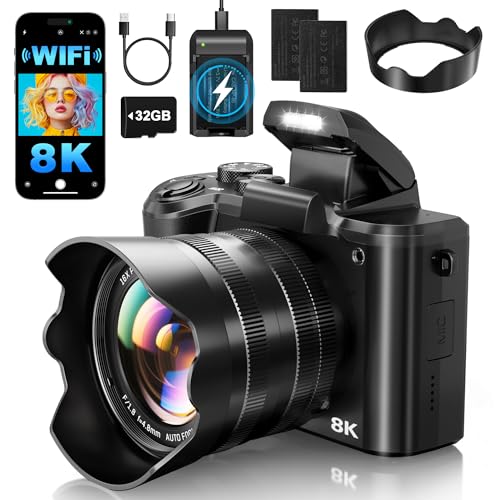 | High-Res Content Creation | Sensor Type: CMOS (1/4-inch size) | Megapixels: 88 MP | Connectivity: Wi-Fi, HDMI, USB | VIEW LATEST PRICE | See Our Full Breakdown |
More Details on Our Top Picks
Canon EOS Rebel T7 DSLR Camera with 18-55mm Lens
If you’re just starting out in product photography and want a reliable DSLR without breaking the bank, the Canon EOS Rebel T7 with 18-55mm lens is a great choice. It boasts a 24.1MP APS-C sensor, ensuring sharp, detailed images. Its DIGIC 4+ processor helps with quick processing, and the built-in Wi-Fi makes sharing your photos easy. The kit includes a versatile 18-55mm lens with image stabilization, perfect for capturing various product shots. With multiple scene modes, creative filters, and autofocus, you’ll find it user-friendly and capable of producing professional-looking results even as a beginner.
- Sensor Type:APS-C CMOS
- Megapixels:24.1 MP
- Connectivity:Wi-Fi, NFC
- Lens Compatibility:EF-S (with EF support)
- Video Resolution:1080p
- Display Type:LCD (3-inch)
- Additional Feature:Built-in Wi-Fi and NFC
- Additional Feature:Supports Eye-Fi cards
- Additional Feature:Approximate weight 1.04 lbs
Canon EOS Rebel T7 DSLR Camera Kit with Accessories
The Canon EOS Rebel T7 DSLR Camera Kit with Accessories stands out as an excellent choice for beginners and hobbyists looking to elevate their product photography. It features a 24.1MP APS-C CMOS sensor and DIGIC 4+ processor, ensuring vibrant colors and sharp details even in low light. Compatibility with Canon EF and EF-S lenses offers creative flexibility for different shot types. The kit includes essential accessories like an 18-55mm lens, memory card, and shoulder bag, making it ready to shoot right out of the box. Its user-friendly design, built-in Wi-Fi, and lightweight build make it perfect for capturing high-quality images with ease.
- Sensor Type:APS-C CMOS
- Megapixels:24.1 MP
- Connectivity:Wi-Fi, NFC
- Lens Compatibility:EF, EF-S
- Video Resolution:1080p
- Display Type:LCD (3.0-inch)
- Additional Feature:Includes shoulder bag
- Additional Feature:64GB memory card included
- Additional Feature:Compatible with Canon EF lenses
Canon EOS Rebel T7 DSLR Camera Kit
The Canon EOS Rebel T7 DSLR Camera Kit stands out as an excellent choice for beginners and hobbyists venturing into product photography. It features a 24.1 MP CMOS sensor that captures highly detailed, vibrant images, even in low light. The kit includes versatile lenses—a wide-angle 18-55mm and a telephoto 75-300mm—perfect for various product shots. With built-in Wi-Fi, a 3-inch articulating touchscreen, and an optical viewfinder, it’s easy to frame and share your work. Its autofocus system, multiple shooting modes, and RAW support guarantee sharp, professional-quality images. Overall, it offers great value and user-friendly controls for those starting out in product photography.
- Sensor Type:CMOS (APS-C)
- Megapixels:24.1 MP
- Connectivity:Wi-Fi, NFC
- Lens Compatibility:EF, EF-S
- Video Resolution:1080p
- Display Type:LCD (3-inch, articulating)
- Additional Feature:Includes two lenses
- Additional Feature:Articulating touchscreen display
- Additional Feature:95% optical viewfinder coverage
Canon EOS 2000D Rebel T7 DSLR Camera Bundle
For beginners and hobbyists looking for an affordable yet capable DSLR, the Canon EOS 2000D Rebel T7 bundle stands out as an excellent choice. It features a 24.1MP APS-C sensor and DIGIC 4+ processor, delivering sharp images with good detail and clarity. The camera offers ISO 100-6400, expandable to 12,800, making it versatile in low light. With Full HD video, 3 fps burst shooting, and built-in Wi-Fi, it’s perfect for capturing moments and sharing easily. The kit includes an 18-55mm lens, a 64GB card, LED light, case, and tripod, providing everything needed for versatile shooting.
- Sensor Type:APS-C CMOS
- Megapixels:24.1 MP
- Connectivity:Wi-Fi, NFC
- Lens Compatibility:EF-S
- Video Resolution:1080p
- Display Type:LCD (3-inch)
- Additional Feature:Supports EOS Webcam Utility
- Additional Feature:Includes LED video light
- Additional Feature:Supports multiple aspect ratios
Canon EOS 2000D Rebel T7 DSLR Camera Bundle
If you’re starting out in product photography and want a versatile, user-friendly DSLR, the Canon EOS 2000D Rebel T7 bundle is an excellent choice. It features a 24.1MP APS-C CMOS sensor, offering sharp, detailed images, and supports Full HD video. The bundle includes two lenses—an 18-55mm zoom and a 75-300mm telephoto—giving you flexibility for different shots. With built-in Wi-Fi, NFC, and a 3-inch LCD, sharing and framing your shots is straightforward. Its autofocus system ensures sharp images, and the extensive accessory kit makes it perfect for beginners looking to explore product photography without extra fuss.
- Sensor Type:APS-C CMOS
- Megapixels:24.1 MP
- Connectivity:Wi-Fi, NFC
- Lens Compatibility:EF, EF-S
- Video Resolution:1080p
- Display Type:LCD (3-inch)
- Additional Feature:90-day Amazon Renewed warranty
- Additional Feature:Supports MP4 video format
- Additional Feature:Includes full-size tripod
Canon EOS 4000D DSLR Camera Bundle (Renewed)
With its 18MP APS-C CMOS sensor and user-friendly features, the Canon EOS 4000D DSLR Camera Bundle (Renewed) is an excellent choice for beginners and hobbyists venturing into product photography. It offers full HD 1080p video recording, a 9-point autofocus system, and a 3-inch LCD for easy framing. The bundle includes essential accessories like a versatile 18-55mm lens, a 64GB SD card, tripod, and cleaning kit, making it a detailed starter kit. Built-in Wi-Fi allows quick sharing and remote control, while its simple interface helps new users get professional-looking results effortlessly. This camera balances affordability with performance, perfect for those starting their photography journey.
- Sensor Type:APS-C CMOS
- Megapixels:18.0 MP
- Connectivity:Wi-Fi
- Lens Compatibility:EF-S
- Video Resolution:1080p
- Display Type:TFT LCD (2.7-inch)
- Additional Feature:50-inch tripod included
- Additional Feature:Comes with photo editing software
- Additional Feature:Compatible with EF-S lenses
XNSIAKXA 8K Digital Camera with Dual Lens
The XNSIAKXA 8K Digital Camera with Dual Lens stands out as an excellent choice for content creators who prioritize high-resolution video and versatile shooting options. With 8K UHD recording and an 88MP sensor, it captures stunning images and videos in sharp detail. Its compact design, weighing just over 1 kilogram, makes it portable and easy to handle. The dual-lens setup is perfect for selfies and vlogging, while features like face detection, stabilization, and multiple shooting modes enhance flexibility. Connectivity options like Wi-Fi and HDMI streamline sharing and live streaming. Overall, this camera combines professional quality with user-friendly features, ideal for versatile product photography and content creation.
- Sensor Type:CMOS (1/4-inch size)
- Megapixels:88 MP
- Connectivity:Wi-Fi, HDMI, USB
- Lens Compatibility:Fixed dual lenses
- Video Resolution:8K UHD
- Display Type:Touchscreen IPS (3.2-inch)
- Additional Feature:8K UHD video recording
- Additional Feature:Dual-lens setup for selfies
- Additional Feature:Built-in digital image stabilization
Factors to Consider When Choosing a DSLR Camera for Product Photography

When choosing a DSLR for product photography, I look at resolution and sensor quality to guarantee sharp, detailed images. I also consider lens compatibility, autofocus accuracy, and lighting options to make my shots versatile. Finally, connectivity features matter for quick sharing and review, making the whole process more efficient.
Resolution and Sensor Quality
Choosing the right DSLR for product photography hinges considerably on resolution and sensor quality. A higher resolution sensor, like 24MP or above, captures finer details, making images sharper and more versatile for enlargements or editing. Sensor size matters too; full-frame sensors generally provide better image clarity, dynamic range, and low-light performance compared to APS-C sensors. Larger sensors produce images with less noise and richer color depth, essential for professional product shots. Additionally, sensor technology, such as CMOS versus CCD, affects color accuracy and high ISO performance. Combining a high-megapixel count with a top-tier sensor results in vibrant, detailed images perfect for marketing and display. Prioritizing resolution and sensor quality ensures your product images are crisp, true-to-life, and ready for any format.
Lens Compatibility Options
Selecting a DSLR for product photography isn’t just about sensor size or resolution; it also depends heavily on lens compatibility. You want a camera that’s compatible with popular lens mount systems like Canon EF or EF-S to access a wide range of options. It’s essential that the camera supports both wide-angle and macro lenses to capture detailed shots from different perspectives. Also, check if it can use third-party lenses—this expands your creative possibilities and can be more cost-effective. Pay attention to the maximum aperture of compatible lenses; wider apertures like f/1.8 or f/2.8 give you better control over depth of field and lighting. Ensuring support for zoom, prime, and macro lenses will help you customize your setup for any product photography challenge.
Autofocus Precision
A essential aspect of getting sharp product photos is having an autofocus system that’s both fast and precise. Cameras with more focus points, like 51 or more, give you greater control and accuracy, especially for small or detailed products. Cross-type autofocus sensors are more reliable, locking focus quickly on fine details. Advanced modes like Eye Detection or Spot AF allow you to target specific areas, ensuring perfect focus on key features. Fast autofocus reduces focus hunting, even in tricky lighting conditions, so you don’t miss sharpness. Consistent focus across multiple shots is fundamental for product photography, and a well-calibrated autofocus system helps achieve that. Overall, investing in a DSLR with precise, reliable autofocus makes a noticeable difference in image quality and workflow efficiency.
Lighting and ISO Range
Lighting and ISO range are essential factors that directly impact the quality of your product photos. A wider ISO range allows me to shoot in low-light conditions without sacrificing image clarity, keeping noise to a minimum. Cameras with ISO sensitivity up to 6400 or higher give me flexibility to capture sharp, well-exposed images in various environments. However, increasing ISO can introduce grain, so I prefer models with good noise reduction capabilities. Proper lighting combined with ideal ISO settings ensures my product details stay sharp, colors remain true, and images look professional. Adjusting ISO correctly helps me avoid extensive post-processing or the need for extra lighting equipment, making my workflow more efficient and my results consistently high-quality.
Connectivity and Sharing Features
Ever wondered how seamlessly you can share your product photos right after capturing them? Modern DSLRs with built-in Wi-Fi and NFC make this effortless, allowing quick wireless transfer to your smartphone, tablet, or computer. Compatibility with apps like Canon Camera Connect enables remote shooting and live viewing, which is a huge plus for product setups. HDMI output support lets you connect to external monitors for detailed review or presentations. Ample storage options like SD, SDHC, or SDXC cards ensure you won’t run out of space during a shoot. Wireless connectivity also streamlines uploading images directly to social media, e-commerce sites, or cloud services. These features save time and boost efficiency, helping you share your work instantly and professionally.
Ease of Use
When selecting a DSLR for product photography, how easy it is to operate can make a big difference in your workflow. An intuitive interface with clearly labeled controls helps you learn camera functions quickly, cutting down the learning curve. Features like scene modes and automatic settings let you shoot effortlessly without fiddling with manual adjustments, which is especially helpful when you’re focused on product details. A user-friendly menu system and accessible buttons enable you to access common functions fast during shoots. Larger, high-resolution LCD screens make framing and reviewing images simple, even for beginners. Plus, built-in guides or help prompts can assist you in understanding settings over time, making the camera easier to use and boosting your confidence behind the lens.
Frequently Asked Questions
How Does Sensor Size Impact Product Photo Quality in 2026?
Sensor size directly impacts product photo quality by influencing detail, depth of field, and low-light performance. Larger sensors capture more light, resulting in sharper images with richer colors and less noise, especially in challenging lighting. I always prefer cameras with bigger sensors because they give me more flexibility to showcase products with clarity and precision. So, if you want high-quality product shots, look for a camera with a larger sensor size.
What Are the Latest Autofocus Features Beneficial for Product Photography?
The latest autofocus features truly boost my product photography. Eye-detection and real-time tracking help me keep small details sharp, even if the product shifts slightly. Dual-pixel AF speeds up focusing, making setup quicker. Face detection ensures consistency across shots. With these advanced autofocus tools, I can focus precisely on intricate details, saving time and producing crisp, professional-looking images that really stand out.
How Important Is Video Capability for Product Photography in 2026?
Video capability is increasingly important for product photography in 2026 because more brands want versatile content. I find having the option to create high-quality videos alongside stills elevates my portfolio and appeals to clients. It saves time and effort, since I don’t need separate gear. Plus, smooth, detailed videos help showcase products in a compelling way, making them more attractive and engaging for online audiences.
Which Camera Brands Offer the Best Durability for Studio Use?
I find that Canon, Nikon, and Sony offer some of the best durability for studio use. Their cameras are built tough with weather-sealed bodies that resist dust and moisture, perfect for long shooting sessions. I personally trust Canon’s robust construction, Nikon’s reliability, and Sony’s innovative design. If you’re aiming for longevity and steady performance, these brands are your top choices, ensuring your gear withstands daily studio demands.
Are There New Lens Technologies Enhancing Macro Product Shots?
Think of macro lenses like tiny microscopes, revealing hidden details I never noticed before. New lens technologies, like improved optical coatings and advanced autofocus, really enhance my product shots. Recently, I used a lens with floating elements that minimized distortion, making my images sharper and more vibrant. These innovations feel like upgrading from a magnifying glass to a high-powered telescope, allowing me to capture every intricate detail with stunning clarity.
Conclusion
Choosing the right DSLR for product photography is about more than just specs; it’s about finding a tool that subtly elevates your work. As you explore these options, remember that the best camera isn’t always the most expensive or feature-rich, but the one that feels like an extension of your vision. Trust your instincts, and you’ll discover the perfect partner to help your craft quietly shine.