
For the best equatorial mount with a belt drive system, I recommend one that offers high drive precision, stable construction, and compatibility with your imaging software. Look for mounts with quality belts, proper tension, and robust supports to make certain of smooth, accurate tracking during long exposures. Payload capacity and balance are also key to avoiding vibrations and maintaining stability. If you explore further, you’ll discover how these features make a real difference in astrophotography results.
Key Takeaways
- Choose mounts with high-quality, tension-adjustable belt drives for minimal backlash and smooth, precise tracking during long exposures.
- Ensure the mount supports a sufficient payload capacity to handle your imaging equipment without sacrificing stability or accuracy.
- Prioritize mounts with robust construction, stable tripod design, and vibration resistance for consistent astrophotography results.
- Confirm compatibility with your preferred control software and connectivity options for seamless automation and remote operation.
- Opt for models with proven belt drive precision, positive user reviews, and reliable firmware support for optimal astrophotography performance.
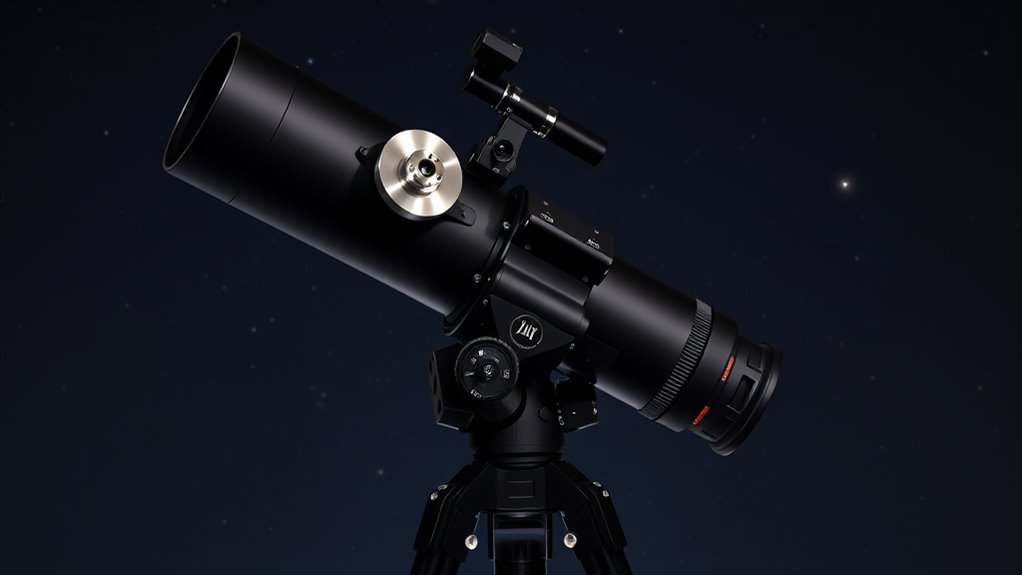
iEXOS-100-2 PMC-Eight Astrophotography Tracker System with Tripod and Mount
If you’re an amateur astrophotographer looking for a portable yet advanced tracking system, the iEXOS-100-2 PMC-Eight is a standout choice. It features eight independent CPUs, providing superior responsiveness and reliability compared to single-processor mounts. The system uses quiet belt-driven worm gears with dual-axis clutches for smooth, precise movement. Setup is quick thanks to a polar alignment sight hole and intuitive ExploreStars app, compatible with Apple, Android, and Windows devices. Lightweight at 20 pounds, it supports small to medium OTAs and guidescopes. While some users encounter initial WiFi or firmware challenges, overall, it offers excellent guiding, stability, and portability for dedicated astrophotographers.
Best For: amateur astrophotographers seeking a portable, feature-rich, and reliable tracking system for planetary and deep-sky imaging.
Pros:
- Advanced eight-CPU system offers superior responsiveness and reliability compared to single-processor mounts
- Quiet belt-driven worm gears with dual-axis clutches enable smooth and precise movement
- Lightweight and portable design, supporting small to medium OTAs and guidescopes with good stability
Cons:
- Initial setup can be challenging, especially with WiFi connections and firmware updates
- Mount lacks azimuth adjustment, requiring additional accessories for optimal polar alignment
- Some users report stability issues with tripod legs and occasional firmware or Bluetooth connectivity problems
Factors to Consider When Choosing Equatorial Mounts With Belt Drive Systems
When selecting an equatorial mount with a belt drive system, I focus on several key factors that impact performance. These include drive system precision, payload capacity, mount stability, ease of setup, and software compatibility. Understanding these points helps me choose a mount that meets my astrophotography needs effectively.
Drive System Precision
Drive system precision in belt drive equatorial mounts hinges on several critical factors that influence tracking accuracy. The quality and tension of the belts directly impact consistency, with proper tension preventing slippage during long exposures. High-quality belts reduce gear backlash and minimize periodic error, resulting in smoother, more accurate tracking. Fine-tuning belt tension is essential; too loose causes slippage, while too tight can strain components. The inherent flexibility of belts allows for more forgiving alignment tolerances, which helps maintain stability and accuracy over time. Additionally, belt drives generally operate more quietly and smoothly than traditional gear systems, further enhancing tracking accuracy. Overall, paying close attention to belt quality and tension ensures peak performance for astrophotography, where precision tracking is crucial.
Payload Capacity Limits
Choosing the right equatorial mount with a belt drive system requires careful attention to its payload capacity limits. These limits determine the maximum weight your mount can safely support, affecting which telescopes and accessories you can use without risking performance issues. Exceeding the recommended capacity can cause decreased tracking accuracy, vibrations, or even damage to the drive system. Belt drive mounts usually specify their payload limits to guarantee ideal operation and longevity. Lighter payloads tend to deliver smoother movement and more precise guiding, which are essential for astrophotography. It’s also important to consider how your equipment’s weight is distributed to maintain proper balance. Staying within the recommended limits helps preserve the mount’s stability and guarantees consistent, high-quality imaging sessions.
Mount Stability Factors
A mount’s stability hinges on more than just its payload capacity; it depends heavily on its design and construction. To achieve steady tracking and minimize vibrations, the mount’s tripod and base must be robust and well-anchored. Belt drive systems need precise tensioning and minimal backlash to guarantee accurate movement and reduce jitter. The quality of bearings and gear engagement directly impacts the mount’s ability to resist external forces and maintain alignment during long exposures. Proper weight distribution and balanced payloads are vital, as they prevent flexing or tipping that could compromise stability. Overall, a well-designed mount with solid materials, tight belt systems, and balanced load handling provides the stability necessary for high-quality astrophotography.
Setup and Alignment
Proper setup and alignment are critical steps when working with equatorial mounts equipped with belt drive systems, as they directly impact tracking accuracy. Ensuring precise polar alignment is essential to keep celestial objects steady during long exposures. Many belt drive mounts include built-in polar alignment sights or holes for polar scopes, making this process quicker and more straightforward. The stability of the mount during setup is also crucial; tightening tripod legs and securing the mount prevents shifts that could compromise alignment. Additionally, adjustable tension or clutch mechanisms help fine-tune balance and improve tracking precision. Achieving a solid initial alignment reduces the need for frequent recalibration, allowing for smoother sessions and better astrophotography results. Proper setup and alignment set the foundation for successful imaging.
Software Compatibility
Selecting an equatorial mount with belt drive systems that’s compatible with your preferred software can make or break your astrophotography experience. It’s vital to ensure the mount works seamlessly with your operating system—whether Windows, macOS, Android, or iOS. Check if it supports popular astronomy software like ASCOM, INDI, or proprietary apps, which help with control and automation. Connectivity options matter too; verify if the mount connects via WiFi, Bluetooth, or serial port, and whether it needs specific drivers or firmware updates. Regular firmware updates are essential—they improve software compatibility and stability. Additionally, consider if the control system allows remote operation through mobile devices or PCs, providing convenience during long imaging sessions. Compatibility ensures smooth operation and better imaging results.
Frequently Asked Questions
How Do Belt Drive Systems Improve Astrophotography Accuracy?
Belt drive systems improve astrophotography accuracy by reducing gear backlash and minimizing vibrations, which are common in traditional gear setups. I’ve noticed that using belt drives helps my mount track celestial objects more smoothly and precisely. This means I get sharper images with less star trailing. The quieter operation also allows me to focus better on my shots without noise disturbances, making my overall astrophotography experience much better.
What Maintenance Is Required for Belt Drive Equatorial Mounts?
Did you know that regular maintenance can extend your mount’s lifespan by up to 30%? I recommend checking the belt tension monthly to prevent slippage, which can affect accuracy. Keep the belts clean and free of dust, and periodically inspect for wear or cracks. Lubricate the gears sparingly, if needed, and ensure the mount’s electronics stay dry. Proper care maintains my astrophotography sharp and reliable.
Can Belt Drive Mounts Support Heavy Astrophotography Equipment?
Yes, belt drive mounts can support heavy astrophotography equipment, but it depends on the specific model’s weight capacity. I recommend checking the mount’s maximum load rating before attaching heavy gear like large cameras or telescopes. I’ve found that well-designed mounts with sturdy belts and robust motors handle heavier setups effectively, providing stability and precision. Just make certain your equipment doesn’t exceed the mount’s specified weight limits for ideal performance.
Are Belt Drive Systems Quieter Compared to Traditional Gearing?
Yes, belt drive systems are generally quieter than traditional gear systems. I’ve noticed a significant reduction in noise when using belt drives, which makes long astrophotography sessions more enjoyable and less disruptive. The smoother operation also helps with tracking accuracy. If you’re sensitive to noise or want a more peaceful observing experience, a belt drive mount is definitely worth considering.
What Is the Typical Lifespan of Belt Drive Components?
Ever wonder how long belt drive components last? Typically, they can endure between 3 to 5 years with proper maintenance, but this varies based on usage and environmental factors. Regularly inspecting belts for wear and keeping them clean can extend their lifespan. Do you take good care of your equipment? Proper care guarantees your mount stays precise and reliable for many clear nights to come.
Conclusion
If you’re serious about precision astrophotography, choosing the right equatorial mount with a belt drive system is vital. Did you know that belt drive systems can reduce periodic error by up to 50% compared to traditional gears? This not only improves tracking accuracy but also makes your imaging sessions smoother. Investing in a reliable, stable mount guarantees your astrophotography captures those stunning celestial details without frustration. Trust me, the right setup makes all the difference.