
If you’re looking to boost your astrophotography, I recommend exploring some top field flatteners for refractors. These tools minimize star distortions, improve image sharpness, and support full-frame cameras, making your shots clearer and more accurate. Models like the HOTECH SCA, SVBONY SV193, and Explore Scientific provide versatile options for various focal ratios. Keep in mind proper setup and compatibility, and you’ll release stunning wide-field astrophotos. Continue, and you’ll discover even more about these essential accessories.
Key Takeaways
- Support for focal ratios between f/5 and f/8 ensures compatibility with most refractor telescopes.
- Fully multi-coated, two-element lens systems minimize distortions and maximize image contrast across the entire field.
- Built-in filter threads and T-ring support facilitate seamless integration with various cameras and accessories.
- Some flatteners reduce focal length or ratio (e.g., 0.8x reduction), enabling wider fields and shorter exposure times.
- Compatibility with full-frame sensors and multiple thread sizes (2-inch, M48, M54) enhances versatility for astrophotography.
SVBONY SV209 Field Flattener, 0.8X Focal Reducer


If you’re using a SV550 122mm f/7 APO refractor for astrophotography or terrestrial imaging, the SVBONY SV209 Field Flattener is an excellent choice to improve your images. This 0.8X focal reducer reduces the focal length from 854mm to 683.2mm, creating a wider field of view and faster imaging. It effectively corrects field curvature, ensuring sharpness across your entire image, whether capturing planets or landscapes. The device screws directly into your focuser with a secure 63×1 thread, making installation simple and stable. Overall, it enhances image quality, expands your shooting options, and streamlines your setup for better astrophotography results.
Best For: amateur and professional astrophotographers using SV550 122mm f/7 APO refractors who want to enhance image sharpness, expand their field of view, and simplify their imaging setup.
Pros:
- Effectively reduces focal length from 854mm to 683.2mm for wider, faster imaging
- Corrects field curvature for sharp, focused images across the entire sensor
- Easy to install with a secure 63×1 metric thread, ensuring stable attachment
Cons:
- Designed specifically for SV550 122mm refractors, limiting compatibility with other telescopes
- May require additional adapters for use with different mounting systems or cameras
- Slight reduction in image brightness due to focal reduction, which might necessitate longer exposures
SVBONY SV260 2 Telescope Filter for SV503 Refractor Telescope

The SVBONY SV260 2 Telescope Filter is an excellent choice for amateur astronomers and astrophotographers seeking to enhance their deep-sky imaging with a refractor telescope. Designed specifically for the SV503 model, it features a 5-bandpass broadband light pollution filter with OD4 cut-off and over 90% peak transmittance. This filter effectively blocks artificial light, revealing more detail in galaxies, nebulae, and star clusters while restoring true colors. Its multi-bandpass capability minimizes light loss, and the built-in field flattener in the telescope ensures sharp, distortion-free images across the entire field. It’s a versatile tool to improve image quality in light-polluted environments.
Best For: amateur astronomers and astrophotographers looking to capture clearer, more vibrant deep-sky images in light-polluted areas using the SV503 refractor telescope.
Pros:
- Effectively blocks artificial light pollution with OD4 cut-off, improving image clarity.
- High peak transmittance (>90%) ensures bright, detailed, and true-to-color celestial images.
- Built-in field flattener provides a wide, distortion-free viewing area for sharp images across the entire field.
Cons:
- Designed specifically for the SV503 refractor telescope, limiting compatibility with other models.
- May require additional accessories or adapters for use with different telescope setups.
- The filter’s advanced features and quality may come at a higher price point compared to basic filters.
Astromania 2 Field Flattener for Astronomy Photos

For astrophotographers using refractor telescopes with focal ratios between f4 and f8, the Astromania 2 Field Flattener offers an effective solution to achieve sharp, flat images across the entire frame. It features M48 threading for full aperture illumination at 2 inches back focus, accommodating various accessories within -109mm. Its multi-coated lenses reduce reflections and enhance clarity, producing pin-sharp stars from center to edges. Compact and lightweight at just 6.3 ounces, it’s easy to handle. While setup can be challenging for some, positive users report successful flat-field imaging and quick support response, making it a viable choice for improving astrophotography results.
Best For: astrophotographers using refractor telescopes with focal ratios between f4 and f8 seeking to achieve sharp, flat images across their entire frame.
Pros:
- Produces pin-sharp stars from center to edges, improving overall image quality.
- Compact and lightweight design for easy handling and portability.
- Multi-coated lenses reduce reflections and enhance clarity during imaging.
Cons:
- Setup can be challenging for some users, requiring careful adjustment.
- Lacks comprehensive manuals, which may complicate initial use.
- Customer support has been reported as unhelpful by some users seeking technical assistance.
Sky Watcher Evolux 62ED Reducer/Flattener (0.9X)

The Sky Watcher Evolux 62ED Reducer/Flattener (0.9X) stands out as an excellent choice for astrophotographers seeking sharp, flat-field images with their refractor telescopes. Its 62mm aperture, combined with a fast f/5.8 focal ratio and 360mm focal length, helps achieve detailed images with shorter exposure times. The inclusion of an ED element enhances image quality by reducing aberrations. Its versatile M56x1 female and M48 male threads allow easy attachment, while the built-in filter cavity simplifies filter use. Compact and lightweight at just under a pound, this reducer/flattener offers a practical, high-quality solution for improving astrophotography results.
Best For: Amateur and professional astrophotographers seeking to capture sharp, flat-field images with their refractor telescopes, especially for astrophotography requiring shorter exposure times and high image quality.
Pros:
- Includes ED element for improved image clarity and reduced aberrations
- Compact and lightweight design, weighing under a pound for easy handling
- Versatile thread options (M56x1 female and M48 male) for broad compatibility
Cons:
- Limited to telescopes with compatible threading and focusing setups
- May require additional adapters for certain telescope models
- Slightly higher cost compared to basic reducers or flatteners without ED elements
Astromania 2 Field Flattener for Astronomy Photos
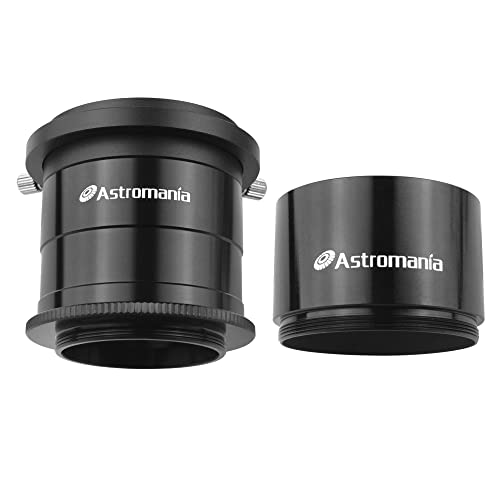
If you’re looking to improve your astrophotography results with a refractor telescope, the Astromania 2 Field Flattener stands out because it guarantees sharp, flat images across the entire field. Compatible with refractors from f4 to f8, it features M48 threading and a 2-inch back focus, accommodating various accessories. Its optical design effectively corrects field curvature, ensuring pinpoint stars even at the edges. Constructed with high-quality multi-coated lenses, it maximizes light transmission and reduces reflections. Weighing just 8.8 ounces, it’s portable and easy to handle. Available online and in stores since May 2022, it offers reliable performance for serious astrophotographers.
Best For: Serious astrophotographers using refractor telescopes from f4 to f8 who want sharp, flat images across the entire field.
Pros:
- Corrects field curvature for pinpoint stars at edges, ensuring high-quality images.
- Compatible with various accessories due to M48 threading and 2-inch back focus.
- Lightweight and portable at only 8.8 ounces, making it easy to handle and transport.
Cons:
- Limited to refractor telescopes within the f4 to f8 range; not suitable for other types.
- As an accessory, it requires additional equipment for full astrophotography setups.
- Availability and pricing may vary, potentially impacting immediate purchase decisions.
SVBONY SV503 Portable Telescope Tube

The SVBONY SV503 Portable Telescope Tube stands out with its high-quality 70ED F6 optical design, making it an excellent choice for amateur astronomers seeking sharp, detailed images on the go. Its S-FPL51 ED glass objective lens virtually eliminates chromatic aberration, delivering high-contrast, bright images of the Moon, planets, nebulae, and galaxies. The sturdy build features a retractable dew shield, precision micro-focusers, and durable tube rings with handles for easy transport. Weighing just under five pounds and compact in size, it’s perfect for travel. Its optical performance rivals more costly scopes, making it ideal for astrophotography and visual observation alike.
Best For: amateur astronomers and astrophotographers seeking a portable, high-quality telescope capable of detailed celestial imaging and observation on the go.
Pros:
- High-quality 70ED F6 optical design with S-FPL51 ED glass for minimal chromatic aberration and sharp images
- Durable, lightweight, and portable construction with a retractable dew shield and sturdy tube rings for easy transport
- Excellent optical performance comparable to more expensive scopes, suitable for both visual astronomy and astrophotography
Cons:
- Slight field curvature when using focal reducers, which may require additional accessories for optimal flat-field images
- Limited internal aperture size may restrict deep-sky object brightness compared to larger scopes
- Some users experience minor issues with field illumination or halos around very bright stars, requiring post-processing adjustments
SVBONY SV503 Refractor Telescope with Built-in Field Flattener
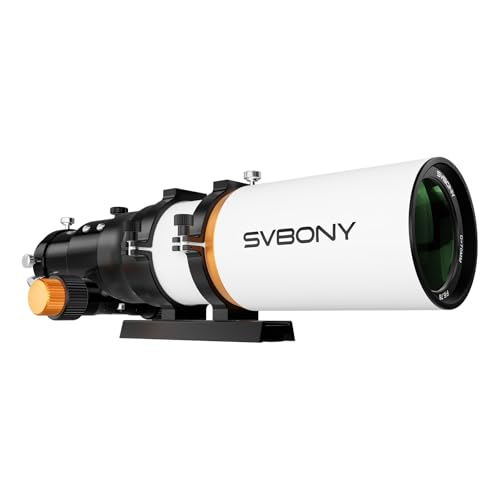
For astrophotographers seeking a streamlined solution, the SVBONY SV503 Refractor Telescope with Built-in Field Flattener stands out as an excellent choice. Its design eliminates field curvature, providing wide, distortion-free images of deep-sky objects. The 70mm aperture at F/6.78 delivers bright, sharp views with minimal chromatic aberration thanks to ED glass. The built-in flat-field corrector makes setup straightforward, allowing immediate focus and superior imaging. The dual-speed focuser ensures precise adjustments, while the lightweight, durable build makes it portable and easy to handle. Overall, the SV503 offers impressive optical quality, making it ideal for both visual observing and astrophotography.
Best For: amateur astronomers and astrophotographers seeking a portable, high-quality refractor with built-in field flattening for wide, distortion-free imaging.
Pros:
- Excellent flat-field correction with built-in field flattener for distortion-free wide views
- High optical quality with minimal chromatic aberration thanks to ED glass
- Smooth dual-speed focuser and lightweight, durable construction for easy handling and precise focusing
Cons:
- Some users may notice minor color halos that require post-processing to mitigate
- Not suitable for very high magnifications beyond 275x under poor seeing conditions
- Limited aperture size (70mm) may restrict deep-sky imaging compared to larger telescopes
SVBONY SV503 Refractor Telescope with Built-in Field Flattener and SV305C Camera

Searching for a refractor telescope that delivers crisp, wide-field images with minimal distortions? The SVBONY SV503 fits the bill perfectly. It features a built-in field flattener that eliminates field curvature, ensuring flat, edge-to-edge sharpness. Its 70mm aperture and F/6.78 focal ratio provide bright, detailed views of galaxies, nebulae, and star clusters. The ED glass reduces chromatic aberration for true-to-life colors, while outstanding flat-field correction prevents edge distortions. Paired with the SV305C camera, based on the IMX662 sensor, it captures high-sensitivity, low-noise images, ideal for planetary and deep-sky astrophotography with exceptional clarity.
Best For: amateur astronomers and astrophotographers seeking high-quality, wide-field celestial imaging with minimal distortions and excellent planetary detail.
Pros:
- Built-in field flattener ensures edge-to-edge sharpness with minimal distortion
- 70mm aperture with F/6.78 focal ratio provides bright, detailed images of various celestial objects
- ED glass and flat-field correction reduce chromatic aberration and field curvature for true-to-life colors and crisp images
Cons:
- Limited aperture size may not capture faint deep-sky objects as effectively as larger telescopes
- Requires a compatible mount and additional accessories for optimal use and stability
- May have a learning curve for beginners unfamiliar with astrophotography equipment setup
SVBONY SV503 Refractor Telescope, 102mm F7

If you’re looking to improve image quality with your refractor telescope, the SVBONY SV503 Refractor Telescope, 102mm F7 stands out because of its high-quality optical design. Its 102mm aperture and F/7 ratio deliver bright, sharp images with minimal chromatic aberration, ideal for astrophotography. Constructed with doublet air-spaced achromatic S-FPL51 ED glass and fully multi-coated optics, it maximizes light transmission and contrast. The dual-speed focuser offers precise, smooth adjustments, while features like a 360° field rotator and retractable lens hood enhance versatility. Overall, it’s a reliable, portable scope that produces detailed planetary, lunar, and deep-sky images.
Best For: amateur astronomers and astrophotographers seeking a portable, high-quality refractor telescope for planetary, lunar, and deep-sky imaging and observation.
Pros:
- Bright, sharp images with minimal chromatic aberration thanks to high-quality achromatic S-FPL51 ED glass
- Fully multi-coated optics for maximum light transmission, contrast, and clarity
- Smooth dual-speed focuser and versatile features like a 360° field rotator and retractable lens hood
Cons:
- Minor field flatness issues such as star elongation toward the edges, which may require post-processing
- Slightly limited aperture compared to larger scopes, affecting very faint deep-sky object viewing
- Some users might find the setup and adjustments less ideal for ultra-advanced astrophotography compared to premium apochromatic scopes
SVBONY Focal Reducer for SV503 102mm ED Telescope

The SVBONY Focal Reducer for the SV503 102mm ED Telescope stands out as an excellent choice for astrophotographers seeking wider sky views and sharper star points across their images. This 0.8x focal reducer and field flattener is designed specifically for the SV503 102mm ED, delivering full-frame illumination and improved flatness. It enhances image quality by reducing edge distortion and providing finer star points, all while maintaining durability with multi-coated optics and a lightweight aluminum body. Keep in mind, to focus properly, you may need to remove the nose piece and add an extension tube. Overall, it’s a reliable, affordable tool that elevates your astrophotography.
Best For: amateur astrophotographers seeking affordable, high-quality focal reduction and field flattening for their SV503 102mm ED telescope.
Pros:
- Provides 0.8x focal reduction and improved flat field for sharper images.
- Durable construction with multi-coated optics and lightweight aluminum body.
- Easy to attach with standard filter threads and compatibility with various setups.
Cons:
- May require removing the nose piece and adding an extension tube to achieve proper focus.
- Focus can be sensitive; some trial and error may be needed for optimal results.
- Slightly limited compatibility outside of the SV503 102mm ED telescope model.
SVBONY SV193 Focal Reducer for Telescope Cameras

For astrophotographers seeking wide-field, high-quality images with minimal star distortion, the SVBONY SV193 Focal Reducer is an excellent choice. Designed for refractor telescopes, it reduces focal length by 0.8x, enabling broader, sharper captures of deep-sky objects and planets. Its standard 2-inch front socket and M48 threading make it compatible with various cameras, including full-frame models like the SV305C Pro and IMX662. The reducer improves image quality by minimizing aberrations and ensuring even illumination across the sensor. Overall, it’s a reliable, effective tool to enhance your astrophotography results with crisp, edge-to-edge clarity.
Best For: amateur and professional astrophotographers seeking wide-field, high-quality images with minimal star distortion using refractor telescopes.
Pros:
- Compatible with full-frame cameras like the SV305C Pro and IMX662 for detailed planetary and celestial imaging
- Reduces focal length by 0.8x, providing wider field of view and sharper images at the edges
- Supports standard 2-inch socket and M48 threading for easy integration with various telescopes and camera setups
Cons:
- Designed specifically for refractor telescopes, limiting use with other telescope types
- May require additional adapters for certain camera models or setups
- Slightly more complex setup process for beginners unfamiliar with astrophotography accessories
SVBONY SV220 Dual-Band Nebula Filter with SV503 70mm Refractor Telescope

The SVBONY SV220 Dual-Band Nebula Filter combined with the SV503 70mm Refractor Telescope is an excellent choice for astrophotographers seeking to enhance contrast and detail in their deep-sky imaging, even amid light pollution. The telescope’s f/6.78 aperture and built-in field flattener deliver sharp, wide, flat views with minimal chromatic aberration. The dual-band nebula filter reduces interference from moonlight and artificial lights, boosting nebula contrast without brightening objects. This setup allows for high-contrast, detailed imaging of gaseous nebulae and other deep-sky objects, making it ideal for both amateur and advanced astrophotographers working in challenging lighting conditions.
Best For: amateur and advanced astrophotographers seeking to improve deep-sky object imaging in light-polluted environments with a versatile dual-band nebula filter and high-quality refractor telescope.
Pros:
- Enhances contrast and detail visibility of gaseous nebulae across various sky conditions.
- Flat-field design minimizes chromatic aberration for sharp, accurate images.
- Suitable for both visual observation and astrophotography, even in light-polluted areas.
Cons:
- May require additional accessories like a camera or mount for astrophotography setups.
- Limited to dual-band nebulae, less effective for objects outside these emission lines.
- The 70mm aperture, while excellent for portability and wide views, may have limitations in capturing extremely faint deep-sky objects compared to larger telescopes.
HOTECH SCA 2 Inch Field Flattener for Refractor Telescopes
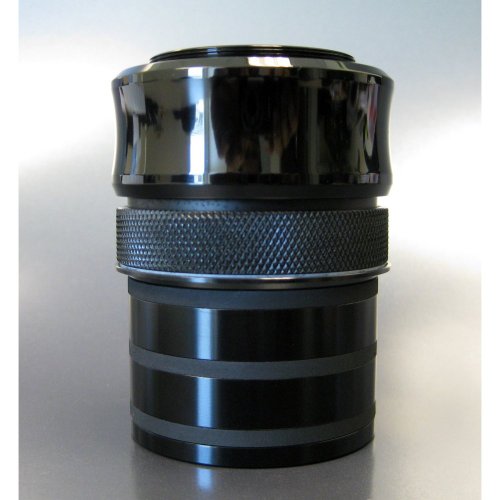
If you’re looking to achieve sharp, distortion-free images across your entire astrophotography field, the HOTECH SCA 2 Inch Field Flattener is an excellent choice. Designed for refractor telescopes, it features fully multi-coated, two-element lenses that maximize light transmission. Compatible with f/5 to f/8 refractors, it ensures bright, crisp images from edge to edge. The built-in 2-inch filter thread and T-ring thread make it versatile for different cameras, including 35mm models. With a secure compression ring and precise alignment, it maintains consistent focus and image quality, making it ideal for capturing detailed astrophotos with minimal distortion.
Best For: astrophotographers seeking sharp, distortion-free images across the entire field of their refractor telescopes.
Pros:
- Fully multi-coated, two-element lens for optimal light transmission and bright images
- Compatible with f/5 to f/8 refractors, suitable for a wide range of telescopes
- Built-in filter and T-ring threads for versatile camera compatibility
Cons:
- May require precise adjustment for perfect focus and alignment
- Compatibility limited to refractor telescopes within specified focal ratios
- Slightly higher price point compared to basic field flatteners
SVBONY SV193 Focal Reducer for Telescopes

Designed specifically for refractor telescopes like the SV503 80mm F7 ED, the SVBONY SV193 Focal Reducer is a must-have tool for astrophotographers seeking wider, brighter images. It reduces the focal ratio from f/7 to around f/4.8, broadening the field of view and considerably decreasing exposure times. Compatible with full-frame cameras, it features a 2-inch front socket and M48 threading for easy attachment. The flatener effectively corrects field distortions, producing sharp, flat images with minimal vignetting when used properly. While some minor star shape distortions may occur, it’s a valuable accessory for enhancing your astrophotography with larger sensors.
Best For: astrophotographers using refractor telescopes like the SV503 80mm F7 ED who want wider, brighter images and shorter exposure times.
Pros:
- Effectively flattens the field and reduces distortions for sharp, clear images
- Compatible with full-frame cameras and supports 2-inch filters for versatile imaging
- Significantly decreases focal ratio from f/7 to about f/4.8, enabling shorter exposures
Cons:
- Potential for minor star shape distortions, especially on larger sensors
- Variability in build quality, with some units experiencing defects or loose components
- Customer support and warranty service may be slow or inconsistent
Explore Scientific Field Flattener for Refractor Telescopes

Astrophotographers seeking sharp, distortion-free images across the entire field of view will find the Explore Scientific Field Flattener an excellent choice, especially for refractor telescopes with focal ratios between f/5 and f/7. It minimizes star distortion caused by field curvature, delivering consistently sharp stars from edge to edge. Compatible with cameras requiring a 55mm back focus, it’s suitable for planetary, nebula, galaxy, and star cluster imaging. Its fully multi-coated optical glass maximizes light transmission, producing high-contrast results. Easy to attach via a secure T-ring thread, this durable flattener offers reliable performance and excellent value for astrophotographers aiming for crisp, flat-field images.
Best For: astrophotographers using refractor telescopes with focal ratios between f/5 and f/7 seeking sharp, flat-field images across the entire field of view.
Pros:
- Minimizes star distortion and field curvature for edge-to-edge sharpness
- Fully multi-coated optical glass maximizes light transmission and contrast
- Easy to attach with a secure T-ring thread and compatible with various cameras
Cons:
- Designed specifically for f/5 to f/7 systems; less effective outside this range
- Requires a precise 55mm (+/- 2mm) back focus spacing, which may need adjustments
- Slightly bulky at 4 pounds, potentially adding weight to lightweight setups
Factors to Consider When Choosing Field Flatteners for Refractor Telescopes
When choosing a field flattener for your refractor telescope, I consider how well it suits my telescope’s compatibility and focal ratio needs. I also pay attention to how it impacts my field of view and the quality of optical coatings, which influence image clarity. Finally, I check the focusing mechanism and spacing requirements to guarantee easy setup and peak performance.
Compatibility With Telescope
Choosing the right field flattener starts with confirming it’s compatible with your telescope’s specifications. First, check that the flattener’s focal ratio range matches your refractor’s f/5 to f/8, guaranteeing peak performance. Next, verify that the thread size and connection type fit your focuser or visual back, whether it’s 2-inch, M48, or M54. It’s also important to see if the flattener is designed specifically for your telescope model or suitable for similar designs. Additionally, confirm that the back focus distance required by the flattener aligns with your telescope’s available focus travel to achieve proper focus. Finally, ensure the flattener supports your camera type and sensor size for full coverage and the best possible image quality.
Focal Ratio Requirements
Matching the focal ratio of your field flattener to your telescope’s focal ratio is vital for ideal image quality. Field flatteners are designed for specific focal ratios, often between f/4 and f/8, to optimize correction. Using a flattener outside its recommended range can cause poor correction, star elongation, or optical distortions. Many are optimized for focal ratios like f/5 to f/7, so compatibility is key. If your telescope’s focal ratio doesn’t match the flattener’s requirements, you’ll likely see diminished image sharpness and increased distortions across your frame. Ensuring the correct focal ratio match allows the flattener to effectively minimize field curvature and produce flat, sharp images. Proper selection based on focal ratio is essential for achieving the best astrophotography results.
Field of View Impact
The field of view (FOV) is a vital factor in selecting a field flattener for your refractor telescope, as it directly impacts how much sky you can capture in a single shot. A good flattener corrects field curvature, enabling sharp images across the entire sensor or eyepiece. This correction results in a wider, distortion-free field of view, especially at the edges, which is essential for wide-field astrophotography. High-quality flatteners can extend the usable FOV without sacrificing image sharpness, offering a more consistent and detailed view across the frame. The impact on FOV varies depending on the flattener’s optical design and compatibility with your telescope’s focal ratio, with some flatteners providing up to 100% flatness across the entire field.
Optical Coatings Quality
High-quality optical coatings are essential for maximizing the performance of a field flattener, as they directly influence how much light passes through the lenses. Multi-coatings enhance light transmission and reduce reflections, resulting in brighter, clearer images. With transmittance rates exceeding 90%, they notably improve brightness and contrast in your astrophotography. Superior coatings also minimize internal reflections and ghosting, which can cause artifacts and diminish image sharpness. Additionally, well-applied coatings offer durability, resisting scratches, corrosion, and environmental damage, ensuring long-term optical performance. The quality of these coatings directly impacts how well the flatener preserves star sharpness and true color fidelity across your entire field of view. Investing in a flattener with excellent optical coatings is vital for achieving professional-grade astrophotography results.
Focusing and Spacing
Achieving sharp, distortion-free images with a field flattener hinges on precise focusing and correct spacing. Proper focus ensures that the entire field of view is sharp, avoiding star elongation or blurring at the edges. Maintaining the correct back-focus distance, usually specified in millimeters, is crucial for ideal flatness and focus. Small deviations in spacing can greatly impact image quality, causing distortions that negate the flattening effect. Many flatteners require specific extension tubes or spacers to achieve the recommended distance for different camera setups. If focus or spacing is off, even the best flattener won’t deliver, resulting in images with uneven sharpness or distortions. Paying close attention to these factors is essential for maximizing your astrophotography results.
Build Durability and Materials
Choosing a field flattener that’s built to last is essential for reliable performance and long-term investment. High-quality models are crafted from durable, multi-coated optical glass that ensures consistent clarity and resists scratches or tarnishing over time. The body materials, like anodized aluminum or high-grade plastics, protect internal components from corrosion, dust, and mechanical damage, extending the product’s lifespan. Precise threading and sturdy mounting mechanisms are vital, as they reduce wear and keep the alignment intact during frequent attachment or removal. Well-designed flatteners also withstand temperature swings and physical handling without deforming. Ultimately, the durability of a field flattener depends on both robust construction and high-quality internal coatings, which maintain optical performance and resist everyday wear and tear.
Price and Support Options
When selecting a field flattener, it’s important to contemplate how its price fits your budget and whether the support options meet your needs. Prices can range from affordable to premium models, so comparing options helps you find a good balance between cost and features. Support services like manufacturer warranties, responsive customer service, and technical assistance are essential for long-term satisfaction. Some flatteners include added features like integrated filters or adjustable spacers, which can influence both cost and support requirements. Checking prices across online and offline retailers ensures you get the best deal, especially when support services are included. Higher-priced models often offer better build quality and extensive support, but budget-friendly options can still be effective if they come with proper backing.
Frequently Asked Questions
How Do Field Flatteners Affect Image Contrast and Brightness?
Field flatteners generally improve image contrast and brightness by reducing optical distortions like curvature and coma, resulting in sharper, more even images across the entire field. I’ve noticed that with a good flattener, my astrophotos look clearer and more vibrant from edge to edge. The overall contrast is enhanced because distortions that cause blurring are minimized, making details pop and brightness levels more uniform throughout the frame.
Are Field Flatteners Compatible With All Refractor Telescope Brands?
Not all field flatteners are compatible with every refractor telescope brand. I’ve found that some flatteners are designed specifically for certain models or optical setups, so compatibility can differ. I recommend checking your telescope’s specifications and the flatteners’ compatibility lists before purchasing. If unsure, consulting with the manufacturer or an experienced astrophotographer can save you time and ensure you get the best fit for your equipment.
What Is the Typical Lifespan of a Field Flattener?
A field flattener generally lasts between 3 to 10 years, depending on how often I use it and how carefully I handle it. I imagine it like a trusty lens that gradually wears down with exposure to dust and handling. Regular cleaning and careful storage extend its life, ensuring crisp, flat images for countless nights under the stars. Proper maintenance truly keeps my astrophotography sharp and vibrant.
Can Field Flatteners Be Used for Planetary Astrophotography?
Yes, you can definitely use field flatteners for planetary astrophotography. They help by reducing optical distortions across the entire field of view, which is especially useful when capturing detailed planetary images. While their primary benefit is for wide-field astrophotography, they also improve image clarity and sharpness when photographing planets, ensuring you get more precise and higher-quality results. I highly recommend trying one out if you want better planetary images.
How Do Temperature Variations Impact Field Flattener Performance?
Temperature variations can really affect a field flattener’s performance because they cause the telescope’s components to expand or contract. When this happens, it can lead to misalignment or focus shifts, resulting in softer images or uneven star fields. I always keep my equipment in a temperature-controlled environment or give it time to acclimate before shooting. This way, I guarantee my images stay sharp and well-focused even as the temperature changes.
Conclusion
I know choosing the right field flattener can seem overwhelming, but don’t let that stop you from capturing stunning astrophotos. Remember, even if your first option isn’t perfect, experimenting and adjusting can make all the difference. With these top picks, I’m confident you’ll find one that fits your setup and helps you achieve crisp, beautiful images. So go ahead, plunge in and enjoy the journey of perfecting your astrophotography!