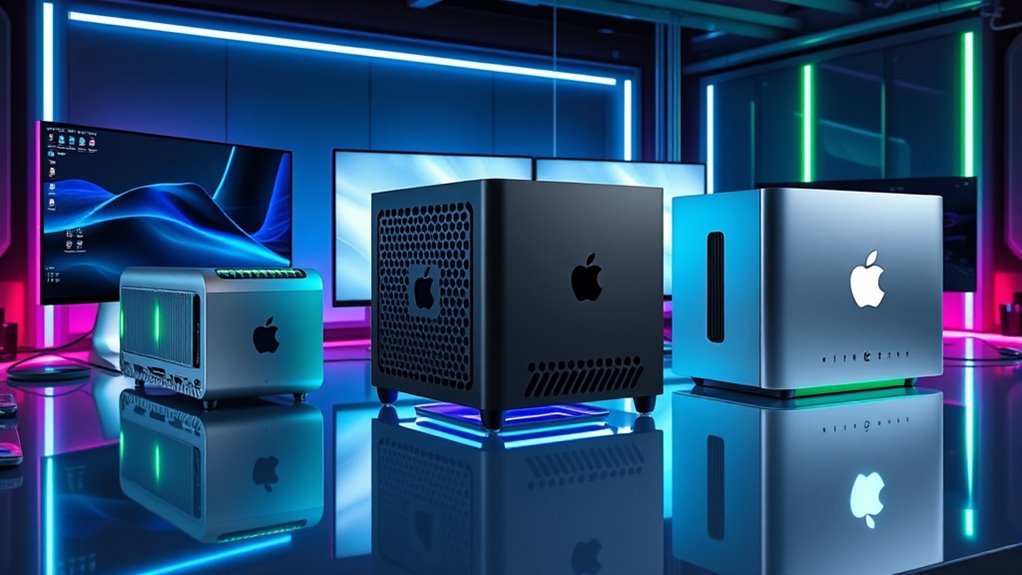

If you’re looking for the best Mac Studio models for machine learning in 2025, I’d recommend considering the latest configurations with the M4 chip, which offer incredible power, integrated GPU performance, and excellent software compatibility. The compact design, high-resolution display support, and efficient thermal management make them ideal for demanding workloads. These models balance power and portability, ensuring future-proof performance. Keep exploring as I’ll share more about which options truly stand out.
Key Takeaways
- The latest Mac Studio models feature a 10-core M4 CPU and GPU, optimized for demanding machine learning workloads in 2025.
- They support up to 32GB of unified memory, ensuring smooth handling of large datasets and AI training tasks.
- Equipped with hardware-accelerated media engines and compatibility with TensorFlow and PyTorch for efficient ML workflows.
- Compact design with multiple high-resolution display support and versatile connectivity for integrated ML workstation setups.
- Power-efficient architecture with advanced cooling and thermal management, suitable for extended intensive AI and ML applications.

Apple 2024 Mac mini Desktop Computer with M4 chip with 10‑core CPU and 10‑core GPU: Built for Apple Intelligence, 24GB Unified Memory, 512GB SSD Storage, Gigabit Ethernet. Works with iPhone/iPad
- Compact Size: Five by five inches of power
- Powerful M4 Chip: Unleashes full speed and capabilities
- Elegant Design: Fits next to monitors and anywhere
As an affiliate, we earn on qualifying purchases.
Apple Mac mini Desktop Computer with M4 Chip
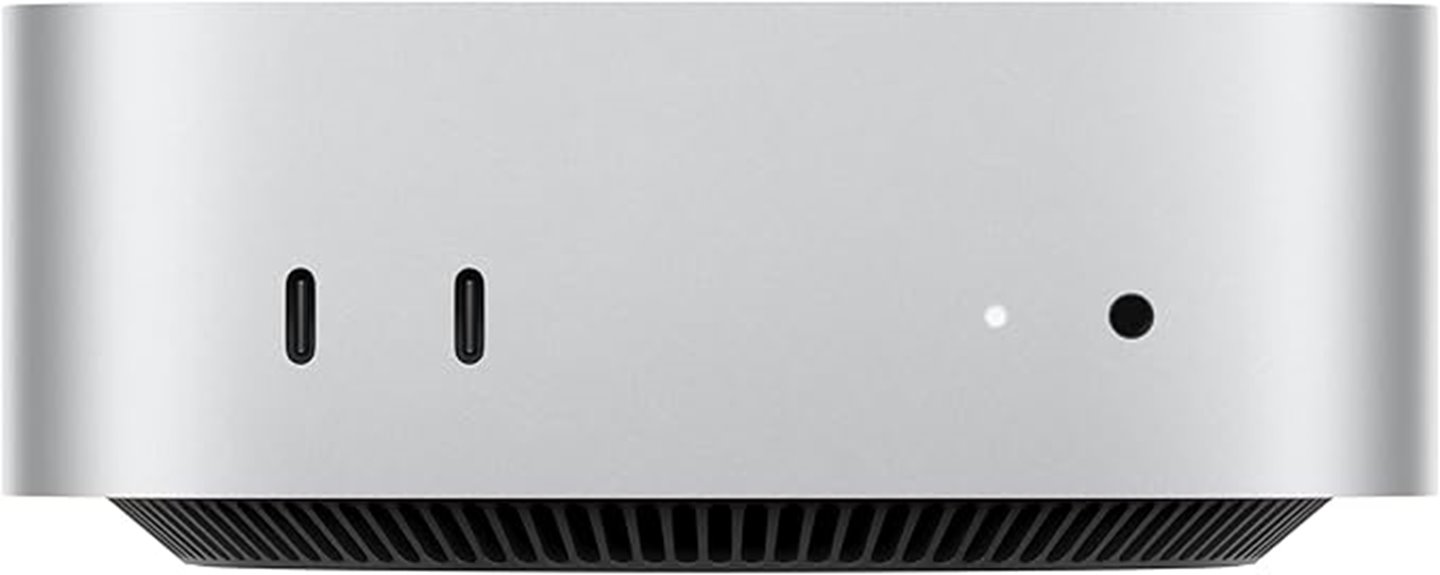
If you’re looking for a compact yet powerful machine for machine learning, the Apple Mac mini with the M4 chip is an excellent choice. Its small footprint—just 5 inches square and 2 inches high—fits easily next to any monitor. Powered by the 10-core M4 processor, it delivers impressive speed with a 10-core GPU and 16-core Neural Engine, perfect for AI tasks. With 24GB of unified memory, fast SSD storage, and support for multiple high-resolution displays, it combines portability with performance. Connectivity options include Thunderbolt 4, USB-C, HDMI, and Ethernet, making it versatile for any setup.
Best For: individuals seeking a compact yet powerful desktop computer for machine learning, creative work, and high-resolution display setups.
Pros:
- Small, space-saving design that fits easily next to monitors and in versatile setups.
- Powerful M4 chip with a 10-core CPU, GPU, and Neural Engine ideal for AI and intensive tasks.
- Supports multiple high-resolution displays, including up to three simultaneously, with excellent connectivity options.
Cons:
- Limited upgradeability due to integrated hardware and fixed storage options.
- No dedicated graphics card slot, relying on integrated GPU for graphics performance.
- Higher cost compared to traditional mini PCs with similar specs, potentially limiting affordability for some users.
Apple 2024 Mac mini Desktop Computer with M4 Chip
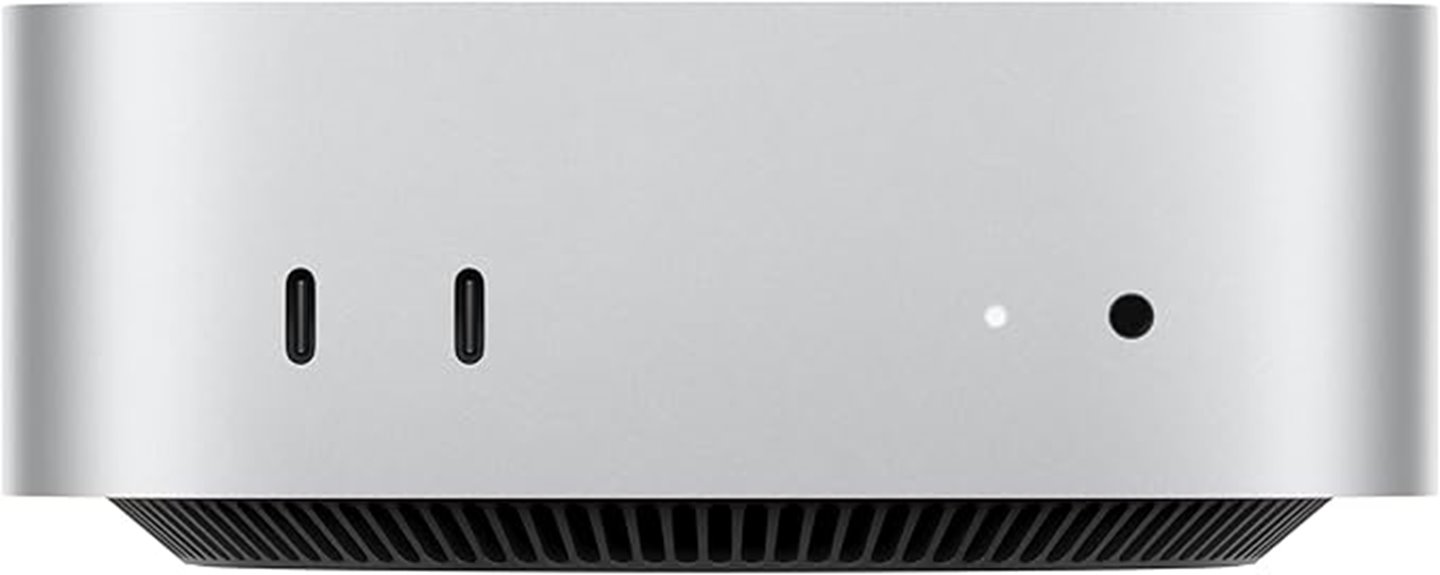
The 2024 Mac mini with M4 chip stands out for its compact design combined with impressive processing power, making it an excellent choice for those who need a versatile machine for machine learning tasks without taking up much space. Its sleek five-by-five-inch form factor packs a 10-core CPU, 10-core GPU, and 16-core Neural Engine, delivering significant speed improvements. With up to 32GB of unified memory and multiple high-speed ports, it handles heavy workloads efficiently. Supporting up to three displays and advanced media capabilities, this Mac mini offers a perfect balance of power and portability for intensive machine learning applications.
Best For: users seeking a compact, powerful desktop perfect for machine learning, multimedia editing, and demanding productivity tasks in a space-efficient design.
Pros:
- Compact five-by-five-inch design easily fits into various setups without sacrificing performance
- Equipped with the powerful M4 chip, offering a 10-core CPU, 10-core GPU, and Neural Engine for fast processing and AI tasks
- Supports multiple high-resolution displays and high-speed connectivity options for versatile workflows
Cons:
- Limited upgradeability of internal components such as RAM and storage after purchase
- Higher price point compared to some traditional mini PCs with similar specs
- No dedicated graphics card options, which may impact certain high-end gaming or specialized 3D rendering workloads
Apple 2024 Mac mini Desktop Computer with M4 Chip
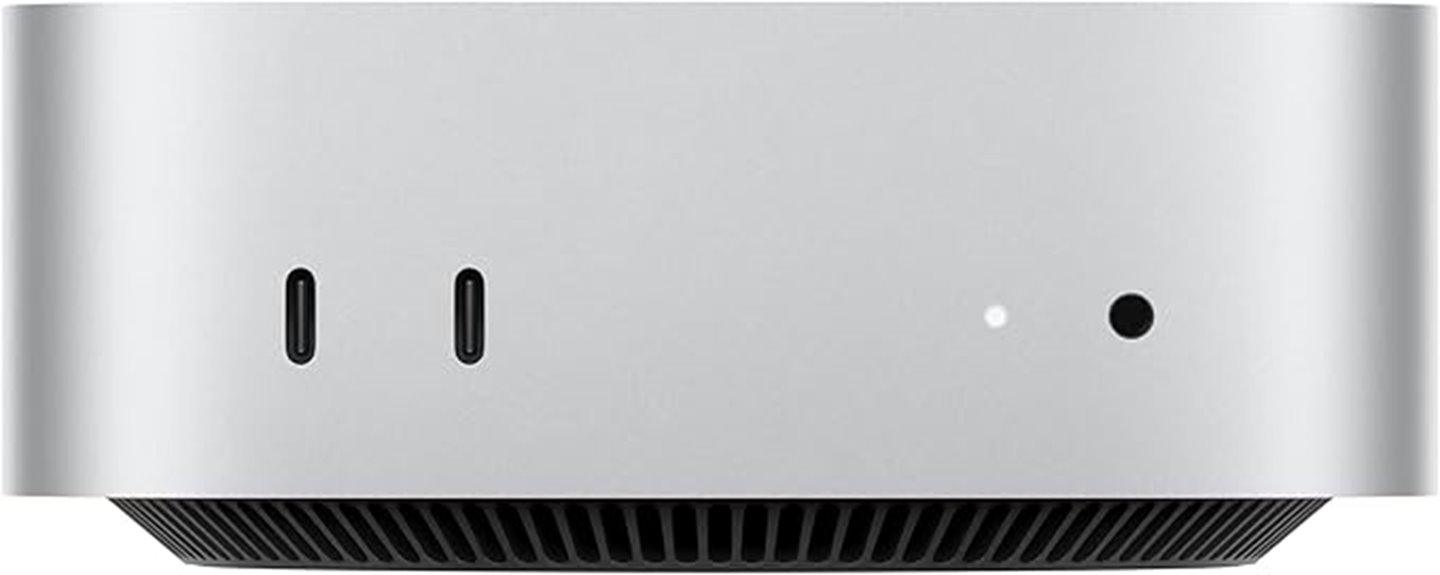
For those seeking a powerful yet compact machine learning workstation, the Apple 2024 Mac mini with M4 chip stands out as an excellent choice. Its small size—just 5×5 inches and 2 inches thick—belies its impressive performance, powered by a 10-core CPU, 10-core GPU, and 16-core Neural Engine. With 16GB of unified memory (expandable to 24GB or 32GB) and up to 2TB SSD storage, it handles demanding ML tasks with ease. Support for multiple displays, fast connectivity, and seamless integration within the Apple ecosystem make this mini a versatile, high-performance option for machine learning enthusiasts.
Best For: machine learning enthusiasts and professionals seeking a compact, high-performance workstation with seamless Apple ecosystem integration.
Pros:
- Compact and stylish design that easily fits into any workspace.
- Powerful M4 chip with a 10-core CPU and GPU, plus a 16-core Neural Engine for demanding ML tasks.
- Supports multiple high-resolution displays and fast connectivity options for versatile use.
Cons:
- Limited to a maximum of 32GB of unified memory, which may not suffice for very large ML models.
- Only 512GB SSD storage standard, requiring upgrades for extensive data storage needs.
- Higher cost compared to traditional mini PCs with similar specs, reflecting its premium Apple ecosystem.
Factors to Consider When Choosing a Mac Studio for Machine Learning
When selecting a Mac Studio for machine learning, I focus on processing power, GPU performance, and available memory and storage options to meet my project’s demands. Compatibility with ML software and connectivity features also play a vital role in ensuring smooth workflows. Considering these factors helps me choose a model that balances performance and expandability for ideal results.
Processing Power Requirements
Have you ever wondered how much processing power you need in a Mac Studio to handle demanding machine learning tasks? The answer depends on your dataset size and model complexity. Larger models and datasets require more CPU and GPU resources to train efficiently. A high-core-count CPU, like a 10-core or more, can dramatically cut down training times for intensive projects. GPU capabilities, such as numerous CUDA cores or hardware-accelerated features, are essential for parallel processing during training. Ensuring your Mac Studio has sufficient processing power means smoother data preprocessing, feature extraction, and inference. Upgrading to a system with a powerful neural engine or dedicated media engine can further accelerate AI-specific tasks, boosting overall performance and making complex machine learning workflows more manageable.
GPU Performance Capabilities
Selecting a Mac Studio for machine learning hinges heavily on GPU performance, as this component handles the heavy lifting of parallel processing and high computational throughput. A GPU with more cores and higher clock speeds can drastically cut training times for complex models, making workflows more efficient. Features like hardware-accelerated ray tracing and AV1 decoding can boost multimedia processing, indirectly benefiting certain ML tasks. Memory bandwidth, measured in GB/s, determines how quickly data moves between the GPU and system memory, impacting training speed. Compatibility with popular machine learning frameworks and support for optimized GPU libraries are essential, as they guarantee smooth integration and maximum performance. Overall, prioritizing GPU architecture and capabilities helps you choose a Mac Studio that meets the demanding needs of modern machine learning workloads.
Memory and Storage Options
Choosing the right memory and storage options is essential for optimizing your Mac Studio’s machine learning performance. Larger memory, like 32GB or more, helps handle extensive datasets and complex models more efficiently. The unified memory architecture enables faster data access, boosting training and inference speeds. Adequate storage capacity is equally important — from 512GB to several terabytes — to store large datasets, models, and software without bottlenecks. Upgrading to higher memory and storage options involves additional costs but can substantially improve workflow, reducing delays and improving overall performance. Striking the right balance ensures smooth processing, minimizes lag, and handles demanding machine learning tasks seamlessly. Careful consideration of these options ensures your Mac Studio can keep pace with your evolving machine learning needs.
Compatibility With ML Software
To guarantee your Mac Studio handles machine learning tasks effectively, it is crucial to verify that its hardware and software components support your preferred ML frameworks. Confirm the Mac Studio has a compatible GPU or Neural Engine that supports popular frameworks like TensorFlow or PyTorch. Check that the macOS version is optimized for ML software and supports the latest computational libraries. Affirm the availability of hardware-accelerated media engines, such as ProRes and AV1 decode, which can speed up data processing. Also, verify that the Mac Studio’s unified memory and GPU configurations meet your specific workload requirements. Ultimately, consider whether your ML software has native macOS support or if you’ll need virtualization or compatibility layers, to ensure smooth operation and maximum efficiency.
Connectivity and Expansion
When evaluating a Mac Studio for machine learning, connectivity and expansion options play a critical role in supporting your workflow. I look for multiple Thunderbolt 4 ports to verify high-speed data transfer and seamless peripheral connections, which are essential for handling large datasets and specialized hardware. HDMI and Ethernet ports are also indispensable for connecting multiple displays and high-bandwidth network infrastructure, improving data access and visualization. I confirm that there are enough USB-C ports to connect external storage devices or machine learning accelerators. Additionally, support for high-resolution and multiple display outputs helps monitor complex models simultaneously. Finally, I consider expandability options for peripherals that can enhance data collection, processing, and training efficiency, ensuring my setup remains flexible and future-proof.
Power Efficiency and Cooling
Power efficiency and cooling are essential factors when selecting a Mac Studio for machine learning, especially during intensive tasks. Apple silicon architecture enhances power efficiency by delivering high performance with minimal energy use, which helps reduce heat output. The integrated Neural Engine efficiently handles AI processing without markedly increasing power consumption or heat generation. Effective cooling systems are critical to prevent thermal throttling during demanding workloads, ensuring consistent performance. Low power consumption also allows for a more compact design, eliminating the need for bulky cooling solutions while maintaining thermal stability. Proper thermal management is key to sustaining high-performance machine learning operations over extended periods, preventing overheating, and maximizing the Mac Studio’s capabilities. This balance between power efficiency and cooling directly impacts reliability and productivity.
Frequently Asked Questions
How Does the Mac Studio Compare to Other Workstations for ML Tasks?
I find the Mac Studio to be a strong contender for ML tasks, especially with its powerful M2 Ultra chip. It offers impressive speed and efficiency, often outperforming traditional workstations in optimized workflows. However, if your work relies heavily on specific GPU-intensive applications, some Windows-based workstations with dedicated NVIDIA or AMD GPUs might still have an edge. Overall, the Mac Studio is a compelling, sleek option for machine learning enthusiasts.
Are There Specific Mac Studio Configurations Optimized for Deep Learning?
Imagine a machine tailored for deep learning—here’s the scoop. The top Mac Studio configs with the M3 Ultra chip, maximum RAM, and multiple GPU cores are best suited. They pack immense power for training complex models swiftly. Opt for the highest specs within this lineup, and you’ll access the machine’s full potential, making it a powerhouse for deep learning tasks that demand speed and efficiency.
What Are the Long-Term Software Upgrade Plans for Mac Studio in ML?
I believe Apple plans to keep the Mac Studio evolving with software updates focused on optimizing machine learning workflows. They’ll likely enhance compatibility with new ML frameworks, improve GPU performance, and integrate more AI-specific tools into macOS. I stay informed about these updates because I want my Mac Studio to remain powerful and future-proof for my long-term ML projects, ensuring I get the most out of my investment over time.
How Does Thermal Management Impact Performance During Intensive ML Workloads?
Thermal management really impacts my Mac Studio’s performance during intense ML tasks. When it gets too hot, I notice throttling, which slows down processing. Proper cooling keeps temperatures stable, allowing me to run complex models longer without performance dips. Efficient thermal design ensures sustained power, so my workflows stay smooth and fast. Without good heat dissipation, even top-tier hardware can struggle under heavy workloads.
Can Mac Studio Handle Multi-Gpu Setups for More Complex ML Models?
The Mac Studio isn’t designed to support multi-GPU setups, so I wouldn’t rely on it for highly complex ML models that need multiple GPUs. Its architecture mainly leverages Apple’s unified M-series chips, which are optimized for power efficiency and performance but don’t support traditional multi-GPU configurations. If you need multi-GPU capabilities, I recommend exploring high-end PCs or servers tailored for that purpose.
Conclusion
Choosing the right Mac Studio for machine learning is like selecting a trusted vehicle for a long journey—performance, reliability, and power matter. I once thought a car’s engine was enough, but later realized the chassis and handling made all the difference. Similarly, the right Mac model fuels your projects smoothly and efficiently. With these top choices, you’ll have the tools to unleash your full potential and navigate complex ML tasks with confidence and ease.