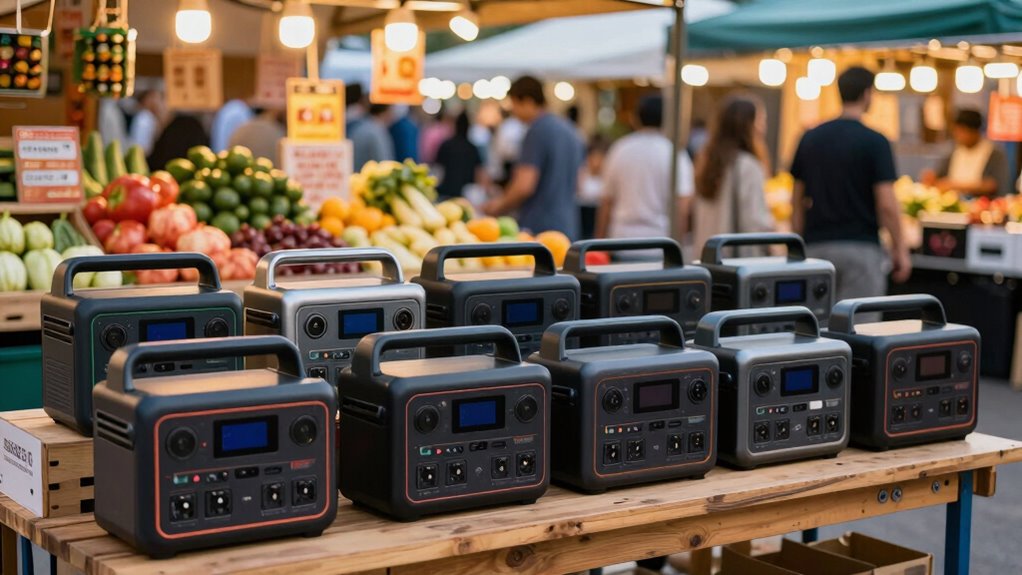

When selecting a portable power station for a market booth, you need reliable, versatile power capable of running multiple devices throughout your day. The Libreds Portable Power Station 640Wh stands out as the best overall choice thanks to its high capacity and multiple outlets, ideal for extended market days. For those seeking a more budget-conscious option, the MARBERO Portable Power Station 88Wh offers portability and ease of use, though it has limited runtime. Meanwhile, the BLUETTI AC180 delivers substantial power with a large capacity but comes at a higher price point. The main tradeoffs involve balancing capacity, portability, and cost—more power often means more weight and expense. Keep reading for a detailed comparison to find the best fit for your market setup.

Get business pricing on tools and workshop supplies
- Business-only prices and quantity discounts
- Tax-exempt purchasing
- Multiple users, one account, clear invoices
Complete the kit


Key Takeaways
- High-capacity models like the BLUETTI AC180 are ideal for all-day market operations but require more space and investment.
- Lighter, smaller units such as the MARBERO are perfect for quick setups or smaller booths, sacrificing runtime.
- Solar input capability varies widely; models with higher solar input are better for off-grid, sunny locations.
- Pure sine wave inverters are a must for sensitive electronics like POS systems and lighting.
- Battery chemistry impacts longevity and safety; LiFePO4 options generally last longer and are safer than lead-acid variants.
| Librids Portable Power Station 640Wh, 1200W Surge, Solar Generator with 4 AC Outlets |  | Best Overall for Reliable Power and Versatility | Capacity: 640Wh | Surge Power: 1200W | Charging Time: 1.5 hours | VIEW ON AMAZON | See Our Full Breakdown |
| 1000W Portable Power Station 1024Wh LiFePO4 for Outdoor & Home |  | Best for Extended Outdoor Use and Larger Power Needs | Power Output: 1000W | Capacity: 1024Wh | Battery Type: LiFePO₄ | VIEW ON AMAZON | See Our Full Breakdown |
| DaranEner Portable Power Station, 192Wh LiFePO4 Battery Backup Solar Generator with 2 300W AC Outlets, USB-C PD 60W, for Camping, Outdoor, Home, Emergency |  | Best for Compact, Emergency Backup Power | Capacity: 192Wh | Inverter Power: 300W (600W surge) | Cycle Life: 3500+ cycles | VIEW ON AMAZON | See Our Full Breakdown |
| MARBERO Portable Power Station 88Wh, 120W Surge, Solar Generator 24,000mAh |  | Best Compact Power Bank for Short-Term Use | Capacity: 88Wh | Surge Power: 120W | Battery Capacity: 24,000mAh | VIEW ON AMAZON | See Our Full Breakdown |
| Portable Power Station 300W, 600W Surge Solar Generator 192Wh |  | Best for Reliable Small-Device Power and Fast Recharge | Power Output: 300W (600W surge) | Capacity: 192Wh | Cycle Life: 4000+ cycles | VIEW ON AMAZON | See Our Full Breakdown |
| UDPOWER S1200 Portable Power Station 1200W (Surge 1800W), Max 400W Solar Input, UPS, UL2743, for Home RV Emergency, Pure Sine Wave |  | Best Overall for Heavy-Duty Market Booths | Wattage: 1200 watts | Power Source: Battery Powered | Recommended Uses: Emergency Power Backup, Indoor Emergencies, Home use, Outdoor Camping, RVs | VIEW ON AMAZON | See Our Full Breakdown |
| Dyness Portable Power Station 300W, 256Wh Solar Generator with 110V Pure Sine Wave AC Outlet, LiFePO4 Battery for Camping, Home Backup, RV, Outdoor Emergency |  | Best for Moderate Power Needs and Portability | Battery Capacity: 256Wh | Power Output: 300W | Battery Type: LiFePO4 | VIEW ON AMAZON | See Our Full Breakdown |
| BLUETTI AC180 Portable Power Station 1152Wh 1800W LiFePO4 Solar Generator |  | Best for High-Capacity, Fast Charging Needs | Battery Capacity: 1152Wh | Maximum Output: 1800W (up to 2700W with app boost) | Charging Time: 1 hour | VIEW ON AMAZON | See Our Full Breakdown |
| Portable Power Station 192Wh Outdoor Generator with AC Outlet, USB, and LED Lights |  | Best Compact and Emergency-Ready for Small-Scale Booths | Capacity: 192Wh | Weight: 3.9 lbs | Output Power: 100W | VIEW ON AMAZON | See Our Full Breakdown |
| GENSROCK Portable Power Station 120W, 24000mAh Power Bank with AC Outlet |  | Best for Basic, Lightweight Power for Small Devices | Capacity: 88Wh (24000mAh) | USB Ports: 2 QC 3.0, 1 USB-C | AC Output: 120W (peak 220W) | VIEW ON AMAZON | See Our Full Breakdown |
| Jackery Explorer 300 Portable Power Station, 292Wh |  | Best Overall for Lightweight Market Booths | Capacity: 292Wh | Weight: 7.5 lbs | Output Power: 300W (600W peak) | VIEW ON AMAZON | See Our Full Breakdown |
| AFERIY 3840Wh Portable Power Station, Expandable Solar Generator to 11520Wh |  | Best for Extended Market Booth Operations and Off-Grid Power | Battery Capacity: 3840Wh | Expandable Capacity: up to 11520Wh | Continuous Output: 3600W | VIEW ON AMAZON | See Our Full Breakdown |
| Anker SOLIX S2000 Portable Power Station, 2010Wh, 3000W Peak, Home Backup |  | Best for Compact, High-Output Market Booths | Capacity: 2010Wh | Peak Power: 3000W | Continuous Output: 1500W | VIEW ON AMAZON | See Our Full Breakdown |
| RDCMKL Portable DJ Table Stand with Double Layer and Power Strip |  | Best for Organized, Mobile DJ and Equipment Setup | Dimensions: 40x20x45 inches | Material: Not specified | Includes: Double layer stand, power strip, scrims, carrying bag | VIEW ON AMAZON | See Our Full Breakdown |
| HOWEASY Portable Power Station, 260W (500W peak) Solar Generator with PD 65W |  | Best for Compact, Emergency-Ready Market Booths | Wattage: 260W | Peak Wattage: 500W | Output Wattage: 300W | VIEW ON AMAZON | See Our Full Breakdown |
More Details on Our Top Picks
Librids Portable Power Station 640Wh, 1200W Surge, Solar Generator with 4 AC Outlets
The Librids Portable Power Station stands out for its balanced combination of capacity, rapid charging, and multiple outlets, making it ideal for market vendors who need dependable power during long hours. Compared with the smaller MARBERO or DaranEner models, its 640Wh capacity and 1200W surge allow for running multiple devices simultaneously without concern. The fast 1.5-hour recharge and durable LiFePO₄ battery with over 4000 cycles add to its reliability. However, its indoor-only design limits outdoor wet use, and careful handling is required to prevent water exposure. This makes it well-suited for indoor market booths or dry environments but less so for outdoor, rainy conditions.
Pros:- Fast charging in 1.5 hours for quick setup
- High cycle life with durable LiFePO₄ battery
- Multiple output ports including 4 AC outlets
- Pure sine wave inverter protects sensitive electronics
Cons:- Limited to indoor, dry environments
- Requires careful handling to avoid water exposure
Best for: Market vendors who need a dependable, high-capacity power source for indoor booths with multiple electronics.
Not ideal for: Vendors working in outdoor markets prone to rain or wet conditions, due to its indoor-use-only design.
- Capacity:640Wh
- Surge Power:1200W
- Charging Time:1.5 hours
- Battery Type:LiFePO₄
- Cycle Life:4000+ cycles
- Output Ports:4 AC outlets, USB ports
Our verdict“This pick is best for indoor market booths where reliable, versatile power is essential and environmental exposure is minimal.”
1000W Portable Power Station 1024Wh LiFePO4 for Outdoor & Home
The 1000W Portable Power Station offers a substantial 1024Wh capacity with over 3000 cycles, making it a strong choice for vendors who operate in outdoor markets or need longer-lasting power. Its multiple fast-charging ports, including USB-C PD, and solar compatibility enhance its flexibility. Compared to the smaller DaranEner, it provides more capacity and output options but is heavier at nearly 28 pounds, which may challenge portability. It’s less suited for high-wattage appliances, so for devices like blenders or large displays, other options might be more appropriate. Nonetheless, its solar input adaptability makes it ideal for off-grid setups in outdoor settings.
Pros:- Large 1024Wh capacity with over 3000 cycles
- Multiple fast-charging ports including USB-C PD
- Solar input support up to 300W for off-grid power
- Portable with non-slip handle
Cons:- Relatively heavy for prolonged carrying
- Limited to 1000W continuous output, unsuitable for high-power appliances
Best for: Vendors in outdoor markets or with moderate power needs seeking a portable, high-capacity solution.
Not ideal for: Vendors with limited lifting capacity or those requiring extremely lightweight gear, due to its weight.
- Power Output:1000W
- Capacity:1024Wh
- Battery Type:LiFePO₄
- AC Ports:2×110V
- USB-C Ports:1×60W PD
- Solar Input:up to 300W
Our verdict“Ideal for outdoor vendors needing substantial, portable power with solar compatibility, but less so for those prioritizing ultra-lightweight gear.”
DaranEner Portable Power Station, 192Wh LiFePO4 Battery Backup Solar Generator with 2 300W AC Outlets, USB-C PD 60W, for Camping, Outdoor, Home, Emergency
The DaranEner 192Wh offers a lightweight, portable solution with enough power for quick device charging during outdoor trips or emergencies. Its 300W inverter can handle most small electronics, making it a solid choice for vendors who need backup power without extra bulk. Compared with the MARBERO, it provides more outlets and faster recharging options, yet its 192Wh capacity limits prolonged use or high-power devices. Its solar input is also limited to 60W, less than larger models, so it’s best suited for quick top-ups rather than continuous off-grid operation. Its compact size and light weight make it perfect for mobile vendors or small setups.
Pros:- Lightweight at just over 5 pounds
- Supports fast charging via AC, car, or solar
- Multiple outlets including USB-C PD
- Long cycle life over 3500 cycles
Cons:- Limited to 300W surge power, not for high-wattage devices
- Solar input capacity is relatively low at 60W
Best for: Vendors seeking a lightweight, emergency-ready power source for small devices in outdoor or mobile settings.
Not ideal for: Vendors with high power demands or those needing to run larger equipment for extended periods.
- Capacity:192Wh
- Inverter Power:300W (600W surge)
- Cycle Life:3500+ cycles
- AC Outlets:2
- USB-C PD:60W
- Charging Methods:AC, car, solar
Our verdict“Best suited for small device backup in mobile or emergency scenarios where portability is key and power demands are modest.”
MARBERO Portable Power Station 88Wh, 120W Surge, Solar Generator 24,000mAh
The MARBERO 88Wh is a highly portable option, ideal for vendors who need quick, short-term power for small devices. Its compact size and lightweight design make it easy to carry around, but the limited 88Wh capacity restricts its ability to power larger or multiple devices for long. The multiple ports, including USB-C PD and standard USB, provide versatility, and the built-in LED flashlight adds utility in low-light conditions. Compared to larger models like the Librids or 1000W stations, this is less suitable for continuous or high-wattage needs. It’s perfect for quick recharges or backup during short market hours, but not for extended use or powering larger equipment.
Pros:- Extremely lightweight and portable
- Multiple output ports including USB-C PD
- Bright LED flashlight with SOS mode
- Fast charging from 0 to 80% in 2 hours
Cons:- Limited capacity restricts longer use
- No wireless charging or larger battery capacity
Best for: Vendors who prioritize portability, quick recharges, and short-term device powering in small setups.
Not ideal for: Vendors needing to run high-wattage devices or extended power during long market days.
- Capacity:88Wh
- Surge Power:120W
- Battery Capacity:24,000mAh
- Weight:3.2 lbs
- Dimensions:6.5 x 4.6 x 3.1 inches
- Charging Time:2 hours from 0 to 80%
Our verdict“Best for quick, portable power needs in small-scale or short-duration market setups where size is a priority.”
Portable Power Station 300W, 600W Surge Solar Generator 192Wh
The 300W Portable Power Station offers a balanced 192Wh capacity with fast 1-hour recharge times, making it suitable for vendors needing reliable backup for small devices. Its multiple ports, including USB-C PD and AC outlets, cover most small electronics, and the built-in UPS feature facilitates seamless power transition. Compared to the DaranEner, it recharges faster and has more versatile output options, but its solar input is sold separately, which could add cost. It handles devices typical for market booths like tablets, small lights, and POS systems well, but it’s not designed for high-power appliances like hair dryers or coffee machines.
Pros:- Fast recharge in just 1 hour
- Multiple output ports including USB-C PD
- Built-in UPS for seamless power switching
- Long cycle life over 4000 cycles
Cons:- Solar panel sold separately
- Limited to 192Wh and not for high-wattage devices
Best for: Vendors seeking quick-recharge, reliable power for small devices, especially when recharging speed is critical.
Not ideal for: Vendors expecting to power larger equipment or needing an all-in-one solar solution without additional investment.
- Power Output:300W (600W surge)
- Capacity:192Wh
- Cycle Life:4000+ cycles
- Ports:2 AC, USB-C PD, USB-A, car outlet
Our verdict“Ideal for quick, reliable backup of small devices with fast recharging, but requires separate solar panel for solar input.”
UDPOWER S1200 Portable Power Station 1200W (Surge 1800W), Max 400W Solar Input, UPS, UL2743, for Home RV Emergency, Pure Sine Wave
The UDPOWER S1200 stands out for its high capacity output, making it well-suited for running multiple devices at a market booth, especially compared to smaller options like the Portable Power Station 192Wh. Its 1200W continuous power and 1800W surge capacity allow it to handle larger appliances, giving it an edge for vendors with higher power demands. The long-lasting LiFePO4 battery and multiple charging options—including solar—add to its versatility, though its weight (25.8 pounds) can be a challenge for portability. The limited 400W solar input means slower off-grid charging, which might restrict use during extended outdoor events. Overall, this pick is ideal for those who prioritize power capacity and durability over ease of transport.
Pros:- High continuous (1200W) and surge (1800W) power output
- Long-lasting LiFePO4 battery with 4,000+ cycles
- Multiple charging options including solar and fast AC charging
- Versatile outlets and USB ports for various devices
Cons:- Heavy weight, making it less portable for frequent transport
- Limited solar input capacity could slow off-grid recharging
Best for: Vendors needing reliable, high-capacity power for multiple or larger devices at their market booth.
Not ideal for: Small vendors or those with limited mobility, as the station is relatively heavy and less portable.
- Wattage:1200 watts
- Power Source:Battery Powered
- Recommended Uses:Emergency Power Backup, Indoor Emergencies, Home use, Outdoor Camping, RVs
- Voltage:110 volts
- Output Wattage:1200 watts
- Item Weight:25.8 pounds
Our verdict“This unit is best suited for vendors who prioritize high power capacity and long-term reliability over portability.”
Dyness Portable Power Station 300W, 256Wh Solar Generator with 110V Pure Sine Wave AC Outlet, LiFePO4 Battery for Camping, Home Backup, RV, Outdoor Emergency
Compared to the larger BLUETTI AC180, the Dyness 300W offers a more compact and lightweight design, making it easier to transport for outdoor vendors or smaller booths. Its 256Wh capacity and 300W continuous output suit basic needs without supporting heavier appliances, which limits its usefulness for high-power equipment. The multiple output ports—including USB-C, USB-A, and DC—provide versatility for charging smartphones, tablets, and small devices. Although it lacks the rapid charging speed of the AC180, its portability makes it a better choice for vendors prioritizing mobility. The tradeoff is capacity—it’s best for lighter devices and short-term use, not continuous heavy-duty loads.
Pros:- Lightweight and highly portable design
- Reliable LiFePO4 battery with long cycle life
- Multiple output ports for versatile device charging
Cons:- Limited 300W continuous power may not support larger appliances
- No included solar panel, requiring additional investment
Best for: Market vendors who need a portable, lightweight solution for powering small devices or short-term backup.
Not ideal for: Vendors running high-wattage equipment or extended outdoor events, due to its limited capacity and power output.
- Battery Capacity:256Wh
- Power Output:300W
- Battery Type:LiFePO4
- AC Outlet:110V Pure Sine Wave
- Ports:USB-C, USB-A, 2 DC
Our verdict“This power station fits vendors seeking a lightweight, portable backup for small devices and low-power needs.”
BLUETTI AC180 Portable Power Station 1152Wh 1800W LiFePO4 Solar Generator
The BLUETTI AC180 offers impressive capacity with 1152Wh and a rapid 1-hour full charge, making it ideal for vendors who need to run multiple devices for extended periods. Its 1800W output, which can be upgraded to 2700W with the app, exceeds most competitors like the UDPOWER S1200 in raw power, and its fast charging capability reduces downtime significantly. Charging via solar, AC, or car provides flexible recharging options, though its heavier build and reliance on app-based boost features add complexity for non-technical users. This model is best for vendors with high power demands and the ability to handle a heavier device, but it’s less suited for those prioritizing lightweight portability.
Pros:- Fast 1-hour full charge
- High capacity with 1152Wh
- Supports solar and car charging
- Upgradeable inverter power via app
Cons:- Heavy and bulky for easy transport
- Requires app for maximizing performance
Best for: Vendors needing high capacity and rapid recharging for extended outdoor operations or heavier equipment.
Not ideal for: Vendors seeking ultra-lightweight solutions, as it is relatively bulky and requires app management for full power potential.
- Battery Capacity:1152Wh
- Maximum Output:1800W (up to 2700W with app boost)
- Charging Time:1 hour
- Solar Input:500W
- Inverter Power:1800W
Our verdict“This station is best for vendors who demand high capacity, fast recharge times, and can handle a heavier device for extended outdoor use.”
Portable Power Station 192Wh Outdoor Generator with AC Outlet, USB, and LED Lights
Compared with larger models like the AC180, the Portable Power Station 192Wh excels in portability, weighing just 3.9 pounds. Its 100W rated output and multiple ports—including AC, USB, and DC—make it suitable for small devices, lighting, or quick power boosts at a market booth. The built-in LED light with SOS mode enhances emergency preparedness, though its capacity limits its ability to power larger or high-wattage equipment for extended periods. This unit’s compact size makes it perfect for vendors with limited space and light power needs, but it isn’t designed for heavy-duty or long-duration use.
Pros:- Extremely lightweight and portable
- Multiple output ports for diverse devices
- Long-lasting LiFePO4 battery with 3,000+ cycles
- Built-in LED flashlight with SOS mode
Cons:- Limited 100W output restricts heavy device use
- No fast charging or solar panel included
Best for: Vendors needing a lightweight, emergency-ready power solution for small devices or quick recharges.
Not ideal for: Vendors with high power requirements or running multiple heavy appliances over long hours.
- Capacity:192Wh
- Weight:3.9 lbs
- Output Power:100W
- Battery Technology:LiFePO4
- Charge Cycles:Over 3,000
Our verdict“This compact power station is best for vendors needing emergency power or small device support in a tight space.”
GENSROCK Portable Power Station 120W, 24000mAh Power Bank with AC Outlet
Unlike larger units such as the UDPOWER S1200, the GENSROCK 120W is designed for simplicity and portability, with an 88Wh capacity and a 120W maximum output suitable for charging phones, tablets, and small gadgets. Its compact size and multiple recharging options—including solar, car, and wall—make it convenient for quick setups at a market booth. However, the limited 120W output and absence of support for high-wattage appliances restrict its usefulness for powering lights or equipment for long hours. This makes it ideal for vendors with minimal power needs and portability as a priority, but unsuitable for larger devices or extended use.
Pros:- Very lightweight and highly portable
- Multiple recharging methods including solar
- Built-in LED flashlight for emergencies
Cons:- Limited to 120W output, unsuitable for larger devices
- Does not include solar panel, requiring extra purchase
Best for: Vendors who need a small, lightweight backup for phones, cameras, and small electronics during short-term events.
Not ideal for: Vendors operating heavy-duty equipment or requiring longer runtime for multiple devices.
- Capacity:88Wh (24000mAh)
- USB Ports:2 QC 3.0, 1 USB-C
- AC Output:120W (peak 220W)
- Weight:2.3 lbs
Our verdict“This power bank is best for vendors needing quick, portable charging for small electronics in a lightweight package.”
Jackery Explorer 300 Portable Power Station, 292Wh
The Jackery Explorer 300 stands out as a balanced choice for market vendors who need reliable, portable power without extra weight. Weighing only 7.5 pounds, it’s significantly lighter than larger options like the AFERIY 3840Wh unit, making it easy to carry around during setup and teardown. Its 292Wh capacity and multiple output ports—including AC, USB-C, and car outlets—offer enough versatility for powering laptops, small appliances, or lighting. The inclusion of durable LiFePO4 chemistry ensures over 4,000 charge cycles, outlasting many competitors with shorter lifespans. However, it doesn’t include a solar panel, and its limited 300W power output might restrict some devices. Compared to larger models, this pick prioritizes portability and ease of use over high capacity, making it ideal for vendors who move frequently but need dependable power.
Pros:- Extremely lightweight and portable at 7.5 lbs
- Multiple versatile output ports for various devices
- Long-lasting LiFePO4 battery with over 4,000 cycles
- Fast solar charging capability
Cons:- Does not include a solar panel, adding to overall cost
- Limited to 300W rated output, restricting high-power devices
Best for: Small-scale market vendors needing lightweight, portable power for essential devices.
Not ideal for: Vendors requiring high-capacity power for multiple devices or longer hours, due to limited output and no solar panel included.
- Capacity:292Wh
- Weight:7.5 lbs
- Output Power:300W (600W peak)
- Charging Cycles:Over 4,000
- Charging Time (solar):80% in 2.8 hours with 100W panel
- Ports:2 AC outlets, 1 USB-C PD, 2 USB-A, 1 car port
Our verdict“This power station suits vendors who prioritize portability and reliable basic power for small devices.”
AFERIY 3840Wh Portable Power Station, Expandable Solar Generator to 11520Wh
The AFERIY 3840Wh offers a substantial capacity that can power a market booth for extended hours or multiple devices simultaneously. Its expandable design allows increasing total capacity to 11.5kWh, outpacing most portable options like the Jackery Explorer 300. This makes it suitable for vendors who need long-lasting power or plan to run larger equipment. Its seamless UPS backup with less than 10ms transfer time ensures continuous power during outages. Despite its impressive features, the unit weighs over 80 pounds, which limits portability — it’s more suited for stationary setup or vendors with assistance. The high price reflects its advanced capabilities, but the size and weight mean it’s less practical for frequent transport. Compared to smaller, lighter models, this is a power solution for those prioritizing capacity and backup reliability over mobility.
Pros:- Expandable capacity up to 11.5kWh for versatile power needs
- Seamless UPS backup with minimal transfer time
- Multiple recharging options including solar, AC, and car charging
- Smart app control for remote monitoring
Cons:- Heavy weight of over 80 lbs hampers portability
- Higher cost may be prohibitive for small or occasional use
- Runtime varies greatly depending on load
Best for: Vendors needing high-capacity, reliable power for extended periods or larger equipment at their booths.
Not ideal for: Vendors who require lightweight, portable units for frequent movement or small setups, due to its weight and size.
- Battery Capacity:3840Wh
- Expandable Capacity:up to 11520Wh
- Continuous Output:3600W
- Recharge Time:as fast as 1.5 hours
- Dimensions:22.99 x 12.63 x 18.26 inches
- Weight:80.46 lbs
Our verdict“This station fits vendors who need sustained, high-capacity power with backup features, and can manage its size and cost.”
Anker SOLIX S2000 Portable Power Station, 2010Wh, 3000W Peak, Home Backup
The Anker SOLIX S2000 offers a compelling mix of high capacity and portability, making it ideal for vendors who need a balance of power and mobility. Its 2010Wh battery supports heavy-duty devices with a 3000W peak power, outperforming smaller units like the Jackery Explorer 300 in capacity and output. Its compact design, at just over 35 pounds, facilitates easy transportation, yet it can run essential appliances during a busy market day or power backup during outages. The long cycle life of 10,000 cycles adds value over time. However, the absence of a dedicated 12V DC port limits some device options, and the runtime depends heavily on the connected load. Compared to the larger AFERIY, it’s less expandable but provides a more manageable size for vendors who need robust power without overwhelming bulk.
Pros:- High 2010Wh capacity with long lifespan
- High peak power of 3000W supports demanding devices
- Compact and portable at 35.7 lbs
- Multiple recharging options including solar
Cons:- Limited to no 12V DC port, restricting some device connections
- Runtime depends on load, not as long for high power use
- Less expandable than larger systems like AFERIY
Best for: Vendors who need high-capacity, portable power for essential equipment with minimal bulk.
Not ideal for: Vendors requiring extensive outlets or expandable capacity, as it’s less customizable than larger systems.
- Capacity:2010Wh
- Peak Power:3000W
- Continuous Output:1500W
- Battery Type:LiFePO4 (LFP)
- Battery Cycle Life:10,000 cycles
- Dimensions:8.2 x 11.1 x 12.7 inches
Our verdict“This pick suits vendors needing substantial power in a portable form factor capable of supporting demanding devices.”
RDCMKL Portable DJ Table Stand with Double Layer and Power Strip
The RDCMKL Portable DJ Table Stand is designed for vendors who need a quick, organized setup for their equipment. Its foldable, compact design makes it easy to transport and set up in limited spaces, especially with adjustable legs and multiple cable management options. The double-layer shelf and included power strip streamline equipment organization, reducing clutter and setup time. While the stand offers flexibility and quick assembly—taking less than a minute—its material details and weight capacity are less clear, which could be a concern for heavier gear. Compared with larger, dedicated power stations, this product emphasizes convenience and organization over raw power or capacity. It’s best suited for vendors who prioritize space efficiency and quick deployment over high energy capacity.
Pros:- Compact, foldable, and easy to transport
- Includes adjustable legs and cable management for stability
- Double-layer design maximizes equipment organization
- Quick setup in less than a minute
Cons:- Material quality and weight capacity are not specified
- Lacks detailed info on maximum load
- Not suitable for larger or more complex setups
Best for: Vendors needing a portable, organized setup for DJ equipment and small electronics in tight spaces.
Not ideal for: Vendors requiring high power or heavy-duty equipment support, due to limited weight capacity and power capabilities.
- Dimensions:40x20x45 inches
- Material:Not specified
- Includes:Double layer stand, power strip, scrims, carrying bag
- Adjustable Legs:Yes
- Cable Holes:3
Our verdict“This stand is ideal for vendors seeking a portable, organized solution for small equipment in limited space.”
HOWEASY Portable Power Station, 260W (500W peak) Solar Generator with PD 65W
The HOWEASY 260W is a highly portable power source for vendors who need quick, emergency-ready power solutions. Its small size—only 5 pounds—and multiple output ports make it easy to carry and connect multiple small devices, from smartphones to laptops. The 260W continuous power is enough for essential devices but not suitable for high-power equipment or extended hours. Its multiple charging modes, including solar, add convenience for off-grid setups. The built-in LED flashlight with SOS mode enhances emergency preparedness. Compared with larger units like the Anker SOLIX, this model sacrifices capacity for ultra-lightweight portability, making it less suitable for powering multiple or high-wattage devices for long periods. It’s best for vendors who need a backup or quick charge on the go, rather than sustained power.
Pros:- Very lightweight and portable at only 5 pounds
- Multiple versatile output ports for diverse devices
- Includes solar charging, ideal for off-grid use
- Built-in LED flashlight with SOS mode
Cons:- Limited to 260W continuous power, restricting high-wattage devices
- Battery capacity details are not explicitly provided
- Requires compatible solar panels for solar charging
Best for: Vendors who need a lightweight, emergency backup power source for small devices and quick recharges.
Not ideal for: Vendors requiring sustained high-power support or longer runtime, as capacity and wattage are limited.
- Wattage:260W
- Peak Wattage:500W
- Output Wattage:300W
- Item Dimensions:8.71″L x 4.72″W x 5.43″H
- Weight:5 pounds
- Charging Modes:Solar, AC wall, car charger
Our verdict“This power station excels as an emergency backup or portable power for small devices in compact setups.”

How We Picked
The products in this roundup were evaluated based on a combination of power capacity, portability, build quality, usability, and value. I prioritized units with ample watt-hours (Wh) for all-day operation, especially for market booths that need consistent power. Ease of use, such as multiple charging options and user-friendly interfaces, played a key role, along with durability for outdoor conditions. Cost was considered in relation to features offered, ensuring each pick provides good value for its price. The ranking reflects a balance between performance, flexibility, and affordability, with an emphasis on models suited for market booth use, where reliability and ease of setup are critical.Factors to Consider When Choosing Portable Power Station For Market Booth
Choosing the right portable power station for your market booth involves several key considerations. Beyond just capacity, factors like port selection, size, and charging options can significantly impact your setup efficiency. Understanding these broader aspects helps prevent common mistakes, such as underestimating power needs or selecting units that are too bulky to transport easily. This guide explores the most important features to match your specific booth requirements and highlights tradeoffs to consider for a balanced purchase.Power Capacity and Runtime
The most critical factor is how much power you need. Larger capacity units (above 1000Wh) can run multiple devices for a full day, making them suitable for extended market days. Smaller units (under 500Wh) are more portable but may only support a few hours of operation or fewer devices. Estimating your total wattage consumption and adding a buffer ensures your setup won’t unexpectedly run out of juice. Remember, higher capacity usually means increased size and weight, so find the right balance based on how portable you need the station to be.
Port Selection and Charging Options
Look for models with a variety of outlets, including AC, USB-A, USB-C, and DC ports, to accommodate different devices like POS systems, lights, and mobile devices. Dual or multiple AC outlets are especially useful for running several appliances simultaneously. Charging flexibility matters too—solar input capability can extend your operating time in off-grid locations, but the maximum input wattage varies. Consider whether you need fast charging, wall charging, or solar compatibility to match your typical setup and environment.
Size, Weight, and Portability
Portability is essential if you frequently move your booth or set up in different locations. Heavier units with larger capacities tend to be less portable, so evaluate how much weight you’re willing to carry and how the power station will fit into your transport. Compact models are easier to handle but might limit your runtime or power options. Think about your mobility needs and storage space when selecting a unit—sometimes a slightly smaller capacity with better portability offers more practical benefits.
Battery Chemistry and Durability
The type of battery affects longevity, safety, and maintenance costs. LiFePO4 batteries, used in many higher-end models, offer longer cycle life and safer operation than traditional lead-acid batteries. They also handle deeper discharges without damage, making them more reliable for frequent use. Cheaper options may use lead-acid batteries, which are heavier, less durable, and require more maintenance. Investing in a well-built, durable chemistry can save money and hassle over time, especially if your booth needs consistent, reliable power year-round.
Price and Value
While it might be tempting to choose the most affordable option, investing in a slightly more expensive unit can provide better reliability, capacity, and features. Consider your typical power needs and how often you’ll use the station. Cheaper models may save money initially but could fall short during busy market days or require frequent replacements. Look for a unit that balances capacity, durability, and features within your budget to ensure consistent performance without overspending.
Frequently Asked Questions
How much capacity do I need for a full day at the market?
For a full day at a market booth, estimating your total power consumption is essential. Typically, a capacity of around 1000Wh to 1500Wh is sufficient for running essential devices like POS systems, lights, and small appliances for an entire day. If you use high-power devices or want to run multiple equipment simultaneously, consider larger units or models with solar input to extend runtime. Planning for a buffer ensures you won’t run out of power during peak hours.
Can I run all my devices at once from a portable power station?
This depends on the station’s total wattage capacity and the power needs of your devices. Many units specify a surge or peak wattage, which indicates the maximum power they can handle temporarily. For multiple devices, add their wattages together and compare with the station’s continuous and surge ratings. Using a station with multiple AC outlets and sufficient capacity allows you to operate several devices at once, but exceeding its limits risks overload or shutdown. Always check the total wattage before connecting multiple devices.
Is solar charging necessary for a market booth power station?
Solar charging isn’t strictly necessary but can be highly beneficial, especially if your booth operates in remote or off-grid locations. It allows for continuous recharging during the day, reducing reliance on grid power and extending operational hours. However, solar input capacity varies, and larger capacity stations typically require more sunlight and better panels to recharge efficiently. If you expect long days outdoors, investing in a station with solar compatibility can provide added flexibility and peace of mind.
How important is battery chemistry for my market booth setup?
Battery chemistry significantly impacts reliability, lifespan, and safety. LiFePO4 batteries are increasingly popular because they last longer—often over 2000 cycles—and are safer due to their stability. They also handle deeper discharges without damage, making them suitable for frequent use. Cheaper lead-acid batteries tend to be heavier, less durable, and require more maintenance. For a business setup where consistent power is crucial, choosing a station with LiFePO4 chemistry offers better longevity and dependability.
Should I prioritize capacity or portability when choosing a power station?
This depends on your specific needs. If your booth setup is stationary or your power needs are extensive, prioritizing capacity makes sense—larger units will run your devices longer. However, if you frequently move your booth or need to set up quickly, portability becomes more important, even if that means sacrificing some runtime. Finding a balance between these factors ensures you get a reliable, manageable solution that suits your operational style and physical constraints.