CNC burning wood happens mainly when cutting parameters aren’t optimized, dull tools generate excessive heat, or cooling isn’t effective. High spindle speeds and low feed rates can also cause heat buildup, leading to burn marks. Fix this by sharpening tools, adjusting speeds and feeds, and ensuring proper heat management. For more tips on preventing burns and achieving smooth results, explore the detailed strategies coming up.
Key Takeaways
- Excessive heat from high spindle speeds and improper feed rates causes wood burning during CNC milling.
- Dull or worn tools increase friction and generate more heat, leading to burn marks.
- Inadequate cooling or ventilation fails to dissipate heat, resulting in burning of the wood surface.
- Incorrect cutting parameters and lack of tool maintenance escalate heat buildup and burning issues.
- Regularly adjusting settings, sharpening tools, and ensuring proper heat management prevent wood burning.

Flexcut Wood Carving Tools | Flexcut SlipStrop | Polish and Debur Cutting and Carving Tools For Razor Sharp Blade Edges | Includes Polishing Compound | PW12 | Made in the U.S.A.
- Sharpens V, Sweep, and U Gouges: Creates razor-sharp edges for carving
- Multiple profiles for various tools: Matches different carving tool shapes
- Includes polishing compound: 1 oz Flexcut Gold for quick polishing
As an affiliate, we earn on qualifying purchases.
As an affiliate, we earn on qualifying purchases.
Why Does Wood Burn During CNC Milling?
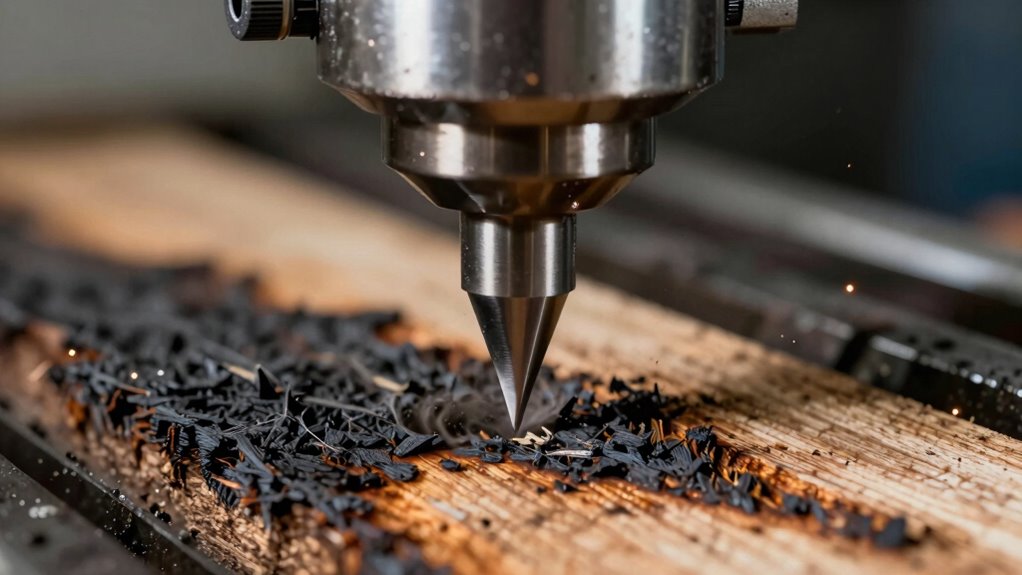
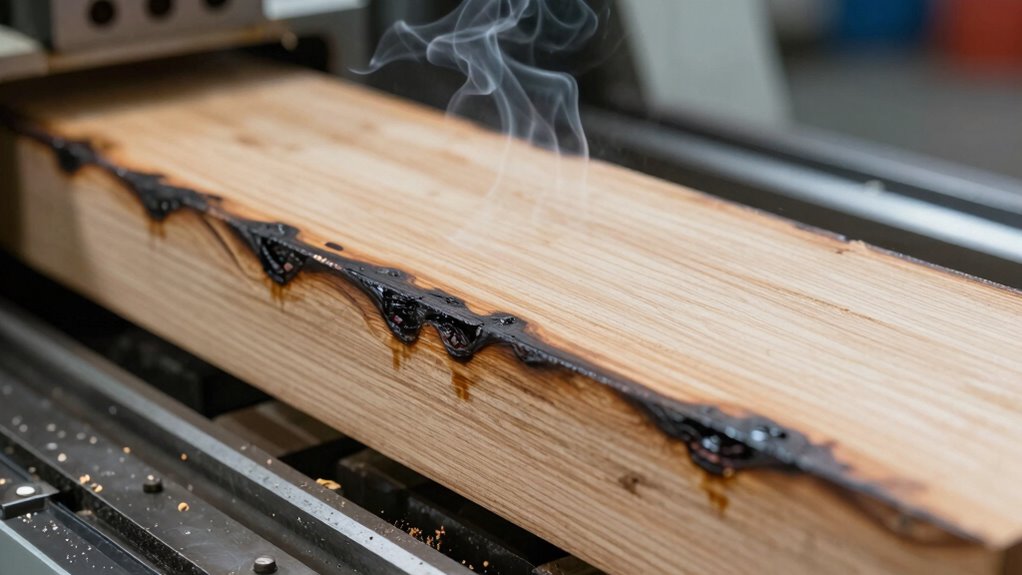
Wood burns during CNC milling because the high-speed cutting process generates significant heat at the tool-workpiece interface. When the cutter moves rapidly through the wood, friction causes heat buildup that can ignite the material or create burn marks. Unlike laser engraving, which uses focused heat intentionally, milling requires sharp tools to minimize heat transfer. Dull tools increase friction, raising temperatures and leading to burning. Regular tool sharpening helps maintain cutting efficiency and reduces heat generation. Properly sharpened tools cut smoothly, decreasing friction and preventing burns. If you neglect tool maintenance, you risk excessive heat and burn marks on your wood. Additionally, cutting parameters such as feed rate and spindle speed play a crucial role in heat production. By keeping your tools sharp and adjusting cutting parameters, you can prevent excessive heat and achieve cleaner cuts without burning the material. Proper cutting techniques are essential to avoid overheating and ensure high-quality results. Moreover, understanding thermal management strategies can further help in controlling heat buildup during milling.
What Are the Main Causes of Burn Marks in CNC Woodworking?
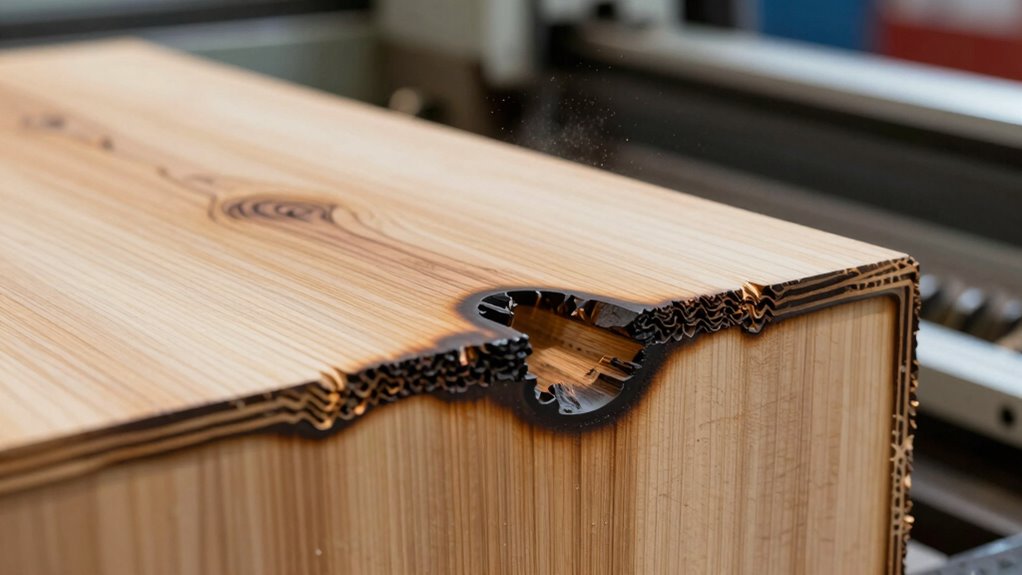
Burn marks in CNC woodworking often happen because of excess heat generated during the cutting process. The main causes include improper feed rate, dull tools, and high spindle speeds. When you set your feed rate too low, the tool spends more time in contact with the wood, increasing heat buildup. Dull tools generate more friction, which causes burning instead of clean cuts. Additionally, running your spindle at excessively high speeds can produce excessive heat, leading to burn marks. Ensuring your tools are sharp and maintaining an appropriate feed rate are critical steps. Properly balancing spindle speed and feed rate helps prevent heat accumulation. Staying aware of these factors allows you to minimize burn marks and achieve cleaner, smoother finishes in your CNC woodworking projects. Regularly inspecting your tools for wear and tear is also essential for preventing heat-related issues. a crucial aspect of maintaining optimal CNC performance.
How Can I Fix and Prevent Burn Marks on My CNC?
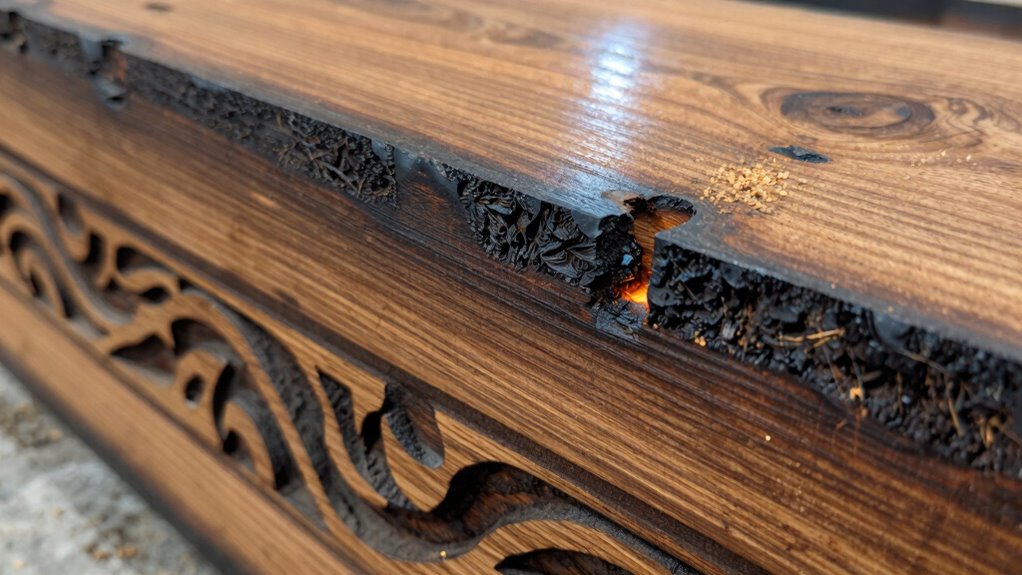
To fix and prevent burn marks on your CNC, start by ensuring your tools are sharp and properly maintained, as dull tools increase friction and heat. Regular tool sharpening reduces unnecessary strain and helps produce cleaner cuts. Adjust your feed rate to match the material and tool specifications; too fast a feed rate generates excessive heat, causing burns. Slowing down the feed rate allows the cutting tool to work more efficiently, minimizing heat buildup. Inspect your tools frequently for wear and sharpen them promptly to maintain ideal cutting performance. Using the correct feed rate combined with sharp tools not only reduces burn marks but also extends your tool’s lifespan. Proper tool calibration and consistent maintenance are essential for optimal results. Incorporating energy-efficient technologies can further optimize your CNC operations for sustainable manufacturing. Additionally, monitoring cutting parameters closely can help identify early signs of issues that may lead to burn marks, allowing for timely adjustments. Being aware of and controlling heat management during machining processes is crucial to prevent damage to both the material and the tool. Implementing these practices creates smoother cuts, preventing burn marks and improving overall CNC performance. Additionally, understanding the material properties helps in selecting the appropriate cutting parameters for different types of wood, reducing the likelihood of burns.
Best Practices to Avoid Burning and Achieve Smooth Cuts

Achieving smooth cuts and preventing burns on your CNC requires adopting best practices that optimize cutting conditions. Focus on proper material selection, choosing woods less prone to burning, and ensuring consistent feed rates. Incorporate finishing passes to smooth edges and reduce heat buildup. Additionally, utilizing repeatable tests to monitor and fine-tune your machine settings can help maintain optimal performance and prevent damage. Regularly check and calibrate your machine for stability and accuracy. Understanding the astrological signs associated with certain traits can provide insights into your work habits and preferences, which may influence your approach to CNC machining. Ensuring a proper cutting environment such as appropriate dust collection and ventilation can also help prevent heat accumulation and material burn marks. Maintaining sharp tools to minimize friction and prevent burn marks is essential for high-quality cuts. Adjust spindle speeds to match the material’s properties, avoiding excessive RPMs. Incorporating machine monitoring systems can provide real-time feedback to help prevent overheating and ensure consistent results. Being aware of material properties can guide you in selecting the best settings and techniques for different woods.
Troubleshooting Persistent Burning Issues in CNC Woodworking

Persistent burning issues in CNC woodworking can be frustrating, but many times they stem from adjustable factors that are easy to overlook. One common cause is material deformation, which occurs when the wood heats up and warps under excessive friction, leading to burnt edges. Another key factor is tool wear; dull or chipped bits generate more heat, increasing the risk of burning. To troubleshoot, check your tool’s condition regularly and replace worn bits promptly. Adjust your feed rate and spindle speed to reduce heat buildup—slower speeds often help prevent material deformation and tool overheating. Also, ensure your cooling system is functioning properly, as inadequate cooling exacerbates burning. Proper air quality control can help reduce dust and fumes that may contribute to overheating and burning issues. Additionally, maintaining optimal machine calibration ensures consistent cutting parameters, preventing unexpected burning. Regularly inspecting your cutting environment can also help identify other factors contributing to heat buildup, leading to more consistent results. Proper coolant application techniques are essential for minimizing heat and preventing burns during cutting. Moreover, using appropriate tooling designed for specific wood types can further minimize heat generation and improve cut quality. Addressing these factors can notably improve cut quality and minimize persistent burning issues in your CNC woodworking projects.
Frequently Asked Questions
Can Changing the Cutting Tool Material Reduce Wood Burning?
Yes, changing the cutting tool material can reduce wood burning. Using tools with better material hardness and resistance to wear minimizes friction and heat buildup, which are primary causes of burning. When your tool wears out quickly, it generates more heat, increasing the risk of burning. Upgrading to higher-quality, durable materials like carbide can improve cutting efficiency, lower heat, and prevent burning, giving you cleaner, smoother cuts.
How Does Feed Rate Influence Burn Marks in CNC Milling?
Adjusting your feed rate considerably impacts burn marks on your wood. A too-high feed rate increases chip load, causing excessive heat and rough surface finish, which leads to burning. Conversely, a slower feed rate reduces heat buildup, resulting in cleaner cuts and fewer burn marks. To optimize your results, find a balance that maintains efficient cutting while preventing heat accumulation, ensuring smooth surfaces and minimal burning during CNC milling.
Are There Specific Types of Wood More Prone to Burning?
Yes, certain types of wood are more prone to burning during CNC machining. Dense woods like oak or hickory have higher density, which increases heat buildup and risk of burns. Additionally, wood with high moisture content can cause uneven cutting and more heat, leading to burns. To prevent this, choose dry, low-moisture woods and adjust your feed rate accordingly to reduce heat and avoid burning marks.
What Role Does Spindle Speed Play in Preventing Burns?
Ironically, cranking up your spindle speed might seem like a quick fix, but it actually causes more heat buildup, increasing the risk of burning your wood. To prevent this, you should carefully adjust the spindle speed—slower speeds generate less heat and reduce burning. Finding the ideal balance helps you cut efficiently without sacrificing your project’s quality, ensuring your CNC runs smoothly and your wood stays unscorched.
Can Software Adjustments Help Minimize Burning During CNC Operations?
Yes, software adjustments can help minimize burning during CNC operations. You should optimize your software settings by tweaking feed rates and spindle speeds for better control. Additionally, enabling coolant application within your software can substantially reduce heat buildup, preventing burns. These tweaks ensure smoother cuts and better heat management, ultimately protecting your wood and improving overall machining quality. Proper software optimization and coolant use are key to avoiding burns effectively.
Conclusion
Think of your CNC machine as a skilled painter—when you understand the causes of burning and apply the right techniques, you can create a masterpiece with smooth, burn-free finishes. By troubleshooting issues, adjusting settings, and practicing best practices, you’ll turn potential mistakes into opportunities for precision. Keep refining your process, and soon your woodworking projects will flow seamlessly, like a well-conducted symphony—free of scorch marks and full of flawless detail.