Whether you need an enclosure depends on your project’s environment and safety needs. Enclosures protect against dust, moisture, impacts, and temperature variations, making devices safer and more durable. However, in controlled indoor spaces or low-risk setups, simple coatings or placement strategies may suffice. Understanding when enclosures help—and when they’re just hype—can save you costs and complexity. Keep exploring to find out how to determine the best solution for your electronics.

Get business pricing on tools and workshop supplies
- Business-only prices and quantity discounts
- Tax-exempt purchasing
- Multiple users, one account, clear invoices
Key Takeaways
- Enclosures protect equipment from environmental damage, impacts, and dust, making them essential in harsh or outdoor settings.
- They enhance safety by preventing accidental contact with electrical components and ensuring compliance with standards.
- For indoor or low-risk environments, protective coatings or simple barriers may suffice, reducing the need for full enclosures.
- Overusing enclosures can restrict ventilation and accessibility, so evaluate whether they truly improve device longevity and safety.
- Consider environmental factors, device heat output, and aesthetic preferences to determine if an enclosure is necessary or just hype.
outdoor weatherproof electronic enclosure
As an affiliate, we earn on qualifying purchases.
As an affiliate, we earn on qualifying purchases.
Do You Really Need an Enclosure for Your Electronics Project?
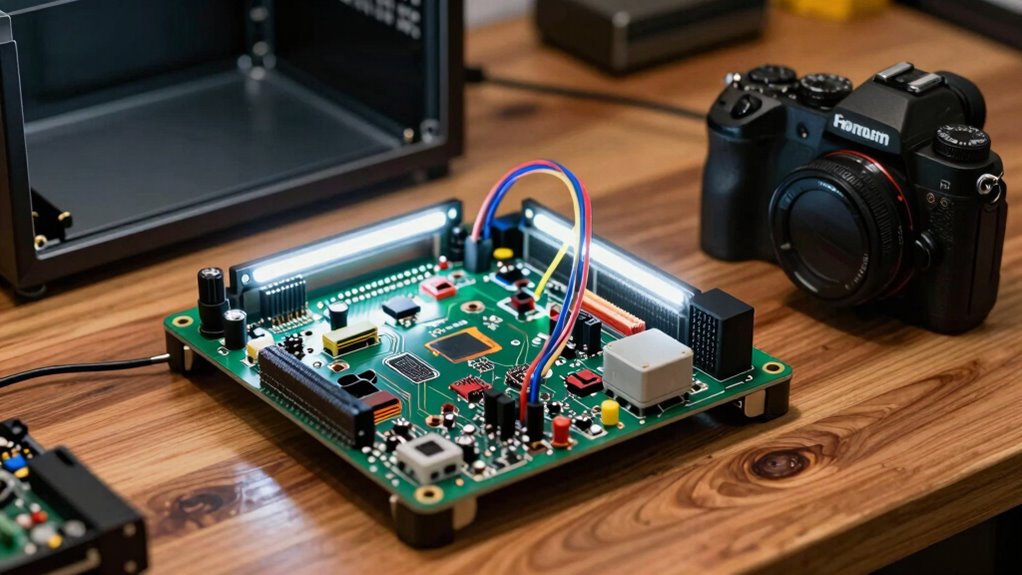
Do you really need an enclosure for your electronics project? If visual presentation matters, an enclosure can boost its aesthetic appeal, making your project look polished and professional. It hides messy wiring and components, giving a clean, finished look. Plus, it can help you avoid accidental damage, but that’s more about safety—something for later. When considering cost, enclosures can range from inexpensive plastic boxes to custom-made cases, so budget plays a role. If your project is purely for personal experimentation or learning, you might skip an enclosure to save money. However, if you plan to showcase or sell your work, investing in an enclosure enhances its overall look and perceived quality. Additionally, choosing the right project enclosure material can influence durability and visual appeal. An enclosure made from durable, sustainable materials aligns with the principles of European cloud innovation, emphasizing eco-friendly solutions. Ultimately, whether you need one depends on your goals and how much you value presentation versus cost.
When Are Enclosures Necessary for Safety and Durability?
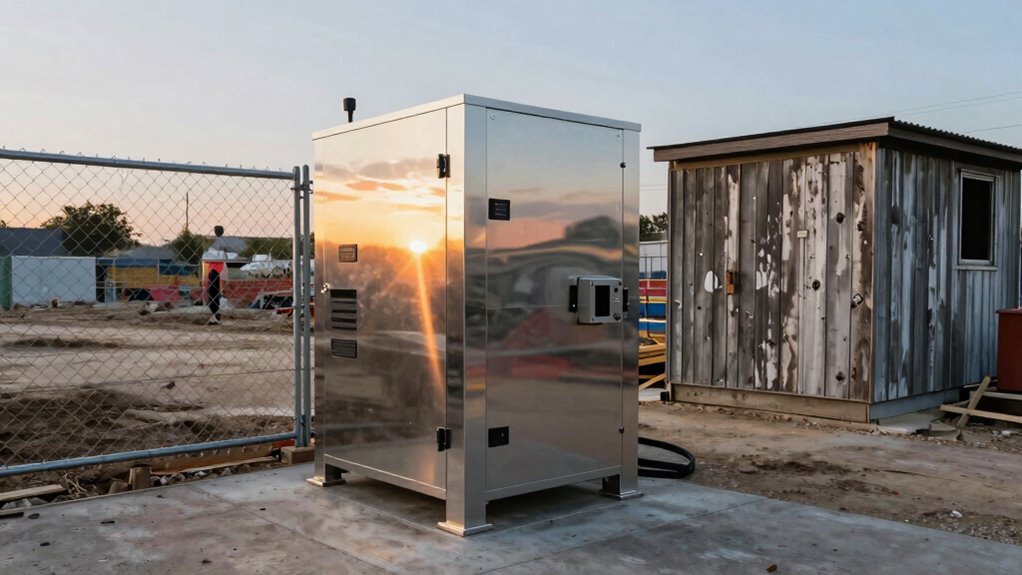
You need an enclosure when your equipment faces harsh weather or dust, as it safeguards against the elements. It also helps you meet safety standards and prevents physical damage that could cause malfunctions. Knowing when to use an enclosure ensures your devices stay safe and durable over time. Additionally, an enclosure can provide proper ventilation to prevent overheating and maintain optimal device performance. Considering Free Floating environments can further influence the decision to use enclosures to protect delicate components from unpredictable conditions. Proper ventilation design within enclosures is crucial to prevent overheating and ensure reliable operation in various environments, especially in settings exposed to extreme temperatures or humidity. As highlighted in Youngster Choice, understanding the environment helps in selecting the right enclosure to maximize device longevity and safety.
Protects Equipment From Elements
Enclosures become vital when equipment is exposed to harsh weather conditions that can cause damage or malfunctions. If your equipment faces rain, snow, or high humidity, a weather-resistant enclosure is essential to safeguard it. These enclosures provide effective weather resistance, preventing water ingress and protecting against temperature fluctuations. Additionally, they offer corrosion protection, especially in salty or industrial environments where metal components might rust. Without proper enclosure protection, your equipment risks deterioration, operational failures, and costly repairs. Choosing an enclosure designed for durability ensures your equipment remains functional despite the elements, extending its lifespan. Incorporating technical standards can help ensure your enclosure meets safety and durability requirements. In environments with extreme weather, enclosures aren’t just an option—they’re a necessity for maintaining safety and performance, as they help prevent equipment failure caused by environmental stressors. Furthermore, selecting enclosures with appropriate ventilation and drainage features can significantly improve longevity and prevent internal condensation that may lead to corrosion or malfunction. Properly designed enclosures also help meet industry safety regulations, ensuring compliance and peace of mind.
Ensures Compliance Standards Are Met
When equipment operates in regulated industries or hazardous environments, conforming to safety and durability standards isn’t optional—it’s mandatory. Enclosures help you meet strict regulatory compliance, ensuring your setup adheres to industry-specific safety codes. They also address aesthetic considerations, providing a professional appearance that aligns with standards. Additionally, choosing the right enclosure material can significantly enhance protection and longevity. Properly designed enclosures can also facilitate proper ventilation, which is essential for maintaining equipment performance and preventing overheating in enclosed environments.
Prevents Physical Damage
Physical damage to equipment can lead to costly repairs, downtime, and safety hazards. An enclosure acts as a protective barrier, shielding your gear from impacts, dust, moisture, and other environmental threats. Beyond safety, enclosures also contribute to aesthetic enhancement, giving your setup a clean, professional look while reducing visual clutter. If weight reduction is a concern, lightweight enclosures make it easier to install and move equipment without compromising protection. They help prevent accidental damage from mishandling or external forces, ensuring your devices stay functional longer. When your environment exposes equipment to physical risks—like industrial settings or outdoor locations—using enclosures is essential. They preserve your investment, maintain durability, and keep your operation running smoothly. Additionally, protective barriers can help meet safety regulations and industry standards, providing peace of mind during inspections and audits. Proper enclosure selection is crucial to ensure your gear remains protected under specific environmental conditions.
What Are the Main Benefits and Drawbacks of Using Enclosures?
Have you ever wondered whether the benefits of using enclosures outweigh their drawbacks? The main advantages include protecting electronics from physical damage, environmental hazards, and reducing noise. However, there are some drawbacks to contemplate:
- Cost implications: High-quality enclosures can be expensive, impacting your budget.
- Aesthetic considerations: Enclosures may limit design flexibility and affect the look of your project.
- Maintenance challenges: Enclosures can make access for repairs or upgrades more difficult.
- In some cases, enclosures are also used to contain water or humidity, which is especially important for sensitive components. Proper enclosure design should consider humidity control to prevent corrosion and degradation.
- Additionally, enclosures can influence thermal management, requiring careful consideration of heat dissipation to prevent overheating.
Proper enclosure selection is crucial for ensuring component longevity and optimal performance. While they add protective value, enclosures might increase upfront costs and influence overall aesthetics. They’re essential when protecting sensitive components, but if visual appeal or budget are primary concerns, weigh these benefits against potential drawbacks carefully.
How to Choose the Right Electronics Enclosure: Key Factors to Consider

Choosing the right electronics enclosure requires careful consideration of several key factors to guarantee your device functions reliably and remains protected. First, assess material selection; your enclosure’s material should match your environment—metal for durability and EMI shielding, plastic for lightweight and corrosion resistance. Ventilation considerations are equally important; ensure proper airflow to prevent overheating, especially if your device generates heat. If ventilation slots or fans are needed, plan their placement to maintain protection against dust, moisture, and contaminants. Also, consider environmental factors like temperature extremes, humidity, and exposure to chemicals. Finally, ensure the enclosure’s size accommodates all components comfortably without sacrificing accessibility or safety. By weighing material options and ventilation needs, you’ll select an enclosure that offers suitable protection and performance for your application.
Are There Alternatives to Enclosures for Protecting Electronics?
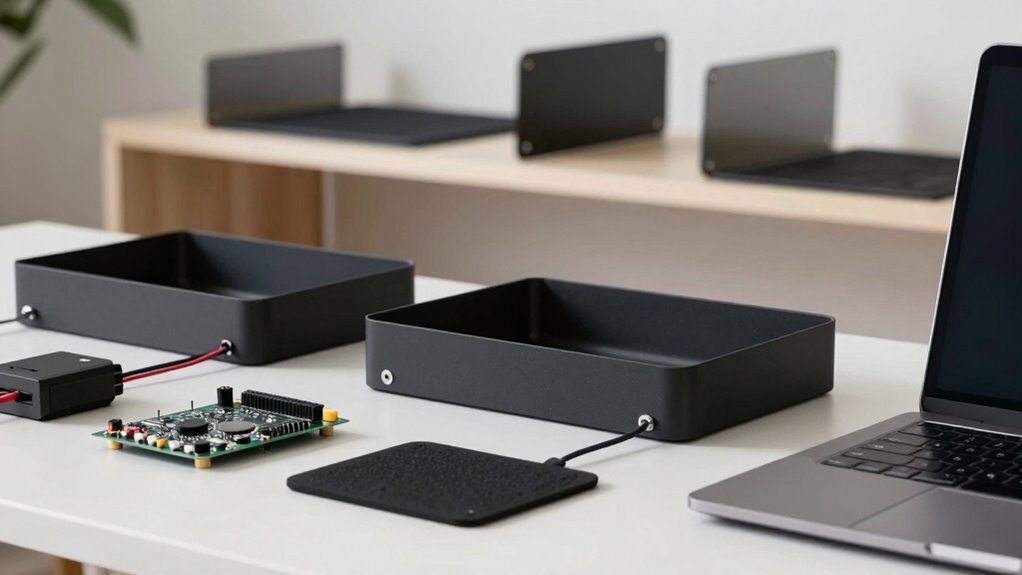
You might not always need a full enclosure to protect your electronics. Protective coatings and films can provide a barrier against moisture and dust, while proper indoor placement minimizes exposure to hazards. Considering these alternatives can sometimes offer simpler, more cost-effective solutions. Additionally, understanding the air quality in your environment can help determine the level of protection needed for your devices.
Protective Coatings and Films
Protective coatings and films offer a practical alternative to traditional enclosures by directly shielding electronic components from environmental hazards. These solutions can enhance coating durability and simplify maintenance through straightforward film application. They are especially useful in tight spaces or when weight is a concern. To maximize effectiveness, consider these factors:
- Ensure proper surface preparation for ideal film adhesion and durability.
- Select coatings or films designed for specific environmental conditions like moisture, dust, or chemicals.
- Regularly inspect and replace damaged coatings or films to maintain protection.
Indoor Placement Strategies
While enclosures are a common solution for safeguarding electronics indoors, there are effective alternatives that can reduce or eliminate the need for physical barriers. Strategic placement can protect devices from dust, moisture, and accidental damage without compromising aesthetics. Positioning electronics away from high-traffic areas minimizes exposure to hazards. Using elevated surfaces or dedicated shelves enhances aesthetic appeal while keeping equipment accessible. Ventilation optimization is essential; ensure good airflow to prevent overheating, which reduces the need for bulky enclosures. Additionally, installing protective filters or barriers can offer targeted protection without hiding the device. These strategies not only maintain a sleek, clean look but also promote better device performance and longevity, all while leveraging thoughtful indoor placement rather than relying solely on physical enclosures. Good environmental considerations play a crucial role in protecting electronics and ensuring their durability over time. Incorporating proper insulation and shielding techniques can further enhance device safety in various indoor settings. Implementing climate control measures, such as dehumidifiers or temperature regulation, can also help safeguard sensitive electronics without additional enclosures. Moreover, understanding airflow management principles can optimize cooling and reduce reliance on physical barriers. Employing monitoring systems can provide real-time insights into environmental conditions, helping to maintain optimal device performance.
Should You Use an Enclosure or Skip It?
Deciding whether to use an enclosure depends on several practical factors. First, consider your aesthetic appeal; an enclosure can improve the look of your setup but might also add clutter. Second, evaluate cost considerations—enclosures can be expensive, so weigh whether the benefits justify the expense. Third, think about your environment: if noise or dust is an issue, an enclosure offers valuable protection. If you prioritize a sleek, clean appearance and are budget-conscious, skipping the enclosure might be best. Conversely, if protection and noise reduction are essential, investing in an enclosure makes sense. Ultimately, your decision hinges on balancing visual preferences, budget constraints, and functional needs. Carefully assess these factors to determine if an enclosure enhances or hinders your setup.
Frequently Asked Questions
How Do I Measure My Project to Select the Right Enclosure Size?
To measure your project for the right enclosure size, start by using measurement tools like a ruler or caliper to get accurate dimensions. Measure the length, width, and height of your components, including any connectors or cables. Add some extra space for airflow and future upgrades. Record these enclosure dimensions carefully, ensuring you’re considering all parts that will fit inside, so you select the perfect enclosure that offers ample room and accessibility.
Can Enclosures Influence the Performance of Electronic Components?
Enclosures can definitely influence your electronic components’ performance by affecting heat dissipation and protection from environmental factors. Plus, enclosure aesthetics and customization options let you match your project’s style and functional needs. A well-chosen enclosure helps maintain ideal temperature, reduces noise, and prevents damage, ensuring your components run smoothly. So, investing in a tailored enclosure enhances both the functionality and visual appeal of your electronics.
What Materials Are Best for Outdoor or Harsh Environment Enclosures?
For outdoor or harsh environments, you should choose enclosures made from durable materials like stainless steel, aluminum, or high-grade plastics such as polycarbonate. These materials resist corrosion, impact, and weathering, ensuring long-term durability. Additionally, consider aesthetic appeal—materials like powder-coated aluminum offer a sleek look while providing protection. Opting for sturdy, visually appealing materials guarantees your enclosure withstands tough conditions without sacrificing style or functionality.
Are There Cost-Effective Enclosure Options for Small-Scale Projects?
Yes, there are cost-effective enclosure options for small-scale projects. You can explore DIY cases using readily available materials like plastic containers, metal boxes, or even repurposed items. Budget solutions like these are easy to customize and provide adequate protection without breaking the bank. Just make certain they’re durable enough for your environment, and you’ll save money while keeping your electronics safe and secure.
How Do I Handle Heat Dissipation Within Enclosed Electronics?
You’ll want to master thermal management and ventilation strategies to handle heat inside your enclosure. Ironically, sealing everything tight might seem smart, but it traps heat more than you’d like. Instead, add vents, fans, or heat sinks to promote airflow. Proper thermal management prevents overheating, extending your device’s lifespan. So, don’t just enclose it—think about how heat escapes, or your electronics might just overheat in protest.
Conclusion
Ultimately, whether you need an enclosure depends on your project’s environment and safety needs. For example, if you’re building a weather-resistant outdoor sensor, an enclosure protects against moisture and damage. But for a simple indoor prototype, it might be unnecessary. Consider factors like durability, safety, and ease of access. Sometimes, skipping an enclosure saves time and cost—just weigh the risks and benefits to make the best choice for your project.
Fall Picks
fall essentials
As an affiliate, we earn on qualifying purchases.