
If your thread tension is acting up, start by ensuring your thread is properly threaded through the machine and the bobbin is correctly wound and seated. Then, check for tangles or misalignments in the thread path, guides, and tension discs. Finally, sew scrap fabric and fine-tune the tension dial until stitches are balanced and even. If you want more tips to fix tension issues quickly, keep exploring these essential checks.
Key Takeaways
- Check that the bobbin is correctly wound and seated properly in the bobbin case.
- Inspect the thread path for tangles, knots, or misalignments from spool to needle.
- Test stitches on scrap fabric and adjust the tension dial gradually for balanced stitches.
- Ensure the needle is properly installed and not bent or dull to prevent tension issues.
- Confirm thread type matches your fabric and tension settings for optimal stitch quality.

2 of Sewing Machine Bobbin Case for Front Loading 15 Class Machines.
- Compatible with 15 Class Machines: Bobbin case for front loading models
As an affiliate, we earn on qualifying purchases.
As an affiliate, we earn on qualifying purchases.
Check and Set Your Thread Tension Correctly
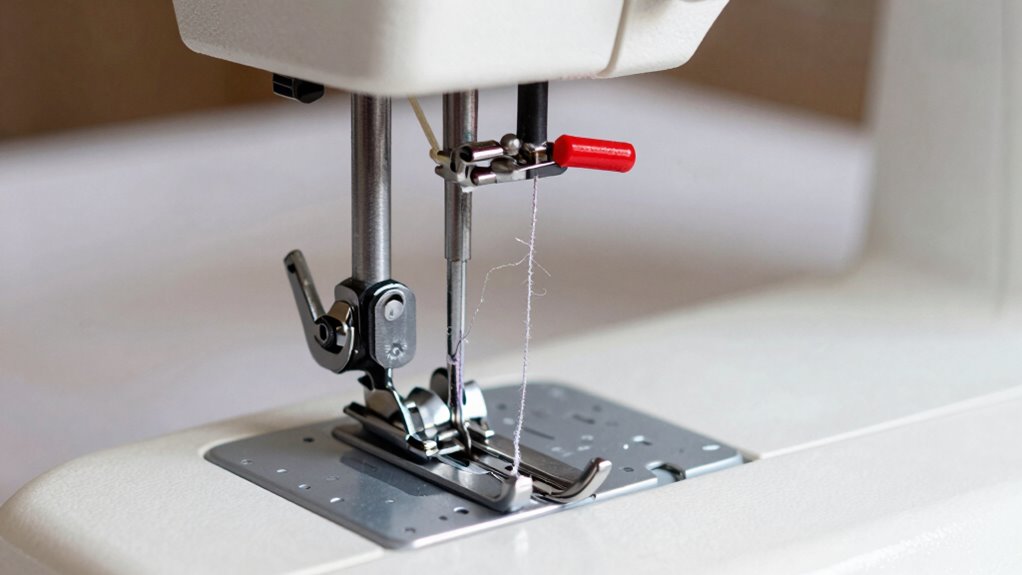
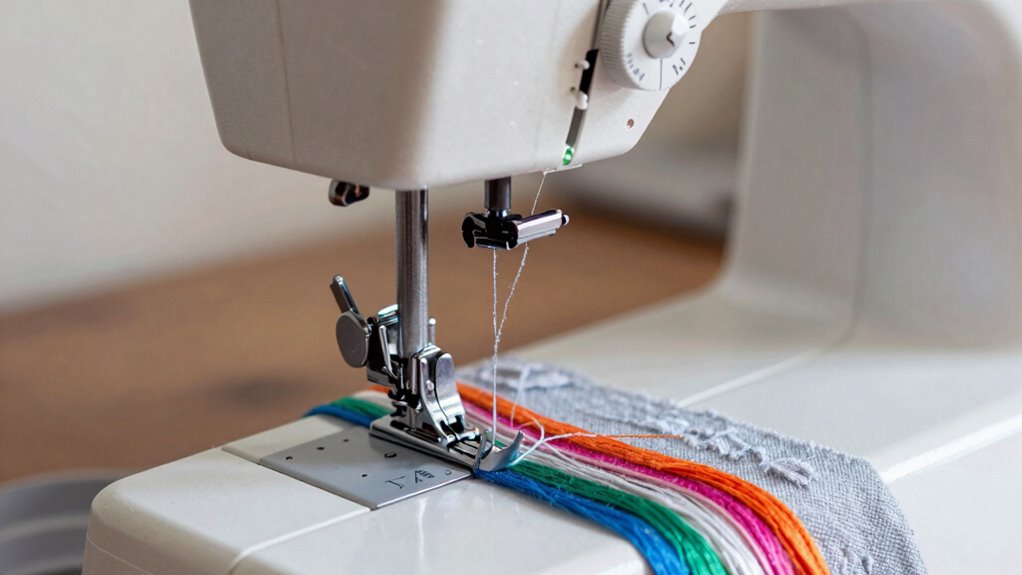
To guarantee your sewing machine stitches smoothly, you need to check and set the thread tension correctly. Start by ensuring your bobbin placement is accurate; if the bobbin isn’t properly seated or wound evenly, tension issues can occur. Next, inspect your needle quality—using a dull or bent needle can cause inconsistent stitches. When setting the tension, begin with the machine’s default setting and test on scrap fabric. Adjust the tension gradually, turning the tension dial clockwise to tighten or counterclockwise to loosen. Proper tension allows your top and bottom stitches to lock evenly without puckering or loose stitches. Regularly checking bobbin placement and replacing worn needles help maintain ideal tension and stitch quality. Additionally, understanding the style of your thread can influence tension settings and stitch consistency. Recognizing the different types of thread and their properties can help you achieve more consistent results. Being aware of the material composition of your thread can also impact how it interacts with your fabric and tension settings. Moreover, understanding how thread tension impacts stitch quality can help you troubleshoot and prevent issues effectively. Proper tension adjustment is essential for achieving professional-looking stitches and avoiding thread breakage during sewing.
Inspect the Thread Path for Tangles and Misalignment
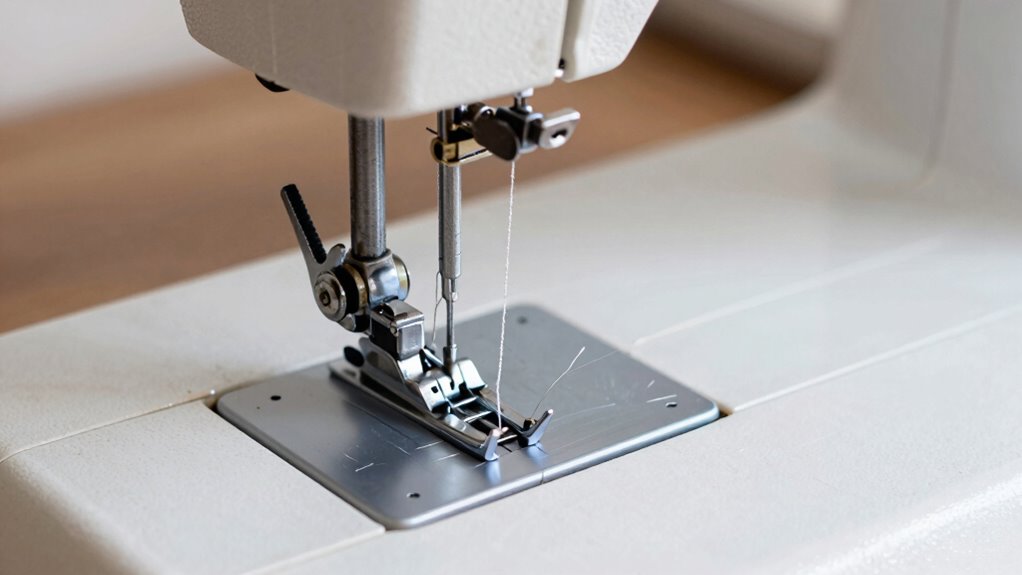
Since tangled or misaligned threads can cause stitching issues, it’s essential to inspect the entire thread path regularly. Start by checking your bobbin threading to ensure the thread is wound correctly and seated properly in the bobbin case. Next, examine the entire thread path, including the tension discs, guides, and take-up lever, for any tangles or knots. Misaligned or improperly threaded components can cause uneven tension and skipped stitches. Additionally, verify the needle alignment; a crooked or improperly installed needle can disrupt the thread path and lead to tension problems. Correcting these issues helps guarantee smooth, even stitches. Take your time to carefully follow the thread from the spool to the needle, fixing any tangles or misalignments you find. Regularly inspecting and maintaining your machine’s tension system can prevent many common tension issues. Always consult your sewing machine’s user manual for specific threading instructions and troubleshooting tips.
Test Your Stitches and Fine-Tune the Tension for Perfect Sewing
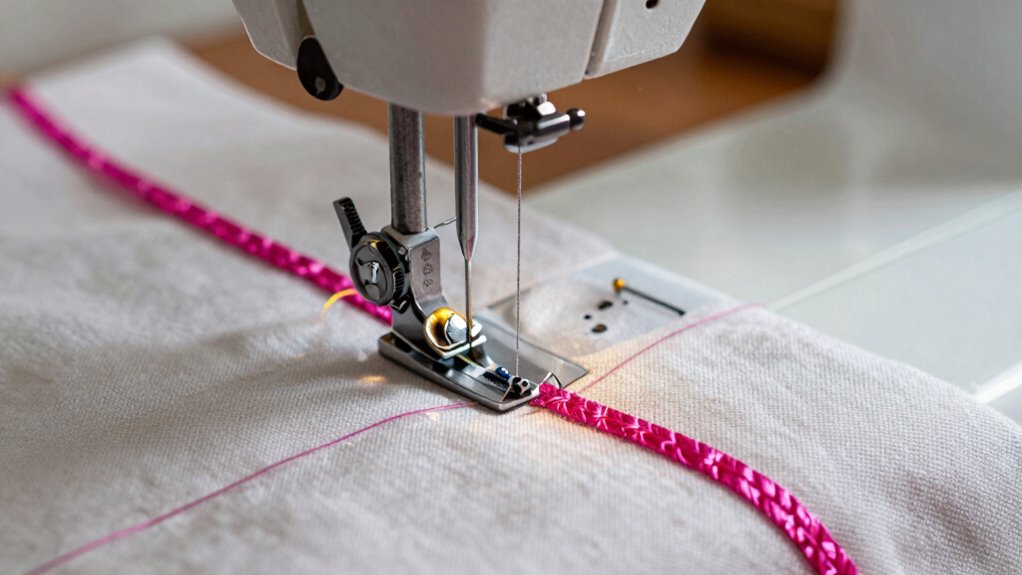
Before you start sewing your project, it’s important to test your stitches and adjust the tension until they look perfect. Begin by sewing a scrap piece of fabric, paying attention to the seam quality. Check the stitches—if they’re uneven or puckered, adjust your machine’s tension dial accordingly. Make certain your bobbin winding is even and the bobbin is inserted correctly, as improper winding can affect stitch quality. Also, verify your needle placement; a crooked or incorrectly inserted needle can cause skipped stitches or tension issues. Fine-tuning involves making small tension adjustments and re-testing until the stitches are balanced on both the top and bottom. This process helps you achieve professional-looking seams and prevents tension problems during your actual project. Additionally, understanding thread tension and how it interacts with your fabric and needle choice can greatly improve your sewing results.
Frequently Asked Questions
How Often Should I Check My Sewing Machine’s Tension Settings?
You should check your sewing machine’s tension settings every few projects or whenever you notice uneven stitches. Regular checks help catch threading mistakes early and prevent bobbin problems from affecting your sewing. Keep an eye on tension if you change thread types or fabrics, and recheck after cleaning or adjustments. Staying proactive guarantees smooth stitching and avoids frustration caused by inconsistent tension.
Can Using Different Thread Types Affect Tension Issues?
Using different thread types definitely affects tension issues. Thinner or specialty threads may require adjustments in your machine’s tension settings, as they have different thread compatibility and thickness. When switching threads, it’s smart to test sew on scrap fabric first. This ensures your tension is balanced, preventing puckering or loose stitches. Always check thread compatibility and adapt your tension accordingly to keep your sewing smooth and snag-free.
What Are Signs of Incorrect Tension Besides Uneven Stitches?
If your stitches look loose or puckered, that’s a sign of incorrect tension, but beware of tension myths that suggest these are the only signs. You might also notice fabric bunching or poor seam strength. To fix this, check your sewing machine calibration and ensure the tension dial is set correctly for your fabric and thread. Proper tension prevents issues and keeps your stitching neat and durable.
Does Fabric Type Influence Tension Adjustments?
Yes, fabric type definitely influences tension adjustments. You need to take into account fabric compatibility because delicate fabrics like silk require different tension settings than heavy fabrics like denim. Also, thread selection plays a role; using the right thread for your fabric ensures even stitches and prevents tension issues. Adjust your tension based on the fabric’s weight and texture, testing on scrap material first to get the best results.
Are There Specific Tools Recommended for Tension Troubleshooting?
A stitch in time saves nine, so don’t ignore tension issues. For troubleshooting thread tension, you’ll want simple tools like a tension gauge or a magnifying glass to see the thread closely. These troubleshooting tools help you identify if the tension is too tight or loose. Using the right tools allows you to adjust your machine accurately, ensuring smooth sewing and preventing future tension problems.
Conclusion
By performing these quick checks, you can substantially reduce thread tension issues and enjoy smoother sewing. Did you know that improper tension is the top cause of skipped stitches and thread breakage in 70% of sewing machine problems? Taking just a few minutes to inspect and adjust your tension can save you hours of frustration and ensure perfect stitches every time. Keep these tips in mind, and your sewing projects will turn out flawless!