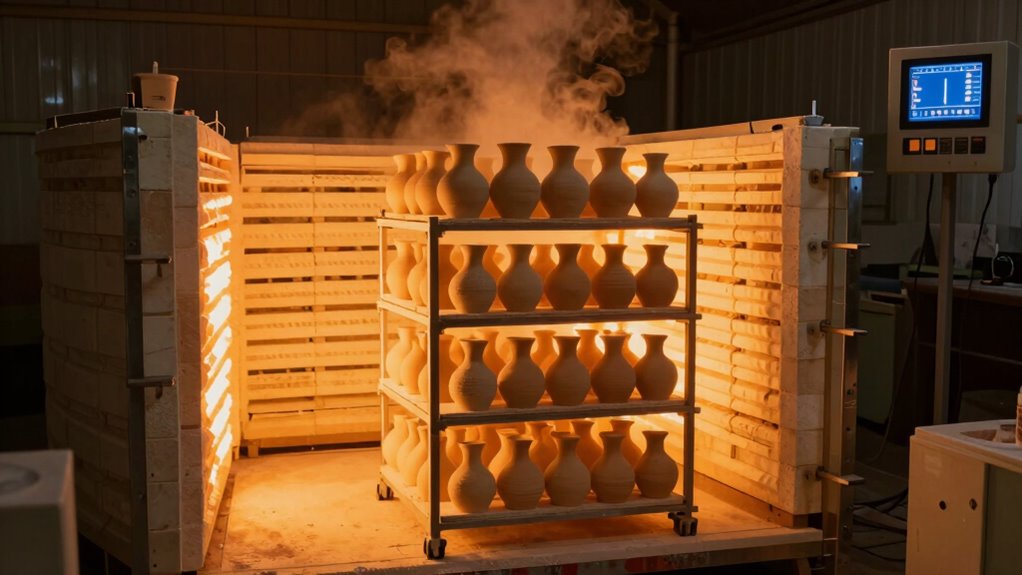

When firing a kiln, you gradually increase the temperature in a process called ramping, then hold it steady during soaking to guarantee even heat and proper glaze development. Cooling should be slow and controlled to avoid cracking caused by rapid temperature drops. Managing these steps carefully helps you achieve consistent, high-quality results. If you’d like to learn how to optimize each phase, you’ll find helpful tips as you explore further.

Get business pricing on tools and workshop supplies
- Business-only prices and quantity discounts
- Tax-exempt purchasing
- Multiple users, one account, clear invoices
Key Takeaways
- Ramp is the gradual increase of kiln temperature to reach the desired firing temperature safely.
- Soak involves holding the kiln at a specific temperature to ensure even heat distribution and glaze maturity.
- Cooling is the controlled reduction of temperature to prevent thermal shock and cracking in the ware.
- Proper management of ramp, soak, and cool phases ensures consistent, high-quality ceramic results.
- Using backup power systems during firing helps maintain temperature control and prevents damage from power outages.
kiln pyrometer for ceramic firing
As an affiliate, we earn on qualifying purchases.
As an affiliate, we earn on qualifying purchases.
What Are the Main Stages of Kiln Firing?
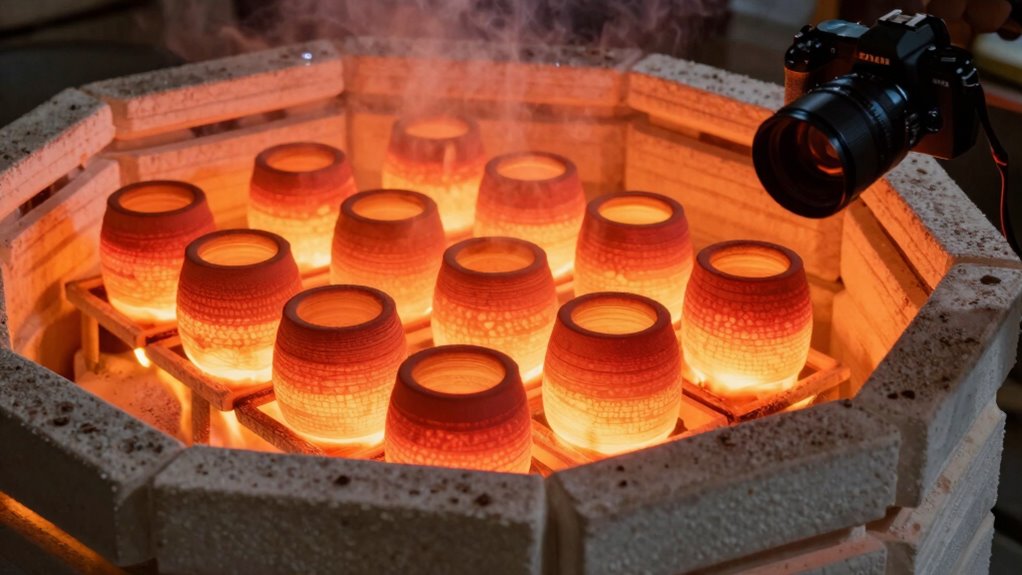
The main stages of kiln firing are essential for transforming raw clay into durable ceramic ware. First, you prepare the firing atmosphere, which can be oxidizing or reducing, affecting the final colors and finishes. During firing, proper kiln maintenance ensures even heat distribution and prevents issues like uneven firing or damage. The initial stage involves gradually heating the kiln to remove moisture and organic materials, creating a stable environment. Next, the firing progresses through the ramp and soak phases, where temperature control is critical. Maintaining the right atmosphere throughout these stages helps achieve desired glaze effects and strength. Additionally, energy-efficient kiln operation can significantly reduce costs and environmental impact during firing. Proper color management during firing can enhance the final appearance of your ceramics. Finally, controlled cooling consolidates the ware’s structure. Each stage demands attention to kiln condition and atmosphere, ensuring your ceramics develop maximum strength, appearance, and durability.
How Do You Control Temperature During the Firing Ramp?
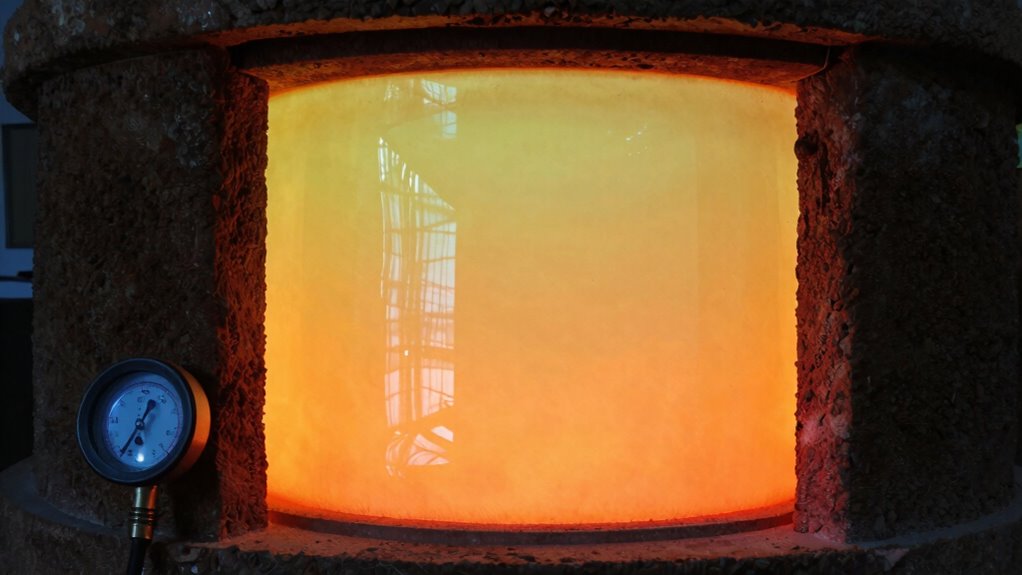
Controlling temperature during the firing ramp requires careful monitoring and precise adjustments to the kiln’s heating elements or fuel supply. You’ll need to rely on accurate readings from your pyrometer, so regular calibration is essential for reliable data. As the temperature rises, you control the rate by adjusting the power or fuel input, maintaining a steady temperature ramp. Use the kiln’s controller, if available, to set specific ramp rates, ensuring even heating. Keep a close eye on the pyrometer during this process, making small tweaks as needed to prevent overshooting or undershooting your target temperature. Proper temperature ramp control helps achieve consistent results and prevents thermal shock or damage to your ware.
Why Is Soaking an Important Step in Kiln Firing?
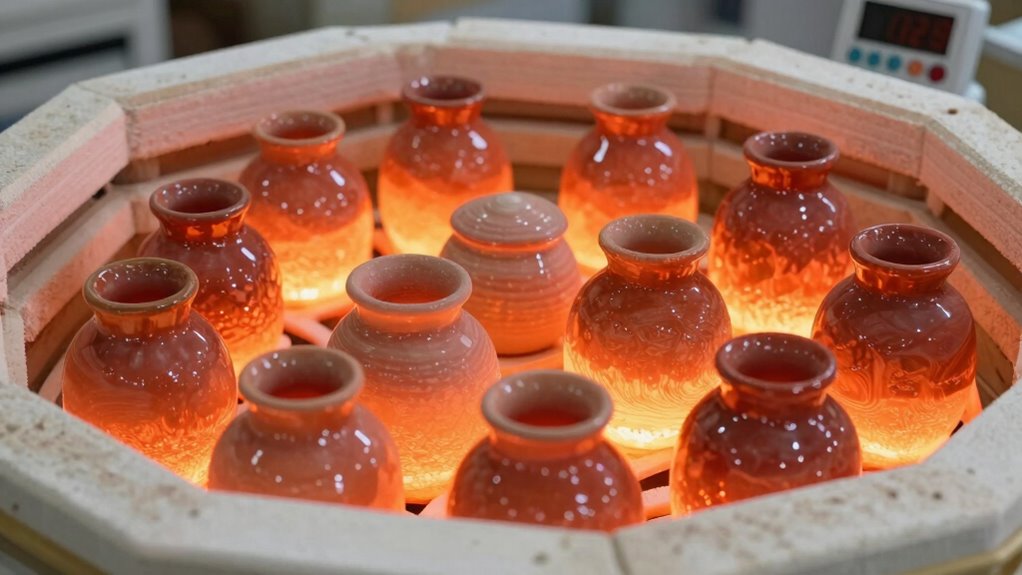
Soaking during kiln firing allows heat to penetrate evenly throughout your ware, ensuring thorough maturation. This step promotes ceramic stability by giving the heat time to distribute uniformly, reducing the risk of weak spots or warping. It also helps achieve consistent glaze maturation, resulting in a smooth, glossy finish. During soak, your piece reaches a uniform temperature, which is critical for reliable results. Additionally, proper temperature control during soaking ensures the best possible outcome for your ceramic piece. Incorporating temperature regulation techniques can help maintain consistent heat levels and improve overall firing success. Using firing schedules that include a soak period is essential for achieving optimal results in various types of ceramic work. Moreover, understanding the heat transfer process can further optimize your firing schedule for better results.
What Happens When the Kiln Cools Down?

As the kiln cools, the temperature gradient shifts, causing different parts of your piece to change at different rates. This process influences how the glaze and materials develop, often affecting the final appearance. Controlling cooling rates helps you manage these effects more precisely, ensuring your finished work meets your expectations. Properly managing the cooling process can also prevent thermal shock, which can crack or damage your pottery. Understanding these changes helps you control the outcome of your fired work more effectively.
Temperature Gradient Shift
When a kiln begins to cool down, the temperature gradient inside shifts considerably, affecting how the heat is distributed across the load. As the temperature drops, areas closer to the kiln walls cool faster, disrupting temperature uniformity. This uneven cooling can cause differential thermal expansion, leading to stress in the ceramic pieces. Understanding natural cooling processes can help prevent damage caused by uneven thermal expansion. To manage this, you should monitor the cooling rate carefully, ensuring it’s gradual enough to prevent cracking. Keep in mind:
- The outer layers cool first, creating a temperature mismatch.
- Uneven cooling impacts the final strength and appearance.
- Slower cooling helps maintain temperature uniformity.
- Proper ventilation ensures steady heat release without abrupt shifts.
Understanding this shift helps you control the cooling process, protecting your work from damage caused by uneven thermal expansion.
Glaze and Material Effects
Have you ever wondered how the cooling process affects the appearance and integrity of your glazed ceramics? As the kiln cools, the glaze continues to undergo material reactions that influence its final look. Rapid cooling can cause the glaze to crack or craze, while slow cooling allows for smoother melting and settling of glaze particles. During this phase, glaze melting slows, giving the surface time to develop its glossy or matte finish. Additionally, chemical changes in the glaze and clay body can create unique color shifts or surface textures. The cooling rate determines whether certain effects, like crystalline formations or runny textures, form properly. Understanding these material reactions helps you control the final outcome, ensuring your ceramics achieve the desired aesthetic and structural qualities.
How Can I Troubleshoot Common Firing Problems?
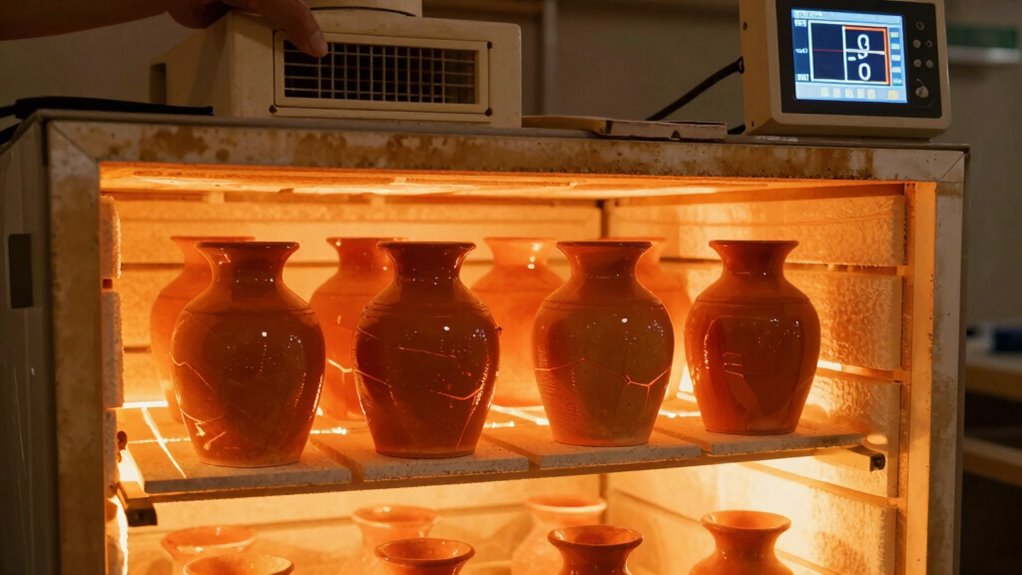
Firing problems can be frustrating, but many issues have straightforward solutions once you identify the cause. If you notice glaze cracking, it’s often due to rapid cooling or uneven heating during firing. Uneven heating can cause parts of your piece to expand or contract differently, leading to cracks or warping. To troubleshoot, check your kiln’s temperature calibration and ensure even heat distribution. Here are some tips:
- Inspect heating elements for damage or uneven wear
- Adjust your ramp and soak schedule for more gradual temperature changes
- Avoid sudden temperature drops during cooling
- Ensure your kiln’s lid and insulation are properly sealed for even heat flow
Addressing these issues can help prevent glaze cracking and achieve more consistent results.
Planning Your Firing Schedule: Tips for Beginners
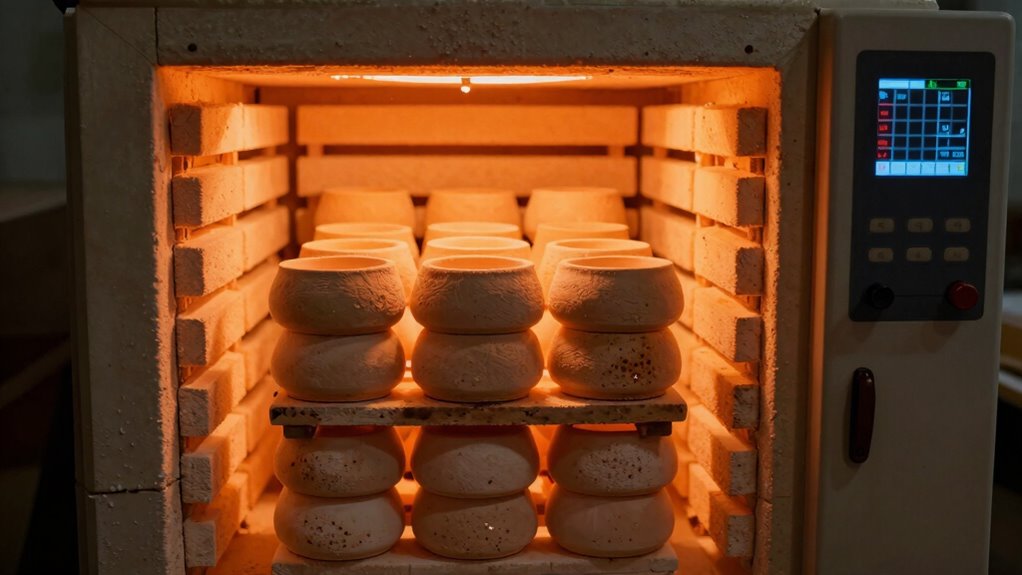
Planning your firing schedule is a crucial step in achieving consistent and successful results. A well-designed firing schedule helps you manage temperature control and ensures even heating. Start by determining the desired peak temperature based on your clay or glaze. Break down the firing into manageable stages, including ramp-up, soak, and cool-down periods. Keep your ramp rates gradual to prevent thermal shock. Use a reliable pyrometer or controller to monitor the temperature closely. Record your schedule details for future reference and adjustments. Proper planning minimizes defects and leads to more predictable, professional results. Additionally, understanding vetted kiln firing techniques can improve your overall process and outcomes. Incorporating thermal expansion principles can help prevent cracking and warping during firing. Consulting with professional kiln technicians can also enhance safety and success in your kiln firing projects. To further optimize your process, consider implementing backup power systems to protect your kiln and equipment during outages.
Frequently Asked Questions
What Types of Materials Are Suitable for Kiln Firing?
You can fire ceramics, porcelain, and certain stones in a kiln, but always check glaze compatibility and firing temperature. Clay bodies like stoneware and porcelain withstand high temperatures, while earthenware needs lower ones. Confirm your materials match the firing range of your kiln and glaze specifications. This way, you prevent damage and get the best results, making sure everything is compatible for a successful firing process.
How Do I Prevent Glaze Defects During Firing?
Don’t put all your eggs in one basket when it comes to glaze compatibility and firing temperature. To prevent glaze defects, always choose glazes suited for your clay body and firing range. Double-check the glaze’s recommended firing temperature and run test pieces first. Maintaining consistent kiln temperature and avoiding rapid changes helps prevent defects like crawling or pinholing. Patience and careful monitoring are your best allies in achieving a smooth, flawless finish.
Can I Modify Firing Schedules for Different Clay Bodies?
Yes, you can modify firing schedules for different clay bodies. Adjust firing schedules based on clay body modifications by experimenting with ramp rates, soak times, and cooling speeds to achieve ideal results. Keep detailed notes on these firing schedule adjustments, as different clay bodies respond uniquely. This helps prevent defects, ensures proper maturation, and enhances the quality of your finished pieces. Always test new schedules on small pieces first.
What Safety Precautions Should I Take During Firing?
Imagine standing near a roaring fire, sparks flying, as you fire your kiln. You should always prioritize fire safety by keeping a fire extinguisher nearby and ensuring proper ventilation. Wear protective gear like heat-resistant gloves, goggles, and a respirator to shield yourself from heat, fumes, and shards. Never leave the kiln unattended during firing, and double-check all wiring and connections to prevent accidents. Your safety is essential.
How Does Kiln Insulation Affect Firing Outcomes?
Kiln insulation plays a vital role in ensuring temperature stability during firing, preventing heat loss and maintaining even heat distribution. When your kiln is well-insulated, it uses energy more efficiently, saving you money and reducing the risk of temperature fluctuations that can affect your work. Proper insulation allows for more precise control over firing cycles, resulting in better glaze results and overall improved firing outcomes.
Conclusion
Just like a symphony needs timing and balance, your kiln firing requires patience and care. Mastering the ramp, soak, and cool stages guarantees your pieces emerge vibrant and strong. Think of each firing as a story, unfolding with precision and purpose. With practice, you’ll find harmony in your process, turning raw clay into art. Embrace each cycle, and soon you’ll orchestrate perfect fires, creating masterpieces that sing with fire’s silent song.
Halloween Picks
halloween
As an affiliate, we earn on qualifying purchases.