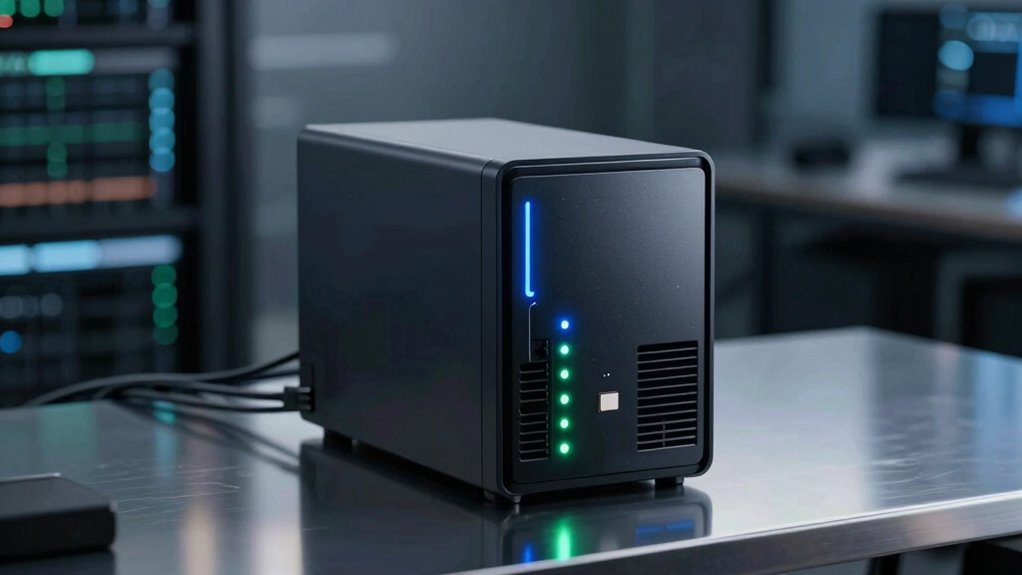

Losing a critical file on your NAS highlights how vulnerable these systems can be without proper safeguards. While NAS devices seem reliable at first, hardware failures, malware, or accidental deletions put your data at risk. Relying solely on a NAS isn’t enough—you need cloud backups and encryption for added safety. Taking these steps can turn a fragile setup into a resilient one. Keep going to discover how to protect your important files more effectively.
Key Takeaways
- Losing one critical file highlights NAS vulnerabilities like hardware failure and accidental deletion.
- Relying solely on NAS risks data loss without additional backup or security measures.
- Cloud backup provides off-site safety for critical files, reducing dependence on NAS hardware.
- Encryption secures sensitive data, preventing unauthorized access if NAS is compromised.
- Combining backup and encryption creates a resilient system that safeguards against data loss and cyber threats.
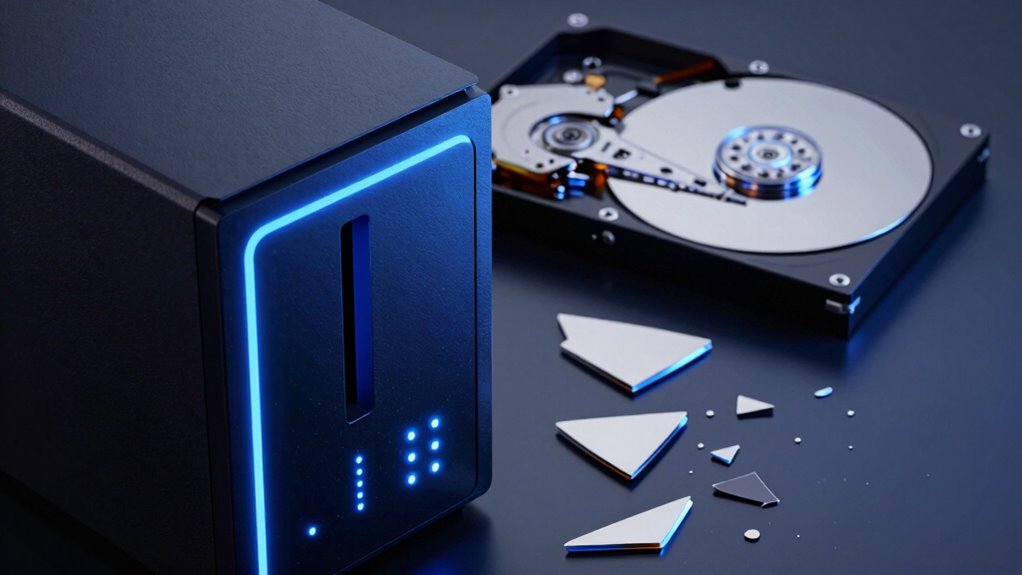
Network Attached Storage (NAS) systems often seem reliable and quiet—until you lose that one critical file. At first glance, they promise seamless storage, easy access, and peace of mind. But when a file suddenly vanishes or becomes corrupted, you realize that relying solely on your NAS isn’t enough. That’s when you start considering additional safeguards like cloud backup and data encryption. These tools aren’t just technical jargon; they’re vital for protecting your most important data.
Relying solely on your NAS isn’t enough—protect your data with cloud backups and encryption for true peace of mind.
You might think your NAS is enough because it’s on your local network, but it’s vulnerable to hardware failures, accidental deletions, or even malware attacks. Cloud backup acts as a safety net, copying your files to a remote server automatically. It’s like having a second pair of eyes watching over your data, guaranteeing that even if your NAS crashes, your valuable files stay safe elsewhere. Setting up regular cloud backups provides peace of mind, knowing that your data isn’t confined to one physical device that could fail at any moment. Implementing redundant storage can further reduce the risk of data loss. Additionally, understanding storage reliability can help you make more informed decisions about your data protection strategies.
Data encryption becomes essential once you start thinking about security. When your files are encrypted, even if someone gains unauthorized access to your NAS or cloud storage, they can’t read your data without the proper decryption keys. This layer of protection ensures that sensitive information, whether personal or business-related, remains confidential. Encryption also helps in complying with data protection regulations, giving you confidence that your data handling practices meet industry standards.
You need to be proactive. Relying solely on your NAS’s internal safety features isn’t enough. Implementing cloud backup ensures your data is stored off-site, safe from local disasters like fires or floods. Meanwhile, encrypting your data guarantees that, even in the worst-case scenario, your information remains secure from prying eyes. Combining these strategies transforms your storage setup from a fragile system into a resilient one.
Losing a critical file can be devastating, especially when you realize it was never properly backed up or secured. It’s not just about hardware failure; it’s about protecting your digital life from all angles. By integrating cloud backup and data encryption into your storage routine, you create a safety net that’s both robust and reliable. With these measures in place, you reduce the risk of losing everything and turn a potentially catastrophic event into a manageable inconvenience. Remember, your data’s safety depends on proactive planning—don’t wait until it’s too late to take action. Incorporating cloud security measures can further safeguard your data from evolving threats.
NAS backup external hard drive
As an affiliate, we earn on qualifying purchases.
As an affiliate, we earn on qualifying purchases.
Frequently Asked Questions
How Often Should NAS Data Be Backed Up?
You should back up your NAS data regularly, ideally daily or weekly, depending on how often you update files. Incorporate cloud synchronization for off-site backups and guarantee hardware redundancy to protect against hardware failure. Regular backups prevent data loss from system crashes or hardware issues. By maintaining consistent backup routines, you minimize risks and ensure your critical files stay safe, even if your NAS encounters unexpected problems.
What Are the Best Practices for NAS Security?
You should prioritize NAS security by enforcing strict user access controls and using robust encryption protocols. Investigate the theory that layered security reduces risks—it’s true. Limit user permissions to essential functions, enable two-factor authentication, and keep firmware updated. Encrypt sensitive data both at rest and during transfer. Regularly review access logs to detect unusual activity. These practices help safeguard your NAS from breaches and unauthorized access, protecting your critical files.
Can NAS Systems Recover Deleted Files Easily?
Yes, NAS systems can recover deleted files, but how easily depends on your setup. If you’ve enabled features like snapshot backups or data restoration tools, you can quickly perform file recovery. Regularly scheduled backups and versioning make data restoration smoother, reducing the risk of permanent loss. Without these safeguards, recovering deleted files becomes much harder, emphasizing the importance of proactive data management to prevent costly data loss.
What Are Common Causes of NAS Data Loss?
You might be caught off guard when your NAS suddenly fails, and data loss occurs. Common causes include data corruption, which sneaks in during faulty transfers or power outages, and hardware failure, like a dying hard drive or faulty components. These issues threaten your important files unexpectedly, emphasizing the importance of regular backups. Stay vigilant, because one moment of hardware trouble or corruption could mean losing critical data forever.
How Does RAID Impact Data Safety on NAS?
RAID configurations considerably enhance data safety on your NAS by providing data redundancy. When you set up RAID, your system stores duplicate data across multiple drives, so if one drive fails, your data remains safe and accessible. Different RAID levels offer various balances of redundancy and performance, ensuring that even in hardware failures, your critical files stay protected. This setup minimizes the risk of data loss, giving you peace of mind.
cloud backup service for NAS
As an affiliate, we earn on qualifying purchases.
As an affiliate, we earn on qualifying purchases.
Conclusion
Losing a critical file from your NAS system is like watching your safety net unravel right before your eyes. It’s a stark reminder that even the most advanced setups can’t replace diligent backups. Don’t let the thrill of convenience turn into a nightmare. Protect your data like a precious treasure, because once it’s gone, no recovery can replace that moment of panic. Stay vigilant, back up regularly, and keep your digital life secure.
data encryption software for NAS
As an affiliate, we earn on qualifying purchases.
As an affiliate, we earn on qualifying purchases.
RAID storage system for data redundancy
As an affiliate, we earn on qualifying purchases.
As an affiliate, we earn on qualifying purchases.