To select the right leathercraft equipment, focus on quality tools for dyeing, tooling, cutting, and finishing. Choose dyes that penetrate evenly and applicators like brushes or airbrushes for smooth effects. Invest in sharp knives, punches, and stamping tools for detailed patterns. Opt for durable hardware to enhance your handmade items. Prioritize eco-friendly and sustainable practices when possible to appeal to conscious consumers. If you keep exploring, you’ll discover how the right tools can elevate your craftsmanship to the next level.
Key Takeaways
- Prioritize versatile tools like sharp knives, rotary cutters, and pricking irons for precise cutting and stitching.
- Choose high-quality dye applicators such as brushes, sponges, or airbrushes for even, vibrant coloring.
- Invest in durable hardware like rivets, clasps, and fasteners to ensure longevity and aesthetic appeal.
- Incorporate eco-friendly dyeing supplies and natural dyes to promote sustainable craftsmanship.
- Focus on mastering essential tools for dyeing, tooling, and finishing to elevate overall craftsmanship quality.
Getting started in leathercraft can be exciting, but choosing the right equipment is vital to guarantee your projects turn out great. As a handmade goods seller, investing in quality tools ensures your work looks professional and stands the test of time. When it comes to leather dyeing techniques, having the right applicators and dyes is essential. You’ll want to select dyes that penetrate the leather evenly and produce vibrant, lasting colors. Brushes, sponges, and daubers are common tools for applying dye, and each offers different control and finish. For detailed work, an airbrush might be worth considering, especially if you aim for smooth gradients or intricate color effects. Always choose dyes compatible with your leather type and be prepared to experiment with layering and blending to achieve the desired depth. Understanding sustainable practices in leather dyeing can also help reduce environmental impact and promote eco-friendly craftsmanship. Incorporating eco-conscious dyeing methods can further enhance the sustainability of your leather projects. Exploring natural dyes can be an effective way to create eco-friendly and unique finishes on your leather goods. Additionally, experimenting with different application techniques can help you achieve more consistent and professional results. Using proper ventilation during dyeing processes is important to ensure safety and maintain a healthy workspace.
Choose the right dyes and applicators for vibrant, durable leather finishes.
Leather tooling patterns are another fundamental aspect of leathercraft equipment. These patterns define the style and intricacy of your designs, and the tools you use can dramatically influence the final look. Basic stamping tools such as swivel knives, bevelers, and background stamps allow you to carve and emboss patterns with precision. Investing in a variety of stamps lets you add depth and texture to your projects, making your designs stand out. When selecting tooling patterns, think about the styles you want to create—whether traditional floral motifs, geometric designs, or custom patterns. A well-chosen set of tools can help you execute consistent, detailed patterns that elevate your craftsmanship.
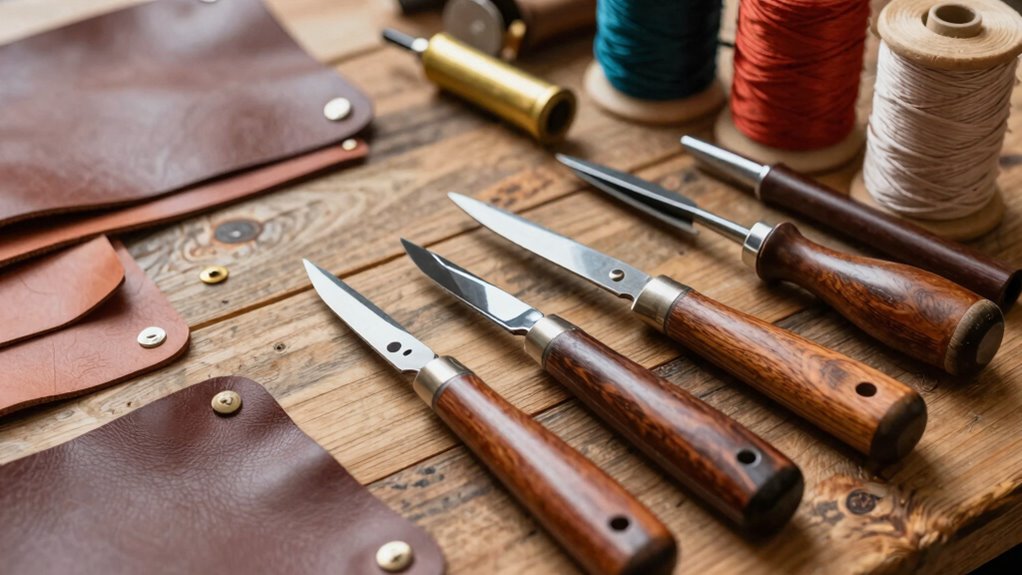
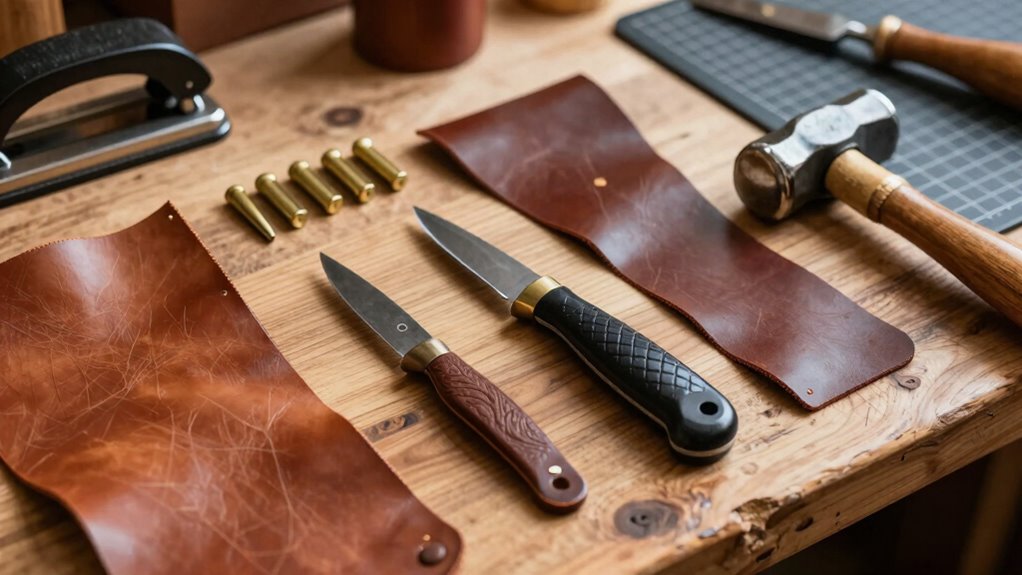
Getting the right equipment also means considering cutting tools, rivets, clasps, and stitching supplies. Sharp knives and rotary cutters will give you clean cuts, while punches and pricking irons help with even stitching. For durability and aesthetic appeal, choose high-quality hardware and thread suited to leather. If you’re planning to sell your handmade goods, investing in professional-grade tools can streamline your workflow and improve your product quality.
In essence, your success in leathercraft hinges on selecting the right equipment for dyeing, tooling, cutting, and finishing. By understanding the importance of leather dyeing techniques and mastering various leather tooling patterns, you set a solid foundation for creating beautiful, durable pieces. Take the time to research and test different tools and methods—your craftsmanship will reflect your attention to detail and commitment to quality. With the right equipment, you’ll turn raw leather into stunning handmade items that attract buyers and build your reputation.

50 Pieces Wool Daubers Ball Brush Leather Dye Dauber Dyeing Applicator with Metal Handle for DIY Crafts Projects
Quantity: 50 Pieces. Wool ball diameter is approx. 0.79 inch and metal wire handle length is 5 inches.
As an affiliate, we earn on qualifying purchases.
As an affiliate, we earn on qualifying purchases.
Frequently Asked Questions
How Do I Choose the Right Leather Thickness for My Projects?
To choose the right leather thickness for your projects, consider your project’s purpose and desired durability. Thinner leather, like 1-2 oz, works well for delicate items like wallets, while thicker leather, 4-6 oz, provides more strength for belts or bags. Leather thickness selection impacts project durability—so, pick the right weight to guarantee your handmade goods are sturdy and long-lasting. Test different thicknesses to find what works best for your specific design.
What Safety Gear Is Essential When Working With Leather Tools?
When working with leather tools, you need essential safety gear like protective gloves to prevent cuts and eye safety equipment to shield your eyes from debris. Always wear sturdy gloves when handling sharp tools, and use safety glasses or goggles to protect against flying particles. Staying vigilant and using the right gear keeps you safe, allowing you to focus on your craftsmanship without risking injury.
Can I Use Household Items for Leathercraft Instead of Specialized Equipment?
You can use household items for leathercraft, especially if you’re a beginner exploring handmade leather techniques. Sharp scissors or utility knives can replace specialized cutting tools, and a sturdy piece of wood or thick cardboard works as a cutting surface. For stitching, a sewing needle and strong thread may suffice. Remember, these tips align with leathercrafting beginner tips, but investing in proper tools will improve your work quality as you grow more experienced.
How Do I Maintain and Sharpen My Leathercraft Tools?
To maintain and sharpen your leathercraft tools, regularly perform tool maintenance by cleaning and oiling them to prevent rust. Use proper sharpening techniques like honing with a fine diamond or ceramic stone, maintaining the correct angle for blades and chisels. Check for dullness often, and sharpen as needed to keep cuts clean and precise. Proper tool care guarantees longevity and consistently professional results in your leather projects.
Are There Eco-Friendly or Sustainable Leathercraft Equipment Options Available?
Think of your tools as seeds planted for a sustainable future. Yes, eco-friendly options exist, like vegetable tanned leather, which uses natural dyes and processes, and tools made from recycled materials that honor the earth. These choices help you craft with purpose, reducing waste and toxins. Embracing such tools lets you create beautiful, handmade goods while nurturing the environment—your work becomes a symbol of mindful craftsmanship.

Fiebing's LeatherColors 4oz Dark Brown – Water Based penetrating & Permanent Leather dye
For use on vegetable tanned or unfinished leather
As an affiliate, we earn on qualifying purchases.
As an affiliate, we earn on qualifying purchases.
Conclusion
So there you have it—your foolproof guide to leathercraft equipment. Just remember, buying the best tools doesn’t automatically turn you into a master artisan overnight; it’s really about patience, practice, and maybe a little luck. But hey, with the right gear in hand, at least you’ll look the part while you’re trying to figure out how to stitch that confusing piece of leather. Happy crafting, and don’t forget—your next masterpiece is just a tool away!

21 PCS Leather Stamping Tools, Leather Stamping Kit with Rubber Hammer for Leather Working
Leather Stamping Tools: Our leather stamping kit contains 20 stamping tools in different patterns and a rubber hammer….
As an affiliate, we earn on qualifying purchases.
As an affiliate, we earn on qualifying purchases.

45mm Rotary Cutter with 5pcs Extra Blades, Ergonomic Handle Rolling Cutter with Safety Lock for Fabric, Leather, Crafting, Sewing, Quilting, Fabric Rotary Cutter Perfect for Left & Right Hand (Green)
Sharp and Durable: rotary blade is made from high quality of SKS7 stainless steel with is super sharp…
As an affiliate, we earn on qualifying purchases.
As an affiliate, we earn on qualifying purchases.