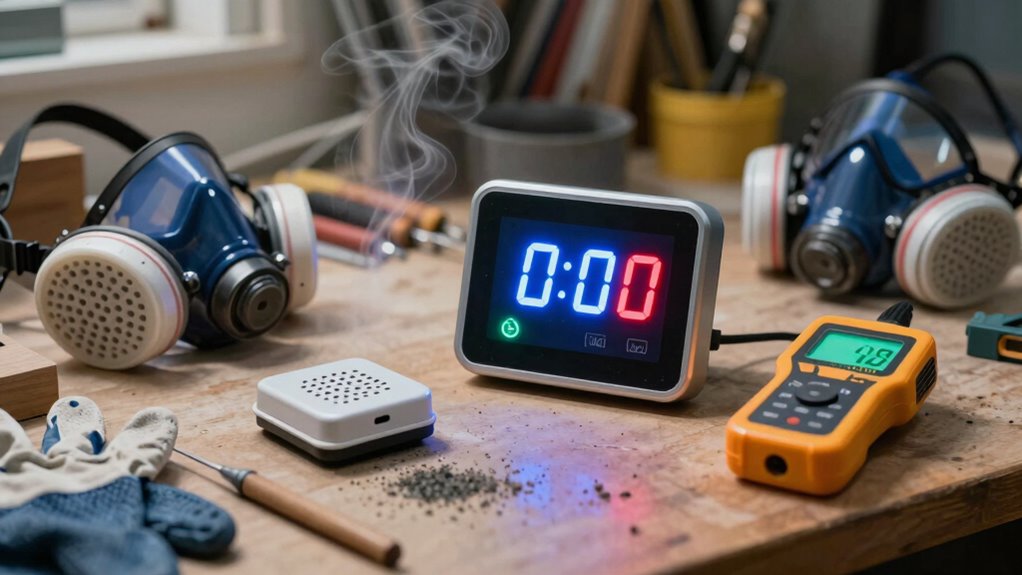

In high-fume crafts, the essential air quality tools include effective ventilation systems, such as local exhausts, to direct fumes away from your breathing zone. Personal protective equipment like respirators and goggles shield you from airborne hazards. Air quality monitors provide real-time data, alerting you to dangerous conditions. Combining these tools with proper maintenance guarantees a safer workspace. Keep exploring to discover how to optimize your safety measures and breathe easier during your projects.
Key Takeaways
- Effective local exhaust systems, like fume hoods and exhaust arms, directly capture fumes at the source.
- Air quality monitors provide real-time data to detect hazardous fume levels promptly.
- Proper ventilation design ensures continuous replacement of contaminated air with fresh air.
- PPE such as respirators and goggles protect against airborne hazards beyond ventilation efforts.
- Regular maintenance and proper use of all safety tools are essential for sustained air quality control.
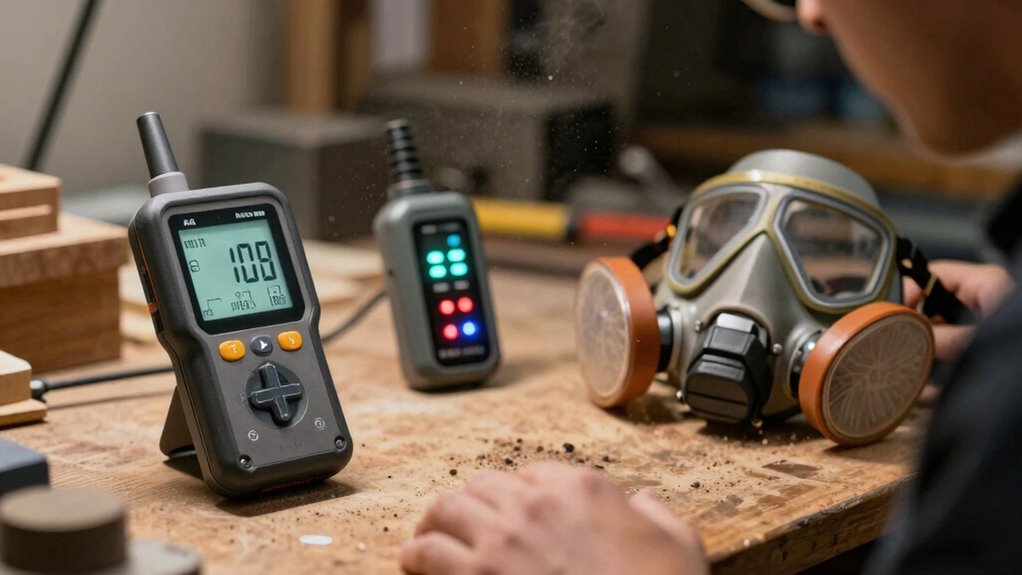
Have you ever wondered how to effectively monitor and improve the air you breathe? In high-fume crafts, where fumes, dust, and airborne particles are common, having the right air quality tools is essential. The first step is understanding ventilation strategies. Good ventilation isn’t just about opening a window; it involves designing a system that continually replaces contaminated air with fresh air, reducing the buildup of harmful fumes. Local exhaust ventilation systems, such as fume hoods or exhaust arms, target specific sources of fumes, capturing pollutants right at the point of origin before they disperse into your workspace. Proper airflow management ensures fumes are directed away from breathing zones, greatly lowering inhalation risks. But even with effective ventilation, personal protective equipment (PPE) remains a critical line of defense. Respirators, masks, and eye protection shield you from airborne hazards that ventilation might not eliminate immediately. Selecting the right PPE depends on the specific fumes or particles you’re dealing with; for instance, a respirator with appropriate cartridges can filter out volatile organic compounds, while goggles prevent eye irritation from splashes or dust.
Monitoring devices complement these strategies by giving you real-time data on air quality levels. Air quality monitors detect concentrations of hazardous substances, alerting you to unsafe conditions before they become problematic. Portable monitors are especially useful—they let you assess different areas of your workspace quickly, ensuring ventilation systems are working effectively and PPE is sufficient. Regularly checking air quality not only protects your health but also helps you comply with safety regulations and avoid costly health issues down the line. Understanding air quality standards is crucial for setting appropriate safety benchmarks and ensuring your workspace remains compliant. Incorporating air quality awareness into your routine encourages proactive responses to potential hazards before they escalate. Additionally, understanding the sources of indoor pollution can help you target problem areas more effectively, improving overall safety. It’s also important to recognize that air quality testing plays a vital role in identifying unseen hazards that might otherwise go unnoticed.
It’s essential to understand that no single tool or strategy offers complete protection. Instead, combining effective ventilation strategies with appropriate PPE and real-time monitoring creates a thorough safety approach. When you prioritize these air quality tools, you’re actively reducing your exposure to dangerous fumes, creating a safer, healthier workspace. Remember, your health depends on staying vigilant and proactive about air quality. Investing in the right equipment and systems might seem straightforward, but their proper use and maintenance make all the difference. With the right combination of ventilation, PPE, and monitoring tools, you can confidently tackle high-fume crafts knowing you’re doing everything possible to breathe cleaner, safer air every day.
As an affiliate, we earn on qualifying purchases.
Frequently Asked Questions
How Often Should Air Quality Tools Be Calibrated?
You should calibrate your air quality tools at least once every six months, but check your maintenance schedules for specific recommendations. Regular calibration guarantees accuracy, especially in high-fume crafts where precise measurements matter. If you notice discrepancies or after any rough handling, recalibrate sooner. Staying consistent with calibration frequency maintains reliable readings, helping you create a safer environment and adhere to safety standards effectively.
Are There Portable Air Quality Tools Suitable for Small Workshops?
Yes, there are portable air quality tools perfect for small workshops. You can choose between portable sensors and compact monitors, both designed for ease of use and mobility. Portable sensors detect specific pollutants, while compact monitors provide a broad overview of air quality. These tools help you stay safe, monitor effectively, and guarantee your workspace remains healthy. Investing in either keeps you informed, proactive, and protected during your craft activities.
What Safety Precautions Should Be Taken When Using Air Quality Tools?
When using air quality tools, you should always wear personal protective equipment like masks, goggles, and gloves to shield yourself from harmful fumes. Make certain proper ventilation strategies are in place, such as opening windows or using exhaust fans, to keep air fresh and contaminants low. Regularly check your tools for damage and follow manufacturer instructions carefully. Taking these safety precautions helps protect your health during high-fume crafts.
How Do I Interpret Air Quality Readings Accurately?
To interpret air quality readings accurately, focus on dust measurement and sensor accuracy. First, compare your readings to recommended safety thresholds for your specific craft. Keep in mind that sensors can drift over time, so regularly calibrate your devices for precise results. Always consider the environment—ventilation, humidity, and fumes—since these factors can influence readings. Trust your measurements, but verify with multiple tests for the most reliable understanding.
Can Air Quality Tools Detect All Types of Airborne Fumes?
Air quality tools can’t detect all airborne fumes because their sensors vary in sensitivity. While some tools are designed to identify specific fumes or particles, others might miss certain types due to limited sensor sensitivity. Fume particles from different sources vary in composition, so it’s crucial to use specialized sensors for accurate detection. Always select air quality tools suited for the particular fumes you’re working with to guarantee thorough safety.
Conclusion
Remember, when it comes to high-fume crafts, the right air quality tools are your best defense. Invest in reliable air purifiers, monitors, and ventilation systems to keep your workspace safe and your health intact. Don’t wait until it’s too late—an ounce of prevention is worth a pound of cure. Stay proactive, stay protected, and always prioritize clean air. After all, a healthy workspace is the foundation for your best work.