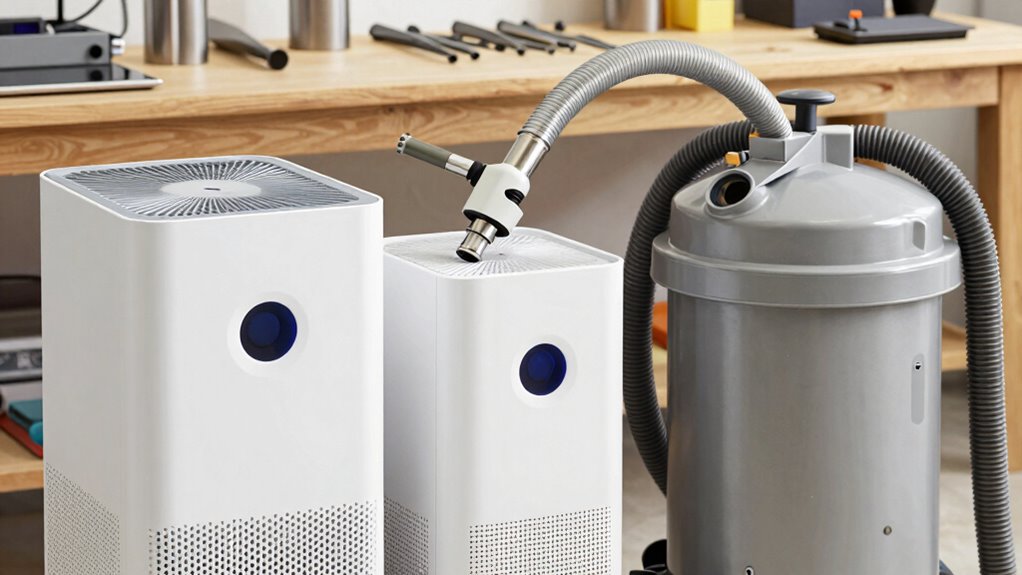

To decide between an air purifier, fume extractor, and dust collector, you should first identify the specific airborne pollutants in your environment. If you’re targeting dust, pollen, or pet dander, an air purifier with HEPA filters works well. For hazardous fumes or vapors, a fume extractor at the source is best. For large dust loads, especially in industrial settings, a dust collector is ideal. Keep in mind safety standards and maintenance needs—knowing more can help you make the best choice.
Key Takeaways
- Identify the primary airborne contaminants (dust, fumes, or general particles) in your environment.
- Match the device to the environment: residential/office for air purifiers, industrial/workshops for fume extractors or dust collectors.
- Consider the device’s filtration capacity and compliance with relevant air quality standards.
- Evaluate maintenance needs and long-term operational costs for each device type.
- Ensure the chosen device effectively addresses specific safety and health regulations applicable to your setting.
Choosing the right air cleaning device can be confusing because air purifiers, fume extractors, and dust collectors each serve different purposes. They are designed to address specific types of airborne contaminants, which is crucial to understanding before making a purchase. Air purifiers are designed to improve indoor air quality by removing airborne particles like dust, pollen, pet dander, and some bacteria or viruses. They are ideal for general residential or office use where the goal is to maintain healthier air. When selecting an air purifier, consider its filtration system—HEPA filters are highly effective for capturing small particles—and guarantee it meets air quality standards relevant to your space. Additionally, look into maintenance requirements; some units need regular filter replacements or cleaning to keep them functioning efficiently. Proper maintenance guarantees consistent performance and helps you avoid unnecessary costs or reduced air quality over time.
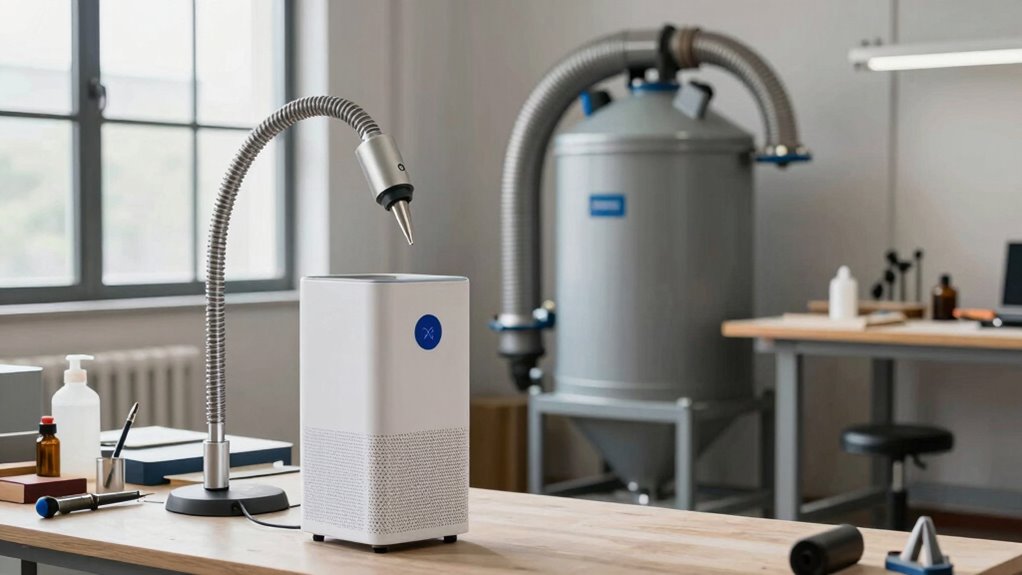
Fume extractors are specialized devices used mainly in workplaces, laboratories, or workshops where fumes, vapors, or smoke pose a health risk. They are designed to capture hazardous airborne contaminants at the source, preventing them from spreading through the environment. If you’re working with chemicals, welding fumes, or other industrial processes, a fume extractor is essential. Unlike air purifiers, these units often include local exhaust systems with flexible arms or nozzles that you position close to the emission point. In terms of meeting air quality standards, fume extractors are built to contain and filter dangerous fumes effectively, guaranteeing compliance with safety regulations. Regularly checking filter efficiency is crucial to ensure the device continues to operate at peak performance. Maintenance involves regularly checking filters and replacing them according to manufacturer guidelines, which is vital for maintaining both safety and efficiency. Failing to keep up with maintenance can compromise air quality, making the extractor less effective and increasing health risks.
Dust collectors are primarily used in environments with high dust generation, such as woodworking shops, manufacturing plants, or construction sites. Their main goal is to capture large quantities of dust at the source, preventing it from becoming airborne and settling on surfaces or being inhaled. These systems typically feature powerful vacuums and high-capacity filters to handle significant dust loads. To stay within air quality standards, regular maintenance is essential—this includes emptying dust bins, replacing filters, and inspecting hoses or ducts for blockages. Neglecting maintenance can lead to system inefficiencies, increased dust in the environment, and potential health hazards. When choosing a system, consider the air quality standards relevant to your industry or environment to ensure safe operation. Properly system maintenance can extend the lifespan of your equipment and ensure it remains effective in controlling dust levels. Remember, understanding each device’s maintenance requirements and how well it meets air quality standards will help you maintain a safer, cleaner environment.
HEPA air purifier for dust and pollen
As an affiliate, we earn on qualifying purchases.
As an affiliate, we earn on qualifying purchases.
Frequently Asked Questions
Can One Device Serve All Air Quality Needs Effectively?
A single device can’t effectively serve all air quality needs because each specializes in different contaminants. While some multi-purpose units offer decent efficiency, they often lack the specialized capabilities of dedicated air purifiers, fume extractors, or dust collectors. For cost-effective solutions, it’s best to combine devices suited to specific pollutants. This approach guarantees ideal air quality and long-term health benefits, rather than relying on one device to cover everything.
How Do Maintenance Costs Compare Among These Devices?
Maintenance costs vary, but generally, air purifiers have lower ongoing expenses due to simple filter replacements and moderate energy use. Fume extractors often require more frequent filter changes and consume more energy, increasing costs. Dust collectors tend to have higher initial costs but lower long-term expenses, as they need less frequent filter replacements. Consider energy consumption and filter replacement frequency to estimate your ongoing maintenance expenses accurately.
Are There Specific Certifications to Look for in These Devices?
Think of certification standards as a lighthouse guiding your decision—look for devices with safety compliance labels like UL, CE, or ISO. These certifications act as trust anchors, ensuring your equipment meets rigorous safety and performance benchmarks. Prioritize these standards to navigate the murky waters of quality, protecting your space and health. Certifications signal a device’s reliability, helping you choose equipment that keeps safety at the forefront of your environment.
How Do Noise Levels Vary Between Air Purifiers, Fume Extractors, and Dust Collectors?
Noise levels vary based on filter efficiency and energy consumption. Air purifiers tend to be quieter, especially models with lower airflow, but might be less effective for heavy fumes or dust. Fume extractors and dust collectors often produce more noise due to powerful motors needed for high filter efficiency. Consider your environment and noise tolerance when choosing, balancing energy consumption and noise levels to find the best fit for your space.
What Is the Typical Lifespan of Each Device Type?
A device’s lifespan varies, but generally, you can expect about 5-10 years for air purifiers, 10-15 years for dust collectors, and 5-8 years for fume extractors. Keep in mind, filter replacement frequency affects longevity, and power consumption impacts overall durability. To get the most out of your equipment, maintain regular filter changes and choose models with energy-efficient features—don’t let it become a ticking time bomb.
Conclusion
Choosing the right air cleaning device depends on your specific needs. An air purifier works well for general air quality, while a fume extractor targets hazardous fumes, and a dust collector handles larger particles. Think of it like this: if you’re cooking, your oven (air purifier) keeps the kitchen fresh; if you’re welding, the fume extractor is your best friend; and for woodworking sawdust, a dust collector is essential. Pick the one that best fits your environment for cleaner, safer air.