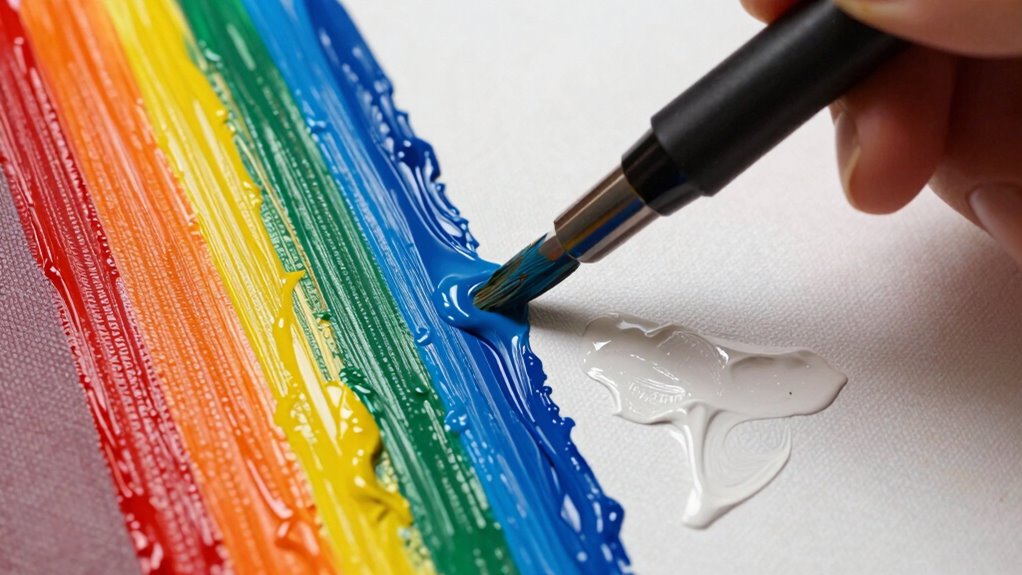

If you want cleaner, sharper details, paint pens are your best choice because they deliver precise, crisp lines that are easy to control. Acrylic paint, on the other hand, tends to be more flexible and better suited for blending and textured effects, which can sometimes reduce the sharpness of fine details. To discover more about how each medium impacts your work and which suits your style, keep exploring the differences.

Get business pricing on tools and workshop supplies
- Business-only prices and quantity discounts
- Tax-exempt purchasing
- Multiple users, one account, clear invoices
Key Takeaways
- Paint pens excel in precision and fine detail due to their controlled flow and quick-drying formula.
- Acrylic paint requires steady hand control for detailed work but offers more blending and textured effects.
- Paint pens provide cleaner lines with less smudging, ideal for crisp, intricate details.
- Acrylics may produce messier lines but allow for richer textures and subtle gradations.
- Overall, paint pens are better suited for cleaner, sharper details; acrylics are more versatile for blending and textures.
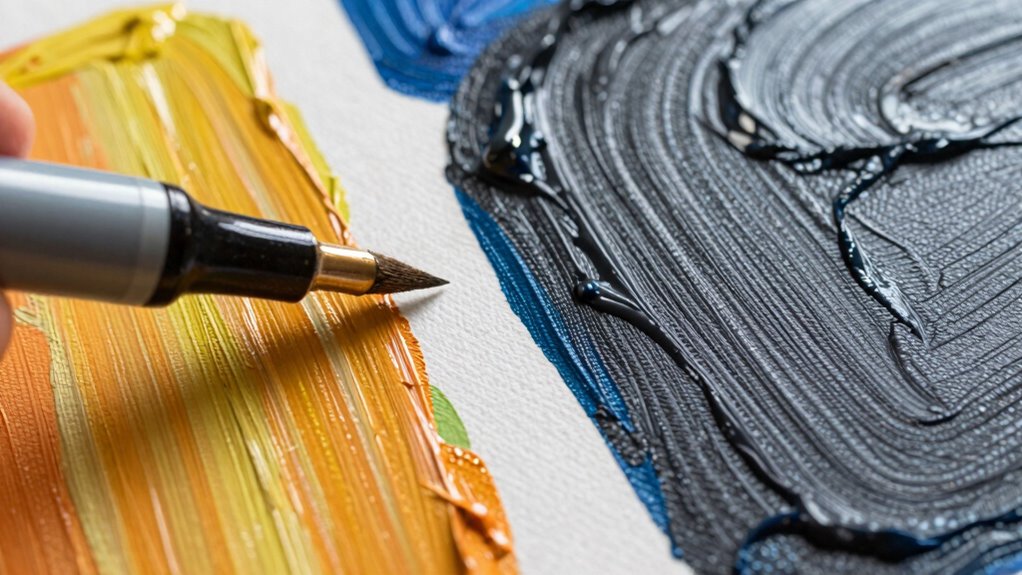
When working with paint pens, you’ll notice that their drying times are quite quick. This rapid drying can be advantageous if you need to layer colors or make adjustments without smudging your work. However, it also means you have less time to blend or manipulate the paint once it’s applied. Acrylic paint usually takes longer to dry, giving you more flexibility to blend shades directly on your surface. This extended drying time can be beneficial for creating gradients or subtle shifts, but it also means you need to be patient and avoid accidental smudges while waiting for the paint to set. Additionally, drying times can influence how you plan your layering and blending techniques for different effects. In terms of brush techniques, paint pens excel when you want to maintain control and produce fine, detailed lines. They work well for outlining, lettering, or adding tiny accents that need to stay crisp. Acrylic paint, with its thicker consistency, lends itself to textured effects and expressive strokes. You can layer acrylics over dried paint to build depth or create complex textures, but achieving the same level of pinpoint accuracy as a paint pen might require a steady hand and practice. Moreover, understanding how each medium responds to different application methods can help you optimize your workflow and achieve cleaner results.
Understanding the medium characteristics can help you choose the right tool for your specific project needs. Ultimately, your choice depends on the nature of your project. If you need clean lines, quick results, and precise control, paint pens are your best bet. If you prefer versatility, blending, and textured effects, acrylic paint offers more room for creativity, even if it requires more patience with drying times. By understanding how each medium responds to different brush techniques and shifts, you can make an informed decision that leads to cleaner, more professional-looking results.
As an affiliate, we earn on qualifying purchases.
Frequently Asked Questions
Can Paint Pens Be Used on Fabric or Textiles?
Yes, paint pens can be used on fabric or textiles. Look for fabric markers designed specifically for textile painting, as they’re formulated to adhere well and withstand washing. These fabric markers provide clean, precise lines perfect for detailed designs on clothing, bags, or other fabric items. Just make sure you follow the instructions for setting the ink, usually by heat setting, to guarantee your artwork stays vibrant and durable over time.
How Long Does Acrylic Paint Typically Dry?
Acrylic paint typically dries within 15 to 30 minutes, but drying time can vary depending on the thickness of the layers and surface. For ideal surface adhesion and to prevent smudging, it’s best to wait at least an hour before handling. Thicker applications or humid environments may extend drying time, so patience guarantees your artwork dries properly and adheres well to the surface for lasting results.
Are Paint Pens Waterproof Once Dried?
Think of paint pens like a boat sailing smoothly across calm waters—they’re waterproof once dried. After the drying process, your paint pen artwork gains waterproof durability, making it resistant to water damage. This means you can confidently display or handle your project without worrying about smudges or washes, ensuring your details stay crisp and vibrant. Just give it enough time to fully dry, and your work will be weatherproof and long-lasting.
Which Is More Cost-Effective for Large Projects?
Paint pens are generally more cost-effective for large projects because they require less paint and are easier to control, reducing waste. Acrylic paints, however, might cost more upfront but can be diluted and used across multiple projects, offering good value. When planning your budget, consider the cost comparison, how much coverage you need, and the project’s complexity. This way, you choose the option that fits your budget and project needs best.
Can Acrylic Paint Be Thinned for More Precise Detailing?
Yes, you can thin acrylic paint to improve detail precision. Acrylic thinning involves mixing your paint with water or an acrylic medium, which makes it more fluid and easier to apply with fine brushes. This technique helps you achieve sharper lines and finer details. Just be careful not to over-thin, as too much water can weaken adhesion and color vibrancy, reducing the overall quality of your detailed work.
Conclusion
In the battle of paint pens versus acrylic paint, the choice isn’t just about cleaner details—it’s about unlocking your artistic superpowers. If you pick paint pens, you’re wielding a precision weapon capable of tiny miracles, transforming your art into a masterpiece of perfection. But remember, acrylics are like a wild, unstoppable force, blending chaos and beauty. Ultimately, your decision shapes your creative destiny—so choose wisely, because your art’s future hinges on this tiny but mighty choice!
Fall yard work Picks
leaf blowers
As an affiliate, we earn on qualifying purchases.