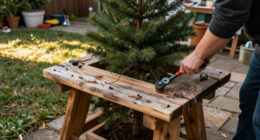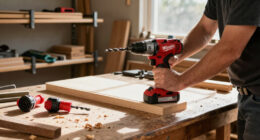
Every October, the same workshop question comes up for anyone who wants to carve Halloween decorations out of wood instead of foam or pumpkins: do you buy a hand carving set, or do you buy a rotary power tool? The projects are the same on both paths — grinning jack-o’-lantern plaques, small ghost figures, spooky signs, bats, tombstone toppers — but the experience of making them, and the results you can realistically achieve, differ a lot.

Get business pricing on tools and workshop supplies
- Business-only prices and quantity discounts
- Tax-exempt purchasing
- Multiple users, one account, clear invoices

Antner Professional 10-Piece Pumpkin Carving Kit
- ✔ Brand: Antner
- ✔ Pieces: 10
- ✔ Large carving tools: 4

Mavax Professional Pumpkin Carving Kit, 11-Piece Stainless Steel Set with Storage Case
- ✔ Brand: Mavax
- ✔ Set size: 11 pieces
- ✔ Included tools: 2 saws, curved etcher, poker drill, scoop, 6 reversible sculpting blades

CHRYZTAL 10-Piece Stainless Steel Pumpkin Carving Kit
- ✔ Brand: CHRYZTAL
- ✔ Set size: 10 pieces
- ✔ Blade material: Stainless steel
The core tension is control versus speed. A hand carving set (a carving knife, a few gouges, maybe a V-tool and chisel) is cheap, quiet, and endlessly controllable, which makes it ideal for small softwood decorations where detail and finish matter. A rotary tool — a Dremel or similar — removes material many times faster, cuts hardwoods that hand tools struggle with, and powers through bigger props, but it costs more, throws dust everywhere, and punishes carelessness.
Most people comparing these are hobbyists making a handful of seasonal pieces, not professional carvers. This guide assumes that context: modest budgets, limited time before Halloween, and projects that mostly involve basswood, pine, or reclaimed boards. If that sounds like you, one of these options is very likely the better first purchase.
At a Glance
| Criteria | Hand Carving Tool Set (knives, gouges, chisels) | Rotary Power Carving Tool (e.g., Dremel-style) | Winner |
|---|---|---|---|
| Upfront cost | $30–$80 for a quality starter set | $60–$150+ tool plus burr sets | A |
| Speed of material removal | Slow; small cuts only | Very fast; removes wood rapidly | B |
| Detail and control | Excellent; fine cuts and clean finishes | Good with practice; coarse at first | A |
| Types of wood handled | Softwoods primarily (basswood, pine) | Soft and hardwoods, plus pumpkin and foam | B |
| Learning curve | Beginner-friendly basics in days | Moderate; results improve over weeks | A |
| Safety and mess | Very safe with gloves; minimal mess | Dust, debris, spinning bits; needs eye protection | A |
| Project size range | Best for small to medium pieces | Small to large props | B |
| Noise and workspace needs | Nearly silent; works at kitchen table | Loud; needs dust control and dedicated space | A |
Antner Professional 10-Piece Pumpkin Carving Kit
Antner earns the top spot for a balanced pumpkin-carving toolkit. Its four larger carving tools cover more direct cutting work, while six detail tools provide 12 tips for shaping, scraping, and engraving. That separation makes it easier to choose a tool by task than with a set described mainly by a general assortment of blades. For a Halloween design that mixes a large opening with etched features, the range is a practical advantage.Compared with Mavax, Antner specifies a longer 16 cm blade and more individual detail tips, while Mavax answers with reversible sculpting blades and access to a much larger stencil collection. Antner also has more clearly differentiated handle materials: wood on some larger tools and stainless steel on the detail tools. That variety may not suit buyers who want a uniform grip, and the kit is explicitly for pumpkins rather than wood. Its storage bag is useful for keeping seasonal tools together, though the description does not state its dimensions or internal organization.
Pros:
- Four larger carving tools plus six detail tools
- Twelve tips support shaping, scraping, and engraving
- Stainless steel blades and a stated 16 cm blade length
- Storage bag helps keep the kit together between seasons
Cons:
- Designed specifically for pumpkin carving, with no stated suitability for wood
- The mix of wooden and stainless steel handles may feel inconsistent
Best for: Pumpkin carvers who want both larger cutting tools and a broad selection of detail tips for varied Halloween faces and patterns.
Not ideal for: Buyers seeking tools confirmed for carving wood, or anyone who prefers all tools to have the same handle material and grip.
Bottom line: We recommend Antner first for pumpkin projects that call for a clear mix of cutting reach and fine-detail options.
“We recommend Antner first for pumpkin projects that call for a clear mix of cutting reach and fine-detail options.”
Mavax Professional Pumpkin Carving Kit, 11-Piece Stainless Steel Set with Storage Case
Mavax is the most design-oriented pick for carvers who like to plan a Halloween pumpkin around patterns. The kit combines two saws, a curved etcher, a poker drill, a scoop, and six reversible sculpting blades. Access to more than 1,000 digital stencils gives beginners and pattern-focused carvers a starting point when freehand work feels uncertain. Its faux-leather case with a wrist strap also makes the set straightforward to carry and store.The tradeoff is the specified one-inch blade length, which may restrict tasks that call for longer reach. Antner lists a 16 cm blade and a larger selection of detail tips, so it is the more adaptable option for buyers prioritizing tool dimensions and tip variety. CHRYZTAL lists a four-inch blade and a broad core set of tools, whereas Mavax emphasizes reversible sculpting blades and stencil access. Like both competitors, Mavax is described for pumpkins; its stainless steel construction does not by itself show that the blades are suitable for wood. The product information also does not say whether the tools are dishwasher-safe, so care requirements should be checked before cleanup.
Pros:
- Six reversible sculpting blades complement saws, an etcher, drill, and scoop
- Access to more than 1,000 digital stencils
- Stainless steel blades with textured handles
- Faux-leather storage case includes a wrist strap
Cons:
- Listed blade length is one inch, which may limit some cuts
- Dishwasher safety is not specified
- The description identifies it as a pumpkin kit, not a wood-carving set
Best for: Pumpkin carvers who want reusable sculpting blades, stencil ideas, and a portable case for a planned Halloween design.
Not ideal for: Carvers who need longer blades for broader work, want confirmed wood-carving tools, or need stated cleaning instructions.
Bottom line: Choose Mavax when stencil-guided pumpkin detailing and reversible blades matter more than longer stated blade reach.
“Choose Mavax when stencil-guided pumpkin detailing and reversible blades matter more than longer stated blade reach.”
CHRYZTAL 10-Piece Stainless Steel Pumpkin Carving Kit
CHRYZTAL makes sense when the blade-length specification is a priority. Its four-inch blade is longer than Mavax’s listed one-inch blades, and the ten-tool assortment covers scooping, cutting, drilling, and etching. That spread gives a Halloween pumpkin carver the main tool categories needed to hollow and decorate a jack-o’-lantern. Easy-grip plastic handles and a zippered nylon case round out a straightforward seasonal setup.Against Antner, CHRYZTAL lists a longer four-inch blade but does not specify the same six-tool, 12-tip detail system. Compared with Mavax, it emphasizes a broad set of conventional carving tasks rather than reversible sculpting blades or a digital stencil library. The product description says children should use the tools with adult supervision and does not recommend them for children under seven; families should treat that guidance as part of the buying decision. And despite its longer stated blade, this remains a pumpkin kit: the listing does not confirm that the tools can carve wood.
Pros:
- Ten tools cover scooping, cutting, drilling, and etching
- Stainless steel tool construction
- Four-inch blade specification
- Zippered nylon carrying case
Cons:
- Children need adult supervision; not recommended for children under seven
- Fewer dedicated detail-tip options are specified than in the Antner kit
- The product information does not establish suitability for carving wood
Best for: Adults choosing a pumpkin kit who want a broad mix of basic carving tasks and a four-inch blade specification.
Not ideal for: Buyers looking for a set explicitly made for wood, a large assortment of fine-detail tips, or tools for young children to use unsupervised.
Bottom line: Pick CHRYZTAL for a pumpkin-focused assortment with a longer stated blade and a zippered case.
“Pick CHRYZTAL for a pumpkin-focused assortment with a longer stated blade and a zippered case.”
As an Amazon Associate we earn from qualifying purchases.
Key Differences
The most practical difference for a Halloween-focused hobbyist is what each tool does to softwood, because that is what most seasonal decorations are made from. Basswood and pine carve beautifully by hand: a sharp knife leaves a surface so clean it barely needs sanding, and a $50 gouge set can produce a detailed ghost or jack-o’-lantern face in an evening. A rotary tool handles the same wood easily too, but it removes material so aggressively that beginners often overshoot lines, round off details they meant to keep, and spend extra time cleaning up fuzzy tool marks with sandpaper.
The second big difference is scope. A rotary tool is not just a faster knife — it is a platform. With different burrs it cuts hardwood props, hollows lantern bodies, engraves lettering on signs, textures surfaces for a weathered tombstone look, and even carves actual pumpkins. If your Halloween ambitions include a large graveyard scene, hardwood yard displays, or production runs of a dozen identical bats, the rotary tool earns its price quickly. If your ambitions are a few tabletop figures and a wall plaque, the hand set covers everything at a third of the cost.
The third difference is environment. Hand carving is quiet, portable, and safe enough to do on the couch next to a drop cloth. Rotary carving is loud, sprays fine wood dust, and involves bits spinning at 30,000+ RPM — eye protection is mandatory, a dust mask is strongly advised, and a carving glove on the holding hand is smart. That is not a reason to avoid rotary tools, but it does mean carving sessions need a workbench and some setup, which matters if your workshop time is squeezed into short evenings.
Detailed Comparison
Upfront cost (Hand Carving Tool Set (knives, gouges, chisels) wins — moderate)
A decent hand carving starter set — a quality carving knife, three or four palm gouges, a strop, and compound — runs $30 to $80. Avoid the $12 kits with soft steel; they frustrate beginners and are a false economy. A corded rotary tool from a reputable brand costs $60 to $100, and realistic costs are higher once you add a burr assortment ($20–$40) and dust attachments. Budget roughly double the hand set for a functional rotary setup.
Hand tools win on price, and the gap is moderate rather than huge. But note that hand tools have an ongoing sharpening commitment — you will strop constantly and occasionally rehone — while rotary burrs last a long time with light hobby use.
Speed and material removal (Rotary Power Carving Tool (e.g., Dremel-style) wins — major)
This is where the rotary tool dominates. Roughing out a 6-inch jack-o’-lantern figure from a basswood block might take an evening by hand; a rotary tool with a coarse carbide burr can do it in twenty minutes. For hollowing a lantern body, removing background wood on a relief plaque, or shaping a large ghost for the porch, the rotary tool saves hours per project.
The gap is major — but its importance depends on your output. If you make two or three decorations a season, hand-carving speed is perfectly adequate. If you make fifteen pieces for a yard display or sell at a craft fair, hand tools become a genuine bottleneck.
Detail and finish quality (Hand Carving Tool Set (knives, gouges, chisels) wins — moderate)
Hand tools win for fine facial detail, crisp knife lines, and surface finish. A sharp carving knife can shape a tiny tooth or a smooth cheek on a spooky face in one pass, and traditional facets left by knife cuts look intentional and crafted. Rotary tools excel at texture — stippled tombstone surfaces, rough bark, engraved lettering — but their burrs tend to blur crisp edges, and beginners often end up with slightly soft, fuzzy details that need sanding.
With experience, rotary detail work improves a lot, especially with small flame and ball burrs. But for the classic carved-figure look that most Halloween decorations aim for, hand tools produce the better finish out of the box. The gap is moderate and narrows with skill.
Wood and material versatility (Rotary Power Carving Tool (e.g., Dremel-style) wins — major)
Hand tools are effectively limited to softwoods and very small hardwood pieces. Carving oak or maple blanks by hand is slow, exhausting, and risky for edge durability. A rotary tool with carbide burrs eats hardwood without complaint and also handles pumpkin shells, foam, dried gourds, and reclaimed lumber with nails-free zones.
If your decoration plans involve hardwood yard stakes, thick branch sections, or mixed materials, the rotary tool is the only realistic choice of the two. For standard basswood and pine blanks, both work and the difference is minor.
Learning curve (Hand Carving Tool Set (knives, gouges, chisels) wins — moderate)
Basic hand carving technique — how to hold the knife, read grain direction, make stop cuts — can be learned from a weekend of YouTube tutorials, and first respectable results come fast. The main beginner failure mode is dull tools, which is fixable. Rotary tools have a steeper curve: burr selection, speed settings, and controlling a tool that skates and grab wood unexpectedly. First projects often look chewed.
Neither is hard, but hand carving delivers satisfying decorations sooner. If Halloween is two weeks away and this is your first carving project, this criterion alone should probably decide your purchase. The gap is moderate.
Safety and mess (Hand Carving Tool Set (knives, gouges, chisels) wins — moderate)
Hand carving risks are cuts from pushing a knife — largely eliminated by a $15 cut-resistant glove and basic technique. Mess is a handful of shavings. Rotary tools throw fine dust (bad for lungs, especially with hardwoods), can fling small workpieces, and rotate bits fast enough to cause serious injury on contact. Safety glasses are non-negotiable, and a dust mask plus ventilation should be treated the same way.
Hand tools win clearly, and the difference matters if you carve indoors, around kids, or have respiratory sensitivities. The gap is major for mess, moderate for injury risk with proper protection.
Project size range (Rotary Power Carving Tool (e.g., Dremel-style) wins — major)
Hand tools cap out somewhere around medium tabletop figures and relief panels; anything much larger than a foot tall becomes a multi-week effort. Rotary tools comfortably handle large wall hangings, life-sized prop components, hollowed lanterns, and yard displays, especially since they pair with flexible shafts for control on big pieces.
If your Halloween vision includes anything bigger than a shelf decoration, the rotary tool’s range is decisive. For small-to-medium projects, it is a tie in capability even if not in speed. The gap is major for large ambitions, minor otherwise.
Workspace and noise (Hand Carving Tool Set (knives, gouges, chisels) wins — moderate)
Hand carving is nearly silent and works anywhere with a drop cloth — porch, kitchen table, couch. Rotary tools whine at high pitch for extended periods, which limits when and where you can use them (family tolerance is a real factor), and fine dust makes an indoor space unpleasant without dust extraction.
Hand tools win outright. If you lack a garage or workshop, this is a bigger practical deal than any spec sheet suggests.
Hand Carving Tool Set (knives, gouges, chisels): Pros and Cons
Pros:
- Very low entry cost ($30–$80 for quality steel)
- Quiet and mess-free; carve anywhere in the house
- Excellent detail and clean finish on softwoods
- Gentle learning curve with fast first results
- Tools last decades with basic sharpening care
Cons:
- Slow for anything beyond small-to-medium pieces
- Softwoods only in practice; hardwoods are punishing
- Requires learning to sharpen and strop
- Physically tiring for larger batch projects
Rotary Power Carving Tool (e.g., Dremel-style): Pros and Cons
Pros:
- Removes material many times faster; great for batches
- Handles hardwoods, pumpkin, foam, and mixed materials
- Excellent for textures, hollowing, and engraved lettering
- Scales to large yard displays and prop components
- One tool platform with dozens of burr options
Cons:
- Higher true cost once burrs and dust gear are added
- Loud; needs a dedicated workspace and dust control
- Coarser results at first; detail requires practice
- Mandatory eye protection and higher injury severity if careless
Who Should Choose What
Choose Hand Carving Tool Set (knives, gouges, chisels) if:
- You are a first-time carver making a handful of small decorations this season
- Your projects are basswood or pine figures, ornaments, and relief plaques
- You will carve indoors or in a shared space where noise and dust are problems
- You want the cheapest path to satisfying results and enjoy slow, meditative work
Choose Rotary Power Carving Tool (e.g., Dremel-style) if:
- You already have some hand-tool experience or prior DIY tool comfort
- Your plans include hardwoods, large yard props, hollowed lanterns, or 10+ pieces
- You have a garage, workshop, or outdoor space with power and ventilation
- You want to engrave lettering and add textured finishes, not just shape figures
Skip both if: You only want decorations for one Halloween and have no ongoing interest in woodworking — painted foam, craft-store props, or actual pumpkin carving kits will cost less time and money for the same visual result.
Value for Money
For a typical hobbyist, the hand carving set is the better value: it delivers the classic carved-decoration look for $30–$80, holds its capability indefinitely, and has near-zero running costs beyond strop compound. Paying roughly double for a rotary setup is worth it only when at least one of these is true: you are producing multiple pieces per season, your projects involve hardwood or large formats, or you already own or will reuse the rotary tool for other DIY tasks — sanding, cutting, engraving — which many households will.
A cheap $12 knife kit, on the other hand, is poor value at any price: soft steel that will not hold an edge turns beginners off carving entirely. Similarly, a no-name rotary tool with weak torque and no burr ecosystem saves little and frustrates much. Buy reputable mid-range in either camp.
There is also a strong third answer for committed hobbyists: buy the hand set first this season, add the rotary tool next year. The two genuinely complement each other — hand tools for shaping and finish, rotary for roughing and texture — and many carvers use both on a single Halloween piece.
Final Verdict
If you are new to carving and your Halloween projects are small, softwood, and few, buy a hand carving set — specifically a mid-range kit with high-carbon steel, plus a cut-resistant glove and a strop. You will spend less, learn faster, finish cleaner, and be able to carve on the couch in October without waking the household. This is the right choice for the majority of people asking this question.
Buy the rotary tool instead if speed, hardwood, or scale is the point: batch production, large yard displays, hollowed lanterns, engraved signs, or mixed-material props. Its higher cost and messier workflow are the price of capability that hand tools simply cannot match, and for those projects the price is worth paying.
The single biggest deciding factor is project scale and material. Small and softwood: hand set, no contest. Large, hardwood, or many pieces: rotary tool, no contest. And if you fall in love with the hobby either way, you will eventually own both — start with the one that matches this season’s actual projects, not your imagined future ones.
Frequently Asked Questions
Can I use a rotary tool to carve actual pumpkins for Halloween?
Yes, and it is one of the rotary tool’s seasonal strengths. Small engraving and cutting burrs let you carve detailed patterns, thin the shell for glow, and even do shaded etching that knife kits cannot. Expect pumpkin pulp mess and clean burrs afterward. Hand carving tools designed for wood do not work well on pumpkin flesh.
What wood should a beginner use for Halloween decorations?
Basswood (lime) is the standard answer — soft, even-grained, and forgiving for both hand and rotary carving. Pine is a cheaper second choice but has harder latewood bands that can catch tools, especially rotary burrs. Avoid hardwoods, construction lumber with knots, and anything possibly treated with chemicals.
Are cheap $10–$15 carving knife sets worth trying?
Generally no. The steel in ultra-cheap kits is soft, loses its edge within minutes, and makes carving feel far harder than it is — the most common reason beginners quit. Spend $40–$70 on a small set from a known carving brand, or even just one good carving knife and one palm gouge to start.
Which is safer for kids’ Halloween craft sessions?
Neither is a kids’ tool. Rotary tools should not be used by children except with close adult supervision for brief, guided passes. For supervised older kids, hand carving with a cut-resistant glove, a thumb guard, and a blunt-detail project (simple ghosts, painted bats) is the more manageable option, and many families use pumpkin carving kits instead below age 12.
Do I need both eventually?
If the hobby sticks, probably. They solve different problems: hand tools shape and finish with precision; rotary tools rough out, hollow, texture, and engrave fast. A common workflow is rotary tool for bulk removal, then knives and gouges for faces and final surfaces. But buy sequentially as real projects demand it, not upfront.