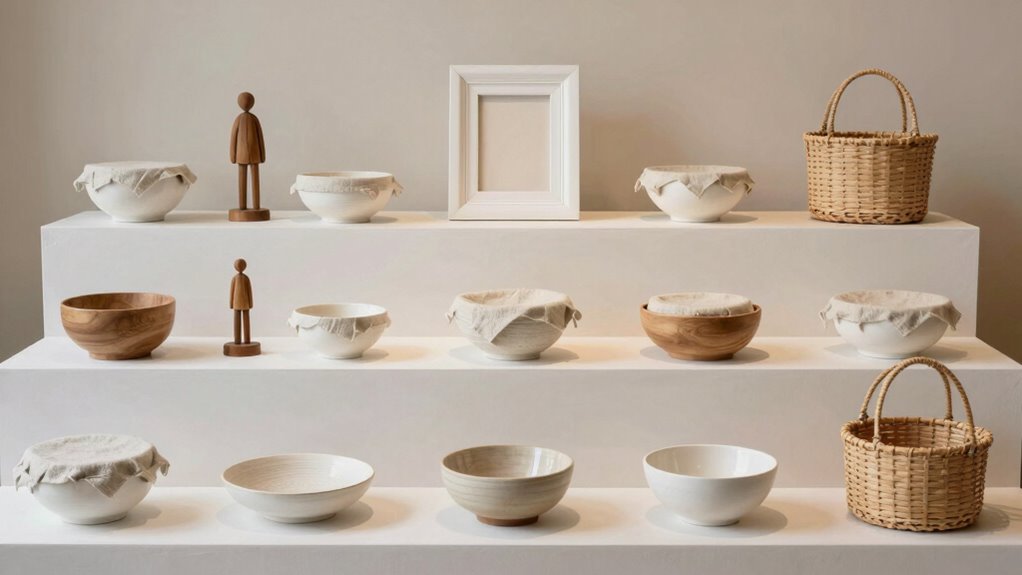

Discover 20 craft ideas using only white, wood, and linen tones to create a timeless and calming home aesthetic. You can make minimalist wall art, cozy cushion covers, rustic shelves, and elegant candle holders, all with natural textures and simple finishes. Experiment with planters, vases, or personalized decor accents to add subtle charm. Stick with these neutral shades, and you’ll bring harmony and sophistication into your space. Keep exploring to find how to bring these ideas to life in your home.
Key Takeaways
- Focus on creating minimalist wall art, such as geometric shapes or framed prints, using reclaimed wood and white paint.
- Design textured linen cushions, table runners, or curtains in soft neutral shades for cozy decor.
- Craft simple wooden shelving units with white accents, pairing them with linen storage baskets.
- Make decorative accents like white-painted wooden candles or lanterns with linen wraps.
- Develop combination pieces like wooden picture frames with linen mats or fabric accents for a cohesive look.

3 Pcs Carved Wood Wall Decor Living Room Farmhouse White Wall Art Boho Sign Rustic Floral Wooden Hollow Carved Design Vintage Wall Plaques for Bedroom Office Kitchen Wall Decoration 12 x 12 Inch
Nice Wall Art Set: you can get a set of 3 pieces of boho white wood wall decors…
As an affiliate, we earn on qualifying purchases.
As an affiliate, we earn on qualifying purchases.
Why White, Wood, and Linen Create Timeless Home Decor

White, wood, and linen are a classic trio that effortlessly create a timeless and versatile home decor aesthetic. Their neutral tones promote a sense of calm and balance, rooted in color psychology, making your space feel welcoming and peaceful. Choosing these materials also aligns with sustainable sourcing, as they often come from eco-friendly sources and are durable, reducing waste over time. Their simplicity allows for easy customization, giving you a foundation to add personal touches without overwhelming the space. Combining these elements helps you craft a harmonious environment that feels both modern and cozy. This classic palette guarantees your decor remains stylish through changing trends, making it a smart, eco-conscious choice for creating a lasting home. Additionally, the use of natural materials can improve indoor air quality and overall well-being, supporting biodiversity by promoting sustainable practices. Incorporating eco-friendly materials into your decor not only enhances the aesthetic but also contributes to a healthier planet. Furthermore, selecting sustainable sourcing ensures that your decor choices support environmentally responsible practices. Embracing these principles can also inspire a deeper appreciation for eco-conscious design and its positive impact on the environment.

Foindtower Set of 2 Decorative Textured Burlap Linen Throw Pillow Covers Farmhouse Boho Cushion Cover Solid Accent Pillowcase for Couch Sofa Bed Living Room Home Decor,18×18 Inch,Light Beige
【Faux Linen Material】This solid pillow cover is made from high-quality faux linen, breathable, skin friendly, thick fabric and…
As an affiliate, we earn on qualifying purchases.
As an affiliate, we earn on qualifying purchases.
Essential Supplies for Your Neutral Tone Craft Projects
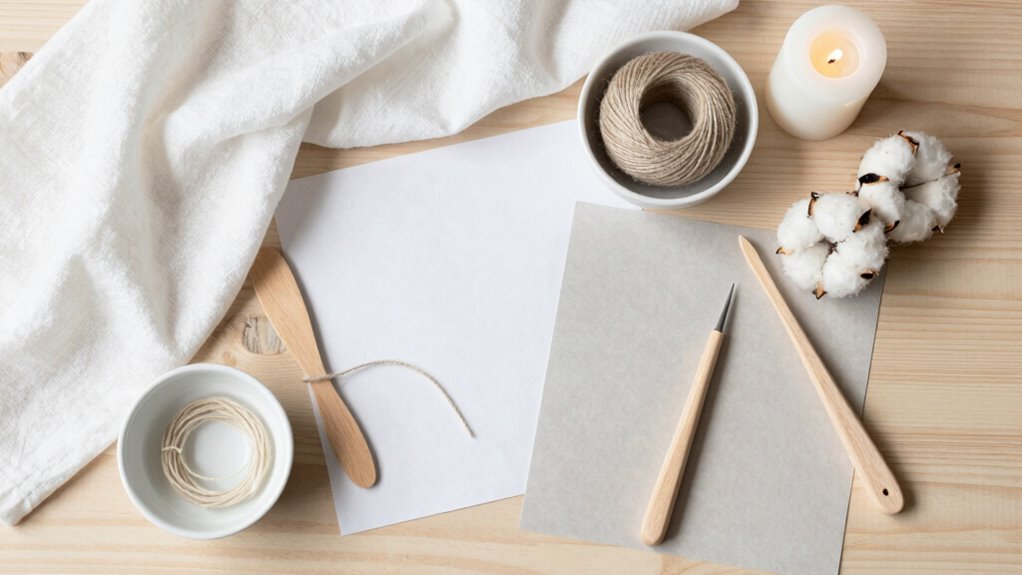
To start your neutral tone craft projects, you’ll need some basic materials like paint, fabric, and glue. Having a cohesive color palette of whites, wood tones, and linens will keep your designs consistent. Don’t forget essential tools like scissors, brushes, and a hot glue gun to bring your ideas to life.
Basic Craft Materials
Starting your neutral tone craft projects requires gathering a few essential supplies. You’ll need basic items like white paint or fabric, natural wood pieces, and linen textiles to create cohesive designs. For color mixing, having a small palette or palette knives helps you achieve subtle shades and vintage inspiration by blending off-white hues and soft textures. Scissors, glue, and brushes are must-haves for cutting, assembling, and detailing your projects. Wooden elements like dowels or blocks add structure and warmth, while linen fabric provides a soft, tactile finish. Keep your supplies simple yet versatile—these essentials will let you experiment with different textures and tones while maintaining a clean, vintage-inspired aesthetic. Incorporating culinary-inspired color palettes can also inspire unique combinations that enhance your craft projects. Having these materials on hand makes your project flow smoothly and creatively.
Neutral Color Palette
Creating a cohesive neutral color palette begins with selecting versatile and understated shades that complement each other effortlessly. These tones evoke calmness and balance, aligning with color psychology principles. When choosing your hues, consider how they reflect different moods and seasons for decorating flexibility. A well-balanced palette allows you to switch styles easily, from cozy winter decor to fresh summer accents. Use this table as inspiration for your core shades:
| White Tones | Wood Tones | Linen Tones |
|---|---|---|
| Ivory | Light Oak | Cream |
| Snow White | Walnut | Beige |
| Chalk | Driftwood | Taupe |
| Pearl | Maple | Linen |
This palette supports timeless, sophisticated projects perfect for seasonal decorating. Additionally, understanding neutral color palettes can help you create harmonious designs that adapt seamlessly to different environments. Developing an awareness of color psychology principles can further enhance the mood and atmosphere of your craft projects. Recognizing how neutral tones influence perception can help you craft more inviting and balanced spaces.
Essential Tools Needed
Having the right tools on hand makes your neutral tone craft projects much smoother and more enjoyable. Essential supplies include quality scissors, a craft knife, and a hot glue gun for precise work. Wooden rulers and measuring tapes help guarantee accurate cuts, reflecting the importance of sustainable sourcing by choosing tools made from eco-friendly materials. Paintbrushes and small sponges are handy for applying finishes, aligning with the calming color psychology of white, wood, and linen tones. Sandpaper smooths surfaces, creating a refined look. Investing in durable, sustainable tools not only supports eco-conscious practices but also ensures your projects stand the test of time. With these essentials, you’ll craft with confidence, creating beautiful pieces that evoke serenity and simplicity.

Goovilla Shelf Bracket, Heavy Duty Floating Shelf Brackets 6 inch Long, 6 Pack Brackets for Shelves, Black Coated Metal Wall Shelf Support Brackets with 1/5 Inch Thick and 160 lb. Load Capacity
【Standard 90° bending】In order to ensure that each shelf bracket can be at 90° to the maximum extent…
As an affiliate, we earn on qualifying purchases.
As an affiliate, we earn on qualifying purchases.
How to Prepare Your Workspace for White and Linen Crafts
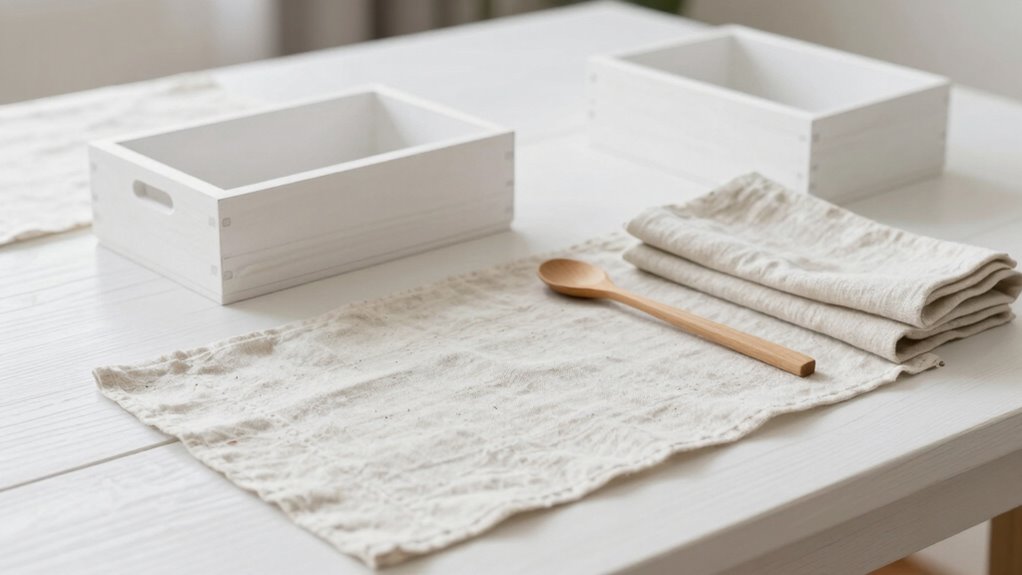
Start by clearing and organizing your workspace to create a clean, clutter-free environment. Gather all the essential supplies you’ll need for your white and linen crafts so everything is within reach. This setup helps you work efficiently and keeps your focus on your project. Incorporating ergonomic workspace tips can further enhance your comfort and productivity during crafting sessions. Additionally, ensuring proper lighting can help you see your details clearly and reduce eye strain. Paying attention to the regional culture in your workspace can also inspire your creative process and add a unique touch to your projects. Remember to also consider laboratory safety practices when handling any materials or tools involved. Maintaining a well-ventilated area is crucial for material safety and your overall health during crafting.
Clear and Organize Space
Before diving into your white, wood, and linen craft projects, take a few minutes to clear and organize your workspace. A tidy space helps you focus and sparks creativity, making your crafting process more enjoyable. Consider the principles of color psychology—keeping the area light and neutral can promote calmness and clarity. As you arrange your workspace, think about seasonal decorating; a clean, organized environment allows you to easily swap out accents or add seasonal touches to complement your crafts. Clear surfaces free of clutter enable you to see your materials clearly and work efficiently. A well-organized space also minimizes distractions, helping you stay centered on your project and inspiring you to create beautiful, harmonious pieces using only white, wood, and linen tones.
Gather Essential Supplies
With your workspace cleared and organized, it’s time to gather the supplies you’ll need for your white and linen crafts. Focus on materials that fit your seasonal color schemes, such as white paint, linen fabric, and light wood pieces. Make certain to have tools like scissors, glue, and brushes handy for precise work. For DIY gift wrapping, gather white kraft paper, linen ribbons, and wooden tags to keep everything cohesive. Consider adding natural elements like dried flowers or twine to enhance your designs. Check your workspace for any leftover clutter that might distract you. Having all your supplies ready ensures a smooth crafting process, making it easier to stay focused and creative while working on your white, wood, and linen projects. Additionally, incorporating animal welfare considerations by using eco-friendly and sustainable materials can help support ethical crafting practices.
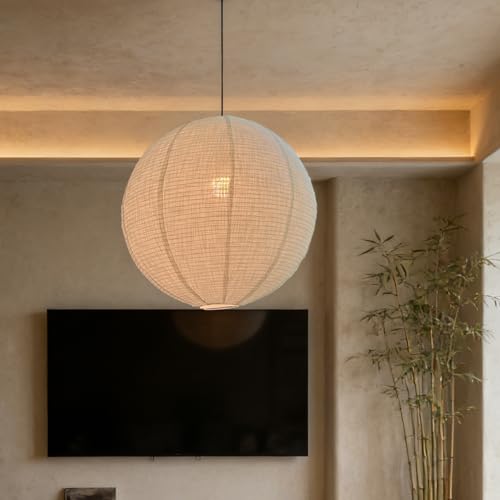
oetmilc Hanging Lamp Shade Linen Lantern Shade White 20INCH Linen Pendant Lampshade Large Round Hanging Lantern Handmade Minimalist Decorations Suitable for Living room Bedroom and kitchen
No wires or light bulbs included: You will receive a 20-inch white linen lampshade. It can replace paper…
As an affiliate, we earn on qualifying purchases.
As an affiliate, we earn on qualifying purchases.
Choosing the Right Paints for a Flawless White Finish
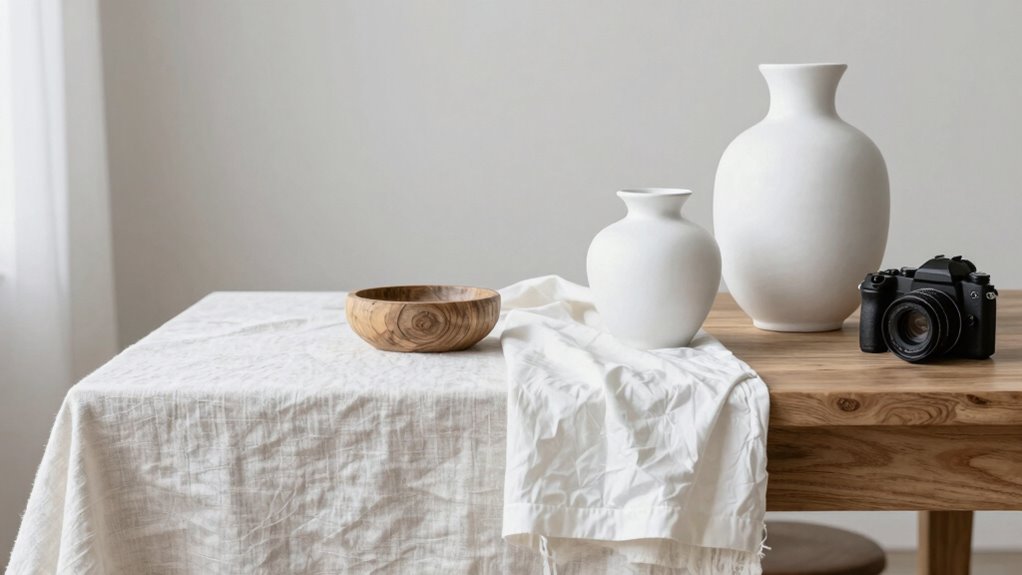
Choosing the right paints is vital for achieving a flawless white finish on your furniture or walls. Selecting the correct type ensures smooth application and a polished look. Focus on color mixing to get a pure, consistent white; sometimes, mixing shades helps eliminate undertones. Proper surface preparation is essential—clean, sand, and prime surfaces to promote adhesion and avoid uneven spots. Additionally, considering the wood-burning heating aspect can influence the paint choice, especially if the finished piece will be near a heat source.
Consider these key points:
- Use high-quality, matte or eggshell finishes for a soft, elegant look
- Opt for paints with excellent coverage to minimize multiple coats
- Test small areas first to check how the color mixes and adheres
Selecting Quality Wood Pieces for Your DIY Decor
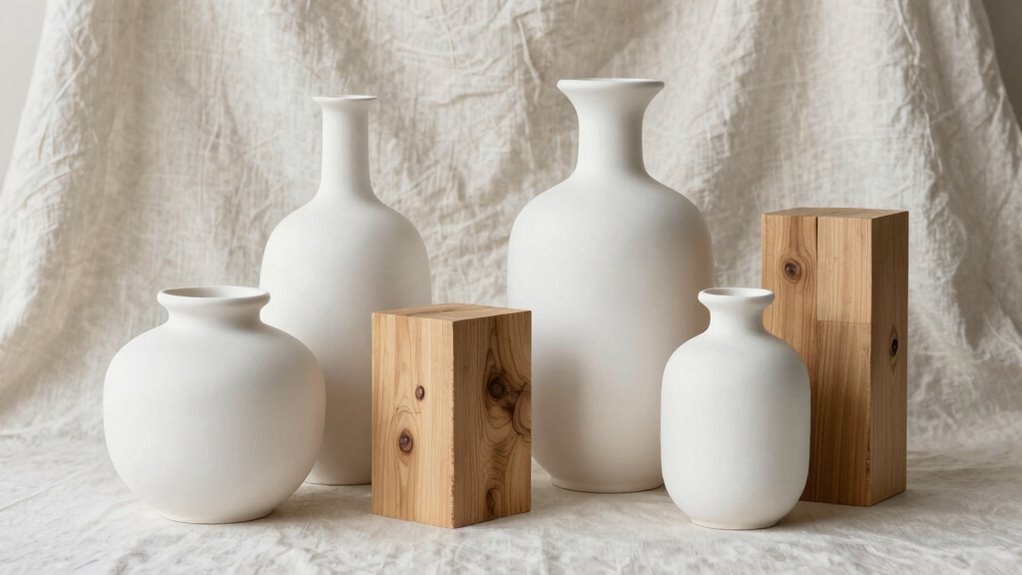
Selecting the right wood pieces can make or break your DIY decor project, especially when aiming for a cohesive look using white, wood, and linen tones. Focus on quality, durability, and appearance to guarantee your pieces complement each other seamlessly. Consider color psychology—lighter woods promote calmness and openness, aligning with the serene aesthetic of linen and white tones. Prioritize sustainable sourcing by choosing woods from eco-friendly suppliers who harvest responsibly, supporting environmental health and your project’s integrity. Look for natural grains and textures that add visual interest without overwhelming the subtle color palette. Well-chosen wood pieces will enhance your decor’s warmth and authenticity, creating a harmonious space that’s both stylish and environmentally conscious. Additionally, incorporating biographies and sports icons can inspire themes or accents that reflect your personal interests and passions. To ensure longevity and aesthetic appeal, always verify the sustainable sourcing practices of your wood suppliers before making a purchase. Being aware of wood grain patterns can also help you select pieces that add unique character and style to your decor. Paying attention to wood durability ensures your pieces withstand daily use and last over time. Moreover, understanding wood treatment methods can help you select finishes that preserve the wood’s natural beauty and increase its lifespan.
Incorporating Linen Fabric to Add Texture and Elegance
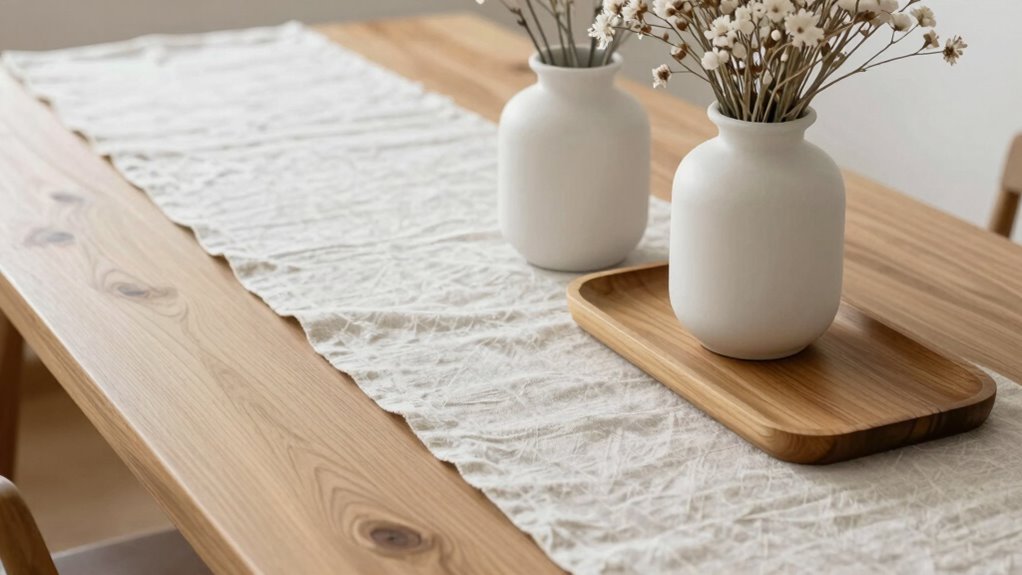
Incorporating linen fabric instantly elevates your decor by adding subtle texture and a touch of sophistication. Linen’s natural weave introduces visual depth, making your space feel more inviting and refined. To maximize impact, consider different textile patterns like pleats, embroidery, or subtle weaves that complement your overall aesthetic. Focus on color coordination by choosing linen shades in soft whites or warm neutrals that blend seamlessly with wood and white elements. Use linen in versatile ways, such as pillow covers, table runners, or curtains, to create a layered look. Incorporating these textured textiles brings an understated elegance, elevating your decor without overwhelming the simplicity of white and wood tones. Additionally, selecting interior design trends that emphasize natural materials can further enhance the timeless appeal of linen and wood accents. Exploring textile patterns can help you achieve a cohesive and stylish look that highlights the beauty of these natural fabrics. Embracing natural materials not only complements the overall aesthetic but also promotes a sustainable and eco-friendly approach to home decor. Incorporating traditional skills in textile making can deepen your appreciation for the craft and authenticity of these fabrics.
How to Make Minimalist Wall Art With White and Wood Elements
Creating minimalist wall art with white and wood elements is a simple way to add sophistication to your space without clutter. Use clean lines and geometric shapes to keep the design sleek and modern. Incorporate sustainable materials like reclaimed wood or eco-friendly paints to align with eco-conscious values. White surfaces evoke calmness and clarity, tapping into color psychology to create a serene environment. Choose natural wood tones to introduce warmth and texture, balancing the coolness of white. Keep the design uncluttered, focusing on a few well-placed pieces. This approach emphasizes simplicity, letting the natural beauty of wood and the purity of white shine. Minimalist wall art crafted this way enhances your space’s elegance while maintaining a sustainable and calming aesthetic.
Easy Linen Cushion Covers for a Cozy, Neutral Look
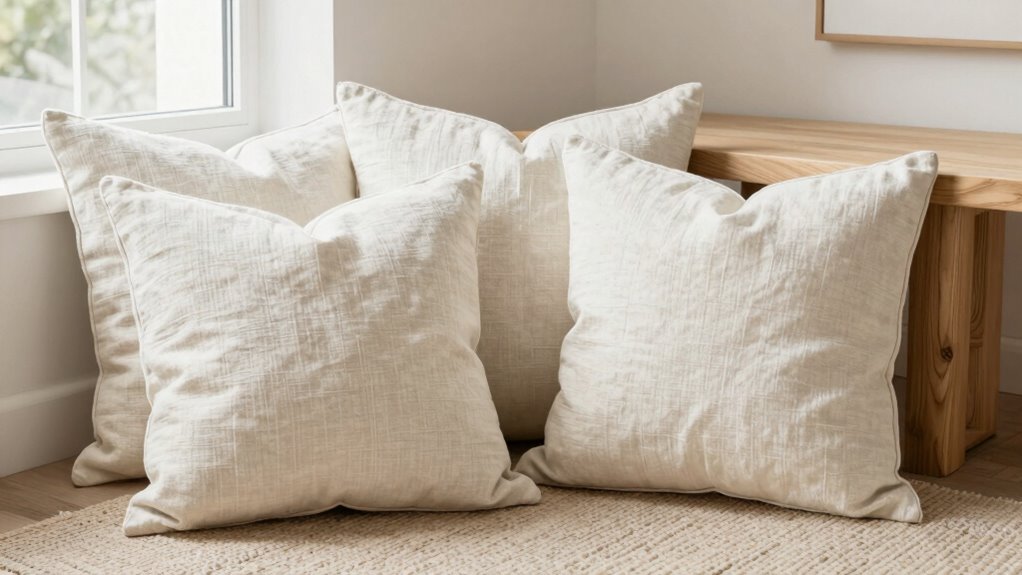
Building on the calm and understated elegance of minimalist wall art, adding cozy linen cushion covers can elevate your space with a soft, neutral touch. To create a cohesive look, focus on simple fabric selection—opt for high-quality linen in natural or white shades that feel breathable and durable. When considering color pairing, stick to shades of white, beige, or light wood tones to maintain a cohesive, neutral aesthetic. You can also introduce subtle texture variations through different linen weaves to add visual interest without disrupting the simplicity.
Enhance minimalist decor with natural linen cushions in neutral tones for a soft, elegant touch.
- Choose linen fabrics that are tightly woven for durability and smoothness
- Pair cushion covers with neutral-colored throws or rugs for harmony
- Use concealed zippers or envelope closures for a seamless, clean appearance
Crafting Elegant Wooden Photo Frames With White Accents
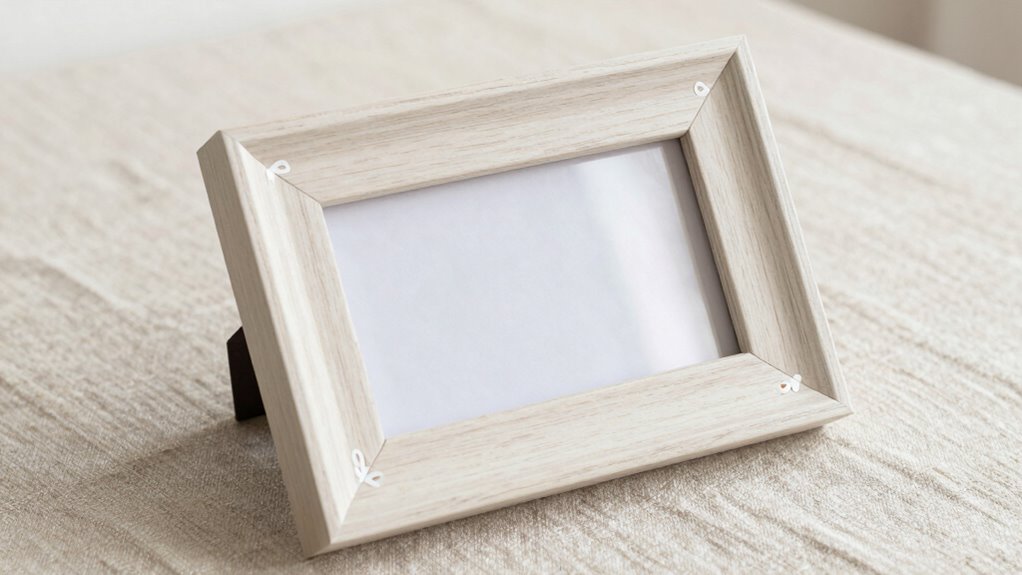
Wooden photo frames with white accents bring a touch of understated elegance to your decor, effortlessly blending natural warmth with clean, crisp details. The use of white highlights enhances the visual appeal, creating a calming effect rooted in color psychology that promotes serenity and clarity. When crafting these frames, choose eco-friendly materials like sustainably sourced wood and non-toxic paints or finishes, aligning your project with environmentally conscious values. White accents add sophistication without overpowering the natural grain of the wood, making your photos stand out. You can customize the look by incorporating simple white detailing or distressed finishes for a more vintage vibe. These frames become not only stylish but also thoughtful additions that reflect your commitment to sustainability and refined simplicity.
Rustic Shelves Made From Reclaimed Wood and Linen Details
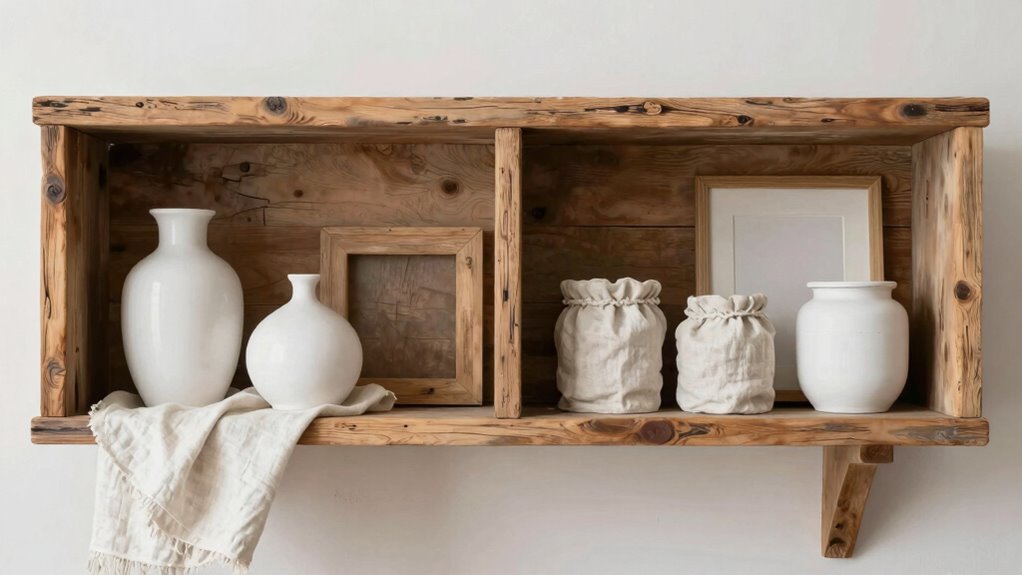
Choosing the right reclaimed wood guarantees your shelves have character and durability. Adding linen details can soften the rustic look and create a cohesive aesthetic. Assembling and placing your shelves thoughtfully will highlight their natural beauty and fit seamlessly into your space.
Reclaimed Wood Selection
Reclaimed wood brings a rugged, natural charm to any space, especially when paired with linen details that soften its rustic edge. When selecting reclaimed wood for your project, focus on pieces with visible grain, unique knots, and authentic weathering to enhance the rustic appeal. Opt for wood with a neutral color palette, such as soft browns, faded greys, or warm beiges, ensuring it complements your overall design. Look for reclaimed planks that are sturdy, free of pests, and have minimal warping. Consider sourcing wood from old barns, warehouses, or pallets, as these often offer diverse textures and tones. This choice adds depth and character to your shelves, making them a focal point in a minimalist, white, and linen-inspired space.
- Use varied reclaimed wood types for visual interest
- Prioritize sustainable sources for eco-friendly projects
- Select pieces with natural imperfections for authenticity
Linen Accent Details
To create a warm, inviting look, incorporate linen accents into your reclaimed wood shelves. Linen details add texture and softness, balancing the rustic wood. Use seasonal accents like dried flowers or small candles wrapped in linen fabric to refresh your space throughout the year. Color mixing with white, wood, and linen creates a subtle, cohesive palette that feels calm and elegant. Consider layering different shades of linen or adding delicate embroidery for visual interest. These accents highlight the natural beauty of your reclaimed wood while maintaining a clean, minimalist aesthetic. By thoughtfully combining seasonal accents and varied linen textures, you enhance your shelves’ charm and versatility. The result is a cozy, timeless display that seamlessly blends rustic warmth with refined simplicity.
Assembly and Placement
When assembling and placing your rustic shelves, careful attention guarantees they become a seamless part of your decor. Start by choosing a wall that enhances the vintage patterns and linen accents you’ve incorporated. Use a level to ensure the shelves hang straight, creating a balanced display for floral arrangements or decorative items. Consider spacing the shelves evenly for visual harmony. To add depth, incorporate small vintage-patterned boxes or linen-covered containers on the shelves. Keep in mind the overall aesthetic, blending reclaimed wood’s rustic charm with your linen details. Finally, position shelves at varying heights to create visual interest and allow space for your favorite floral arrangements, making your space both functional and charming.
How to Make Neutral Candle Holders for Warm Ambient Lighting
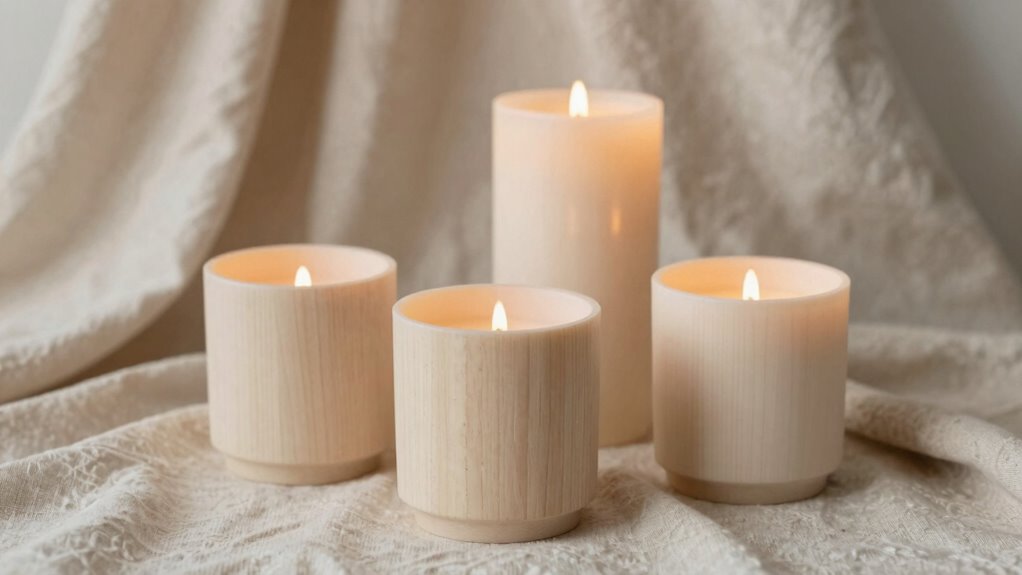
Looking to create a cozy, inviting atmosphere with your decor? Neutral candle holders are perfect for warm ambient lighting, especially with seasonal color schemes and modern minimalist styles. Start with simple wooden blocks or ceramic bases in white or linen tones. Wrap them with twine or fabric for texture, or leave them plain for sleekness. Use candles in shades of beige, ivory, or soft gray to complement your palette. Arrange them on a tray or stagger on shelves for depth. Here’s a quick guide:
| Material | Finish | Style Tip |
|---|---|---|
| Wood | Natural or painted | Keep it simple, clean lines |
| Linen fabric | Wrapped or draped | Add subtle texture |
| Candles | Neutral hues | Match seasonal schemes |
These holders fit seamlessly into modern minimalist decor.
Creating Stylish Table Centerpieces With White, Wood, and Linen

To create eye-catching table centerpieces, consider incorporating natural elements like greenery or wooden accents that complement the white and linen tones. Focus on balancing minimalist elegance by keeping arrangements simple yet refined, avoiding clutter. By thoughtfully combining these elements, you’ll craft stylish centerpieces that elevate any table setting effortlessly.
Incorporating Natural Elements
Natural elements can elevate your table decor by adding texture and warmth that perfectly complement white, wood, and linen tones. They create a grounded, inviting atmosphere, especially when you incorporate seasonal color schemes or focus on modern minimalist styles. Using fresh greenery or dried botanicals brings a subtle vibrancy without overpowering the simplicity of your palette. Incorporate elements like:
- Branches or twigs, painted white or left natural for a rustic touch
- Dried flowers in neutral tones to add texture and visual interest
- Small stones or pebbles arranged as accents or bases for centerpieces
These touches help craft a balanced, harmonious look that seamlessly blends organic beauty with your overall minimalist aesthetic. Natural elements make your table feel more authentic and thoughtfully curated, perfect for intimate gatherings or elegant events.
Balancing Minimalist Elegance
Achieving a balanced minimalist elegance involves carefully selecting and arranging your table elements to create a cohesive, sophisticated look. Focus on neutral tones like white, wood, and linen, which evoke calmness and clarity through color psychology. Use natural materials to emphasize sustainability practices, showing respect for the environment. To keep your centerpiece stylish yet simple, mix textures—smooth linens with textured wood—without overcrowding. Consider a symmetrical layout for harmony and visual balance. Here’s an example:
| Element | Material | Purpose |
|---|---|---|
| Centerpiece | Wooden bowl | Focal point, natural touch |
| Accent Items | White candles | Soft glow, elegance |
| Textiles | Linen runner | Unify the look, add warmth |
This approach keeps your table refined, eco-conscious, and inviting.
DIY Neutral Planters and Vases to Enhance Your Decor
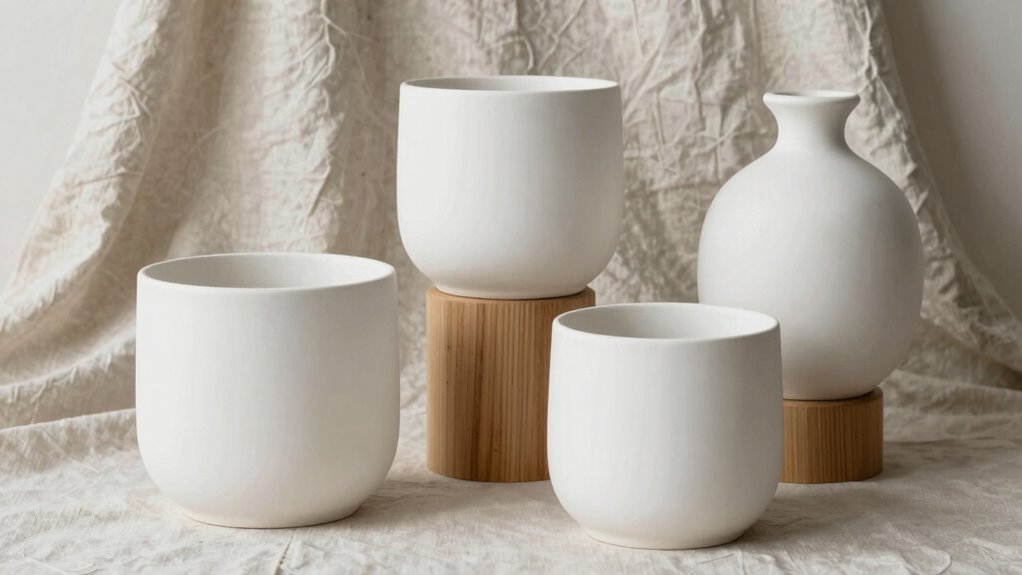
Creating your own neutral planters and vases is a simple and rewarding way to elevate your decor with understated elegance. Using white, wood, and linen tones, you can craft pieces that evoke calm and balance, aligning with key principles of color psychology. By choosing sustainable practices—like repurposing old wood or using natural linen—you not only create beautiful decor but also support eco-conscious living. Personalize your creations by experimenting with textures and finishes, ensuring they complement your space. Incorporate subtle details, such as carved patterns or painted accents, to add depth without overwhelming the neutral palette. These DIY projects allow you to express your style while fostering sustainability, making your home both stylish and environmentally friendly.
Create elegant, eco-friendly planters and vases using neutral tones, natural textures, and sustainable practices.
- Incorporate natural textures for visual interest
- Use eco-friendly paints or finishes
- Combine different shades of white and linen for subtle contrast
How to Make Your Neutral Decor Look Cohesive and Balanced
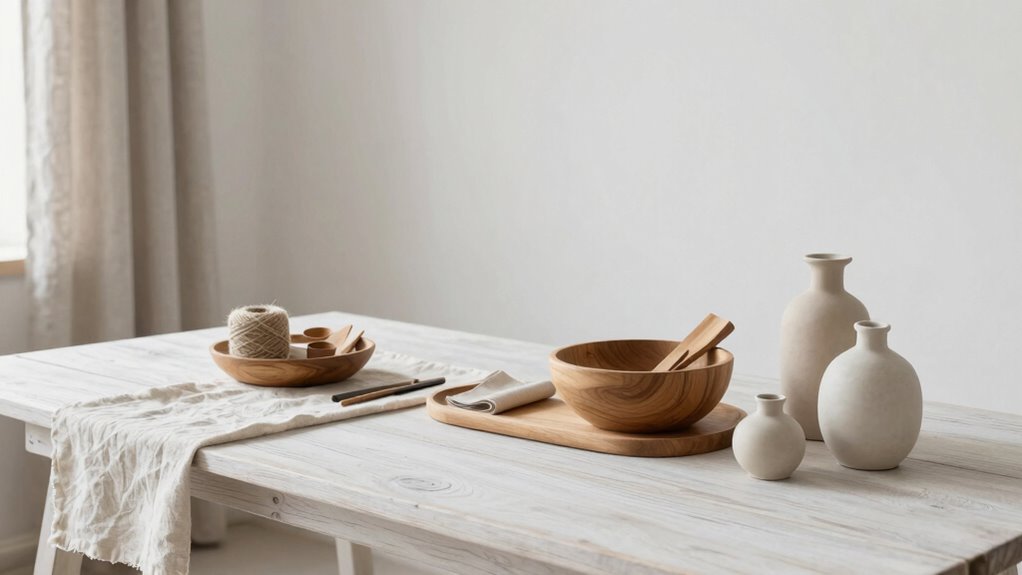
Building a cohesive and balanced neutral decor starts with understanding how different elements work together to create harmony. Color psychology plays a key role; whites, wood tones, and linens evoke calmness and warmth, so choose hues that complement each other to maintain serenity. Focus on furniture placement by arranging pieces to create flow and avoid clutter, ensuring each item supports the overall aesthetic. Keep larger furniture pieces centered or aligned along walls to ground the space, while smaller accents can be used to balance visual weight. Use variations in texture—such as linen cushions or wooden accents—to add depth without disrupting the neutral palette. By thoughtfully mixing textures and positioning your furniture intentionally, you’ll craft a space that feels cohesive, balanced, and inviting.
Fixing Common Mistakes in White and Linen Crafting
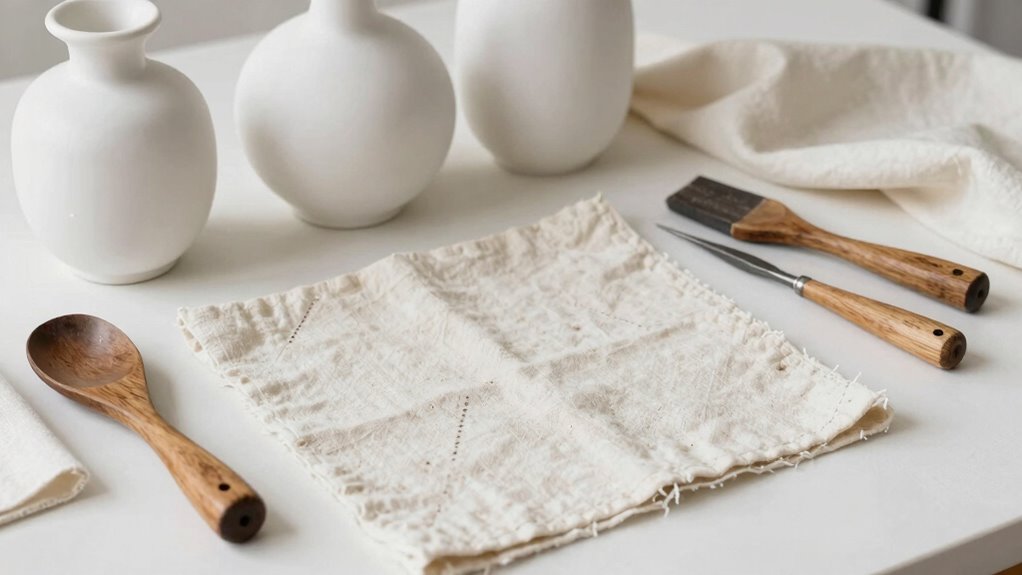
When working with white and linen crafts, it’s easy to make mistakes that can disrupt the clean and serene look you’re aiming for. One common error is ignoring color theory, which can cause your pieces to appear dull or mismatched. Pay attention to subtle variations in white tones and how they interact with linen shades to maintain harmony. Additionally, misusing textile patterns can create visual clutter instead of calmness. Stick to simple, cohesive patterns to enhance your design.
- Use a consistent white hue across different materials to avoid jarring contrasts.
- Incorporate texture thoughtfully, balancing smooth linen with textured wood accents.
- Keep textile patterns minimal and cohesive, avoiding overly busy designs.
Personalizing Your Neutral Crafts With Subtle Details
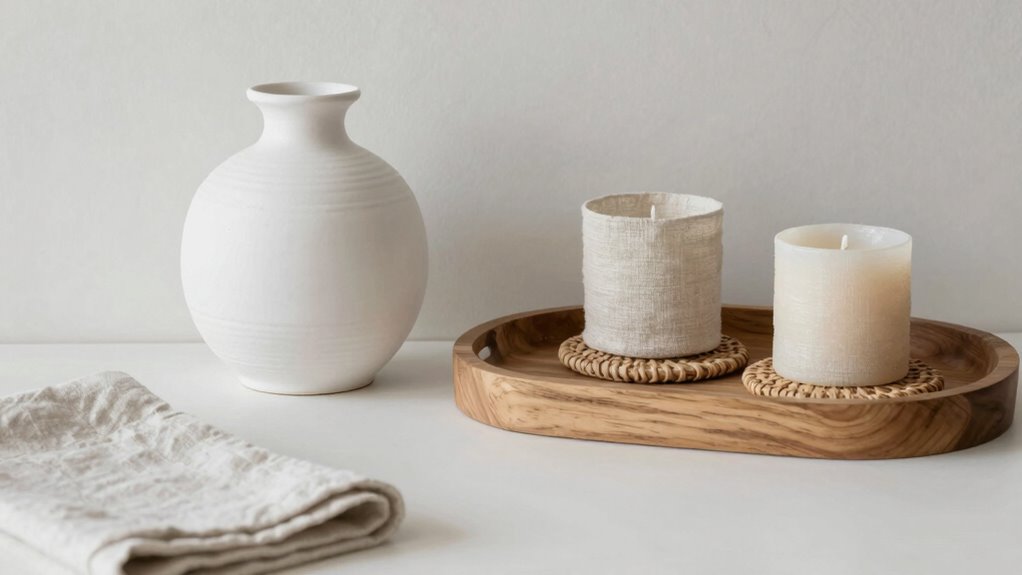
After mastering the basics of working with white, wood, and linen, adding subtle personal touches can elevate your crafts from simple to meaningful. Incorporate small details inspired by color psychology and seasonal variations to create deeper connections. Use delicate embroidery, engraved initials, or textured fabric accents to personalize pieces without overpowering the neutral palette. These subtle details reflect your personality and adapt to seasons—think soft linen for spring or cozy wood accents for winter. Here’s a quick guide:
| Element | Seasonal Variation | Personal Touch |
|---|---|---|
| Embroidery | Light pastels for spring | Initials or motifs |
| Wood accents | Darker tones for fall | Engraved quotes |
| Linen textures | Heavier fabrics for winter | Personalized patterns |
| Color accents | Bright for summer | Small painted symbols |
| Fabric trims | Neutral tones | Unique stitching details |
Finishing Touches to Elevate Your White and Linen Projects
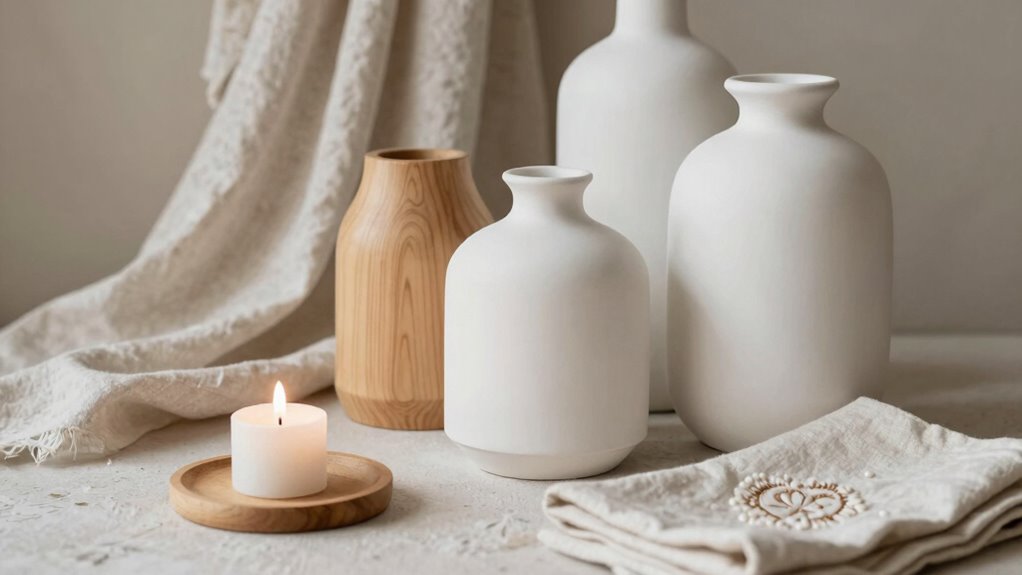
Adding elegant hardware can instantly refine your project’s look, giving it a polished feel. Incorporating textured fabric accents adds depth and tactile interest without overwhelming the simplicity. Soft lighting techniques create a warm, inviting atmosphere that elevates your white and linen designs effortlessly.
Elegant Hardware Choices
Choosing the right hardware can instantly elevate your white and linen projects, adding a touch of sophistication and style. When selecting hardware, consider color psychology—brushed nickel or matte black can evoke calmness and elegance. Historical influences also play a role; vintage brass or antique finishes can bring timeless charm. The hardware’s style and finish influence the overall tone, helping you create a cohesive look. To deepen your design, think about these options:
- Brushed nickel for modern, understated elegance
- Antique brass for a vintage, warm feel
- Matte black for bold contrast and contemporary appeal
These choices serve as subtle yet powerful details that enhance your project’s aesthetic, grounding your white and linen tones with refined, meaningful accents.
Textured Fabric Accents
Textured fabric accents can instantly add depth and dimension to your white and linen projects, preventing them from feeling too flat or plain. Incorporate textured fabric in neutral colors like soft beiges, warm creams, or subtle grays to enhance your design. These fabrics introduce tactile interest without overpowering the simplicity of your color palette. Use textured linen or woven textiles for pillows, table runners, or upholstery to create a layered look. You can also add a touch of texture with embroidered details or subtle ruffles. The key is to choose fabrics that complement your existing tones while adding visual intrigue. By carefully selecting textured fabric accents, you elevate your project’s sophistication while maintaining a clean, cohesive aesthetic.
Soft Lighting Techniques
Soft lighting can dramatically transform the ambiance of your white and linen projects, highlighting their delicate textures and subtle tones. By carefully choosing lighting, you can create a warm, inviting atmosphere that enhances the natural beauty of wood, linen, and white surfaces. Focus on achieving the right lighting ambiance to emphasize the softness of your materials. Incorporate dimmable fixtures or warm-toned bulbs to add depth and intimacy. To create compelling color contrast, position lights to accentuate the interplay between light and shadow, making textures stand out. Consider the following techniques:
- Use layered lighting, combining ambient, task, and accent lights for depth.
- Opt for warm or neutral bulbs to maintain a soothing, cohesive look.
- Experiment with placement to enhance texture and emphasize contrast.
Caring for and Maintaining Your Neutral Home Decor Pieces

Maintaining the beauty of your neutral home decor pieces requires regular care and mindful handling. To preserve their calming effect, consider how color psychology influences your space—clean whites and natural wood tones promote tranquility. Use gentle, eco-friendly cleaning materials to protect these eco-friendly materials, avoiding harsh chemicals that can damage finishes or fade fabrics. Dust wooden surfaces frequently with a soft cloth, and spot-clean linen fabrics as needed. Keep your decor out of direct sunlight to prevent discoloration. Be mindful of moisture, as excess can warp wood or mold linen. Regular upkeep guarantees your neutral tones stay fresh and inviting, creating a peaceful environment. Proper care not only extends the life of your decor but also sustains the natural, harmonious aesthetic you love.
Gift Ideas: How to Present Your Neutral Tone Crafts

Presenting your neutral tone crafts as thoughtful gifts can enhance their natural beauty and create a memorable impression. To elevate their presentation, consider how color theory influences the overall aesthetic, using subtle contrasts and harmonious shades. When wrapping or packaging, opt for simple linen wraps or white tissue paper to complement the tones. Including a handmade tag or small note adds a personal touch. If your gift involves furniture assembly, verify it’s sturdy and well-finished, emphasizing craftsmanship. Use minimalistic designs for a cohesive look that balances the neutral palette. These details show attention to detail and make your gift feel intentional, stylish, and timeless—perfect for any occasion.
Incorporating Your White, Wood, and Linen Creations Into Your Home Style
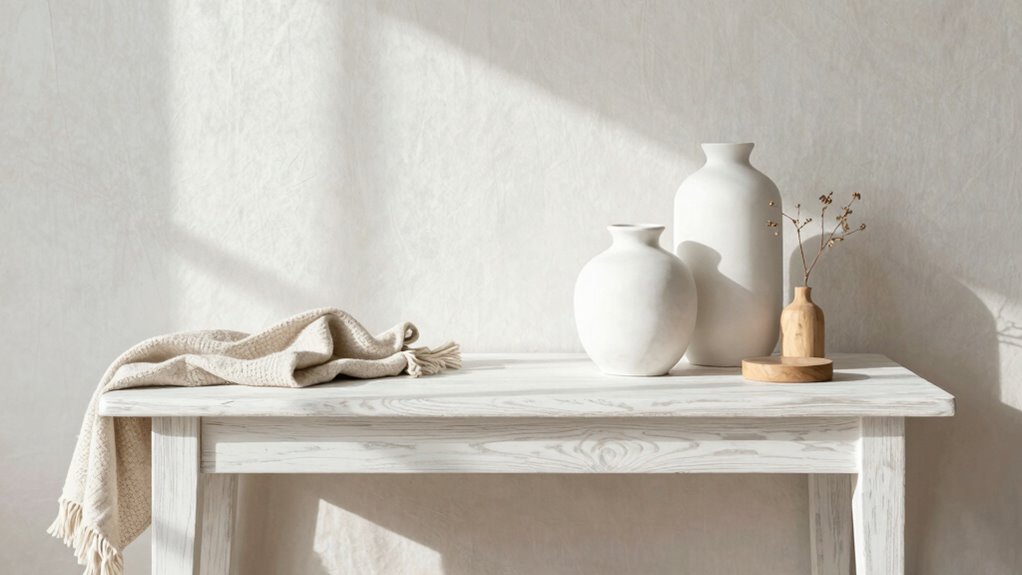
Integrating your white, wood, and linen creations into your home style can effortlessly create a serene and cohesive environment. These neutral tones blend seamlessly with seasonal color schemes, allowing you to adapt your decor throughout the year. For a fresh, modern minimalist look, focus on clean lines and simple arrangements that highlight the natural textures of wood and linen. During spring, add subtle pastel accents to enhance the airy feel, while in winter, layer with cozy textiles for warmth. This versatile palette complements various styles, from Scandinavian to rustic, ensuring your space feels balanced and inviting. By thoughtfully incorporating these elements, you create a timeless home that evolves effortlessly with the seasons and trends.
Frequently Asked Questions
How Can I Prevent White Paint From Yellowing Over Time?
To prevent white paint from yellowing over time, you should choose high-quality, low-UV or fade-resistant paint for better white paint preservation. Keep your painted surfaces out of direct sunlight and maintain proper ventilation. For linen fabric treatments, use gentle, color-safe fabric protectors to prevent discoloration. Regular cleaning and avoiding harsh chemicals also help preserve the brightness of your whites, ensuring your craft projects stay fresh and vibrant longer.
What Are Eco-Friendly Options for Linen Fabric?
Imagine your linen fabric as a garden needing eco-friendly care. You can choose sustainable dyeing methods and organic linen sources to keep it green. These options reduce chemical use and support eco-conscious farms. Like tending a garden with natural fertilizers, sustainable dyeing assures your linen remains beautiful and eco-friendly. Opting for organic linen sources guarantees that your fabric comes from environmentally responsible farms, making your craft projects both stylish and sustainable.
How Do I Repair Damaged or Scratched Wood Surfaces?
To repair damaged or scratched wood surfaces, start with wood sanding to smooth out the imperfections. Carefully sand the affected area, blending it with the surrounding surface. Afterward, apply a suitable stain or touch-up finish to match the color. Finish by sealing the surface to protect your repair. Surface sealing not only enhances durability but also keeps scratches from reappearing, giving your wood a refreshed, polished look.
Can I Use Synthetic Linen for My Projects?
Yes, you can use synthetic linen for your projects. Synthetic linen offers good durability, making it suitable for various craft ideas. Just keep in mind that linen fabric care differs slightly from natural linen; it may require gentle washing and avoiding high heat. Its durability guarantees your projects stay looking fresh longer, and it’s a practical choice if you want a similar aesthetic with easier maintenance.
What Are the Best Storage Methods for Finished Crafts?
You should store your finished crafts in clear storage containers to easily see what’s inside. Using labeling techniques with clear tags or labels helps keep everything organized, making it simple to find your projects later. Keep delicate items in padded boxes or on shelves away from direct sunlight and moisture. Regularly check and update your storage to maintain your crafts’ condition, ensuring they stay beautiful and ready for display or gifting.
Conclusion
By sticking to white, wood, and linen tones, you can create timeless, versatile pieces that truly tie your home together. With a little creativity and patience, you’ll turn simple materials into stunning decor. Remember, practice makes perfect, and soon enough, you’ll be standing tall with your own beautiful crafts. So go ahead — roll up your sleeves and bring your vision to life, because these neutral tones are a blank canvas waiting for your personal touch.