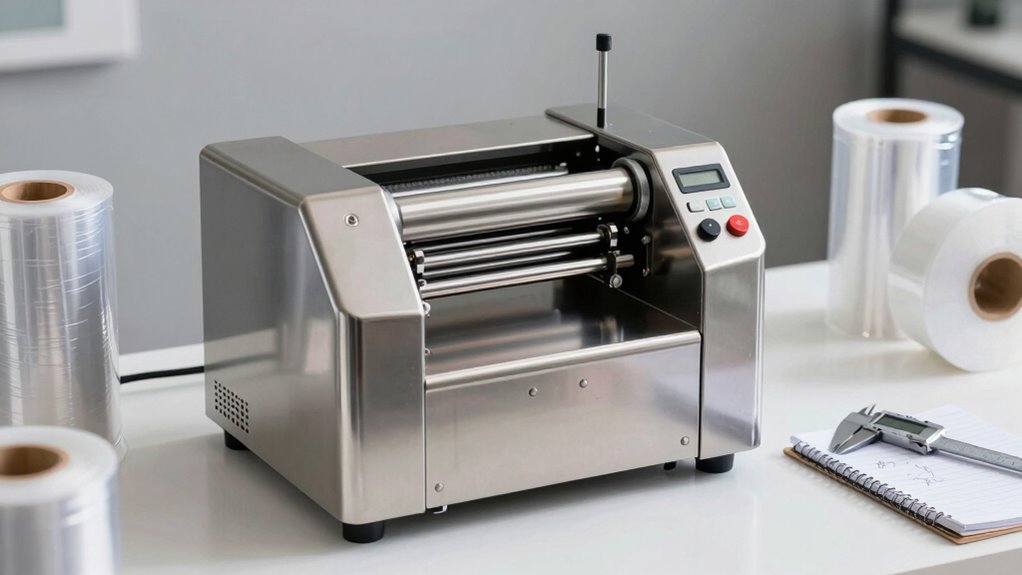

Before buying packaging machines for your small studio, you should focus on automation features like filling, sealing, and labeling that save time and reduce errors. Check the machine’s size and capacity to guarantee it fits your workspace and can handle your current and future volume needs. Prioritize safety features such as emergency stops and shields, and consider maintenance requirements and support options. Balancing cost with long-term functionality is key—continue exploring to discover how to pick the best fit for your studio.

Get business pricing on tools and workshop supplies
- Business-only prices and quantity discounts
- Tax-exempt purchasing
- Multiple users, one account, clear invoices
Key Takeaways
- Assess automation features like filling, sealing, and labeling for efficiency and ease of use.
- Verify maintenance requirements and accessibility to minimize downtime and repair costs.
- Ensure the machine’s size, capacity, and compatibility suit your workspace and production volume.
- Check safety features and available support to ensure a secure and well-supported operation.
- Consider overall costs, including purchase price, operational expenses, and future upgrade potential.
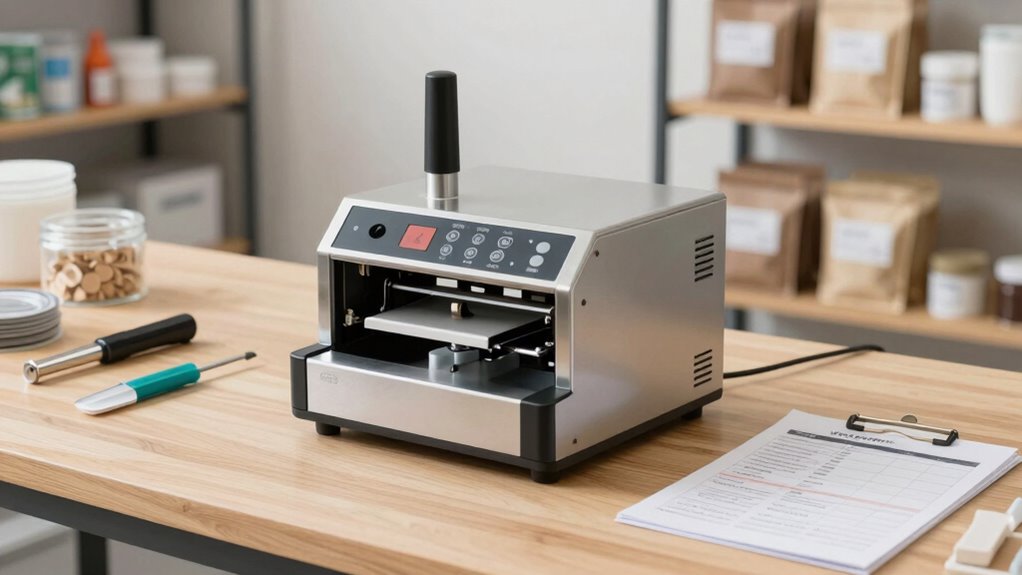
If you’re running a small studio, investing in packaging machines can considerably streamline your production process. Before making a purchase, it’s vital to assess the machine’s features carefully, especially its automation capabilities and maintenance requirements. Automation features are essential because they determine how much manual effort you’ll need to put in during packaging. Look for machines that offer features like automatic filling, sealing, and labeling. These functionalities can save you time and reduce errors, making your workflow more efficient. However, make certain that these automation features are user-friendly and adaptable to your specific products. Overly complex machines might require extensive training, which could slow down your operations initially. Also, verify if the automation can be customized or upgraded later as your studio grows, so you’re not stuck with a machine that becomes obsolete quickly. Additionally, understanding the automation capabilities of a packaging machine can help you determine its suitability for different production scales and product types. Maintenance requirements are equally important to take into account because they directly impact your long-term costs and operational downtime. Ask the seller about the routine maintenance tasks and how often they need to be performed. Some machines require regular lubrication, calibration, or filter replacements, which can add to your workload if not designed for easy upkeep. Opt for machines with accessible parts and clear maintenance instructions, so you don’t spend excessive time and effort keeping them in top shape. Regularly reviewing the maintenance schedule can help you prevent unexpected breakdowns and extend the lifespan of your equipment. An understanding of cost considerations can also help you plan your budget more effectively, especially when factoring in operational expenses and potential upgrades. Furthermore, choosing a machine with easy-to-access parts can facilitate quicker repairs and reduce downtime. Additionally, consider the availability of spare parts and technical support. Machines with readily available parts and responsive customer service can minimize downtime if repairs become necessary. Remember, a machine with high maintenance demands might end up costing you more in the long run, both in repairs and lost productivity. Proper training and support from the manufacturer can also help ensure smooth operation and longevity of your equipment. Size and capacity are also vital factors. You want a machine that fits comfortably into your workspace but still offers the capacity to handle your current volume and future growth. Check the machine’s throughput rate to make certain it aligns with your production needs. Compatibility with your existing packaging materials is another must; verify that the machine can handle different sizes or types of packaging you plan to use. Safety features shouldn’t be overlooked either—look for machines with emergency stops, safety shields, and clear operational instructions to keep your workspace safe. Finally, consider the overall cost, including purchase price, operational expenses, and potential upgrades. Evaluating all these elements—automation features, maintenance requirements, size, capacity, and safety—will help you select a packaging machine that enhances your studio’s efficiency and supports your growth without unexpected setbacks.
automatic packaging machine for small studio
As an affiliate, we earn on qualifying purchases.
As an affiliate, we earn on qualifying purchases.
Frequently Asked Questions
What Is the Typical Lifespan of Packaging Machines for Small Studios?
The typical lifespan of packaging machines for small studios ranges from 5 to 10 years, depending on packaging durability and machine compatibility. Regular maintenance and proper handling can extend this lifespan. You should check if the machine’s components are built to last and confirm it fits seamlessly with your existing setup. Staying on top of servicing and updates helps maximize your investment and keeps your packaging operations running smoothly over the years.
Are There Any Specific Maintenance Requirements for Small Studio Packaging Machines?
To keep your small studio packaging machine running smoothly, you should follow simple maintenance routines like regular cleaning protocols and checking for spare parts availability. Keep the machine clean to prevent buildup and guarantee efficiency. Additionally, having spare parts on hand helps you quickly address minor issues without much downtime. Regular maintenance and proper care will prolong your machine’s lifespan and keep your packaging operations seamless and reliable.
How Energy-Efficient Are These Packaging Machines?
These packaging machines are generally quite energy-efficient, helping you save on power consumption and reduce your overall energy costs. Look for models with energy-saving features like automatic shut-off or standby modes to maximize power savings. Keep in mind that newer machines tend to have better energy efficiency ratings. By choosing an energy-efficient option, you can lower your studio’s environmental impact and operating expenses, making your packaging process both eco-friendly and cost-effective.
Can the Machines Be Upgraded or Customized Later?
Yes, many packaging machines are designed with machine compatibility and future scalability in mind. You can often upgrade or customize features later, such as adding new packaging options or increasing capacity. When choosing a machine, check if it supports modular attachments or software updates. This guarantees your equipment can grow with your small studio’s needs, saving you money and avoiding the hassle of replacing machines prematurely.
What Is the Average Downtime During Machine Setup or Repair?
You’ll find that the average downtime during machine setup or repair usually ranges from a few hours to a day, depending on your machine’s complexity. During this time, calibration adjustments are made to guarantee accuracy, and repair turnaround is prioritized to minimize delays. It’s essential to select a machine with quick calibration and accessible repair options, so your studio stays productive without long interruptions.
Conclusion
Before you commit to a packaging machine, remember it’s the backbone of your small studio’s success. Check its versatility, ease of use, and maintenance needs like a seasoned navigator charts a course through choppy waters. A well-chosen machine isn’t just equipment; it’s the steady heartbeat of your growth, ready to propel you forward. Make your decision wisely, and watch your studio flourish like a well-tended garden in full bloom.
Fall yard work Picks
leaf blowers
As an affiliate, we earn on qualifying purchases.