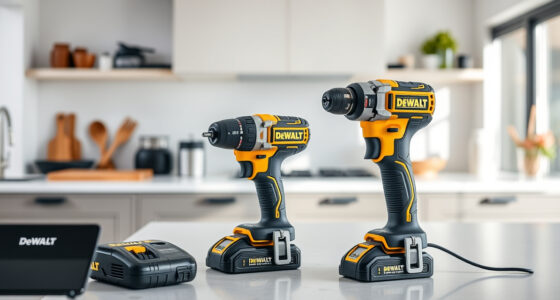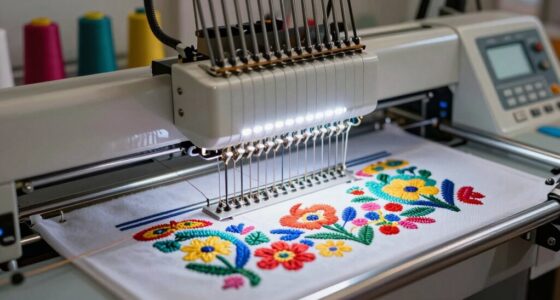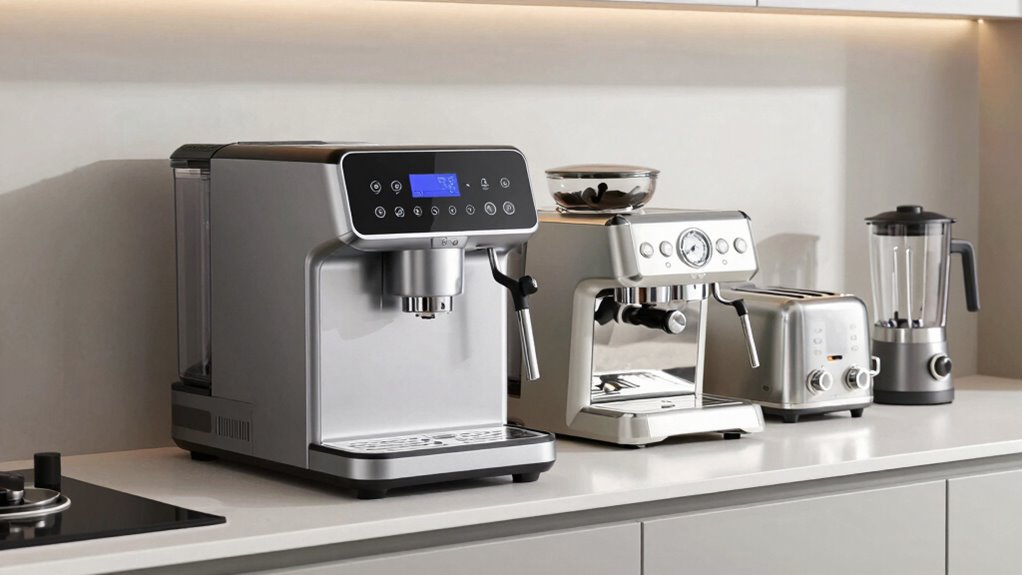

If you’re choosing between a combo machine and separate appliances, consider your space and how often you’ll use each function. Combo units save space and can be more convenient, but they may not match the performance or durability of dedicated machines. Separate appliances generally last longer and are easier to repair, possibly saving you money in the long run. To find out which setup best suits your needs, look into the details that follow.

Get business pricing on tools and workshop supplies
- Business-only prices and quantity discounts
- Tax-exempt purchasing
- Multiple users, one account, clear invoices
Key Takeaways
- Consider space limitations; combo machines save space but may compromise performance compared to dedicated units.
- Evaluate long-term costs; separate machines often have higher initial costs but lower repair and maintenance expenses.
- Assess durability needs; dedicated appliances typically last longer and withstand frequent use better than combo units.
- Determine performance priorities; specialized machines usually provide better efficiency for specific tasks.
- Balance convenience versus reliability; combo units offer simplicity, but separate appliances can offer easier troubleshooting and repairs.

When deciding whether to invest in a combo machine or separate appliances, understanding your specific needs and space constraints is essential. If you’re limited on space, a combo machine can be a smart choice because it consolidates multiple functions into one unit, helping you maximize your kitchen or laundry area. Space efficiency becomes a key factor here; with a combo, you avoid clutter and free up room for other essentials. However, it’s important to consider how well the combo machine performs each function. Sometimes, a single appliance might not match the efficiency or capacity of dedicated units, which can impact your overall workflow.
Choosing between a combo machine and separate appliances depends on your space and performance needs.
Maintenance costs also play a significant role in your decision. Combo machines tend to have a simpler design with fewer individual parts, which could mean lower maintenance costs initially. But, if the combo fails or needs repairs, you might face higher costs because the entire unit could be out of commission until fixed. Separate appliances, on the other hand, often have dedicated parts and easier troubleshooting, so repairing or replacing one isn’t as disruptive to your routine. Over time, these maintenance costs can add up, so it’s worth weighing the potential expenses versus convenience. Additionally, considering the technological advancements in appliance design can help you choose a model that remains efficient and reliable over time.
In terms of durability, separate machines typically have a longer lifespan because they’re built specifically for their purpose, while combo units might be more prone to wear and tear since they handle multiple functions in one device. If you frequently use your appliances and rely on them daily, investing in separate, high-quality machines could save you money and reduce downtime. Conversely, if your use is occasional or you just want to simplify your setup, a combo machine might suit your needs, especially if it’s designed with quality components. Furthermore, performance and longevity are crucial factors to consider, as they directly influence the long-term value of your investment. To optimize your decision, consider examining reliability ratings and user feedback, which can offer insights into how well a machine performs over time. Evaluating the cost-effectiveness of each option can also help ensure you’re making a sustainable choice.
As an affiliate, we earn on qualifying purchases.
Frequently Asked Questions
How Much Maintenance Does Each Type Require?
You’ll find that maintenance costs for combo machines are generally lower since they have fewer parts and simpler design, leading to less repair frequency. Separate machines, however, might require more frequent repairs and upkeep because of their complex mechanisms and multiple components. Regular cleaning and inspections help reduce overall maintenance costs for both, but combo machines usually demand less time and money for upkeep over time.
Are Combo Machines More Prone to Breakdowns?
Combo machines tend to be more prone to breakdowns because their machine versatility means more complex mechanisms that can fail. When breakdowns happen, repair costs often rise since fixing a combo unit involves addressing multiple functions at once. You should consider this risk, especially if you prefer a reliable setup with fewer repair concerns. Separate machines usually have simpler designs, making repairs less costly and less likely to disrupt your workflow.
What Is the Typical Lifespan of Each Machine Type?
You’ll love how long each machine type lasts—if you’re lucky. Combo machines typically endure 5-10 years before crying uncle, thanks to their all-in-one design, while separate machines often reach 10-15 years with proper care. Their durability depends on build quality, maintenance, and upgrade options. So, if you’re into betting on longevity, separate machines might be your best bet. But hey, one-stop convenience has its own charm!
Can Separate Machines Be Integrated for Efficiency?
Yes, separate machines can be integrated for efficiency through modular integration, allowing you to customize your setup. Focus on system compatibility to guarantee all components work seamlessly together. By connecting your machines properly, you can streamline operations, save space, and reduce downtime. Just make sure the equipment you choose supports modular integration and is compatible with your existing systems, so you get the most out of your investment and improve overall productivity.
Which Option Is More Energy-Efficient?
A combo machine generally uses less energy because it consolidates functions into one device, reducing overall energy consumption. Separate machines might consume more due to individual power needs, but they can be more efficient for specific tasks. When considering cost comparison, a combo machine might save you money upfront and on energy bills. Ultimately, your choice depends on your usage patterns, but combo machines tend to be more energy-efficient overall.
Conclusion
Ultimately, whether you choose a combo machine or separate appliances, it’s about finding what fits your life best. Sometimes, the perfect solution appears just when you’re not looking—like that day you found a sleek combo machine at a sale, saving space and time. It’s funny how coincidence can lead us to what we truly need, making your kitchen feel just right. Trust your instincts, and you’ll discover the choice was right all along.
Fall yard work Picks
leaf blowers
As an affiliate, we earn on qualifying purchases.