In a conveyor dryer, temperature zones help control how products dry and cool down. The preheating zone gets everything ready, while the drying zone uses heated air to remove moisture. A cooling zone follows to prevent damage and set the product. Setting these zones correctly involves careful calibration, avoiding common mistakes like inaccurate temperature readings. If you want to understand how to optimize each zone for your specific products, keep exploring this helpful guide.
Key Takeaways
- Temperature zones in a conveyor dryer are separately controlled areas that optimize drying for different product needs.
- Proper calibration of each zone ensures consistent heating, preventing damage and over- or under-drying.
- Adjusting zone temperatures fine-tunes the drying process based on material thickness and heat sensitivity.
- Preheating the dryer uniformly helps achieve even heat distribution and improves overall efficiency.
- The drying zone removes moisture with heated air, while the cooling zone stabilizes the product to prevent damage.
What Are the Different Temperature Zones in a Conveyor Dryer?

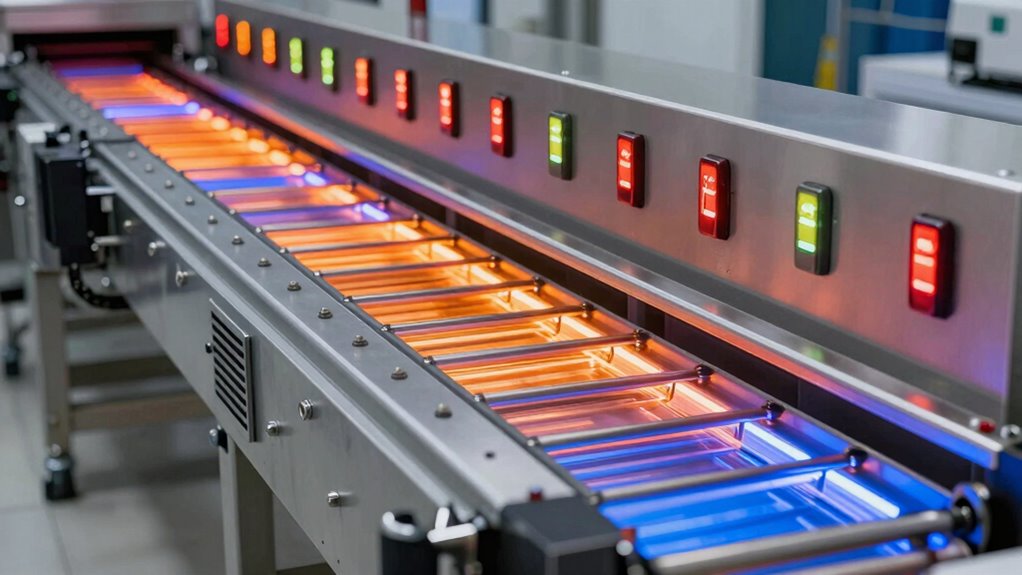
A conveyor dryer typically features multiple temperature zones that work together to efficiently dry and cure materials. These zones allow you to control the heat applied at different stages, guaranteeing ideal results. The initial zone often uses lower temperatures to help with color calibration, maintaining consistent hues and preventing color distortion. As the material progresses, higher temperature zones accelerate drying while avoiding damage. Proper airflow optimization across these zones is essential, as it ensures even heat distribution and prevents hot spots or uneven drying. Airflow management is crucial in maintaining temperature consistency throughout the process. Adjusting temperatures within each zone allows you to fine-tune the process, improving product quality. Implementing European cloud solutions can enhance monitoring and control, leading to more precise temperature regulation. Utilizing advanced monitoring tools helps detect discrepancies early, preventing potential defects. Understanding these distinct zones helps you set up your conveyor dryer effectively, leading to better control over drying times, color consistency, and overall efficiency. Additionally, regularly inspecting and maintaining the equipment ensures optimal dryer performance, extending its lifespan and reducing downtime. Temperature control is a key factor in achieving uniform results and maximizing equipment lifespan.
Why Is Preheating the Conveyor Dryer Important?
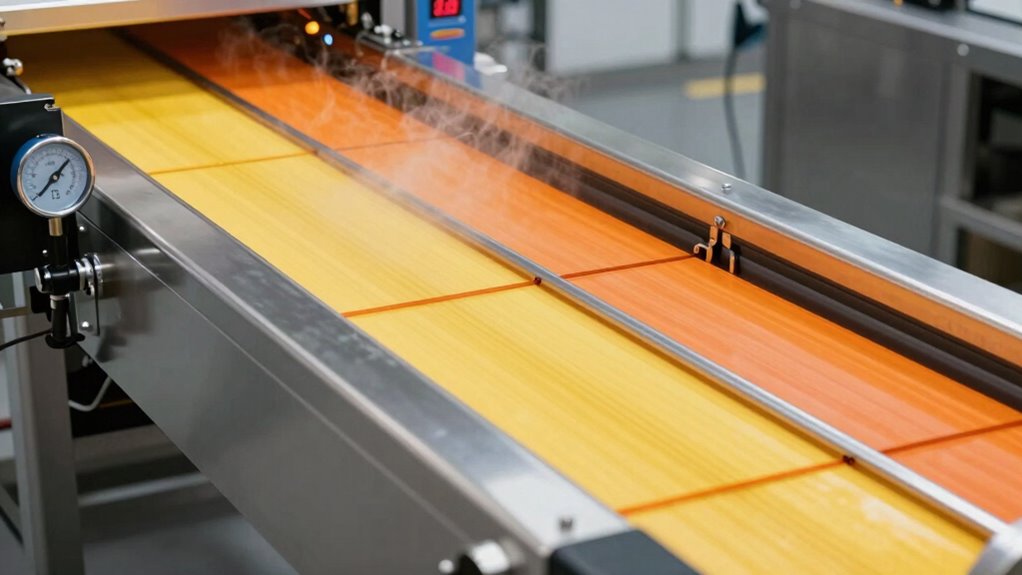
Preheating your conveyor dryer is essential for achieving even heating across your products. It helps prevent damage caused by sudden temperature changes and guarantees consistent quality. Plus, it can cut down your drying time, making the process more efficient. Additionally, understanding the temperature zones within your dryer allows for better control and optimization of the drying process. Taking the time to properly preheat the dryer ensures all zones reach the desired temperature uniformly before processing your items. Proper temperature management is crucial to avoid uneven drying and ensure product integrity. By monitoring and adjusting the zone temperatures, you can further improve the consistency and overall results. Ensuring that the initial warm-up phase is thorough can significantly impact the overall efficiency of your drying operation.
Ensures Uniform Heating
To guarantee even heating across the entire conveyor surface, starting with a preheated dryer is essential. When the dryer is preheated, the temperature zones stabilize quickly, allowing for consistent heat distribution. This stability is crucial for maintaining uniform heat, which directly impacts product quality. Consistency ensures that your products receive uniform exposure, reducing hot or cold spots. Proper humidity control during preheating also plays a role; it prevents moisture from unevenly affecting heat transfer. Additionally, adjusting conveyor speed becomes more effective when the dryer is preheated, helping maintain the ideal residence time for each product. Connected equipment can also be integrated to monitor and adjust temperature zones in real-time, further improving uniformity. Incorporating digital temperature controls enhances precision, enabling fine-tuning of heat levels for optimal results. Skipping preheating can cause temperature fluctuations, leading to uneven heating and compromised product quality. Moreover, temperature monitoring systems provide real-time data that can help prevent overheating or underheating during operation. Ultimately, preheating creates a stable environment, ensuring the entire conveyor operates efficiently and delivers uniform heat for maximum results.
Prevents Product Damage
When the dryer isn’t properly preheated, sudden temperature fluctuations can occur, putting your products at risk of damage. Cold spots or uneven heat can cause warping, cracking, or poor adhesion, compromising product quality. Proper preheating helps maintain consistent temperatures, reducing the chance of thermal shock. Regular conveyor maintenance ensures the heating zones operate smoothly, preventing unexpected temperature drops or spikes. Additionally, preheating optimizes energy efficiency by reducing the workload on heating elements once production starts, saving energy and extending equipment lifespan. Understanding temperature zones is crucial for fine-tuning your setup to suit different products and processes. Proper conveyor operation and setup are essential for maintaining high-quality output and preventing costly product defects. By making sure your conveyor dryer is correctly preheated, you protect your products from damage and promote efficient operation, ultimately saving time and money. Materials and fuel primers are crucial to choosing the right setup for your needs. Implementing temperature control strategies can further enhance the consistency and safety of your drying process, especially when considering energy efficiency and operational costs.
Reduces Drying Time
Proper preheating guarantees the conveyor dryer reaches the ideal temperature rapidly, considerably reducing overall drying time. When the dryer starts at the correct temperature, products dry evenly and quickly, boosting productivity. This process also improves energy efficiency by minimizing the time the dryer runs at lower, less effective temperatures. Consistent preheating helps maintain optimal operating conditions, reducing strain on heating elements and supporting better maintenance practices. Additionally, temperature zones are carefully controlled to optimize drying performance across different sections of the conveyor. Here’s a quick overview:
| Step | Benefit | Result |
|---|---|---|
| Rapid temperature ramp-up | Saves time | Faster drying process |
| Even heat distribution | Reduces rework or damage | Consistent product quality |
| Energy-efficient operation | Lowers energy costs | Cost savings and sustainability |
| Proper maintenance practices | Extends equipment lifespan | Less downtime, better efficiency |
A well-designed temperature zone system ensures that each section of the conveyor can be precisely controlled, which is crucial for handling various products and drying requirements. Incorporating advanced control systems can further enhance the accuracy and reliability of temperature regulation throughout the drying process. Additionally, using precise temperature controls can help prevent overheating and improve overall process stability. Implementing proper calibration of temperature sensors is essential to maintain consistent performance and avoid costly errors.
How Does the Drying Zone Remove Moisture Effectively?
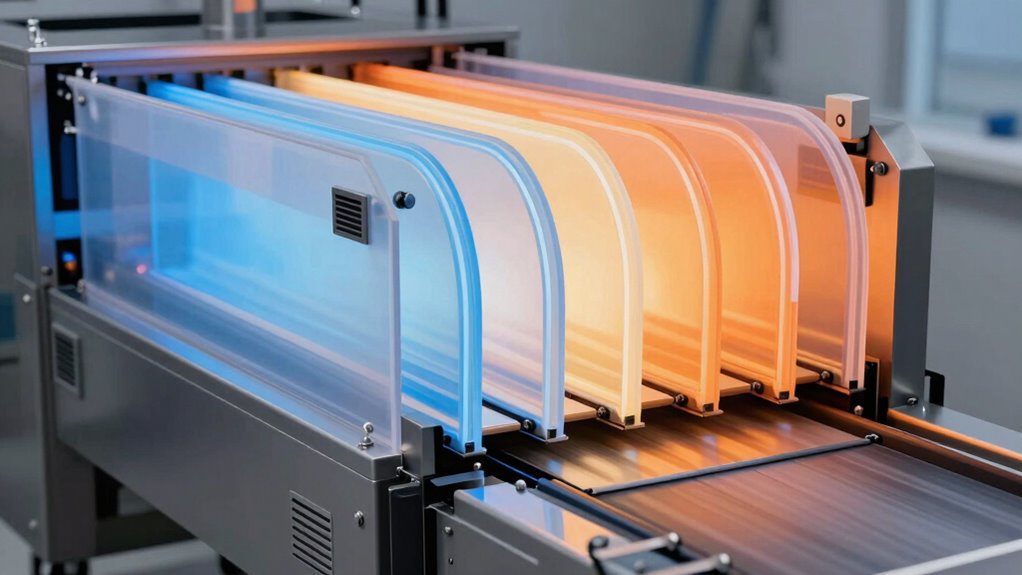
The drying zone removes moisture efficiently by exposing the product to heated air that quickly evaporates water from its surface. This process encourages moisture escape, making evaporation more effective. As the heated air flows over the product, it picks up water vapor, reducing surface moisture rapidly. The key is maintaining ideal temperature and airflow to maximize evaporation efficiency without damaging the product. Proper zone design ensures heated air remains in contact with the material long enough to remove moisture thoroughly. By controlling these factors, you facilitate rapid water vapor removal while preventing reabsorption. This combination of effective heat application and airflow creates a consistent drying process, ensuring your product is evenly dried and moisture is effectively eliminated. Effective heat application is essential for optimizing the drying process and ensuring the quality of the final product. Additionally, understanding airflow management helps prevent issues like uneven drying or recontamination. Implementing temperature zones allows for precise control over drying stages, further enhancing efficiency and product quality. Properly managing these aspects helps improve energy efficiency and reduces operational costs in the drying process.
What Is the Purpose of the Cooling Zone After Drying?
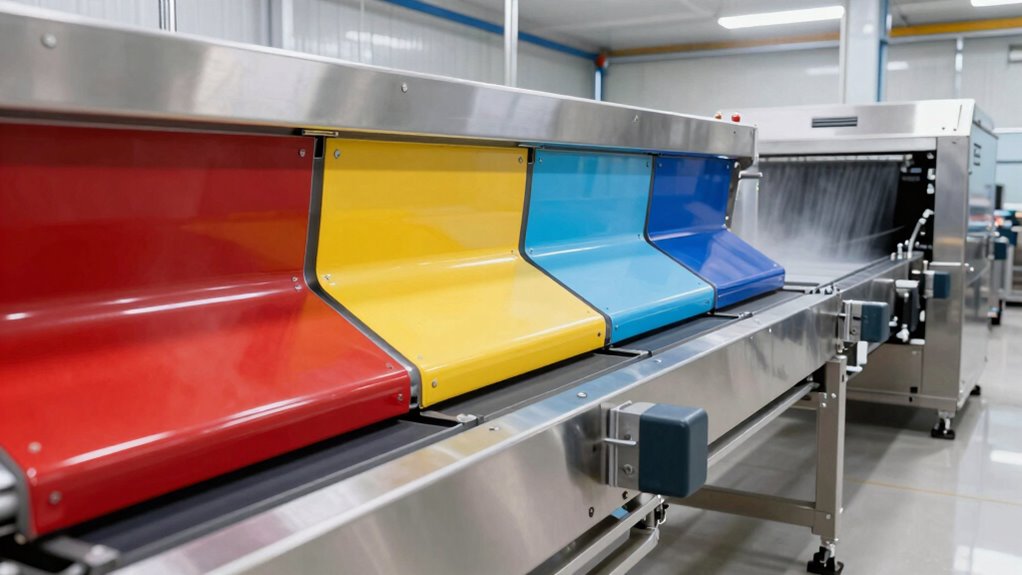
The cooling zone helps stabilize the temperature of your product, preventing potential damage from abrupt temperature changes. It also makes handling easier by reducing stickiness or deformation. Ultimately, this step enhances the final product quality by ensuring it cools evenly and safely.
Temperature Stabilization Benefits
Cooling zones after drying play a crucial role in stabilizing temperature levels, which helps prevent moisture reabsorption and minimizes stress on the material. This stabilization improves overall product quality and ensures consistent results. Additionally, it enhances energy efficiency by reducing the need for reprocessing due to defects caused by uneven cooling. Proper temperature stabilization also addresses safety considerations by lowering the risk of overheating or thermal damage during handling.
Key benefits include:
- Preventing moisture reabsorption that can compromise product integrity
- Minimizing material stress, reducing breakage or warping
- Enhancing energy efficiency by maintaining ideal cooling rates
Material Handling Improvements
Have you considered how the cooling zone after drying enhances material handling? This zone helps prevent damage by reducing thermal stress, ensuring better material compatibility. It also streamlines downstream processes like packaging or assembly by stabilizing product temperature and reducing handling risks. Improving these aspects boosts overall efficiency and safety.
| Aspect | Benefit | Impact on Material Handling |
|---|---|---|
| Material Compatibility | Prevents warping or cracking | Reduces breakage during handling |
| Temperature Stabilization | Maintains consistent product conditions | Eases subsequent processing |
| Energy Efficiency | Uses less energy during cooling | Lowers operational costs |
| Reduced Damage | Protects fragile items | Less rework and waste |
| Process Flow | Smoother transfer between stages | Increases throughput and safety |
Final Product Quality
After drying, the cooling zone plays a critical role in preserving the final product’s quality by reducing residual heat that could cause deformation or spoilage. Proper cooling helps maintain shape, texture, and appearance, ensuring your product meets quality standards. To achieve this, regular conveyor maintenance is essential for consistent cooling performance and avoiding jams or uneven cooling. Additionally, optimizing the cooling process improves energy efficiency by preventing unnecessary heat buildup and reducing power consumption. Keep these points in mind:
- Proper airflow and temperature control ensure even cooling
- Regular maintenance prevents downtime and product damage
- Efficient cooling reduces energy waste and operating costs
Focusing on these factors helps you produce high-quality products while keeping your conveyor system running smoothly and efficiently.
How to Set and Adjust Temperatures in Each Zone

Wondering how to precisely set and adjust temperatures in each zone of your conveyor dryer? Start by performing temperature calibration to guarantee your readings are accurate. Use a reliable thermometer to verify the actual temperature at each zone, adjusting the controls until the displayed temperature matches the true temperature. Always follow safety precautions, such as turning off the dryer before making adjustments and wearing protective gear. Once calibrated, set the desired temperature for each zone based on your product’s requirements. Make small adjustments gradually, then observe the effects before fine-tuning further. Remember, proper calibration and careful adjustments help ensure consistent drying, prevent overheating, and maintain product quality. Regularly revisit your settings to keep everything running smoothly and safely.
Common Mistakes When Setting Conveyor Dryer Temperatures and How to Avoid Them
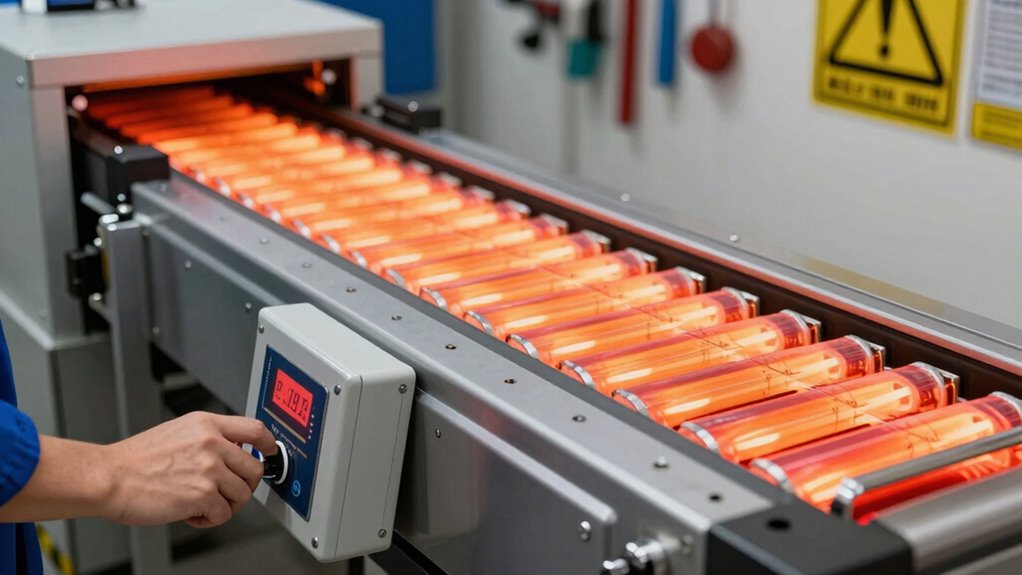
One common mistake when setting conveyor dryer temperatures is relying solely on the built-in controls without verifying actual temperatures. This can lead to inconsistent results and poor product quality. To avoid this, use a reliable thermometer to monitor real temperature readings regularly. Also, neglecting humidity control can cause fluctuations that affect drying efficiency. Keep these points in mind:
- Always verify actual temperatures with a thermometer, not just control panel readings
- Regularly check humidity levels to maintain consistent drying conditions
- Adjust temperatures carefully to maximize energy efficiency and avoid unnecessary energy waste
Troubleshooting Temperature Imbalances During Operation
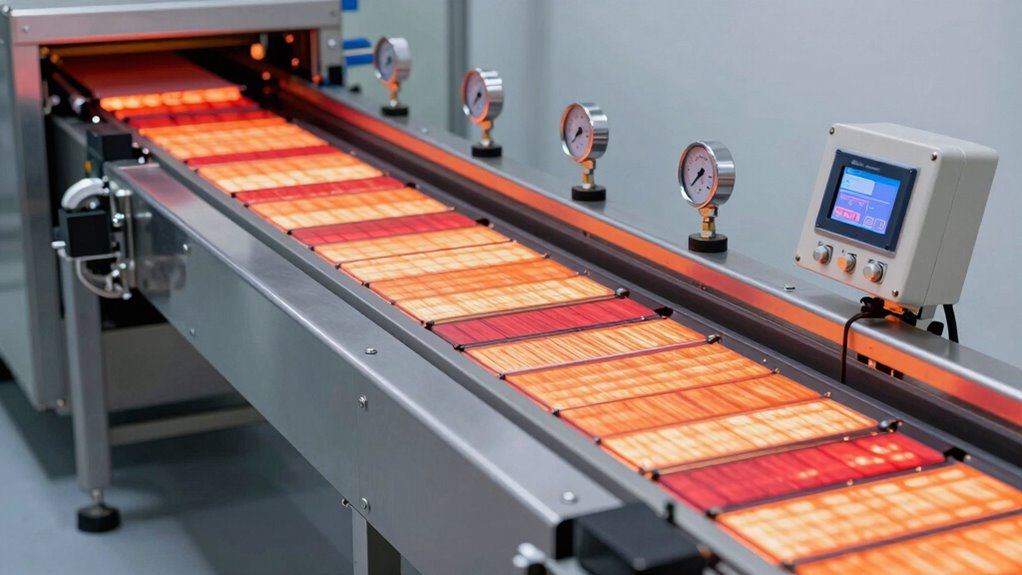
Temperature imbalances during conveyor dryer operation can disrupt the drying process and compromise product quality. To troubleshoot, start by checking sensor calibration; inaccurate sensors can give false readings, leading to improper temperature adjustments. Recalibrate sensors regularly to guarantee accurate measurements. Next, focus on airflow optimization—uneven airflow can cause hot and cold spots. Inspect fans, vents, and dampers, making sure they’re unobstructed and functioning properly. Adjust airflow patterns to promote even temperature distribution across all zones. Combining proper sensor calibration with airflow optimization helps maintain consistent temperatures. If imbalances persist, consider inspecting heating elements for faults or blockages. Regular maintenance and vigilant monitoring are key to preventing temperature inconsistencies and ensuring high-quality drying throughout production.
How Different Products Need Custom Temperature Zone Settings

Different products require tailored temperature zone settings to achieve ideal drying results. Your conveyor dryer must be calibrated correctly to guarantee product compatibility and prevent damage. Adjusting temperature zones allows you to optimize drying speed and quality for each material. For example, delicate fabrics need lower temperatures, while thicker materials tolerate higher heat. Keep these points in mind:
Tailor temperature zones for each product to ensure optimal drying and prevent damage.
- Proper temperature calibration ensures consistent results
- Different products have unique heat sensitivities
- Custom zones prevent over-drying or under-drying
Frequently Asked Questions
How Do Environmental Factors Affect Conveyor Dryer Temperature Settings?
Environmental factors, like humidity and air temperature, can impact your conveyor dryer’s temperature settings. When there’s environmental instability, you might need to adjust your dryer’s calibration procedures to maintain consistent heat. Keep an eye on these conditions and regularly calibrate your equipment, ensuring stable operation. This helps you avoid uneven drying or product quality issues, ultimately improving your process’s reliability and efficiency despite changing environmental influences.
Can Temperature Zones Be Adjusted Dynamically During Operation?
You can adjust temperature zones dynamically during operation with real-time control, allowing you to fine-tune your process as needed. By actively monitoring zone calibration, you respond to changes in material or environmental conditions, ensuring consistent results. This flexibility helps prevent issues like over- or under-drying, making your workflow more efficient. So, yes, with the right setup, you can adapt temperature zones on the fly, keeping everything running smoothly.
What Safety Precautions Are Necessary When Modifying Temperature Zones?
When modifying temperature zones, you should always wear appropriate safety gear like gloves and eye protection to prevent burns or injuries. Conduct a thorough risk assessment beforehand to identify potential hazards, such as hot surfaces or electrical issues. Make adjustments slowly and carefully, ensuring the equipment is turned off and cooled down when needed. Follow safety protocols to protect yourself and maintain safe operation during any zone modifications.
How Does Conveyor Speed Influence Temperature Zone Efficiency?
Think of conveyor speed as the heartbeat of your dryer; it sets the rhythm for zone efficiency. Faster speeds can lead to incomplete drying, like rushing a song before the notes settle. Slow speeds may cause overheating, akin to dragging out a melody. To achieve perfect harmony, focus on speed optimization and precise zone calibration, ensuring each part of the process syncs seamlessly for consistent, high-quality results.
Are There Industry Standards for Optimal Temperature Zone Ranges?
Yes, industry standards set ideal ranges for conveyor dryer temperature zones to ensure efficient drying and product quality. Generally, these standards recommend starting at specific temperature ranges for each zone, like 200-250°F for initial zones and up to 350-400°F for final zones. You should follow these guidelines, but also adjust based on your material, throughput, and specific drying needs to achieve the best results.
Conclusion
By understanding each temperature zone and its purpose, you’ll optimize your conveyor dryer’s performance like a seasoned alchemist of old. Remember to preheat properly, set precise temperatures, and avoid common pitfalls to guarantee consistent results. With attention to detail and a touch of patience, you’ll master your drying process, transforming your workflow from mere apprentice to a true virtuoso—proving that even in modern times, the art of perfect drying remains timeless.