For cleaner paper cuts with a craft knife, you should hold it at an angle between 30 and 45 degrees. This range helps you apply even pressure across the blade, resulting in precise and smooth cuts without tearing or jagged edges. Maintaining the right angle also reduces blade dulling and makes cutting easier. To master perfect cuts, pay attention to your technique and keep your blade sharp. Keep going, and you’ll discover even more tips to improve your craft.
Key Takeaways
- Maintain a blade angle between 30 to 45 degrees for optimal cutting precision.
- Use a sharp blade to reduce pressure and improve cut cleanliness.
- Guide the knife steadily along the line, applying gentle, controlled pressure.
- Avoid excessive force, which dulls the blade and causes jagged edges.
- Regularly sharpen or replace the blade to ensure clean, smooth cuts.
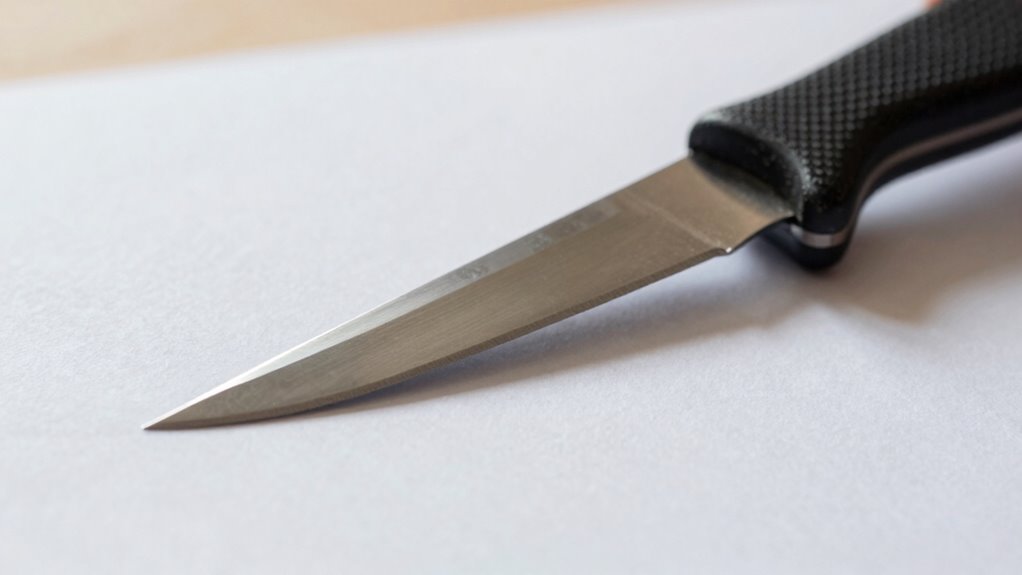
Mastering the craft knife angle is essential for achieving clean, precise cuts in your projects. When you hold the knife at the right angle, you give yourself the best chance to slice smoothly through paper without tearing or jagged edges. The key lies in understanding how blade sharpness and cutting pressure interact. A sharp blade reduces the amount of force needed, allowing for a cleaner cut, while the correct angle ensures that pressure is distributed evenly across the blade’s edge. If you press too hard or hold the knife at an improper angle, you risk losing control, which can lead to uneven, rough edges.
To start, you want to hold your craft knife at a shallow, consistent angle—roughly 30 to 45 degrees—that allows the blade to make contact with the paper just enough to cut through cleanly. A sharper blade makes this easier. When your blade is sharp, you don’t need to apply excessive pressure; instead, you can let the blade do the work. Applying too much pressure not only dulls the blade faster but also increases the chance of slipping and creating rough cuts. Instead, focus on maintaining the correct angle and gently guiding the knife along your cutting line. Additionally, blade maintenance is crucial for ensuring consistent, clean cuts and prolonging the life of your craft knife. Your cutting pressure should be steady and controlled. Think of your hand as a guiding force rather than a forceful hammer. Use light, consistent pressure, and let the sharpness of your blade do the heavy lifting. This approach minimizes tearing or ripping the paper, especially around intricate or curved lines. If you find your cuts aren’t as clean as you’d like, it might be time to sharpen your blade or replace it altogether. A dull blade requires more force, which compromises your control and the quality of your cut. Properly blade sharpening can significantly improve your cutting results and extend your tools’ lifespan. Maintaining the correct angle and ensuring your blade stays sharp are both key factors in achieving the best results.

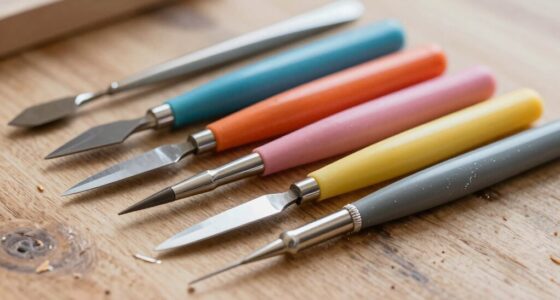
Moicstiy White Craft Cutting Tools Pen
- Product Length: 6.5 inches (165mm) long
- Blade Angles: Includes 15°, 30°, 45° blades
- Portability: Compact and easy to store
As an affiliate, we earn on qualifying purchases.
As an affiliate, we earn on qualifying purchases.
Frequently Asked Questions
How Does Blade Sharpness Affect Cut Quality?
Blade sharpness directly impacts your cut quality, as a sharper blade guarantees cleaner, more precise cuts. When the blade maintains good durability, it stays sharp longer, reducing tearing or uneven edges. Dull blades require more force, compromising cutting precision and increasing the risk of mistakes. To achieve the best results, regularly sharpen or replace your craft knife blade, guaranteeing it remains sharp, durable, and capable of delivering smooth, accurate cuts every time.
What Safety Precautions Should I Take When Using a Craft Knife?
Practice precautions proactively by prioritizing proper safety gear and workspace organization. Always wear cut-resistant gloves and safety glasses to protect your hands and eyes. Keep your workspace clean, well-lit, and clutter-free, ensuring a safe, secure cutting surface. Hold the craft knife firmly, cut away from your body, and always use a sharp blade to prevent slips. Staying cautious and organized minimizes accidents, making your crafting safer and more enjoyable.
Can Different Paper Types Influence the Optimal Cutting Angle?
Yes, different paper types influence the ideal cutting angle. For smooth, glossy paper, a steeper angle offers better cutting precision, reducing tearing. Meanwhile, textured or thicker paper requires a shallower angle to prevent snagging and achieve cleaner cuts. You should adjust your craft knife angle based on paper texture to enhance cutting precision and get smooth, professional results. Experimenting with angles helps you find the best for each paper type.
How Often Should I Replace or Sharpen the Craft Knife Blade?
Imagine slicing through paper like a hot knife through butter—that’s what good blade maintenance helps you achieve. You should replace or sharpen your craft knife blade after about five to ten uses or when you notice a decline in cutting precision. Regularly check for dullness or nicks, as these can cause jagged edges. Keeping your blade sharp guarantees smooth, clean cuts every time, making your craft projects look professional and polished.
Does Cutting Speed Impact the Cleanliness of the Cut?
Yes, cutting speed impacts the cleanliness of your cut. Using a steady, controlled pace while applying consistent cutting pressure helps you maintain precision technique, leading to cleaner cuts. Rushing can cause jagged edges or uneven results because you might push too hard or too fast. Slowing down allows you to guide the craft knife smoothly along your line, ensuring a neater, more precise cut every time.
Conclusion
Mastering the perfect craft knife angle is like finding the key to a secret garden—you uncover precision and beauty with just the right touch. I once watched a friend carefully adjust her blade, and her paper cut like silk, revealing intricate details she never thought possible. Remember, the right angle isn’t just about cutting; it’s about creating art that feels as smooth and effortless as a gentle breeze. Keep experimenting, and your craft will blossom.