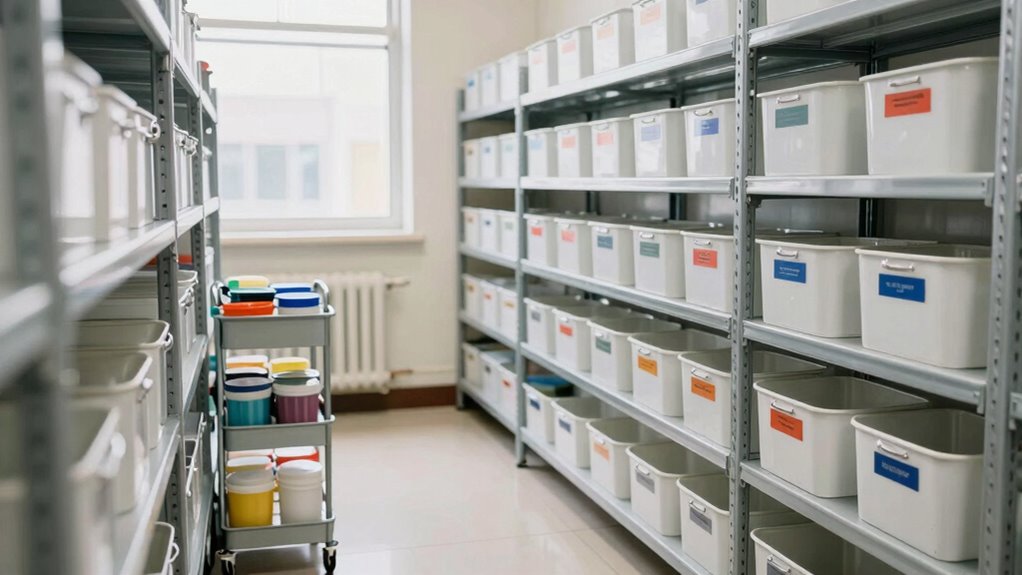

To create a supply layout that supports speed and reduces stress, focus on designing a seamless workflow that minimizes travel time and unnecessary movements. Arrange inventory thoughtfully to keep high-demand items within reach and group similar products for quick access. Incorporate flexible, adaptive spaces that can evolve with your needs, and analyze workflows regularly to spot and fix inefficiencies. Applying these strategies helps streamline operations, boost productivity, and create calmer, more efficient work environments—if you keep exploring, you’ll discover even more expert tips.
Key Takeaways
- Design a layout that minimizes travel distance and streamlines workflow to reduce delays and stress.
- Organize inventory based on demand and similarity for quick access and efficient picking.
- Incorporate flexible, adaptive work areas that can evolve with changing operational needs.
- Use workflow analysis to identify inefficiencies and implement innovative layout strategies for continuous improvement.
- Prioritize sustainable space utilization that promotes smooth operations and mitigates bottlenecks.

Have you ever wondered how optimizing your supply layout can dramatically boost speed and efficiency? The key lies in strategic planning that minimizes travel time, reduces unnecessary movement, and creates a seamless workflow. One of the most effective ways to achieve this is through inventory optimization. When your inventory is arranged thoughtfully, you eliminate wasted steps and avoid clutter that slows down operations. Keep high-demand items within easy reach and group similar products together, so your team spends less time searching or walking across the workspace. Proper inventory placement not only accelerates picking and packing but also helps in maintaining a smooth flow of work, reducing delays and bottlenecks. Incorporating biodiversity principles into your layout design—such as creating flexible and adaptable spaces—can further enhance resilience and efficiency in your operations. Additionally, considering innovative layout strategies can provide fresh insights into streamlining workflows and adapting to changing demands. Incorporating workflow analysis can also uncover hidden inefficiencies and opportunities for further optimization. Moreover, applying adaptive design techniques allows your layout to evolve with your needs, ensuring sustained speed and productivity. Recognizing the importance of inventory arrangement in layout design can lead to significant improvements in overall operational speed.

Warehouse Management and Inventory Control System
As an affiliate, we earn on qualifying purchases.
As an affiliate, we earn on qualifying purchases.
Frequently Asked Questions
How Often Should Supply Layouts Be Reviewed and Updated?
You should review your supply layout regularly—at least quarterly—to guarantee ideal inventory management and space utilization. Frequent reviews help you identify outdated arrangements, address bottlenecks, and adapt to changing demand. Keep an eye on inventory turnover and workflow efficiency, making updates as needed. By staying proactive, you’ll maintain a streamlined supply system that minimizes stress and maximizes speed, keeping your operations running smoothly and efficiently.
What Tools Are Best for Designing a Supply Layout?
Did you know that 85% of successful supply chain managers use CAD software for layout design? For designing an efficient supply layout, tools like AutoCAD or SketchUp excel in helping with inventory optimization and space utilization. These programs enable you to visualize, plan, and adjust your layout easily, ensuring ideal flow. They’re user-friendly and adaptable, making it easier to create a layout that supports speed and reduces stress in your operations.
How Can Technology Improve Supply Layout Efficiency?
Technology improves your supply layout efficiency through automation integration, reducing manual tasks and speeding up processes. It also enhances space optimization by providing real-time data and analytics, helping you arrange your layout for maximum flow and minimal congestion. By embracing these tech tools, you streamline operations, minimize stress, and boost overall productivity, making your supply chain more agile and responsive to changing demands.
What Common Mistakes Should Be Avoided in Layout Design?
You should avoid poor storage optimization, which can cause clutter and delays, and neglecting safety protocols, risking accidents and disruptions. Don’t place high-traffic areas near storage zones, as it creates congestion. Guarantee your layout promotes smooth movement, with clear pathways and logical product placement. Regularly review and adjust your design to prevent bottlenecks, maintaining a balance between efficiency and safety to support a stress-free, speedy supply chain.
How Do Supply Layouts Vary Across Different Industries?
Think of supply layouts like a well-orchestrated symphony—different industries play different tunes. In retail, you focus on quick inventory management, with open aisles for rapid restocking. Manufacturing emphasizes space optimization to streamline workflows, while warehouses prioritize high-density storage. Your goal is to adapt these principles to your industry’s rhythm, ensuring your supply layout harmonizes efficiency with ease, reducing stress and boosting speed across every operation.
Conclusion
By designing your supply layout for speed, you’re fundamentally building a well-oiled machine. Think of a relay race, where each runner must pass the baton smoothly to keep the momentum. When you streamline pathways and reduce bottlenecks, your team can move faster and stress less. Remember, a well-planned layout isn’t just about efficiency; it’s about creating a rhythm that keeps your operations running seamlessly, just like that relay team crossing the finish line together.