
If you’re working in a small space, you need a heat press strategy tailored to your limited environment. Compact, affordable models with simple controls make setup and maintenance easier, helping you keep clutter at bay. Prioritizing regular cleaning and calibration guarantees consistent results and prolongs your equipment’s lifespan. With a smart approach, you can maximize your space’s efficiency and produce professional-quality designs. Keep going to discover more tips for optimizing your small-space heat press setup.

Get business pricing on tools and workshop supplies
- Business-only prices and quantity discounts
- Tax-exempt purchasing
- Multiple users, one account, clear invoices
Key Takeaways
- Limited space requires compact, versatile heat presses with easy operation and maintenance routines.
- Small setups benefit from simplified equipment to reduce clutter and streamline workflow.
- Regular, targeted maintenance prevents breakdowns and ensures consistent, professional results in tight areas.
- Cost-effective, adjustable models maximize functionality without sacrificing quality or taking up extra space.
- Proper calibration and cleaning routines extend equipment lifespan, essential for small-scale, budget-conscious makers.

Small-space makers often face unique challenges, like fitting equipment into tight areas and managing workflow efficiently. One key aspect is understanding the importance of heat press maintenance. Regularly cleaning and inspecting your heat press ensures it operates smoothly, prolongs its lifespan, and maintains consistent results. Neglecting maintenance can lead to uneven heat distribution, which affects your design quality. Since space and resources are limited, prioritizing simple, effective maintenance routines saves you time and money, preventing costly repairs down the line. Additionally, focusing on heat press calibration is crucial for ensuring your machine produces accurate and professional results every time. Proper calibration can also help prevent common issues like temperature fluctuations, which compromise the quality of your designs. Incorporating routine maintenance checks into your workflow is essential for catching potential problems early and maintaining optimal performance.
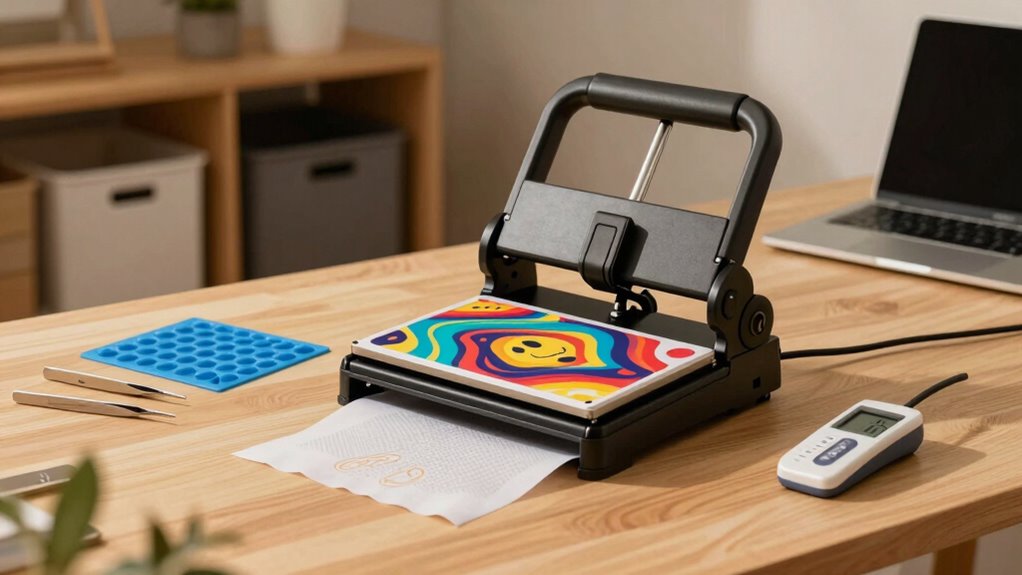
When it comes to choosing your heat press, budget-friendly options are essential. You don’t need the most expensive model to produce professional-looking results; instead, look for versatile, reliable presses that fit your space and budget. Compact tabletop presses are ideal for small areas—they’re easy to store, portable, and often more affordable than industrial machines. Many budget-friendly options still offer adjustable temperature and time controls, giving you the flexibility to work with various materials and designs. This adaptability is indispensable for small-scale production, where versatility can help you maximize your limited space.
In a small workspace, every inch counts, so you want a heat press that’s easy to operate and maintain. Simpler machines often require less setup and are easier to clean, which is a fundamental part of heat press maintenance. A clutter-free, well-maintained machine not only produces better results but also reduces the risk of breakdowns, saving you money and stress. Additionally, choosing a machine with easy-to-access components can streamline your maintenance routine. When selecting a heat press, consider models that come with straightforward features—this minimizes learning curves and allows you to focus more on your craft rather than troubleshooting equipment.
Finally, developing a routine for heat press maintenance tailored to your space and budget keeps your equipment in top condition. Regularly wiping down surfaces, inspecting for wear, and calibrating temperature settings ensure consistent high-quality output. Incorporating proper cleaning techniques into your routine can also prevent residue buildup that might interfere with heat transfer. Building these habits into your workflow helps extend your equipment’s lifespan and ensures reliable results. Combining this with budget-friendly options that suit small spaces means you can build an efficient, cost-effective setup that produces professional results without sacrificing your limited room. By implementing these strategies, you’ll be well on your way to creating high-quality heat-pressed designs, even in a compact environment.
As an affiliate, we earn on qualifying purchases.
Frequently Asked Questions
Can I Use a Household Iron Instead of a Heat Press?
You can use a household iron instead of a heat press, but it’s not always ideal. A household iron offers less consistent pressure and temperature control, which can affect fabric compatibility and the quality of your design. For small projects or occasional use, it might work, but for better results and durability, a dedicated heat press provides even heat, adjustable pressure, and better fabric compatibility, making it a smarter choice.
What’s the Best Heat Press Temperature for Delicate Fabrics?
You have to tread carefully when working with delicate fabrics. The best heat press temperature varies depending on fabric sensitivity, but generally, keep it between 250°F and 300°F. Precise temperature control is key to avoid damage. Always start low, and increase gradually if needed. Think of it as walking a tightrope—balance is everything to safeguard your delicate materials and guarantee professional results.
How Do I Prevent Heat Press Accidents in Small Spaces?
You prevent heat press accidents in small spaces by organizing your workspace efficiently, keeping everything within reach but tidy. Use safety gear like heat-resistant gloves and aprons to protect yourself from burns. Always turn off and unplug the press when not in use, and stay attentive during operation. Clear the area of clutter, and make certain proper ventilation, so you minimize risks and work safely in your limited space.
Are Portable Heat Presses Suitable for Large Projects?
Think of portable heat presses like a Swiss Army knife—great for small tasks, but not ideal for large projects. They struggle with consistent pressure and heat distribution, making them less suitable for large project planning. For bigger jobs, you need a dedicated heat press with the right heat press accessories to handle the workload efficiently. Otherwise, you risk uneven results and wasted time, which isn’t worth it.
How Often Should I Calibrate My Small Heat Press?
You should calibrate your small heat press at least once a month to guarantee consistent results. Regular heat press maintenance, including calibration, helps maintain accurate temperature and pressure settings. If you notice uneven transfers or inconsistent colors, it’s a sign you need to stick to your calibration schedule. Keeping your press properly calibrated ensures quality projects and prolongs the equipment’s lifespan, making your small-space setup more efficient.
Conclusion
When space is limited, adapting your heat press approach isn’t just smart—it’s essential. You’ve got to be strategic, efficient, and creative to succeed in a small workspace. Are you ready to rethink your setup and maximize every inch? With the right mindset and tools, you can produce high-quality designs without sacrificing your space or your standards. After all, isn’t it worth making your small space work just as hard as you do?
Fall yard work Picks
leaf blowers
As an affiliate, we earn on qualifying purchases.