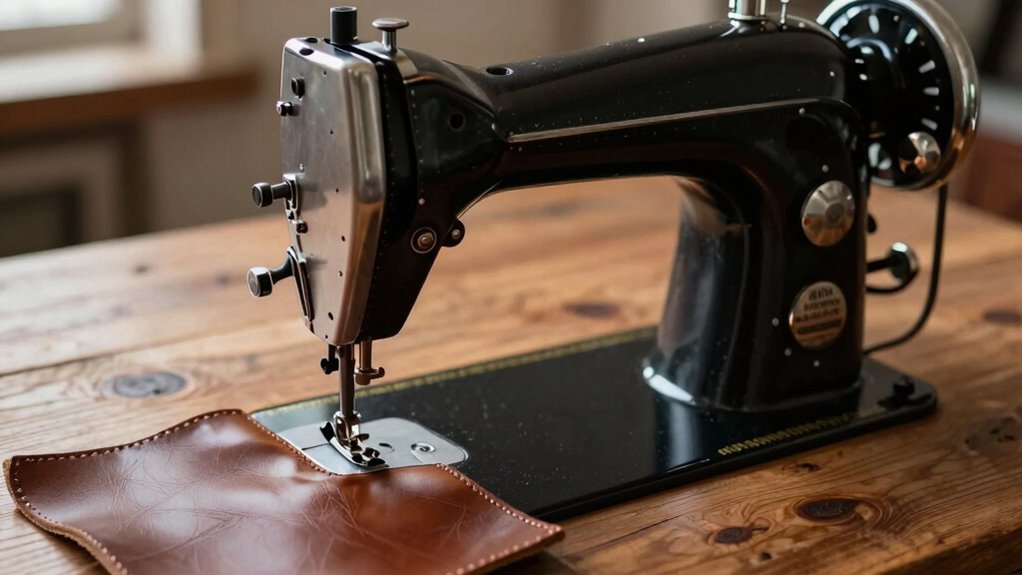

Before buying a leather sewing machine, make sure it’s sturdy and built to handle thick, dense leather with a powerful motor. Check that it has key accessories like heavy-duty needles, a Teflon or roller foot, and adjustable features for stitch length and tension. Look for machines with good build quality, reliable performance, and easy access to spare parts and support. A well-chosen machine will last longer and make your projects smoother—keep exploring to discover more essential tips.
Key Takeaways
- Ensure the machine has a powerful motor and durable build suitable for thick, dense leather projects.
- Check compatibility with necessary accessories like heavy-duty needles, presser feet, and strong thread types.
- Prioritize adjustable features such as stitch length, tension, and walking feet for handling multiple leather layers.
- Verify the manufacturer’s reputation for support, availability of replacement parts, and reliable customer service.
- Regular maintenance capabilities like cleaning and oiling are essential for long-term machine performance and durability.

If you’re looking to sew leather effectively, choosing the right machine is essential. Leather is a tough material that demands a sturdy, reliable sewing machine capable of handling thick, dense fabrics without jamming or skipping stitches. When you’re shopping, keep in mind that a machine’s durability and power are critical. A good leather sewing machine should have a strong motor and a robust build to withstand frequent use. Beyond the initial purchase, proper machine maintenance becomes imperative to keep your machine running smoothly. Regularly cleaning out lint and dust, oiling moving parts, and checking for worn or loose components will prolong the lifespan of your machine and guarantee consistent performance.
Choosing a sturdy, powerful machine and maintaining it ensures smooth, professional leather sewing results.
Another key factor is the availability of sewing machine accessories. Leather sewing often requires specific presser feet, needles, and thread types. For example, a Teflon or roller foot can help prevent the leather from sticking or shifting as you sew, providing cleaner, more precise stitches. Heavy-duty needles are essential because standard needles tend to break or bend under the strain of thick leather. Choosing the right needle size and type can improve stitch quality and reduce frustration. Strong, waxed or bonded thread is also recommended for durability, especially if you’re working on projects like upholstery or belts. Having these accessories on hand allows you to adapt your machine for different leather types and project requirements.
When evaluating a machine, consider whether it offers adjustable stitch length and tension controls. These features give you more control over the sewing process, which is especially useful when working with varying thicknesses of leather. You should also look into the machine’s capabilities for handling multiple layers, as thicker projects demand a machine with enough power and stability. Some models come with specialized features like walking feet, which help feed multiple layers evenly, preventing slipping and puckering. Additionally, choosing a machine with sturdy construction can significantly improve its ability to handle heavy-duty sewing tasks over time. Properly assessing a machine’s overall build quality ensures long-term reliability and performance. Investing in a machine with reliable motor performance can further enhance your sewing experience, especially for demanding projects. Furthermore, selecting a machine with adjustable features allows tailoring your sewing experience to different leather projects and thicknesses.
Lastly, don’t forget to check the manufacturer’s reputation for customer support and availability of replacement parts. Leather sewing can be demanding, and having access to quality sewing machine accessories, along with support for machine maintenance, can make your crafting experience much smoother. Investing in a machine that suits your specific needs and understanding how to care for it will help you produce professional-looking results while avoiding unnecessary repairs or downtime. Remember, a well-maintained machine and the right accessories are your best allies in successful leather sewing projects.
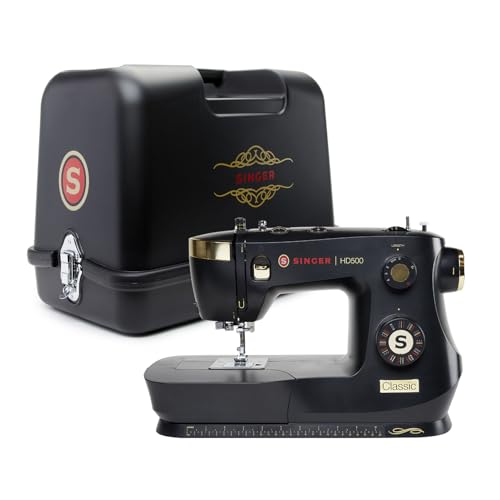
SINGER® Super Bundle, Heavy Duty 500 Sewing Machine with Carrying Case
- Bundle Includes Sewing Machine and Case: Includes sewing machine and matching hard case
- Vintage-Inspired Design: Black with gold accents for style and durability
- Heavy Duty Metal Frame: Sturdy construction for stability and longevity
As an affiliate, we earn on qualifying purchases.
As an affiliate, we earn on qualifying purchases.
Frequently Asked Questions
Can a Standard Sewing Machine Handle Heavy Leather?
A standard sewing machine typically can’t handle heavy leather, especially if it’s thick. You’ll find it struggles with leather thickness over 3mm, causing skipped stitches or jams. Plus, the sewing speed may be too fast or inconsistent for such tough material. For best results, opt for a dedicated leather sewing machine that offers adjustable sewing speed and can handle thicker leather comfortably, ensuring smooth, durable stitches every time.
What Is the Best Type of Needle for Thick Leather?
You should use a tapered, heavy-duty needle like a 90/14 or 100/16 for thick leather, as 75% of leather artisans prefer these for durability. A good needle improves stitch tension and prevents skipped stitches during leather tooling projects. Choosing the right needle guarantees clean, professional seams and reduces damage to your machine, especially when working with dense, heavy leather. Proper needle selection makes all the difference in your sewing results.
How Do I Maintain My Leather Sewing Machine?
To maintain your leather sewing machine, regularly perform leather care by cleaning dust and debris after each use. Keep the machine well-lubricated with proper machine lubrication to guarantee smooth operation and prevent rust. Check and replace needles as needed, especially after sewing thick leather, to avoid damage. Store your machine in a dry, dust-free environment, and periodically inspect moving parts for wear to keep your sewing machine running efficiently.
Is a Walking Foot Necessary for Leather Sewing?
Imagine sewing a thick leather belt—you’ll notice slipping or uneven stitches without a walking foot. A walking foot is crucial for leather bonding and maintaining even stitching techniques, especially with dense materials. It helps feed the leather evenly through the machine, preventing puckering. Without it, your stitches may be inconsistent, making a walking foot a necessary accessory for smooth, professional results in leather projects.
Can I Sew Multiple Layers of Leather at Once?
Yes, you can sew multiple layers of leather at once, but it depends on the leather thickness and your machine’s power. Thicker leather may require stronger stitching techniques and a machine with higher torque. Use a heavy-duty needle and adjust stitch length for durability. Practice on scrap pieces first to guarantee your machine handles multiple layers smoothly, preventing skipped stitches or jams.
Conclusion
Before buying a leather sewing machine, remember to weigh your project needs, your budget, and the machine’s durability. Focus on the features that matter most—power, stitch options, and ease of use. Do your research, test the machine if possible, and read reviews. Invest in quality, invest in reliability, and invest in confidence. Because the right machine isn’t just about sewing leather; it’s about sewing your passion, your projects, and your dreams—sew wisely, sew well, sew confidently.