
To fix laser fumes in your home safely, guarantee proper ventilation by using portable exhaust fans or HEPA-filtered air purifiers placed close to your laser. Recognize signs of poor airflow like lingering fumes, headaches, or irritation, and upgrade equipment if needed. Keep your workspace organized and free of obstructions to improve airflow. By understanding these steps, you can create a healthier environment—discover more tips to enhance your setup and protect your health.
Key Takeaways
- Identify signs of poor ventilation like lingering fumes, odors, or respiratory irritation to determine if your workspace needs better airflow.
- Use portable exhaust fans or HEPA air purifiers at the source to safely remove laser fumes without guesswork.
- Position exhaust outlets close to the laser device and ensure unobstructed airflow for effective fume extraction.
- Regularly maintain and replace filters in your ventilation devices to ensure optimal safety and air quality.
- Upgrade to professional ventilation systems if fumes persist, health symptoms occur, or safety standards are not met.
Why Laser Fumes Are a Health Concern in Your Home Workshop

Laser fumes can pose serious health risks, especially if you work in a home workshop without proper ventilation. These fumes contain chemical hazards that can irritate your respiratory system or cause long-term health issues. Poor air quality from laser emissions means you might unknowingly breathe in toxic particles and volatile compounds. Without adequate ventilation, fumes can accumulate quickly, increasing your exposure. Even brief inhalation of laser fumes can lead to headaches, dizziness, or more severe health problems over time. Protect yourself by understanding that the chemical hazards in laser fumes are not just unpleasant—they’re potentially dangerous. Ensuring good air quality is essential to maintain a safe workspace and prevent health issues caused by inhaling harmful fumes. Additionally, air quality management plays a crucial role in reducing the risks associated with laser fumes in your home workshop, especially since proper ventilation systems can significantly decrease the buildup of toxic fumes. Maintaining proper air circulation is vital for dispersing fumes and improving overall indoor air quality. Implementing effective air filtration solutions can further enhance safety by capturing fine particles before they are inhaled.
How to Recognize Poor Ventilation and Fume Build-Up

Recognizing signs of poor ventilation and fume build-up is vital for maintaining a safe workshop environment. Poor air quality can cause headaches, dizziness, or respiratory irritation, signaling that ventilation signs are present. Notice if the air feels stuffy or stale, or if fumes linger even after stopping work. You might see a layer of haze or a film on surfaces, indicating fumes are accumulating. Unpleasant odors that don’t dissipate also point to inadequate airflow. If you find yourself frequently coughing or experiencing eye irritation while working, it’s a clear sign your ventilation isn’t sufficient. Regularly assess your workspace’s air quality and stay alert for these ventilation signs to guarantee your environment remains safe and fumes do not reach dangerous levels. Incorporating smart ventilation systems can help monitor air quality automatically and maintain optimal airflow. Additionally, understanding your home’s ventilation efficiency can help identify areas needing improvement, especially in spaces where air exchange rates are low. Ensuring proper ventilation maintenance is key to preventing harmful fume buildup over time. Monitoring indoor air quality levels can provide early warnings of potential issues before they become hazardous.
Factors to Consider When Choosing a Laser Fume Ventilation System

When selecting a laser fume ventilation system, you need to take into account your airflow capacity to ensure it effectively captures fumes. It’s also important to check if the filters are compatible with your specific fumes and how easy they are to maintain. Additionally, pay attention to the noise level, so your workspace stays comfortable and safe. To ensure your system is reliable and safe, consider consulting a comprehensive guide to choosing standby backup power, which emphasizes the importance of proper safety features and regular maintenance. Incorporating practical gear that is designed for ease of use and durability can further enhance your setup and ensure consistent performance.
Airflow Capacity Needs
Choosing the right airflow capacity for your fume ventilation system depends on several critical factors. First, you need to assess the volume of fumes generated during your laser activities. Second, consider the size and layout of your workspace to guarantee proper airflow distribution. Third, review relevant ventilation standards to meet safety regulations. Fourth, factor in the frequency and duration of laser use, which influence how much airflow you need. Additionally, understanding air quality requirements is essential to ensure that your ventilation system effectively maintains a safe environment. Proper airflow capacity also depends on understanding ventilation standards, which provide guidelines for safe operation. Knowing the biography of influential figures can help in designing systems that align with industry best practices. By evaluating these points, you’ll determine the appropriate airflow capacity to effectively remove fumes and maintain a safe environment. Ensuring your system matches these needs helps comply with ventilation standards and keeps your home safe. Proper airflow capacity is key to effective, reliable laser fume extraction. Understanding airflow requirements is essential for creating a safe and efficient workspace. Additionally, considering air exchange rates can optimize the removal of contaminants and improve overall air quality.
Filter Compatibility Options
Selecting the right filters for your laser fume ventilation system is essential to guarantee effective pollutant removal and maintain air quality. You need to consider the filter media type, ensuring it’s designed to capture specific fumes generated during laser work. Compatibility testing is critical; not all filters work seamlessly with every system. Check manufacturer specifications to confirm that the filter media is compatible with your ventilation unit. Some filters may require additional adapters or modifications for proper fit and performance. Proper compatibility ensures optimal filtration efficiency, prevents system damage, and extends filter lifespan. Before purchasing, review product details and consult with suppliers if needed. This careful approach helps you choose filters that effectively remove hazardous fumes while fitting your setup perfectly. Additionally, understanding ventilation considerations can help optimize airflow and filtration effectiveness in your workspace. Incorporating local automation features can further enhance the safety and efficiency of your ventilation system. Paying attention to filter replacement schedules is also vital to ensure ongoing performance and safety.
Noise Level Considerations
Noise level is a crucial factor to contemplate because it directly impacts your workspace comfort and communication. A loud ventilation system can cause distractions and reduce productivity. When considering noise impact, think about:
- The system’s decibel rating to ensure it’s quiet enough for your environment.
- The type of fan, as some designs produce less noise than others.
- The placement of the vent to minimize sound transmission.
- The possibility of installing sound dampening features or enclosures.
- Sound dampening options can further reduce noise levels and improve overall comfort. Additionally, selecting a system with adjustable fan speed allows you to tailor noise output to your specific needs. Choosing a system with lower noise impact helps maintain a calm, focused workspace. Remember, even a powerful ventilation system isn’t helpful if it’s too noisy to use comfortably. Prioritize noise considerations to create a safe, efficient, and peaceful environment. Incorporating noise reduction techniques can significantly enhance the overall workspace experience and ensure a more pleasant atmosphere.
DIY Ways to Improve Laser Fume Ventilation at Home

You can boost your home laser fume ventilation by improving airflow with simple adjustments. Using safe, DIY-friendly ventilation devices helps remove fumes effectively without complex setups. Small changes can make a big difference in keeping your workspace safer and cleaner. Additionally, understanding airflow dynamics can help you create a healthier environment for your creative projects. Incorporating knowledge of auditory processing can also assist in creating a more comfortable and focused workspace by minimizing disruptive noises. Ensuring proper ventilation system placement can further enhance fume extraction efficiency and overall air quality. Being aware of air quality measurements can guide you in assessing the effectiveness of your ventilation improvements.
Improve Airflow Effectively
To improve airflow for laser fume ventilation at home, start by ensuring that your workspace is well-organized and free of obstructions. Proper airflow patterns are essential for maximizing ventilation effectiveness. Here’s how to do it:
- Position the exhaust outlet near the laser source to capture fumes directly at the source.
- Use fans to direct airflow toward the exhaust, creating consistent movement.
- Keep doors and windows open to promote cross-ventilation, enhancing airflow patterns.
- Avoid clutter that can disrupt air circulation, ensuring smooth, unobstructed airflow.
Use Safe Ventilation Devices
Utilizing safe ventilation devices is a practical way to enhance your laser fume management at home. These devices improve air quality and boost air circulation, reducing harmful fumes effectively. Portable exhaust fans or HEPA-filtered air purifiers are excellent options. Guarantee they are properly positioned near your laser setup to capture fumes directly at the source. Regular maintenance, like cleaning filters, keeps these devices working efficiently. To help visualize, here’s a quick comparison:
| Device Type | Benefits |
|---|---|
| Exhaust Fan | Direct fumes extraction |
| Air Purifier | Circulates and cleans air |
| DIY Hood | Custom fume capture |
| HEPA Filter | Removes tiny particles |
| Ventilation Fan | Improves overall air flow |
Choosing the right device improves air quality and assure safer laser operation at home.
When to Invest in Professional Laser Fume Extraction Equipment
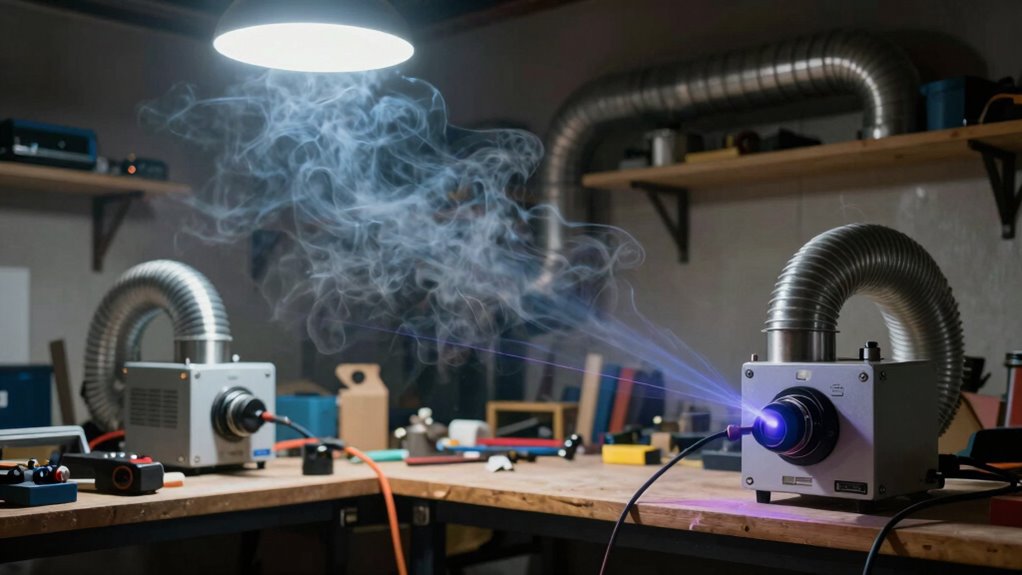
Investing in professional laser fume extraction equipment becomes essential when your workspace regularly produces hazardous fumes or when your current ventilation system no longer effectively safeguards health. If you notice persistent fumes despite basic measures, it’s time to upgrade. Consider these signs:
- Frequent alarms from fume detection devices indicating unsafe levels
- Visible fumes lingering after laser operation
- Discomfort or health issues among yourself or others
- Inability of existing ventilation to maintain laser safety standards
Professional systems ensure proper air filtration and fume removal, reducing health risks. They provide reliable, compliant solutions tailored to high-frequency use. When these indicators appear, investing in advanced laser fume extraction equipment is your safest bet to protect health and maintain a safe workspace.
How to Maintain and Filter Your Laser Ventilation System

Regular maintenance and effective filtering are essential to keep your laser ventilation system operating at peak performance. Proper ventilation maintenance ensures that your system continues to improve air quality by removing harmful fumes efficiently. Start by regularly inspecting filters and replacing them according to the manufacturer’s recommendations. Use high-quality filters designed specifically for laser fumes to trap particles effectively. Keep the ventilation pathways clean and free of dust or debris that can clog filters or reduce airflow. Check for leaks or damage in ducts and seals, fixing issues promptly. Maintaining a routine schedule not only prolongs your system’s lifespan but also guarantees it functions at maximum capacity. By staying vigilant with ventilation maintenance, you ensure cleaner air in your workspace and a safer environment overall.
Tips for Creating a Safer Home Laser Workspace

Creating a safer home laser workspace starts with choosing a dedicated area that’s well-ventilated and free from clutter. Proper ventilation design is essential for laser safety and minimizing harmful fumes. To enhance your setup, consider these tips:
Designate a well-ventilated, clutter-free space for safe laser workspace operation.
- Position your laser workstation near an exhaust vent or window to facilitate airflow.
- Use a high-quality fume extractor with appropriate filters to capture laser fumes effectively.
- Keep the workspace organized, removing unnecessary clutter that could block airflow or cause accidents.
- Regularly inspect and maintain your ventilation system to guarantee it operates efficiently.
Common Mistakes to Avoid When Fixing Laser Fume Ventilation

When fixing your laser fume ventilation system, it’s crucial to avoid common mistakes that can compromise safety and efficiency. One mistake is overlooking filter compatibility, which can lead to ineffective filtration or damage to the system. Always verify that filters match your ventilation unit’s specifications. Another error is neglecting airflow capacity; if your system isn’t rated for your workspace’s size or the volume of fumes produced, it won’t remove fumes effectively. Ensure the ventilation system is powerful enough to handle your laser work area. Additionally, avoid installing vents or filters without proper sealing, as leaks can release fumes into your home. Taking these precautions ensures your ventilation system functions safely and efficiently, protecting your health and maintaining a clean workspace.
Frequently Asked Questions
Can Laser Fumes Cause Long-Term Health Issues?
Yes, laser fumes can cause long-term health issues if you’re exposed over time. The health risks include respiratory problems, skin irritation, and potential damage to your nervous system. Continuous inhalation of these fumes may lead to more serious long-term effects, including chronic respiratory conditions or other health complications. To protect yourself, verify proper ventilation and avoid prolonged exposure, minimizing the chance of lasting health impacts.
Are There Specific Air Purifiers Recommended for Laser Fumes?
You should look for air purifiers with HEPA filters, as they effectively capture laser fumes and fine particles. According to recent air purifier reviews, HEPA filters are among the best filter types for this purpose. Did you know that 99.97% of particles as small as 0.3 microns can be trapped? Choosing a purifier with a high-quality HEPA filter guarantees safer air while working with lasers, reducing health risks considerably.
How Often Should I Inspect My Ventilation System?
You should inspect your ventilation system at least every six months to guarantee proper ventilation maintenance and ideal performance. Regular inspections help you identify potential issues early, like blockages or worn components, which can affect air quality. If you notice increased fumes or decreased airflow, schedule an inspection sooner. Consistent inspection frequency keeps your home safe from laser fumes and maintains a healthy indoor environment.
Is It Safe to Use DIY Methods for Laser Fume Extraction?
Using DIY ventilation for laser fumes isn’t entirely safe, especially if you’re unfamiliar with proper airflow and filtration standards. While DIY methods might seem cost-effective, they often lack the efficiency and safety features of professional installation. For reliable protection, it’s best to invest in professional ventilation systems designed specifically for laser fumes. This guarantees proper filtration, compliance with safety standards, and peace of mind knowing your home environment stays safe.
What Signs Indicate My Ventilation System Needs Replacement?
Think of your ventilation system as a loyal guardian—if airflow assessment reveals weak or inconsistent flow, it’s a sign it’s lost its strength. Notice persistent odors, excessive dust, or increased noise, and your filters may need maintenance or replacement. When these signs appear, it’s time to replace your system to guarantee safe, effective removal of laser fumes, keeping your home healthy and well-ventilated.
Conclusion
Taking control of your laser fumes is like steering a ship through calm waters—you want smooth sailing and clear skies. By understanding the risks, choosing the right ventilation, and maintaining your system, you create a safer home workshop. Don’t let fumes become storm clouds on your workspace horizon. With the right steps, you’ll keep your environment fresh and safe, turning your laser setup into a beacon of safety rather than a cloud of concern.