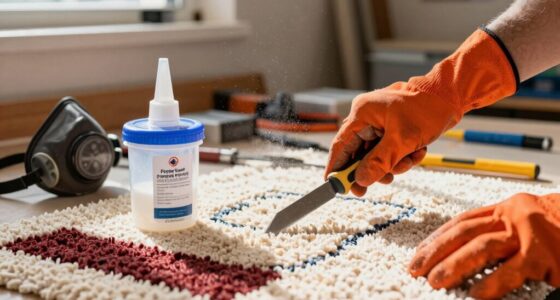
To vent paint fumes safely in a small spray booth, ensure you install a properly designed ventilation system with the right size exhaust fan, effective ducting, and strategic vent placement. Position exhaust vents at the highest points opposite the spray area and use filters to capture fumes. Regularly maintain and inspect your system to keep airflow at its best, prevent hazards, and stay compliant with safety standards. If you keep exploring, you’ll discover essential tips for a safe and efficient setup.
Key Takeaways
- Position exhaust vents at high points opposite the spray area to effectively remove fumes and ensure proper airflow.
- Use appropriately rated, high-capacity exhaust fans and minimal-bend ducting to optimize fume extraction in limited space.
- Install filters and duct insulation to capture fumes, prevent leaks, and improve overall system efficiency and safety.
- Maintain unobstructed vents and regularly inspect and clean filters to ensure continuous, safe ventilation.
- Follow local safety standards and keep detailed documentation to ensure compliance and effective hazard management.
Why Proper Ventilation Is Critical in Small Spray Booths
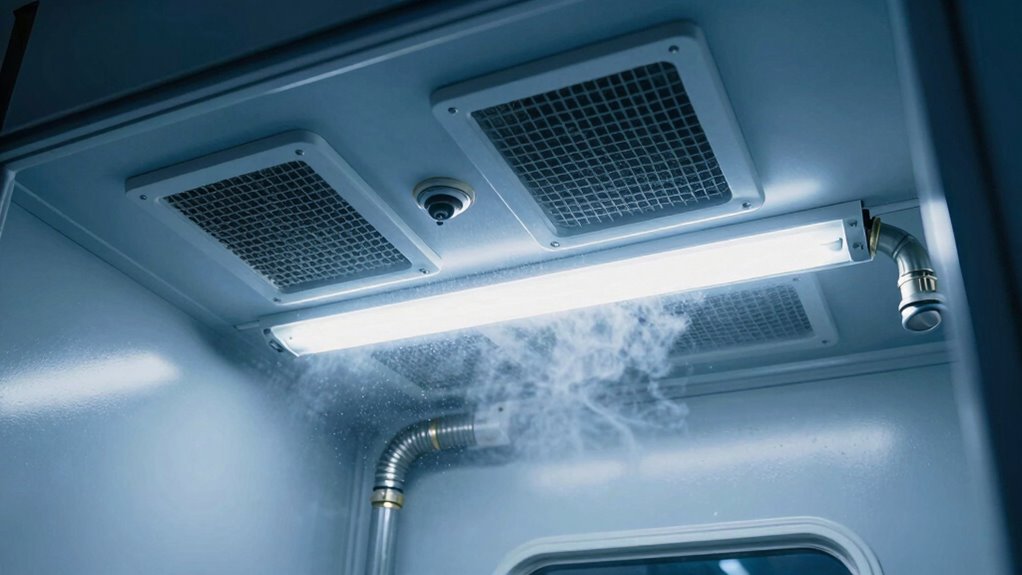
Proper ventilation is essential in small spray booths because it guarantees the safe and efficient application of paint. Good airflow improves air quality by removing harmful fumes and airborne particles, protecting your health and maintaining a safe workspace. It also plays a key role in odor control, preventing unpleasant smells from lingering and making the environment more comfortable. Without proper ventilation, fumes can accumulate quickly, creating risks of inhalation hazards or even fires. Consistent airflow ensures that overspray and vapors are effectively extracted, keeping the air clean and safe for you to work in. Prioritizing ventilation not only enhances safety but also contributes to a better finish, as it helps regulate temperature and humidity during spraying. Additionally, understanding the importance of a high contrast ratio in projectors can be compared to ensuring proper airflow, as both are vital for achieving optimal visual clarity and safety in their respective environments. Implementing proper ventilation strategies can also reduce environmental impact, promoting more sustainable workspace practices and minimizing the release of hazardous fumes into the environment. Proper airflow systems can also incorporate smart automation to monitor and adjust ventilation rates in real-time, optimizing safety and efficiency. Ensuring proper ventilation can also prevent workspace hazards by reducing the risk of fires or explosions caused by flammable vapors.
How to Design an Efficient Ventilation Layout in Limited Space
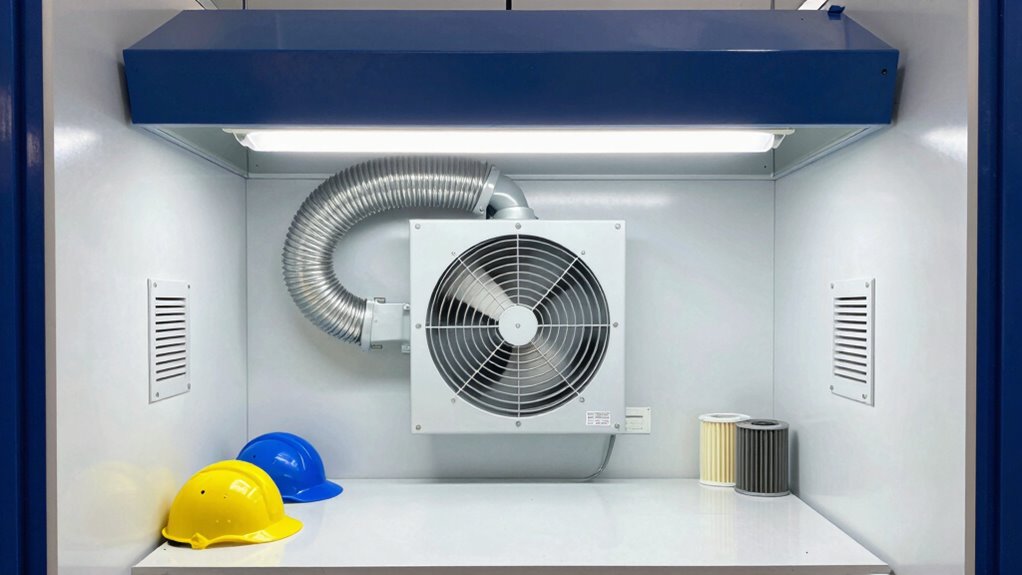
To make the most of your limited space, focus on maximizing airflow efficiency with a well-planned ventilation layout. Position vents strategically to guarantee proper air circulation without crowding the area, and consider space-saving hood designs that fit seamlessly into tight spots. By balancing these elements, you create an effective ventilation system that maintains safety and performance. Incorporating proper tool selection can further improve airflow and reduce fumes. Additionally, implementing smart appliance integration can optimize the ventilation process through automation and precise control. Consulting with trusted local service providers can also help in customizing the optimal setup for your specific space constraints. Paying attention to ventilation system design ensures that fumes are effectively exhausted, protecting your health and maintaining a clean workspace. Furthermore, selecting compact ventilation equipment can help maximize the efficiency of your limited space while ensuring safety.
Maximizing Airflow Efficiency
When space is limited, designing an efficient ventilation layout becomes essential for maximizing airflow. To optimize airflow patterns, focus on three key steps:
- Position your fan strategically, preferably near the exhaust outlet, to create a strong airflow that pulls fumes away from your work area.
- Ensure the intake vent is placed opposite the fan to promote a consistent, unidirectional airflow.
- Use ducting that minimizes bends and restrictions, allowing air to flow smoothly and efficiently.
- Consider implementing proper ventilation practices to enhance safety and ensure effective removal of paint fumes in confined spaces, while also monitoring air quality sensors to maintain a safe environment. Additionally, choosing ventilation equipment with adequate capacity is crucial for handling the volume of fumes generated in small spaces and ensuring proper airflow is maintained throughout the workspace.
Strategic Vent Placement
In tight spaces, strategic vent placement can make or break your spray booth’s airflow efficiency. Proper exhaust placement guarantees that fumes and overspray are effectively removed, preventing buildup and maintaining a safe environment. To optimize airflow patterns, position the exhaust vent at the highest point on the side opposite your spray area. This setup pulls fumes away from your work zone and directs contaminated air toward the exhaust. Avoid placing vents near the intake or too close to the spray area, as this can cause turbulent airflow and contamination. Keep the vent unobstructed and at a sufficient height to maximize efficiency. Additionally, understanding the principles of airflow dynamics helps in designing an effective ventilation layout. Proper ventilation planning ensures consistent airflow and reduces the risk of fumes lingering in the workspace. With careful planning of exhaust placement, you’ll achieve better air circulation, reduce fumes, and create a safer, more effective spray booth in limited space.
Space-Saving Hood Design
Designing an efficient ventilation layout in a limited space requires a compact, multifunctional hood that maximizes airflow without occupying too much room. To achieve this, focus on three key aspects:
- Choose hood materials that are lightweight yet durable, ensuring easy installation and cleaning. Corrosion-resistant materials are essential for longevity in a moist environment. Selecting materials with long-term durability ensures the hood remains effective and safe over time. Additionally, selecting materials with low maintenance requirements can reduce ongoing upkeep efforts. Incorporating material compatibility with your environment helps prevent deterioration and maintains performance.
- Optimize airflow patterns by positioning the hood to capture fumes directly at the source, preventing dispersion into your workspace.
- Incorporate adjustable baffles or deflectors to control airflow direction, enhancing efficiency without adding bulk.
- Ensure the hood includes proper ventilation controls to maintain safe fume levels and prevent buildup.
A well-designed space-saving hood balances size and performance, ensuring fumes are effectively vented while saving precious room. Prioritize sturdy, corrosion-resistant materials and strategic airflow management to keep your small spray booth safe and compliant.
Choosing the Right Exhaust System for Your Small Spray Booth
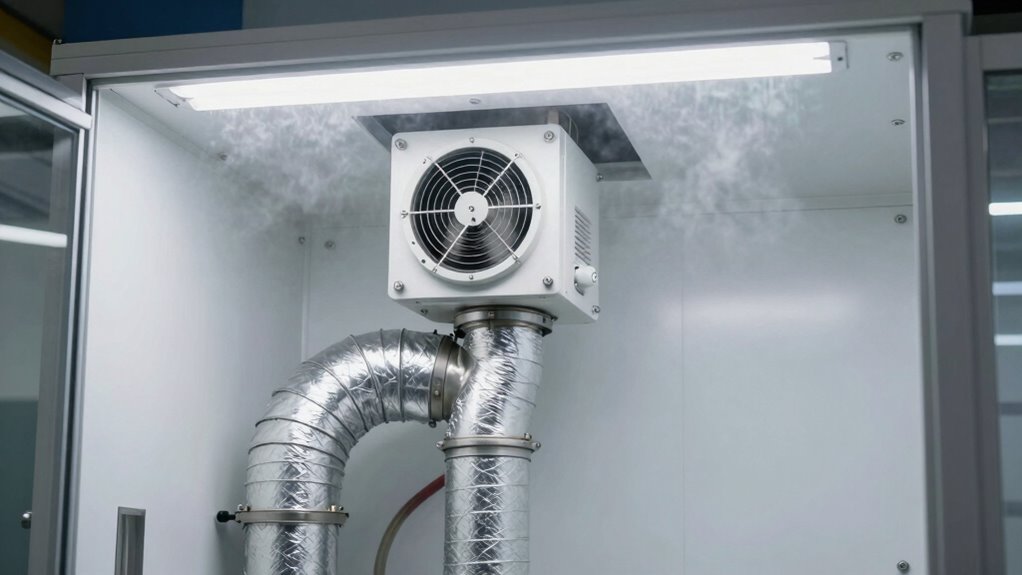
Choosing the right exhaust system is crucial for guaranteeing your small spray booth operates safely and efficiently. You need to take into account airflow patterns to ensure fumes are effectively directed out of the space. Proper airflow helps prevent paint fumes from lingering and reduces health hazards. When selecting an exhaust fan, focus on its capacity to handle the volume of air in your booth, matching it to the size and ventilation needs. A fan that’s too small won’t remove fumes adequately, while one that’s too powerful could create turbulence or draw in unfiltered air. Make certain the fan’s specifications align with your booth’s airflow requirements, providing consistent, reliable ventilation. Additionally, choosing a reliable ventilation system ensures continuous, safe operation over time. A well-chosen exhaust system keeps your workspace safe, compliant, and free of hazardous fumes. It’s also beneficial to consider air filtration options to further improve air quality and safety in small spray booths. Incorporating airflow testing can help verify that your setup maintains proper fume extraction and ventilation effectiveness.
How to Install Fans and Ductwork Safely and Effectively
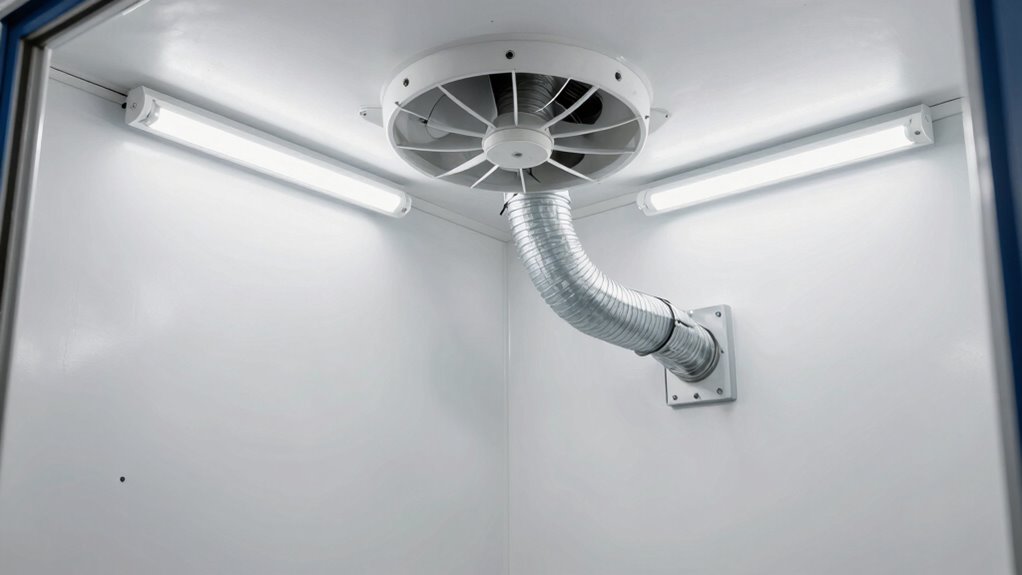
Installing fans and ductwork correctly is essential to guarantee your spray booth operates safely and efficiently. To optimize airflow and ensure proper venting, consider these steps:
- Position the fan strategically—place it where it can maximize airflow and create negative pressure, pulling fumes away from your workspace.
- Seal duct connections tightly—prevent leaks that can compromise airflow and reduce safety.
- Use appropriately sized ductwork—ensure ducts match your fan’s capacity to maintain consistent airflow and effective fume extraction.
How to Achieve Proper Airflow and Turnover in Your Spray Booth
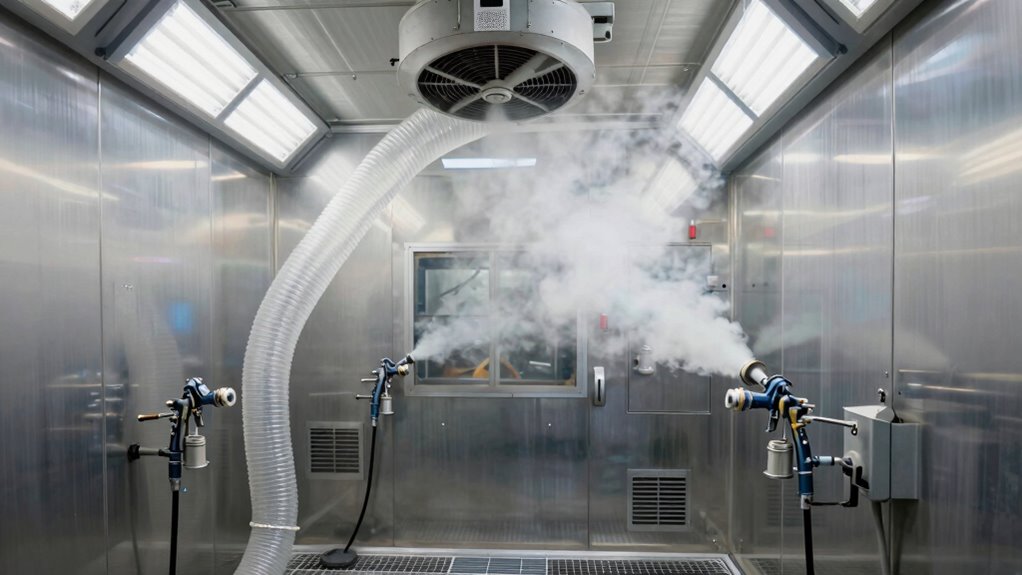
To guarantee your spray booth maintains proper airflow and turnover, start by optimizing where you place your air intake vents for maximum efficiency. Regularly monitor your airflow to catch any issues early and make adjustments as needed. Improving ventilation and keeping a close eye on airflow will help you achieve consistent, high-quality results. Additionally, understanding filtration systems can help you maintain a safer environment by effectively capturing paint fumes and particulates. Incorporating airflow management strategies ensures that fumes are efficiently exhausted and fresh air circulates properly within the space. Paying attention to ventilation design can further enhance safety and efficiency in your setup.
Optimize Air Intake Placement
Proper airflow begins with strategic air intake placement, guaranteeing fresh air enters the booth efficiently without disrupting the spray process. To optimize your vent placement, consider these key points:
- Position the air intake low and on the side opposite the exhaust vent to promote smooth airflow.
- Ensure the intake is unobstructed and filters are clean to prevent contaminants from entering.
- Adjust the vent placement to direct fresh air across the work area, avoiding dead zones or turbulence.
Enhance Ventilation Efficiency
Effective ventilation in your spray booth hinges on achieving consistent airflow and timely air exchange. To enhance ventilation efficiency, start by measuring airflow accurately using an airflow measurement device. Regularly check that your fans and exhaust systems are functioning properly to maintain steady airflow rates. Proper airflow measurement helps identify weak spots or blockages that could hinder air turnover. Ensure your ventilation system is appropriately sized for your booth’s volume, and adjust fan speeds if possible to optimize performance. Good ventilation efficiency ensures fumes are quickly removed, reducing health risks and improving paint finish quality. Remember, efficient airflow isn’t just about volume; it’s about consistent, directional movement of air that continually replaces contaminated air with fresh, filtered air.
Monitor Airflow Regularly
Regularly monitoring airflow in your spray booth is essential to maintaining proper air turnover and ensuring a safe, efficient painting environment. Consistent checks help you identify airflow pattern issues and prevent hazardous fumes from accumulating. To optimize ventilation maintenance, consider these steps:
- Use airflow meters or smoke tests to verify consistent airflow patterns.
- Inspect exhaust fans and filters regularly for blockages or wear.
- Adjust intake and exhaust vents to maintain balanced air movement and prevent turbulence.
Using Filters and Ducts to Capture Fumes and Keep Your Workspace Clean
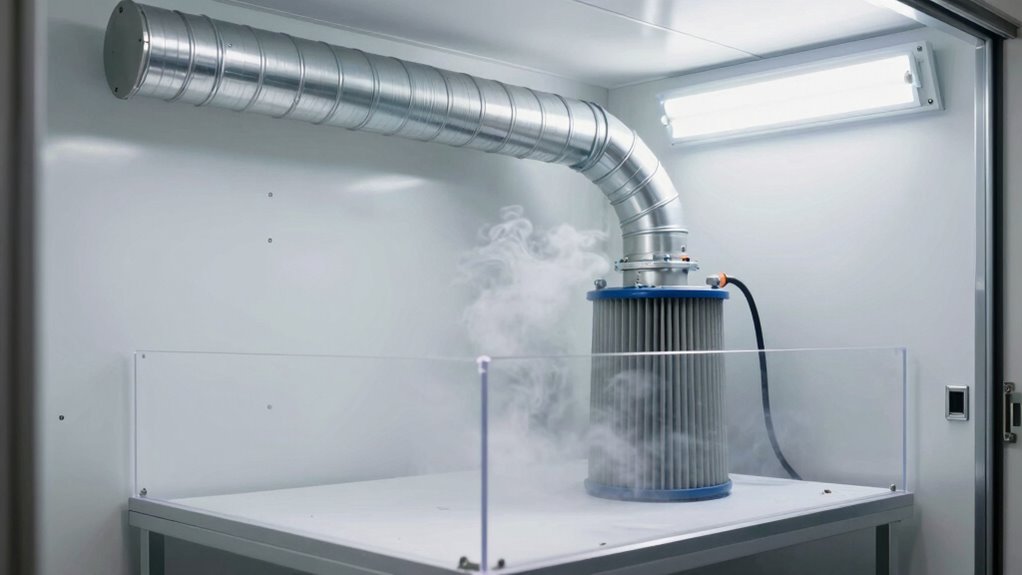
To keep your workspace safe and clean, it’s essential to use filters and ducts that efficiently capture fumes generated during spraying. Start with high-quality air filter materials designed to trap paint particles and volatile fumes, preventing them from circulating in your space. Choose filters rated for spray booth use to guarantee maximum effectiveness. Proper duct insulation is also vital; it reduces heat loss and prevents fumes from escaping through leaks. Well-insulated ducts maintain proper airflow and improve overall ventilation efficiency. Regularly inspect and replace filters to keep fumes contained and your workspace clean. By combining effective air filter materials with properly insulated ducts, you create a safer environment that minimizes health risks and keeps your workspace tidy.
Tips for Maintaining Your Ventilation System for Safety and Longevity

Maintaining your ventilation system is essential to guarantee it functions safely and lasts longer. Regular upkeep prevents breakdowns and ensures best fume extraction. Here are key tips:
Regular maintenance ensures safe, efficient ventilation and prolongs system life.
- Follow a consistent maintenance schedule, inspecting filters and ducts weekly to catch issues early.
- Prioritize filtration upgrades when necessary to improve air quality and system efficiency.
- Clean or replace filters regularly, especially after heavy use, to prevent clogs that reduce airflow.
Common Mistakes to Avoid When Venting in a Small Space
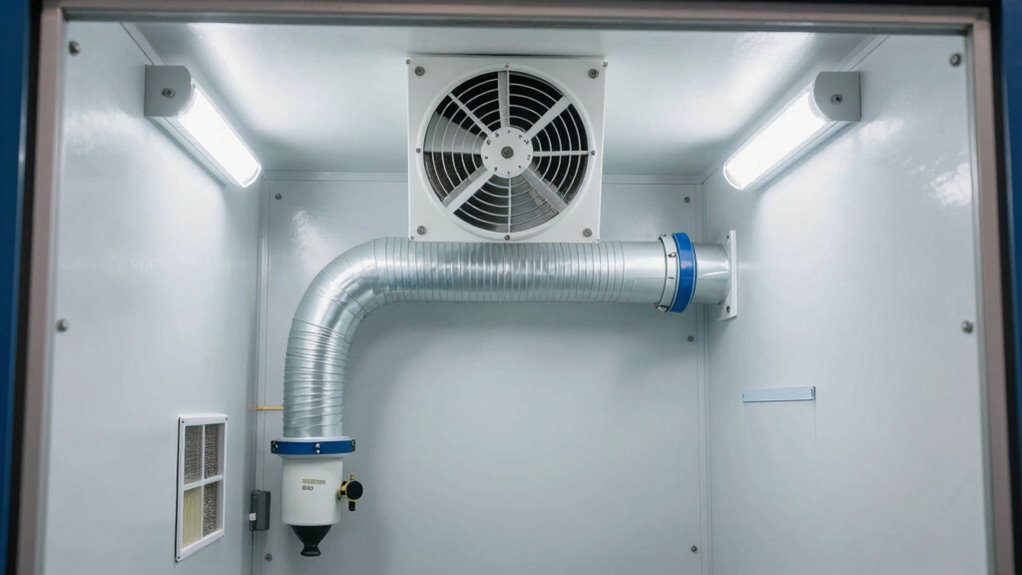
Venting in a small space can be tricky, and overlooking common pitfalls can lead to safety hazards and reduced air quality. One major mistake is neglecting proper airflow patterns, which can cause fumes to circulate instead of exit. Ensure your ventilation system creates a consistent pull, directing fumes toward the fume extraction points. Avoid blocking vents or placing equipment that disrupts airflow, as this hampers proper venting. Additionally, relying on a single exhaust fan might not be enough; multiple extraction points help improve efficiency. Failing to regularly check and maintain your ventilation setup can lead to clogs or reduced performance. By understanding airflow patterns and optimizing fume extraction, you’ll prevent dangerous fumes from lingering and maintain a safer, cleaner working environment.
How to Stay Compliant With Safety Regulations for Spray Booths

To stay compliant with safety regulations, you need to understand your local rules and standards. Make sure your ventilation systems are up to code and properly maintained. Keeping detailed safety documentation will help you prove compliance and address any inspections effectively.
Understand Local Regulations
Understanding and complying with local regulations is essential when setting up a spray booth. First, you need to secure the necessary local permits to operate legally. These permits ensure your setup meets safety standards and environmental guidelines. Second, check noise regulations in your area, especially if your workspace is near residential zones; exceeding noise limits can lead to fines. Third, familiarize yourself with storage rules for hazardous materials, which often vary by location. Ignoring these regulations can result in costly penalties or shutdowns. Always consult your local authorities or regulatory agencies before installation. By staying informed and adhering to these rules, you ensure your spray booth operates safely, legally, and without interruptions.
Use Proper Ventilation Systems
Proper ventilation is essential for maintaining a safe spray booth environment and staying compliant with safety regulations. A well-designed ventilation system improves air quality by efficiently removing paint fumes, overspray, and VOCs, reducing health risks. It also plays a key role in odor control, preventing fumes from lingering and creating an uncomfortable workspace. You should install exhaust fans and filters that meet local standards to guarantee proper airflow. Regularly inspect and maintain your ventilation system to prevent blockages and ensure it operates at peak performance. Proper airflow not only protects your health but also helps you stay compliant with safety regulations. By prioritizing effective ventilation, you create a safer, more efficient spray booth environment.
Maintain Safety Documentation
Are you keeping thorough safety documentation for your spray booth? Staying compliant with safety regulations requires organized records. Here’s what you need to focus on:
- Maintain updated safety certifications to prove your compliance with local and federal standards.
- Conduct regular hazard assessments to identify potential risks in your setup and document the findings.
- Keep detailed logs of safety inspections, equipment maintenance, and employee training sessions.
Troubleshooting Ventilation Problems in Small Spray Booths
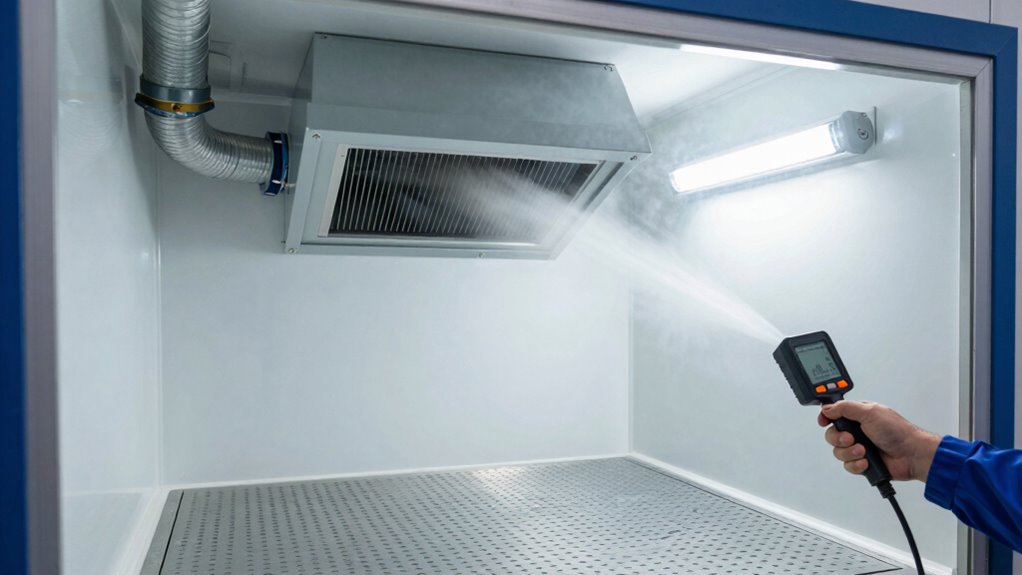
When ventilation issues arise in small spray booths, they can substantially impact the quality of your work and safety. To troubleshoot effectively, start with airflow modeling to identify areas where airflow is restricted or uneven. Poor airflow can cause paint fumes to linger or drift into undesired areas. Next, review your fan selection; ensure your fan has enough capacity to handle the booth’s size and exhaust requirements. An undersized fan won’t circulate fumes properly, while an oversized fan may create excessive turbulence. Check for blockages, leaks, or obstructions in ductwork, and verify that filters are clean. Adjust fan speed or upgrade equipment if necessary. Regular maintenance and careful assessment of airflow pathways will help resolve common ventilation problems quickly and keep your workspace safe.
Frequently Asked Questions
How Often Should I Replace or Clean Ventilation Filters?
You should replace or clean your ventilation filters regularly to guarantee ideal filter maintenance and maximize their ventilation lifespan. Typically, check filters every 1-2 weeks if you’re frequently spray painting, and clean or replace them when they appear dirty or clogged. In less busy periods, inspect monthly. Proper filter maintenance prevents fumes buildup, improves airflow, and keeps your workspace safe. Regular upkeep is key to maintaining effective ventilation and extending your system’s lifespan.
Can I Retrofit My Existing Space Into a Spray Booth?
Yes, you can retrofit your existing space into a spray booth with DIY modifications. Focus on space optimization by installing proper ventilation, exhaust fans, and filters. Make certain you create a sealed environment to contain fumes and add a filtration system for safety. Be mindful of local regulations and safety standards, and plan your modifications carefully to turn your space into a functional, safe spray booth that effectively manages paint fumes.
What Are the Signs of Poor Ventilation Performance?
If your ventilation seems sluggish, it’s a clear sign of poor airflow efficiency. You might notice lingering paint fumes or foggy filters that seem to trap more particles than they should, drastically shortening filter lifespan. Poor performance could also lead to paint drying unevenly or fumes backing up, making your workspace unsafe. Keep an eye on these signs to make certain your spray booth operates safely and efficiently.
How Do I Ensure Safety During Ventilation System Maintenance?
To guarantee safety during ventilation system maintenance, you should first turn off the system and wear appropriate PPE. Perform a thorough system inspection, checking filters for damage or clogging and replacing them as needed. Regular filter replacement keeps airflow ideal. Also, inspect ducts and fans for debris or wear. Always follow manufacturer guidelines and ensure proper reassembly before restarting to prevent hazards and maintain effective ventilation.
Are There Portable Ventilation Options Suitable for Small Spaces?
Yes, you can use portable fans and air purifiers for small spaces. Portable fans help circulate air quickly, pushing fumes out and improving airflow. Air purifiers with activated carbon filters trap airborne paint fumes, making the environment safer. Place these devices strategically near your spray area, and run them during and after painting to effectively vent fumes and maintain a healthier workspace.
Conclusion
Think of your spray booth as a delicate garden; proper ventilation is the sunlight that keeps it thriving. When you design, install, and maintain your system carefully, you guarantee the fumes are carried away like wilting flowers, leaving fresh, safe air behind. By nurturing your setup with attention and care, you protect your workspace and breathe easy—your own oasis of safety amid the chaos of paint fumes. Keep it well-ventilated, and your small space will flourish.